
Backconnect Proxy Guide: Essential Insights for 2025
In 2025, businesses and individuals face an unprecedented surge in demand for advanced proxy solutions. The need for reliable data privacy and large-scale automation has never been higher.
Enter the backconnect proxy, a game-changer for high-volume, anonymous operations. This guide will walk you through what a backconnect proxy is, how it works, and why it is becoming essential for modern web tasks.
Here’s what you can expect:
- Clear definitions and technical breakdowns
- Real-world use cases and benefits
- Pros, cons, and direct comparisons to other proxy types
- Actionable tips for choosing the right provider
Whether you need robust privacy or enterprise-level efficiency, this guide will help you make smart proxy choices for 2025.
What Are Backconnect Proxies?
A backconnect proxy is a powerful proxy solution designed to give users access to a massive, rotating pool of IP addresses through a single connection point. Unlike traditional proxies, which assign one static IP per session, a backconnect proxy acts as a gateway, automatically routing requests through new IPs from its pool. This setup is ideal for anyone who needs to make thousands or even millions of requests while staying anonymous and avoiding bans.
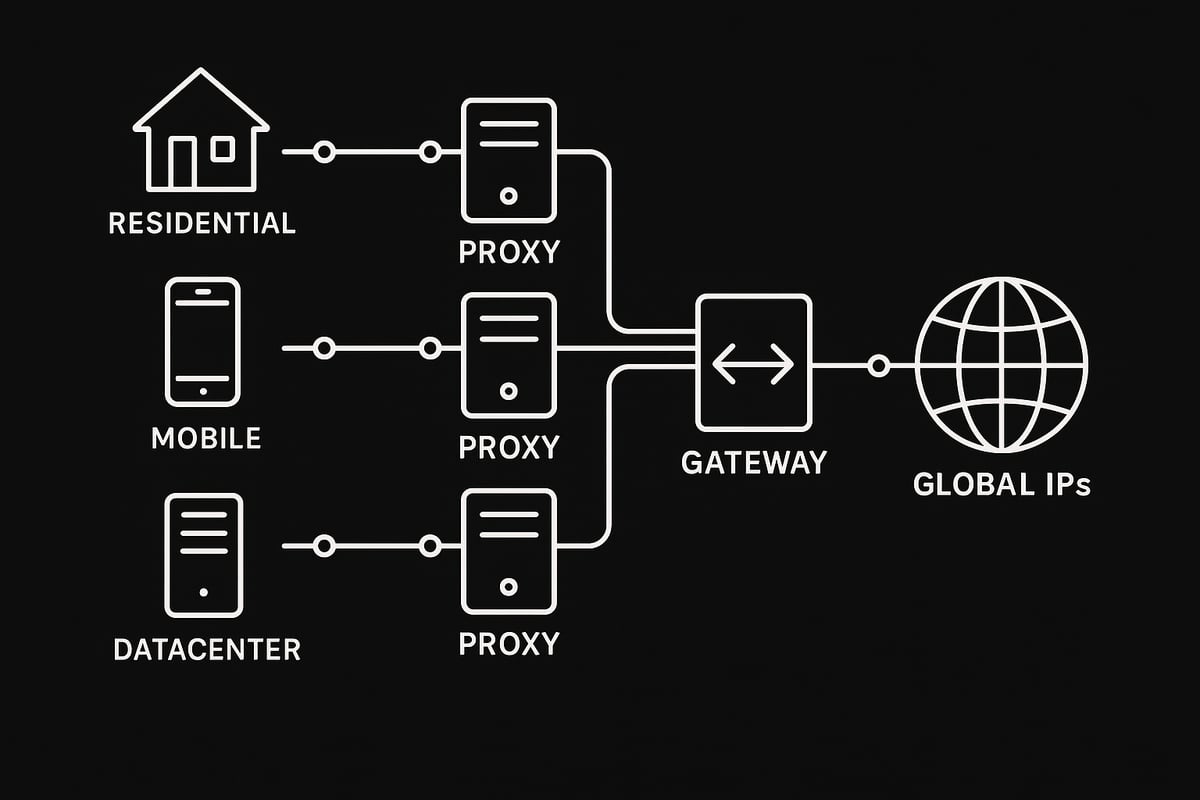
The core architecture of a backconnect proxy revolves around a gateway model. When you connect, your traffic is not just passed through a single IP. Instead, it is dynamically routed through a vast network of IPs managed by the provider. This means you interact with just one endpoint, but behind the scenes, your requests are distributed across a pool that can range from hundreds of thousands to over 150 million unique IPs. For comparison, standard rotating proxies often offer only thousands of IPs. If you want a broader context on different proxy types and how backconnect proxies fit in, check out this Types of proxy servers resource.
Backconnect proxy pools are diverse. They typically include residential IPs (from real users’ devices), mobile IPs, and datacenter IPs. Residential and mobile IPs are especially valuable for tasks where authenticity and geo-targeting matter, while datacenter IPs are used for speed and cost-effectiveness. This mix allows a backconnect proxy to offer unmatched flexibility and reliability for large-scale operations.
One of the standout features is managed rotation. With a backconnect proxy, you do not have to worry about manually updating proxy lists or switching IPs. The provider handles all rotation automatically, either on every request or at set intervals. This managed approach saves time and reduces the risk of using stale or banned IPs, making it much easier to scale up web scraping or automation projects.
Terminology can get confusing, so it helps to clarify: a backconnect proxy may also be called a “pooled proxy” or “rotating proxy.” These terms highlight the idea of a shared, dynamically changing IP pool. However, not all rotating proxies use a backconnect gateway model. The main difference is that a backconnect proxy offers seamless, provider-managed rotation at scale, while others may require manual updates or offer smaller pools.
Imagine a business that needs to monitor global e-commerce prices in real time. Using a backconnect proxy, they can make hundreds of thousands of requests per day, each routed through a new residential or mobile IP. This approach drastically reduces the chance of detection or blocking. Leading providers are known to offer backconnect proxy pools exceeding 150 million IPs, dwarfing the capabilities of conventional proxies.
However, a backconnect proxy is not always the right fit. For small-scale users or those who need precise control over which IPs or locations they use, it can be overkill. The true value shines for enterprise-scale operations, where efficiency, anonymity, and the ability to handle millions of requests are essential. For these users, a backconnect proxy is a game-changer, delivering both scale and security.

How Do Backconnect Proxies Work?
Understanding how a backconnect proxy operates can demystify the sophisticated architecture behind modern large-scale proxy solutions. Let’s break down the process, from connection and routing to the source of IPs and the practical limitations you should know.
Connection and Routing Mechanism
A backconnect proxy uses a gateway model, which acts as your single point of access to an enormous pool of IP addresses. When you connect to this gateway, your request is automatically routed through one of the many available IPs in the pool.
This workflow is seamless. You send a request to the gateway. The provider then assigns a random IP from their pool, routes your traffic through it, and returns the response. On the next request, the backconnect proxy rotates your IP, often switching it every request or at set intervals. This automated rotation is a major advantage over manual lists.
Load balancing is another core feature. The provider distributes client requests across the pool, ensuring no single IP gets overloaded. This approach helps maintain both stability and anonymity, making it tough for websites to block your activity.
Because multiple clients share the same IP pool, your traffic blends with that of others. This shared use boosts anonymity, though it also means robust management is essential to avoid overlaps or bottlenecks.
For further details on how rotation works and how it compares to other methods, see Rotating proxies explained.
Imagine a session where every request you make is routed through a different residential or mobile IP. This makes a backconnect proxy perfect for high-volume, stealthy operations.
Source and Quality of IPs
A backconnect proxy aggregates IPs from three main sources: residential, mobile, and datacenter networks. Providers build vast pools by partnering with ISPs, device owners, or datacenter operators, resulting in millions of available IPs.
Using real-user IPs, such as residential or mobile, boosts your anonymity. These IPs appear genuine to target websites, making detection and blocking more difficult. Datacenter IPs, while faster and cheaper, are often included for speed and volume, though they can be easier to flag.
Geo-distribution is a major strength. Backconnect proxy providers can offer IPs from multiple regions or countries, letting you access location-specific content or perform geo-targeted tasks. The diversity and freshness of the pool depend on the provider’s network and sourcing ethics.
The quality and reliability of a backconnect proxy network rely heavily on the provider. A strong provider ensures a mix of fresh, clean IPs and avoids recycled or previously abused addresses.
For example, if you need to scrape data from different countries, a backconnect proxy allows you to select IPs from those regions, making geo-targeted scraping possible and efficient.
Performance and Limitations
Performance with a backconnect proxy can vary. Since the pool includes IPs of different types and histories, speed and reliability are not always consistent. Some IPs may be slower, or temporarily overloaded if many clients are using the same pool.
Because IPs are shared, there’s always a risk that an IP you use may have a negative history or be flagged by certain websites. This can affect your success rate and sometimes require additional troubleshooting.
Control is another limitation. In some setups, you cannot pick a specific IP or even a precise location, which can be a drawback for projects that require targeted geo-presence. When your task demands pinpoint accuracy, this lack of control may be significant.
Still, for most large-scale projects, the benefits of automation, volume, and anonymity with a backconnect proxy outweigh these limitations.
Key Use Cases for Backconnect Proxies in 2025
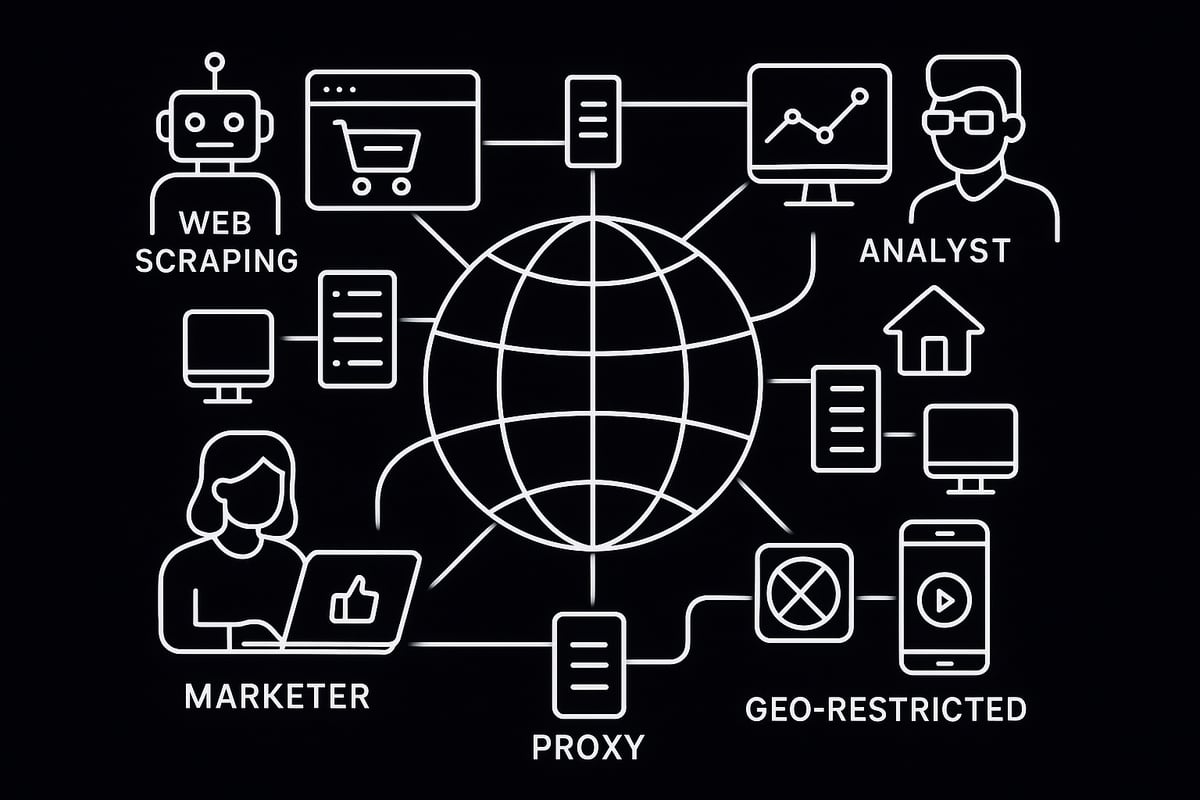
As digital operations expand in 2025, the backconnect proxy is emerging as an essential tool for businesses needing scalable, reliable, and anonymous access to data and platforms. Let’s explore how organizations are harnessing the power of backconnect proxy solutions across industries.
Large-Scale Web Scraping and Data Collection
A top use case for backconnect proxy technology is automating web scraping and data collection at massive scale. Modern businesses need to extract data from public websites for tasks such as price monitoring, product catalog updates, or trend analysis.
With a backconnect proxy, requests are routed through millions of IPs, making it possible to bypass IP bans, rate limits, and anti-bot measures like CAPTCHAs. This allows enterprises to gather competitive intelligence without interruption. For example, an e-commerce company tracking global prices can make millions of requests daily, rotating IPs with every connection.
Key benefits include:
- Seamless IP rotation for every request
- Avoidance of regional blocks and detection
- Ability to scrape data from multiple domains simultaneously
For a comprehensive strategy, review the Complete web scraping guide 2025 to maximize results with your backconnect proxy setup.
Market Research and Competitive Intelligence
Market research teams rely on backconnect proxy pools to gather real-time data from competitor websites, marketplaces, and forums without risk of detection or being blocked. By leveraging residential and mobile IPs, researchers can monitor price changes, product launches, and consumer sentiment across regions.
A backconnect proxy ensures that data requests appear as if they originate from real users worldwide. This is invaluable for industries like travel, where monitoring airline ticket prices globally requires a rotating, geo-diverse IP footprint.
Typical applications include:
- Tracking competitor pricing in real time
- Analyzing product availability across markets
- Collecting consumer reviews and ratings
SERP Scraping and SEO Monitoring
Accurate search engine data is critical for SEO agencies and in-house marketing teams. Using a backconnect proxy, professionals can collect search engine results pages (SERPs) for keyword analysis and ranking checks without triggering detection or restrictions.
The ability to rotate between geo-specific IPs allows for truly localized SERP data, ensuring you see what users in each country or city see. Agencies can track keyword rankings, monitor ad placements, and audit search visibility across multiple regions efficiently.
Key features:
- Localized scraping for precise SEO insights
- Automated rotation to avoid search engine bans
- High-volume data collection for trend analysis
Social Media Management and Automation
Managing hundreds of social media accounts for global campaigns requires stealth and flexibility. With a backconnect proxy, brands and agencies can automate posting, schedule engagement, and collect analytics while avoiding platform limits and bans.
This approach is perfect for influencer marketing, brand protection, and campaign scaling. Each account can operate through a different IP, mimicking genuine user behavior and reducing the risk of triggering anti-spam filters.
Use cases include:
- Managing multi-region campaigns
- Automating content posting and engagement
- Gathering social media analytics at scale
Bypassing Geo-Restrictions and Accessing Localized Content
A backconnect proxy enables users to access content restricted to specific regions, such as streaming platforms or localized advertising. By leveraging diverse IP pools, companies can verify ads, test user experiences, or consume geo-blocked media as if they were local users.
This is especially valuable for:
- Streaming content not available in your country
- Verifying localized digital ads
- Testing website localization and UX
Benefits and Drawbacks of Backconnect Proxies
Choosing a backconnect proxy for your 2025 projects means weighing powerful advantages against some real-world tradeoffs. Let’s break down what makes this technology so compelling, and where it might not be the perfect fit.
Main Advantages
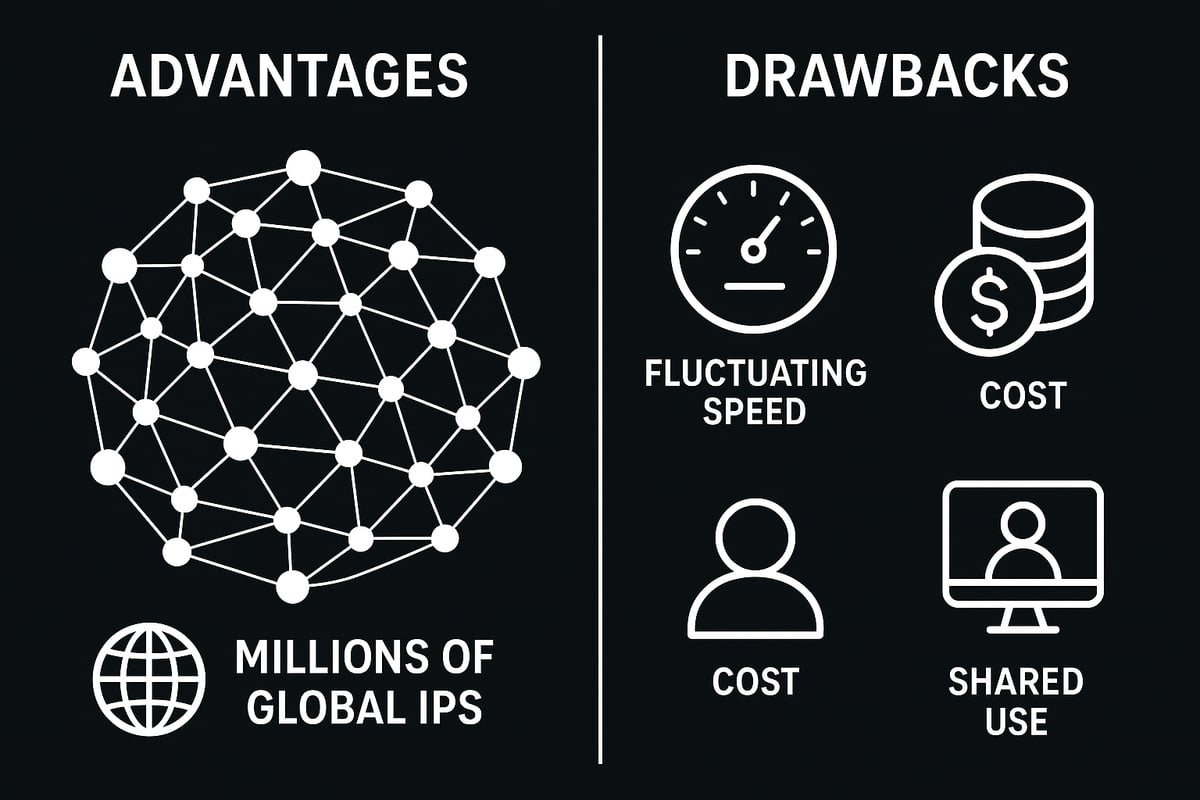
The primary strengths of a backconnect proxy revolve around scale, anonymity, and ease of use. Here’s why enterprises and advanced users are turning to this solution:
- Massive IP Pool: Access millions of IPs across residential, mobile, and datacenter sources. This breadth allows users to distribute requests globally without hitting rate limits.
- Enhanced Anonymity: With automatic rotation for each request or session, it becomes extremely difficult for websites to track or block your activities.
- High Rate-Limit Resistance: Since each IP is used briefly, anti-bot systems struggle to detect or ban your operations.
- Provider-Managed Infrastructure: No need to manage endless proxy lists, monitor IP health, or handle manual rotations. Everything is handled by the service.
- Load Balancing: Requests are distributed evenly, ensuring stability and reducing the risk of any single IP being overused.
- Geo-Flexibility: Switch between countries or regions instantly, supporting localized data collection and testing.
Example: Imagine a global retail scraper that needs to monitor product prices in 50 countries, sending millions of requests per month. A backconnect proxy offers the reliability and scope to avoid detection while maintaining uninterrupted access.
Key Drawbacks and Considerations
Despite their strengths, backconnect proxy solutions come with important limitations and risks:
- High Cost: Premium access to vast and fresh IP pools can be expensive, especially for long-term or large-scale use.
- Variable Performance: Speed and reliability can fluctuate, depending on the quality of the IPs and how the provider manages their network.
- Shared IPs: The same IP might be used by multiple clients. If one user abuses an IP, you could inherit a negative reputation or face bans.
- Limited Control: In many setups, you cannot select specific IPs or reserve precise locations, which can be a challenge for targeted campaigns.
- Provider Dependency: The experience is only as good as the provider’s network, support, and ethical sourcing practices. Choosing the wrong partner could mean unreliable service or compliance risks.
For an up-to-date look at how top providers are addressing these challenges, check the Proxy Market Research 2025, which details performance benchmarks and industry trends.
Example: If you’re running a high-speed, targeted scraping operation in a single country, a dedicated proxy might outperform a backconnect proxy, offering better speed and control.
When to Use and When to Avoid
A backconnect proxy is ideal for enterprises or teams that need high-volume, global data extraction and maximum anonymity. It’s less suited for small-scale projects, precise geo-targeting, or those with tight budgets.
Example: For a massive social media SEO campaign across multiple regions, a backconnect proxy brings efficiency and stealth. However, for a one-off market research project in a single city, a simpler solution may be more cost-effective.
Backconnect Proxies vs. Other Proxy Types
Choosing the right proxy can be confusing with so many types available. Let’s break down how a backconnect proxy stacks up against other common proxy solutions. By understanding these differences, you’ll know exactly when to use a backconnect proxy for your specific needs.
Backconnect vs. Rotating Proxies
At first glance, a backconnect proxy and a rotating proxy look similar. Both offer IP rotation, making them excellent for tasks that require anonymity and large-scale automation. The main difference is in management and scale.
A backconnect proxy uses a provider-managed gateway. You connect to a single endpoint, and the provider automatically rotates your IP address from a massive pool, often millions strong. In contrast, traditional rotating proxies usually require you to manage a list of proxies and switch between them manually or with your own scripts.
| Feature | Backconnect Proxy | Rotating Proxy |
|---|---|---|
| IP Pool Size | Millions | Thousands |
| Management | Provider handles | User handles |
| Rotation | Seamless, automatic | Manual or scripted |
For example, if you need to scrape thousands of pages rapidly, a backconnect proxy can simplify setup and reduce headaches, while rotating proxies might require more manual work.
Backconnect vs. Dedicated and Shared Proxies
When comparing a backconnect proxy to dedicated and shared proxies, the differences are clear. Dedicated proxies give you exclusive use of an IP address, which means more control and less risk of negative IP history. However, the pool size is limited, so you can’t scale as easily.
Shared proxies are used by multiple clients at the same time, typically offering a smaller pool and a higher risk of bans since others’ activity can affect your results. A backconnect proxy, on the other hand, offers access to a huge, managed pool of IPs, balancing anonymity and volume.
- Dedicated proxies: Best for account creation or logging into sensitive platforms.
- Shared proxies: Suitable for low-stakes, low-volume tasks.
- Backconnect proxy: Ideal when you need millions of rotating IPs and don’t want to manage them yourself.
Think of dedicated proxies as private rooms, shared proxies as a busy café, and a backconnect proxy as a sprawling hotel with endless doors.
Backconnect vs. Residential, Mobile, and Datacenter Proxies
A backconnect proxy acts as a gateway, aggregating residential, mobile, and datacenter proxies into one powerful solution. Residential and mobile proxies are prized for their authenticity and low block rates, while datacenter proxies offer speed and cost efficiency but are more likely to be detected.
When you use a backconnect proxy, you benefit from the flexibility to choose or mix these types based on your needs. For a deeper dive on residential proxies and how they fit into backconnect proxy pools, check out this Residential proxies guide.
| Proxy Type | Trust Level | Speed | Block Risk | Cost |
|---|---|---|---|---|
| Residential | High | Moderate | Low | High |
| Mobile | Highest | Moderate | Lowest | Highest |
| Datacenter | Low | Fastest | High | Lowest |
| Backconnect Proxy | Flexible | Varies | Low/Medium | Premium |
This flexibility is why a backconnect proxy is often the go-to for enterprise-scale operations.
Choosing the Right Proxy Type for Your Needs
So, how do you know if a backconnect proxy is right for you? Start by assessing your project size, the level of anonymity required, your geo-targeting needs, and your budget.
- Choose a backconnect proxy for large-scale, high-anonymity, or multi-region projects where seamless IP rotation is critical.
- Opt for dedicated or shared proxies if you need more control or are running small, niche tasks.
- For single-country market research, a dedicated proxy might suffice. For global price aggregation, a backconnect proxy is unbeatable.
In summary, match your task to the proxy’s strengths, and you’ll maximize efficiency and results.
How to Choose the Best Backconnect Proxy Provider in 2025
Selecting the right backconnect proxy provider in 2025 is crucial for maximizing performance, security, and ROI. With the proxy market evolving rapidly, knowing which features to prioritize can make all the difference for your business or project.
Evaluating Provider Quality and IP Pool
The backbone of any backconnect proxy service is its IP pool. Look for providers offering millions of fresh, ethically sourced IPs. Diverse pools that include residential, mobile, and datacenter addresses ensure versatile coverage and reduce the risk of blocks.
Transparency matters. Top providers will list their pool size, geographic spread, and sourcing practices. For a deep dive into how large-scale residential proxy pools operate, see An Extensive Study of Residential Proxies in China. This research highlights why a robust backconnect proxy network is essential for enterprise needs.
- Confirm pool size and region coverage.
- Check for real-time updates and IP freshness.
- Avoid providers with vague sourcing details.
A strong backconnect proxy network gives you the reach and reliability needed for global projects.
Rotation Policies and Customization Options
Rotation policies are a defining feature of a backconnect proxy. The best providers let you control how and when IPs rotate. Options might include per-request, per-session, or custom intervals, allowing you to match rotation speed with your use case.
Look for user-friendly dashboards where you can set rotation frequency, session persistence, and geo-targeting preferences. Some providers even let you reserve specific regions or subnets for targeted tasks.
- Flexible rotation intervals
- Geo-based targeting
- Session control features
The flexibility of backconnect proxy rotation policies can be the difference between success and constant CAPTCHAs.
Reliability, Speed, and Support
Reliable uptime and fast response times are non-negotiable for any backconnect proxy. Providers should offer clear uptime guarantees and publish latency benchmarks, so you know what to expect. Enterprise-grade scalability ensures your operations aren't interrupted during peak loads.
Responsive, 24/7 customer support is vital, especially for mission-critical scraping or automation. Look for providers with real-time dashboards, proactive alerts, and multiple support channels.
- Uptime SLA (Service Level Agreement)
- Real-time performance monitoring
- Global support coverage
A dependable backconnect proxy partner keeps your data pipelines running smoothly.
Pricing Models and Cost Efficiency
Backconnect proxy pricing can vary widely. Common models include pay-per-GB, flat-rate subscriptions, or per-endpoint access. Always check for hidden fees, especially for geo-targeting or high-frequency rotation.
Compare providers by calculating total cost for your expected usage. Some offer discounts for high-volume plans or long-term contracts. Use a table to track features, costs, and support to simplify your decision.
| Provider | Pricing Model | Geo Fees | Rotation Control | Support |
|---|---|---|---|---|
| Provider A | Pay-per-GB | Yes | Flexible | 24/7 |
| Provider B | Subscription | No | Standard | 9-5 |
A cost-effective backconnect proxy setup balances scale, control, and budget.
Security, Compliance, and Privacy
Security and compliance must be top priorities when choosing a backconnect proxy. Ensure your provider follows strict data privacy policies, such as zero-log operations and GDPR compliance. Encryption and user authentication add extra layers of protection.
Stay informed about cutting-edge security research, like HTTP Request Synchronization Defeats Discrepancy Attacks, which explores how proxy services can defend against advanced threats. Reliable providers will also supply detailed compliance documentation and regular security audits.
- Zero-log and privacy-first policies
- Encryption and secure authentication
- Regular compliance reporting
Selecting a backconnect proxy provider with robust security safeguards your data and reputation.
Advanced Tips and Best Practices for Backconnect Proxy Success
Staying ahead with your backconnect proxy strategy in 2025 means more than just picking a provider. The landscape is evolving rapidly, and smart tactics can mean the difference between seamless automation and frustrating blocks. Let’s dive into advanced tips that will help you maximize efficiency, security, and reliability.
Optimizing Rotation and Monitoring Performance
Fine-tuning your rotation intervals is crucial for backconnect proxy success. If requests hit a target site too frequently from different IPs, you risk triggering anti-bot defenses. Adjust rotation settings based on your targets: slower for sensitive sites, faster for high-volume scraping.
Monitor proxy performance regularly. Use dashboards or analytics to track speeds, error rates, and IP bans. If you notice repeated slowdowns or blocks, consider switching providers or requesting fresher IPs. This proactive approach ensures your backconnect proxy network remains robust.
Proxy Management Tools and Automation
Managing hundreds or thousands of connections manually is impossible at scale. Invest in dedicated proxy management tools that integrate with your automation stack. These tools let you organize sessions, rotate IPs, and set up custom rules for different projects.
Pairing your backconnect proxy setup with anti-detect browsers or advanced automation frameworks boosts stealth. This combination makes your traffic appear more human-like, reducing the risk of detection. For enterprise users, automation saves time and maintains operational consistency.
Staying Updated and Legal Considerations
Proxy providers frequently update their IP pools, geo-locations, and infrastructure. Stay in touch with your provider’s updates so you can take advantage of new regions or improved performance. Subscribe to provider newsletters or join user communities for early access to changes.
Never overlook legal and ethical factors. Always respect a target site’s terms of use, and avoid scraping sensitive or restricted data. A responsible backconnect proxy approach protects your business from legal issues and maintains industry trust.
Implementing Failover and Future Trends
For mission-critical operations, set up automated failover systems. If one proxy endpoint fails, your system should reroute traffic instantly to another. This keeps your data extraction running smoothly, even during provider outages or bans.
Looking ahead, the Rotating Residential Proxies Market Overview predicts rapid innovation in proxy management, including AI-driven rotation and expanded IPv6 adoption. Staying informed about these trends positions your backconnect proxy strategy for long-term success.
Conclusion
Mastering backconnect proxy usage requires more than a basic setup. By optimizing rotation, leveraging management tools, and staying informed on trends, you’ll maximize both efficiency and stealth. Always operate ethically and monitor performance to avoid disruptions. With these best practices, your backconnect proxy operations will be ready for the demands of 2025.Now that you know what makes backconnect proxies so powerful for privacy, speed, and large scale tasks in 2025, why not put these insights into action? With PinguProxy, you get unlimited access to blazing fast datacenter and mobile proxies, complete with advanced features like 1ms rotation, zero log privacy, and round the clock support. Whether you’re scraping data, managing social media, or bypassing geo restrictions, you’ll have the tools and peace of mind you need. If you’re ready to level up your projects with smarter proxy solutions, Get Started Now and see the difference for yourself.