
Full Proxy: Architecture & Benefits for 2026
Understanding the full proxy architecture is essential for businesses seeking robust network solutions in 2026. Unlike simpler proxy configurations, a full proxy operates at both ends of a connection, completely terminating the client connection and establishing a separate connection to the backend server. This dual-connection approach provides unprecedented control over traffic management, security enforcement, and performance optimization. Organizations implementing full proxy solutions gain granular visibility into all application layer data, enabling sophisticated load balancing, content inspection, and security policies that partial proxies simply cannot achieve.
Understanding Full Proxy Architecture
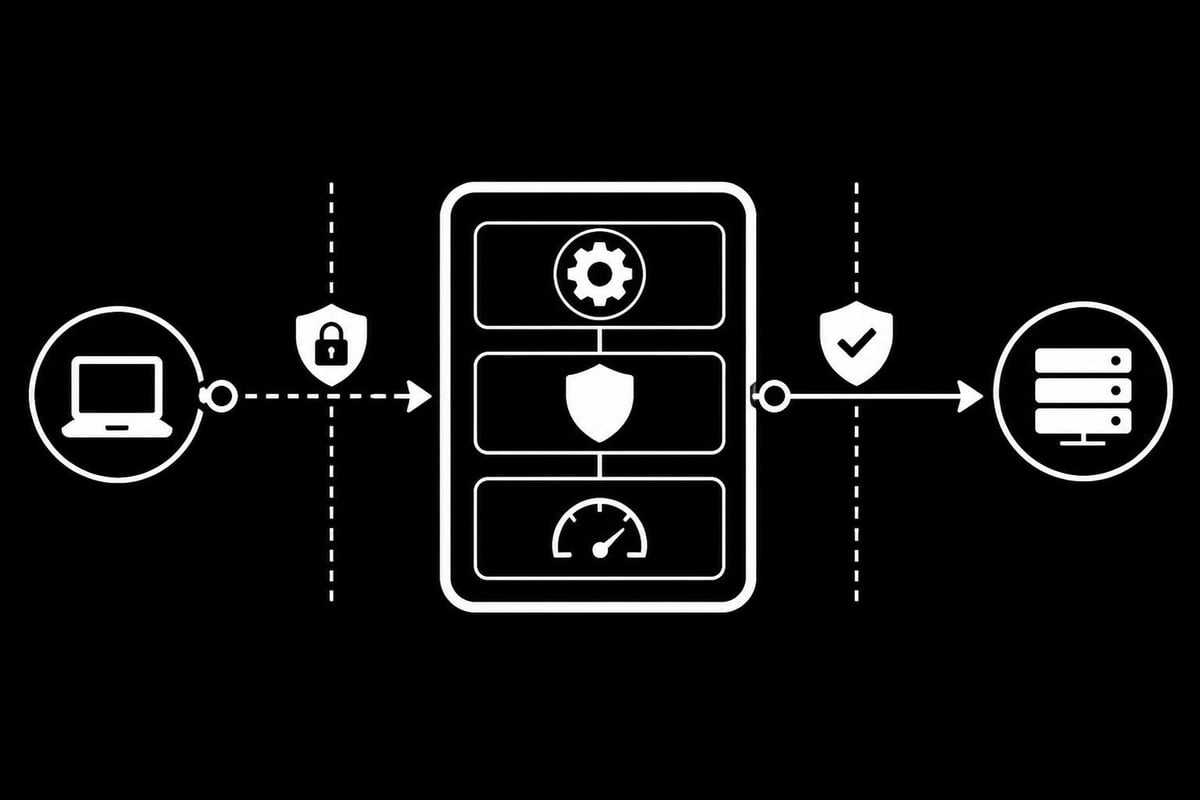
A full proxy solution acts as a complete intermediary between clients and servers, creating two distinct connections rather than simply forwarding packets. When a client sends a request, the full proxy terminates that connection entirely, processes the request at the application layer, and then initiates a completely new connection to the destination server.
This architecture differs fundamentally from half-proxy or packet-forwarding solutions. The full proxy maintains independent TCP stacks for both the client-side and server-side connections, allowing it to optimize each connection separately based on network conditions, security requirements, and performance parameters.
Key Architectural Components
The full proxy system consists of several critical layers that work together:
- Client-side connection handler that terminates incoming requests
- Application layer processing engine for deep packet inspection
- Security policy enforcement layer for threat detection
- Server-side connection manager that initiates backend requests
- Response processing unit that handles server replies before forwarding
Each component operates independently, creating opportunities for optimization at every stage. The application layer processing engine can decrypt SSL/TLS traffic, inspect content for malicious payloads, modify headers, compress data, and cache responses-all before forwarding to the destination.
Performance Benefits of Full Proxy Systems
The dual-connection model of a full proxy enables performance enhancements impossible with simpler proxy configurations. By maintaining separate connections, the system can optimize each independently based on real-time conditions.
TCP optimization represents one of the most significant advantages. The full proxy can use different TCP window sizes, congestion control algorithms, and connection parameters for client-facing and server-facing connections. Clients on slower networks benefit from optimized settings while backend servers receive connections optimized for high-speed datacenter networks.
Connection pooling and multiplexing further enhance performance:
- Persistent backend connections reduce overhead from repeated TCP handshakes
- Request multiplexing allows multiple client requests over fewer server connections
- Connection reuse minimizes latency for subsequent requests
- Intelligent routing directs traffic based on server health and load
| Performance Feature | Full Proxy | Half Proxy | Direct Connection |
|---|---|---|---|
| SSL Termination | Yes | Limited | No |
| Connection Pooling | Yes | No | No |
| Application Layer Optimization | Yes | No | No |
| Independent TCP Tuning | Yes | No | No |
| Content Caching | Yes | Limited | No |
Services like PinguProxy leverage full proxy capabilities to deliver 10Gbps bandwidth with optimized routing, ensuring maximum performance for bandwidth-intensive applications like web scraping and content delivery.
Security Advantages Through Full Termination
Security represents perhaps the most compelling reason to implement a full proxy architecture. By completely terminating connections at the proxy layer, organizations gain unprecedented visibility and control over all traffic.
Deep Packet Inspection and Threat Detection
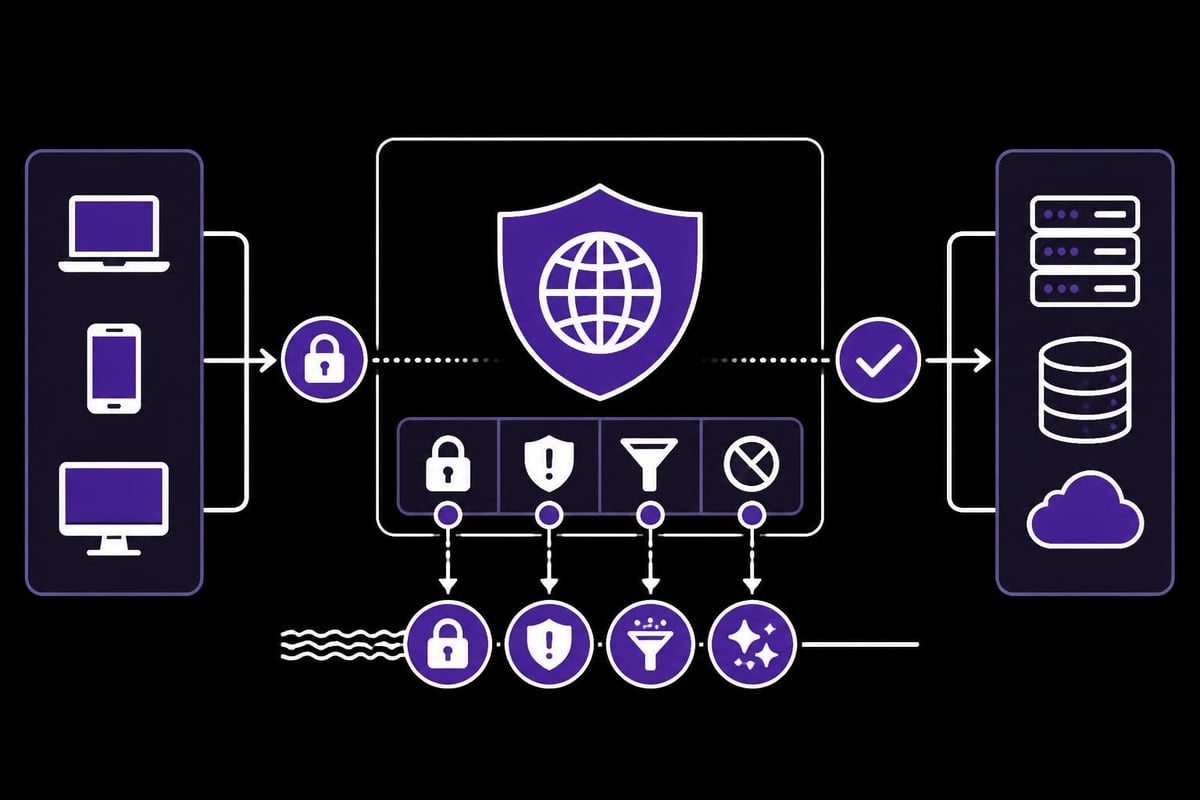
The full proxy inspects every byte of traffic at the application layer. This enables detection of threats that packet-level inspection misses:
- Malware embedded in HTTP responses
- SQL injection attempts in POST data
- Cross-site scripting attacks in URL parameters
- Command injection in API requests
- Data exfiltration through encoded payloads
Unlike reverse proxies that primarily protect backend servers, full proxy implementations protect in both directions. They scan outbound requests for credential leakage and policy violations while simultaneously protecting against inbound attacks.
SSL/TLS decryption allows the full proxy to inspect encrypted traffic without compromising end-to-end security. The proxy decrypts traffic from clients, inspects it for threats, then re-encrypts before forwarding to servers. This "break and inspect" approach catches threats hidden in encrypted channels.
Access Control and Policy Enforcement
The application layer visibility provided by full proxy systems enables sophisticated access controls:
- User-based policies that restrict access based on authentication
- Content filtering that blocks specific data types or patterns
- Rate limiting at the application level, not just network level
- Geographic restrictions based on IP geolocation and routing
- Time-based access controls for scheduled restrictions
Organizations requiring strict compliance benefit significantly from full proxy logging capabilities. Every request and response can be logged with complete context, creating comprehensive audit trails for security investigations and compliance reporting.
Implementation Strategies for Full Proxy Solutions
Deploying a full proxy requires careful planning to maximize benefits while minimizing complexity. The architecture must align with organizational needs, traffic patterns, and security requirements.
Deployment Models
Different deployment configurations suit different use cases:
Explicit proxy configuration requires client applications to be configured with proxy settings. This approach works well for controlled environments where client devices are managed, but it can create friction for BYOD scenarios.
Transparent proxy deployment intercepts traffic without client configuration using network routing or interception techniques. Clients remain unaware of the proxy, simplifying deployment but potentially complicating SSL/TLS handling.
Reverse proxy mode positions the full proxy in front of servers, protecting backend infrastructure while providing load balancing and performance optimization. This represents a common configuration for web applications and APIs.
Organizations often combine these approaches. Understanding the differences between forward and reverse proxies helps determine the optimal deployment strategy for specific requirements.
Scaling Considerations
As traffic volumes grow, full proxy infrastructure must scale appropriately:
- Horizontal scaling through multiple proxy instances with load balancing
- Vertical scaling by upgrading hardware resources for existing proxies
- Geographic distribution to reduce latency for global user bases
- Specialized proxy pools for different traffic types or security zones
High-performance implementations leverage rotating proxies for web scraping and other intensive applications, distributing load across multiple proxy endpoints while maintaining session persistence where required.
| Scaling Strategy | Best For | Complexity | Cost Impact |
|---|---|---|---|
| Horizontal Scaling | High traffic volumes | Medium | Linear increase |
| Vertical Scaling | CPU-intensive processing | Low | Exponential increase |
| Geographic Distribution | Global user base | High | Variable by region |
| Specialized Pools | Mixed workloads | Medium | Optimized allocation |
Use Cases Maximizing Full Proxy Value
Certain applications particularly benefit from full proxy capabilities. Understanding these use cases helps organizations identify where to invest in full proxy infrastructure.
Enterprise Web Security
Organizations use full proxy systems as comprehensive web security gateways. All employee internet traffic routes through the proxy, enabling:
- URL filtering to block malicious and inappropriate sites
- Malware scanning for downloads and web content
- Data loss prevention to prevent sensitive information leakage
- Bandwidth management to prioritize business-critical applications
- Compliance reporting for regulatory requirements
The full proxy architecture allows inspection of HTTPS traffic, which now comprises over 90% of web traffic in 2026. Without SSL decryption capabilities, security tools operate blindly against the majority of threats.
Application Delivery and Load Balancing
Full proxy systems excel at intelligent traffic distribution. Unlike simple load balancers that operate at the network layer, full proxies make routing decisions based on application-layer information:
- Route requests based on HTTP headers, cookies, or URL patterns
- Perform health checks using application-specific protocols
- Implement session persistence using application session identifiers
- Distribute load based on server response times and capacity
- Failover automatically when backend servers become unavailable
Content delivery networks extensively use reverse proxy configurations with full proxy capabilities to optimize content delivery while providing security and performance benefits.
API Gateway Functionality
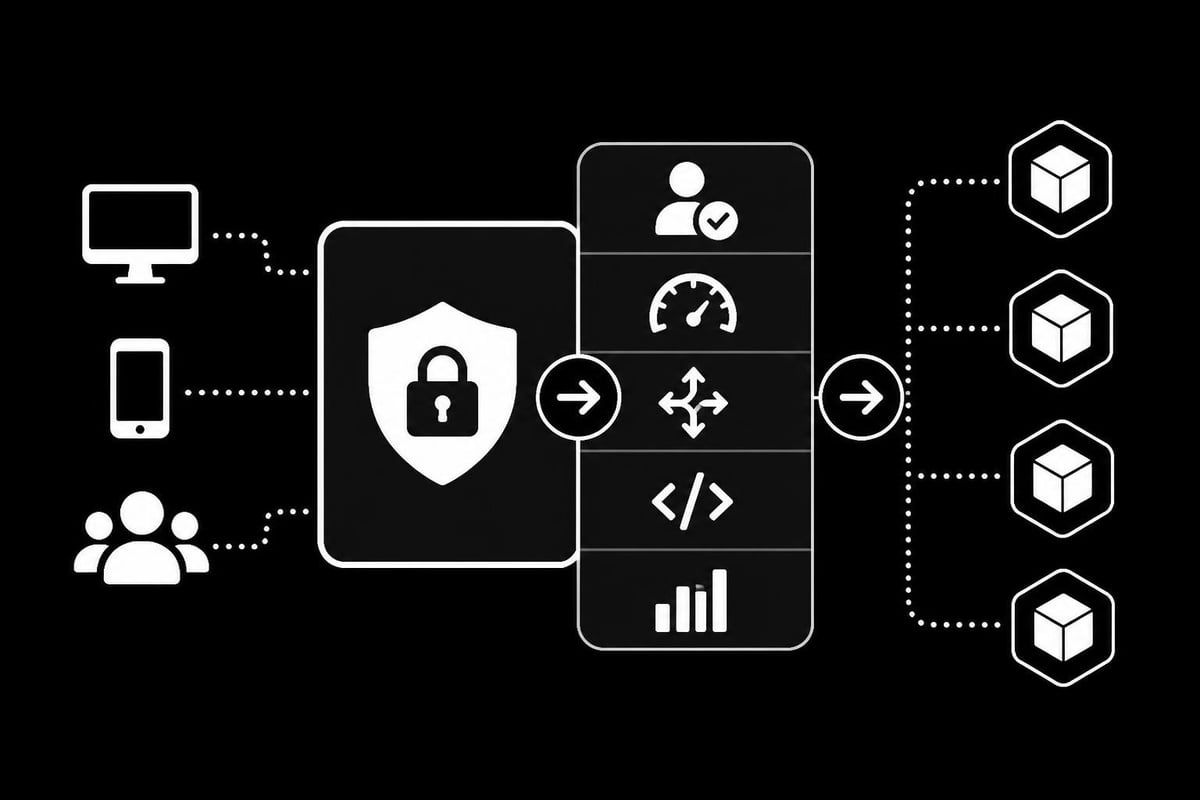
Modern API gateways frequently implement full proxy architecture to provide comprehensive API management. The proxy layer enables:
- Authentication and authorization for API requests
- Rate limiting and quota enforcement per client
- Request/response transformation and protocol translation
- API version routing and deprecation management
- Analytics and monitoring with complete request visibility
Organizations building microservices architectures rely on full proxy systems to manage the complexity of service-to-service communication while enforcing security policies and collecting operational metrics.
Full Proxy vs. Alternative Solutions
Choosing between full proxy and alternative architectures requires understanding the trade-offs involved. Each approach offers distinct advantages depending on specific requirements.
Comparison with VPN Solutions
While both full proxies and VPNs create secure connections, they operate differently. VPNs establish encrypted tunnels at the network layer, routing all traffic through the tunnel without application-layer inspection. Full proxies terminate connections and inspect traffic at the application layer.
VPN advantages include:
- Simpler client configuration
- Protocol-agnostic operation
- Lower latency for some applications
Full proxy advantages include:
- Application-layer security controls
- Content inspection and filtering
- Performance optimization through caching
- Granular access policies
Many organizations deploy both technologies for different purposes. Understanding how VPNs and proxies differ helps determine which technology suits specific requirements.
Traditional Firewall Comparison
Next-generation firewalls incorporate some application-layer inspection capabilities, blurring the lines between firewalls and full proxies. However, architectural differences remain significant.
Firewalls primarily operate as packet filters, making allow/deny decisions based on header information. Even with deep packet inspection, most firewalls don't fully terminate connections like a true full proxy. This limits their ability to perform application-layer optimization and sophisticated content manipulation.
Full proxies excel when organizations need:
- Complete protocol validation beyond simple pattern matching
- Content transformation like compression or format conversion
- Application-specific load balancing based on session state
- Detailed logging of complete request/response pairs
For specialized use cases like mobile proxies for social media automation, full proxy capabilities enable sophisticated session management and fingerprint rotation that firewalls cannot provide.
Managing Full Proxy Infrastructure
Successful full proxy deployment requires ongoing management and optimization. Organizations must balance security, performance, and operational complexity.
Monitoring and Visibility
Comprehensive monitoring forms the foundation of effective full proxy management:
- Traffic analysis showing request patterns and anomalies
- Performance metrics including latency, throughput, and error rates
- Security events from threat detection and policy violations
- Capacity planning data to guide infrastructure scaling decisions
- User experience metrics measuring application performance
Modern full proxy solutions provide APIs and integrations for feeding data into centralized monitoring platforms, enabling correlation with other infrastructure metrics.
Configuration Management
As full proxy deployments grow, configuration management becomes critical:
- Version control for proxy configurations
- Automated deployment pipelines for changes
- Testing environments for validating updates
- Rollback capabilities for failed deployments
- Documentation of configuration decisions
Infrastructure-as-code approaches treat proxy configurations as source code, enabling collaborative development, peer review, and automated testing before production deployment.
Certificate and SSL Management
Full proxy SSL termination requires careful certificate management:
| Approach | Security Level | Complexity | Best For |
|---|---|---|---|
| Single Wildcard Cert | Medium | Low | Internal services |
| Per-Domain Certificates | High | Medium | Customer-facing apps |
| Dynamic Certificate Generation | Highest | High | Enterprise web gateways |
| Certificate Pinning | Highest | Very High | High-security environments |
Automated certificate renewal through ACME protocols reduces operational overhead while maintaining security. Organizations must also plan for certificate revocation scenarios and maintain backup certificates for business continuity.
Cost-Benefit Analysis of Full Proxy Deployment
Implementing full proxy infrastructure involves significant investment. Organizations must weigh costs against benefits to determine ROI.
Direct Costs
Full proxy deployment incurs several cost categories:
- Hardware or cloud infrastructure for proxy servers
- Software licensing for commercial proxy solutions
- Network bandwidth for proxy-to-server connections
- Storage for logs and cached content
- Personnel for deployment, configuration, and management
Open-source solutions like HAProxy or Squid reduce licensing costs but increase personnel requirements for customization and support. Commercial solutions provide vendor support and integrated management tools at higher licensing costs.
Indirect Benefits
The value proposition extends beyond direct security benefits:
- Reduced incident response costs through threat prevention
- Improved application performance increasing user productivity
- Compliance achievement avoiding regulatory penalties
- Network visibility enabling better capacity planning
- Centralized control reducing management complexity
Organizations often find that residential proxies for web scraping and similar specialized applications justify full proxy investment through operational efficiencies and competitive advantages gained from better data access.
Calculating ROI
A realistic ROI calculation considers:
- Risk reduction value based on prevented security incidents
- Productivity gains from improved application performance
- Operational savings from centralized management
- Compliance value from audit capabilities
- Total cost of ownership including all direct and indirect costs
Most organizations realize positive ROI within 12-24 months for full proxy deployments, particularly when replacing multiple point solutions with integrated full proxy capabilities.
Future Trends in Full Proxy Technology
The full proxy landscape continues evolving as network architectures and security threats advance. Several trends will shape full proxy implementations through 2026 and beyond.
Cloud-Native Architectures
Modern full proxy solutions increasingly leverage cloud-native designs:
- Containerized deployments using Kubernetes for orchestration
- Serverless proxy functions for specific processing tasks
- Multi-cloud support for vendor-neutral implementations
- Elastic scaling based on real-time traffic demands
These architectures reduce operational overhead while improving scalability and resilience. Organizations can deploy full proxy capabilities globally without managing physical infrastructure.
Machine Learning Integration
AI and machine learning enhance full proxy capabilities:
- Anomaly detection identifying unusual traffic patterns automatically
- Predictive scaling adjusting resources before traffic spikes occur
- Intelligent routing optimizing backend selection dynamically
- Automated threat response blocking attacks in real-time
- Behavioral analysis detecting account compromise and fraud
As machine learning models improve, full proxy systems become increasingly autonomous, reducing the need for manual policy configuration while improving security outcomes.
Protocol Evolution
Emerging protocols drive full proxy adaptation. HTTP/3 and QUIC adoption requires full proxy solutions to support these protocols while maintaining security and visibility. The shift toward encrypted DNS (DoH/DoT) challenges traditional proxy implementations, requiring new approaches to maintain policy enforcement.
Full proxy vendors continue investing in protocol support, ensuring organizations can maintain security controls even as underlying technologies evolve. The evolution of proxy architectures demonstrates the continued relevance of full proxy approaches despite technological changes.
Full proxy architecture delivers unmatched visibility, security, and control over network traffic through its dual-connection approach and application-layer processing capabilities. Organizations implementing full proxy solutions gain sophisticated threat protection, performance optimization, and compliance capabilities that simpler proxy configurations cannot match. Whether you're securing enterprise web traffic, optimizing application delivery, or managing API access, PinguProxy provides high-speed datacenter and mobile proxies with complete IPv4 and IPv6 support, unlimited access, and 24/7 customer support to meet your full proxy requirements in 2026 and beyond.