
Este artículo actualmente solo está disponible en inglés.
Leer en inglésGolang Proxy Server: Build Fast, Secure Proxies in 2026
Building a golang proxy server has become increasingly popular among developers who need high-performance networking solutions. Go's concurrency model, efficient memory management, and built-in networking packages make it an ideal language for creating proxy servers that can handle thousands of simultaneous connections. Whether you're developing a solution for web scraping, load balancing, or security applications, understanding how to implement a robust golang proxy server is essential for modern development in 2026.
Why Choose Go for Proxy Server Development
The decision to use Go for proxy server implementation stems from several compelling advantages. Go's goroutines enable lightweight concurrent processing, allowing a single server to manage numerous connections without the overhead of traditional threading models. This makes it perfect for proxy applications that need to handle high traffic volumes.
Performance benefits include:
- Minimal memory footprint per connection
- Native HTTP/HTTPS support through standard libraries
- Fast compilation and deployment
- Cross-platform compatibility
- Built-in race detection for debugging
Additionally, Go's standard library includes the net/http and net/http/httputil packages, which provide robust foundations for building fast and secure proxy servers. These packages handle the complexity of HTTP protocol implementation, letting developers focus on business logic rather than low-level networking details.
The language's strong type system and error handling mechanisms also contribute to building reliable proxy infrastructure. When dealing with sensitive data routing and connection management, these features prevent common programming errors that could lead to security vulnerabilities or service interruptions.
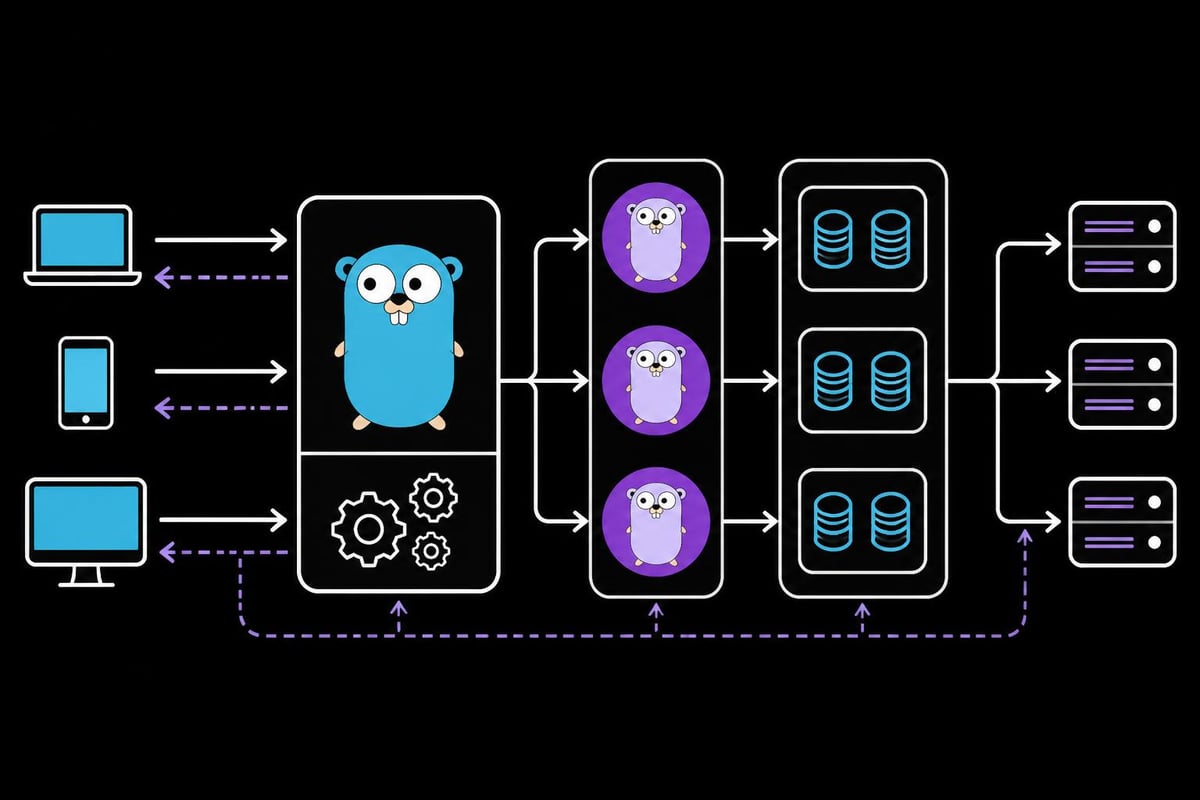
Building a Basic HTTP Golang Proxy Server
Creating a fundamental HTTP proxy in Go requires understanding the core components that intercept and forward requests. The httputil.ReverseProxy type provides an excellent starting point for most proxy implementations, handling the complexity of request forwarding automatically.
Here's what a minimal implementation requires:
- Setup the HTTP handler to intercept incoming requests
- Configure the director function to modify requests before forwarding
- Implement error handling for failed upstream connections
- Add logging for monitoring and debugging
- Configure timeout settings to prevent hanging connections
The simple proxy server tutorial demonstrates how these components work together. The director function is particularly important because it determines how requests are modified before being sent to the target server.
When implementing request forwarding, developers must handle headers carefully. The golang proxy server should preserve necessary headers like User-Agent and Accept-Encoding while potentially adding or removing others based on security requirements. For applications involving web scraping, proper header management becomes critical for avoiding detection.
Request and Response Modification
A production-ready golang proxy server needs sophisticated request and response modification capabilities. This includes transforming URLs, adjusting headers, and potentially modifying response bodies based on content type.
The modification pipeline should support:
- Dynamic header injection for authentication
- Cookie management and session tracking
- Content-Type based response filtering
- Bandwidth throttling for rate limiting
- Request logging and metrics collection
Response buffering versus streaming represents a key architectural decision. Buffering allows complete response modification but increases memory usage, while streaming minimizes latency and memory consumption but limits modification capabilities.
Advanced HTTPS and CONNECT Method Support
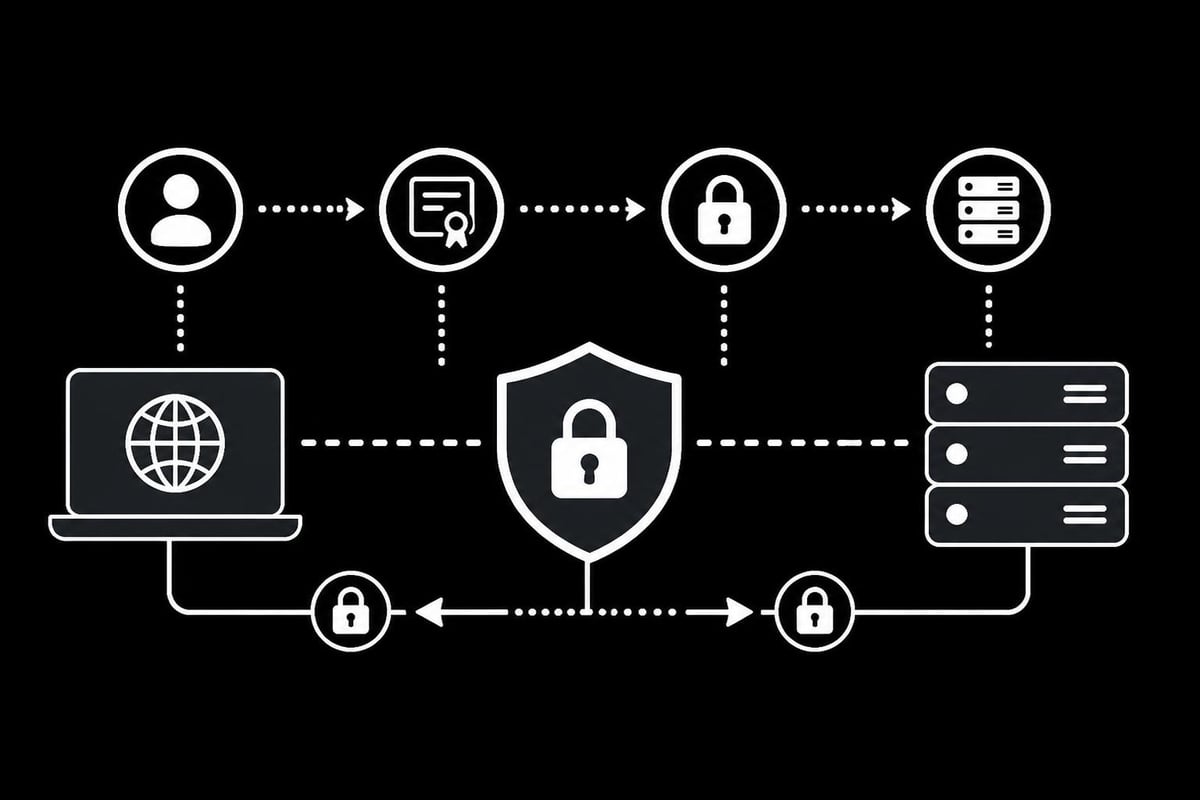
Implementing HTTPS support in a golang proxy server introduces additional complexity beyond basic HTTP proxying. The CONNECT method, used for HTTPS tunneling, requires the proxy to establish a TCP tunnel between the client and target server without inspecting the encrypted traffic.
| Feature | HTTP Proxy | HTTPS Proxy |
|---|---|---|
| Encryption | Plain text | TLS/SSL |
| Certificate handling | Not required | Required for MITM |
| Connection method | Direct forwarding | CONNECT tunneling |
| Inspection capability | Full | Limited (unless MITM) |
| Performance overhead | Low | Moderate |
For scenarios requiring HTTPS proxy inspection capabilities, developers must implement certificate generation and TLS termination. This man-in-the-middle approach allows the golang proxy server to decrypt, inspect, and potentially modify HTTPS traffic.
Certificate management considerations:
- Dynamic certificate generation for target domains
- Root CA trust requirements on client systems
- Certificate caching for performance
- Proper certificate validation to prevent security issues
The implementation must carefully balance security and functionality. While MITM capabilities enable powerful traffic inspection for legitimate use cases like corporate security monitoring, they also introduce potential privacy concerns that must be addressed through proper policies and user consent.
Implementing Proxy Rotation and Load Balancing
Proxy rotation is essential for applications requiring high anonymity or distributed request patterns. A sophisticated golang proxy server can implement rotation strategies to distribute requests across multiple upstream proxies or target servers.
Different rotation strategies serve different purposes:
Round-Robin Rotation
The simplest approach cycles through available proxies sequentially. This ensures even distribution but doesn't account for proxy performance or availability. The golang proxy server maintains a list of backend proxies and increments an index with each request.
Weighted Load Balancing
More advanced implementations assign weights to different backends based on capacity, performance, or geographic location. High-performance proxies receive more traffic while slower or geographically distant proxies handle fewer requests.
Health Check Integration
Production systems should implement active health checking to remove failed backends from the rotation pool. The golang proxy server periodically tests each upstream proxy and marks unhealthy ones as unavailable.
For developers working on web scraping projects that require proxy rotation, integrating these patterns with frameworks like Colly provides powerful data collection capabilities. The combination of Go's concurrency and intelligent proxy rotation enables scraping at scale while maintaining anonymity.
Services like rotating residential proxies become particularly valuable when combined with a custom golang proxy server that implements smart rotation logic tailored to specific scraping patterns.
Performance Optimization Techniques
Optimizing a golang proxy server for production workloads requires attention to connection management, resource pooling, and concurrency patterns. The default settings work well for basic use cases, but high-traffic applications demand careful tuning.
Connection pool configuration significantly impacts performance. Go's HTTP client includes connection pooling by default, but the golang proxy server should tune these settings based on expected traffic patterns:
MaxIdleConns: Total idle connections across all hostsMaxIdleConnsPerHost: Idle connections per backendIdleConnTimeout: How long idle connections remain openMaxConnsPerHost: Maximum total connections per host
Buffer management also plays a crucial role. Copying data between client and server connections requires careful buffer sizing. Too small buffers increase system calls, while oversized buffers waste memory.
Memory Management Best Practices
Key optimization strategies:
1. Reuse buffers through sync.Pool
2. Limit concurrent connections with semaphores
3. Implement request timeouts at multiple levels
4. Use streaming for large responses
5. Monitor goroutine counts to prevent leaks
The building efficient TCP proxies guide provides detailed examples of low-level optimizations. While HTTP proxies operate at a higher level, many TCP optimization principles still apply.
Monitoring and metrics collection should be built into the golang proxy server from the start. Track connection counts, request latency percentiles, error rates, and backend health. This data enables proactive optimization and troubleshooting.
Reverse Proxy Implementation Patterns
A reverse proxy differs from a forward proxy by sitting in front of backend servers rather than clients. This pattern is fundamental to modern microservices architectures, API gateways, and load balancing solutions.
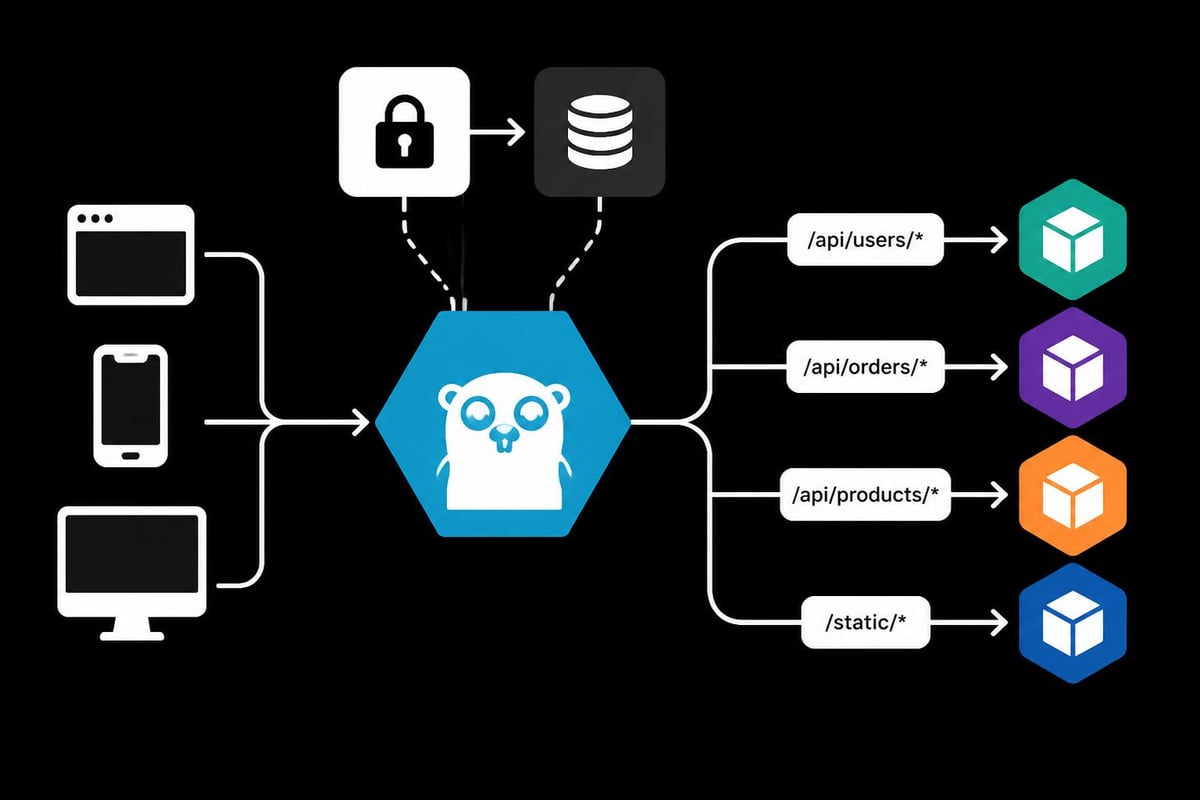
The reverse proxy implementation guide demonstrates how Go's httputil.ReverseProxy simplifies this pattern. The golang proxy server becomes the single entry point for client requests, routing them to appropriate backends based on rules.
| Use Case | Configuration Approach | Key Features |
|---|---|---|
| Load balancing | Multiple backends with health checks | Even distribution, failover |
| API gateway | Path-based routing | Authentication, rate limiting |
| CDN origin | Cache layer with backend fallback | Content caching, edge delivery |
| Security proxy | TLS termination and inspection | DDoS protection, WAF rules |
Path-based routing enables a single golang proxy server to handle requests for multiple services. The proxy examines the request path and forwards to the appropriate backend based on configured rules.
Advanced reverse proxy features include:
- Request authentication and authorization
- Response caching with configurable TTLs
- Header-based routing decisions
- WebSocket proxying support
- HTTP/2 and gRPC support
For organizations managing complex microservices environments, implementing API gateways with reverse proxies in Go provides centralized control over service access, security policies, and observability.
Security Considerations and Best Practices
Security must be paramount when building a golang proxy server that handles potentially sensitive traffic. Several attack vectors specifically target proxy servers, requiring defensive programming and careful configuration.
Authentication and Authorization
Implementing proper access controls prevents unauthorized proxy usage. Options include:
- Basic authentication for simple scenarios
- Token-based authentication for API access
- IP allowlisting for restricted environments
- Rate limiting per client to prevent abuse
The golang proxy server should validate credentials before establishing upstream connections. Failed authentication attempts should be logged and potentially trigger automatic blocking after repeated failures.
Request Validation
Never blindly forward requests without validation. A secure golang proxy server must:
- Validate target URLs against allowlists or denylists
- Reject requests with malformed headers
- Limit maximum request and response sizes
- Sanitize or reject potentially dangerous header values
- Implement timeout controls at every network boundary
When integrating with proxy services for enhanced privacy and anonymity, understanding the security model of both your golang proxy server and the upstream proxy service ensures comprehensive protection.
Logging and Monitoring
Comprehensive logging enables security auditing and incident response. The golang proxy server should log:
- All connection attempts with timestamps
- Authentication successes and failures
- Unusual traffic patterns or error rates
- Backend health status changes
- Performance metrics and resource utilization
Structured logging formats like JSON enable integration with centralized logging systems and security information and event management (SIEM) platforms.
Real-World Use Cases and Applications
Organizations deploy golang proxy servers for diverse purposes across industries. Understanding common patterns helps developers design solutions that meet specific business requirements.
Web scraping operations represent one of the most demanding use cases. A golang proxy server can coordinate requests across multiple rotating proxies, implement retry logic, and distribute scraping jobs across worker pools. The combination of Go's concurrency and proper proxy rotation enables collecting data at scale while respecting rate limits.
Enterprise Security Applications
Corporate networks often deploy reverse proxies for security purposes:
- SSL/TLS termination to centralize certificate management
- Content filtering and malware scanning
- Data loss prevention through response inspection
- Compliance logging for regulatory requirements
The golang proxy server becomes a critical security control point, inspecting all traffic between internal users and external services.
Development and Testing
Developers use proxies for various testing scenarios:
- Traffic recording and replay for test case generation
- API mocking by intercepting and returning fake responses
- Performance testing by introducing artificial latency
- Fault injection to test error handling
- Protocol translation between different API versions
Proxify's portable CLI-based proxy demonstrates how a lightweight golang proxy server serves development workflows. Its ability to save and replay traffic makes debugging distributed systems significantly easier.
Content Delivery and Caching
Reverse proxies excel at reducing backend load through intelligent caching. A golang proxy server can:
- Cache frequently accessed responses based on headers
- Implement cache invalidation strategies
- Serve stale content when backends are unavailable
- Compress responses before forwarding to clients
These capabilities reduce bandwidth costs and improve response times for end users. For businesses managing high-traffic websites, a well-configured caching proxy delivers substantial infrastructure savings.
Integration with External Proxy Services
Many applications require routing traffic through third-party proxy networks rather than directly to destination servers. A golang proxy server can act as an intelligent middleware layer that manages connections to commercial proxy services.
When working with providers offering residential and mobile proxies, the golang proxy server handles:
- Session management and proxy authentication
- Automatic failover when proxies become unavailable
- Geographic routing based on target requirements
- Usage tracking and cost monitoring
The comprehensive guide to building proxies in Golang covers integration patterns that work with various proxy service APIs. Proper integration ensures applications benefit from the proxy service's features while maintaining clean separation of concerns.
Proxy Chain Implementation
Advanced scenarios may require chaining multiple proxies together. The golang proxy server connects to a first-tier proxy, which forwards requests through additional proxies before reaching the target. This multi-hop approach provides enhanced anonymity but increases latency.
Chain configuration considerations:
- Authentication at each proxy layer
- Cumulative timeout calculations
- Error propagation and debugging complexity
- Performance impact of multiple hops
- Cost implications of using multiple services
For applications requiring maximum anonymity, such as bypassing anti-bot detection systems, proxy chaining combined with request randomization provides robust protection against fingerprinting.
Error Handling and Resilience Patterns
Production golang proxy servers must gracefully handle various failure modes. Network unreliability, backend failures, and resource exhaustion all require specific recovery strategies.
Circuit breaker pattern prevents cascading failures by temporarily stopping requests to failing backends. After a threshold of failures, the golang proxy server stops attempting connections for a cooldown period, then gradually reintroduces traffic.
Retry logic must be implemented carefully to avoid exacerbating backend problems. Exponential backoff with jitter prevents retry storms where multiple clients simultaneously retry failed requests.
Timeout Management
Different timeout types serve different purposes:
| Timeout Type | Purpose | Typical Value |
|---|---|---|
| Connection timeout | Maximum time to establish connection | 5-10 seconds |
| Request timeout | Total time for complete request | 30-60 seconds |
| Idle timeout | Maximum time connection stays idle | 90-120 seconds |
| Shutdown timeout | Grace period before forced shutdown | 30 seconds |
The golang proxy server should configure each timeout appropriately based on expected usage patterns. Web scraping applications may require longer timeouts for slow target servers, while API gateways benefit from aggressive timeouts to maintain responsiveness.
Graceful Shutdown
When a golang proxy server receives a shutdown signal, it should:
- Stop accepting new connections immediately
- Allow in-flight requests to complete within timeout
- Close idle connections after short grace period
- Flush logs and metrics before exiting
- Release resources in proper order
This ensures zero downtime during deployments and prevents data loss or corruption during shutdown sequences.
Monitoring and Observability
Understanding golang proxy server behavior in production requires comprehensive monitoring infrastructure. Key metrics provide insights into performance, reliability, and capacity planning needs.
Request metrics form the foundation:
- Request rate (requests per second)
- Response time percentiles (p50, p95, p99)
- Error rate by type and backend
- Request size distribution
- Response size distribution
Connection metrics reveal resource utilization:
- Active connection count
- Connection pool utilization
- Failed connection attempts
- Connection lifetime statistics
System metrics indicate resource constraints:
- CPU utilization
- Memory consumption
- Goroutine count
- File descriptor usage
- Network bandwidth
Implementing structured logging with correlation IDs enables tracing requests across multiple systems. When a golang proxy server sits between clients and backends, correlation IDs help connect frontend errors to backend failures.
Prometheus integration provides time-series metrics storage and powerful querying capabilities. Grafana dashboards visualize trends and enable real-time monitoring of proxy health and performance.
Building a robust golang proxy server requires understanding Go's concurrency model, networking fundamentals, and production reliability patterns. The language's standard library provides excellent building blocks, while the ecosystem offers specialized tools for advanced use cases. Whether you're implementing forward proxies for client anonymity, reverse proxies for load balancing, or specialized proxies for web scraping, Go delivers the performance and reliability modern applications demand. PinguProxy offers high-speed datacenter and mobile proxies with complete IPv4 and IPv6 support, unlimited access, and 1ms proxy rotation that integrates seamlessly with your golang proxy server implementations. With 10Gbps bandwidth and 24/7 support, PinguProxy provides the infrastructure you need to build and scale your proxy-dependent applications with confidence.