
यह लेख वर्तमान में केवल अंग्रेज़ी में उपलब्ध है।
अंग्रेज़ी में पढ़ेंPalo Alto Web Proxy: Complete Guide for 2026
Organizations face mounting challenges securing web traffic while maintaining performance and compliance in 2026. The palo alto web proxy solution addresses these concerns by providing advanced filtering, inspection, and control capabilities for enterprises of all sizes. As cyber threats grow more sophisticated and regulatory requirements become stricter, understanding how to leverage web proxy technology has become essential for IT security teams worldwide.
Understanding Palo Alto Web Proxy Architecture
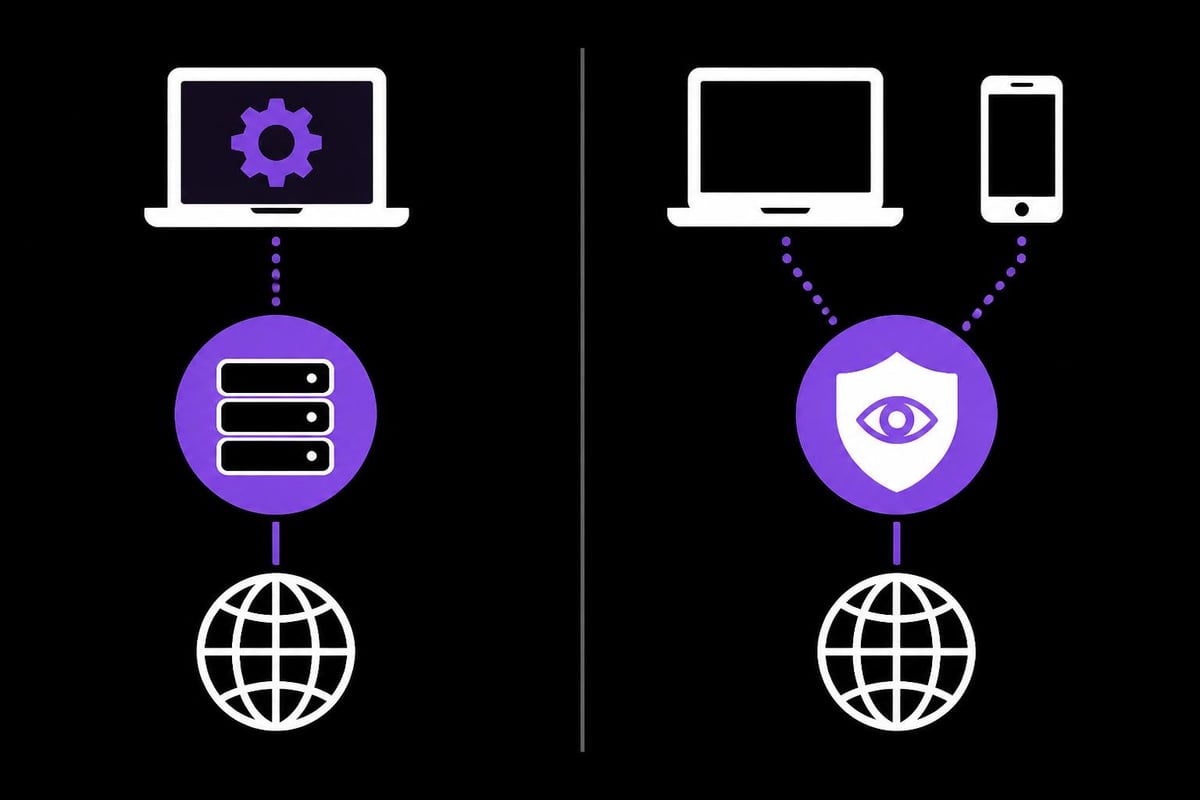
The palo alto web proxy operates as an intermediary layer between client devices and internet destinations, fundamentally transforming how organizations manage outbound traffic. Unlike traditional security appliances that simply permit or deny connections, this technology actively processes requests, applies policies, and can modify content before forwarding it to destinations.
Core Components and Functionality
At its foundation, the architecture consists of several integrated elements working together:
- Request interception engine that captures HTTP and HTTPS traffic
- Policy evaluation framework applying security rules based on user, application, and content
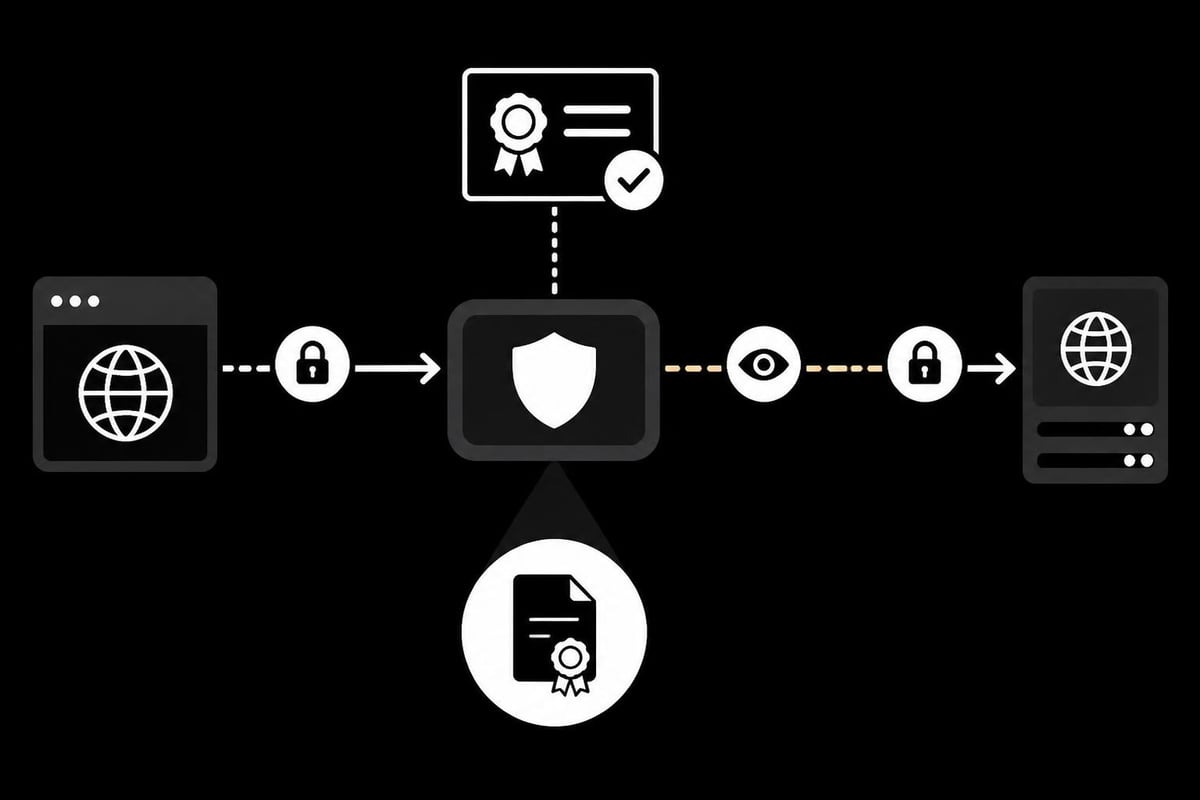
- SSL/TLS decryption capabilities for inspecting encrypted traffic
- Content filtering modules blocking malicious or inappropriate sites
- Logging and reporting systems tracking all proxy activities
When implementing this solution, organizations must understand the two primary deployment modes available. Explicit proxy configuration requires clients to specify the proxy server in their browser or system settings, while transparent proxy intercepts traffic automatically without client configuration. Each approach offers distinct advantages depending on your network architecture and security requirements.
Network Integration Considerations
Successfully deploying a palo alto web proxy demands careful planning around network topology. The firewall must be positioned to intercept traffic flows effectively while minimizing latency impacts. Many enterprises deploy dedicated proxy zones within their network architecture, creating segmented environments where inspection occurs before traffic reaches the internet edge.
Organizations with cloud-first strategies often leverage VM-Series deployments, which enable web proxy functionality in virtual environments supporting AWS, Azure, and Google Cloud Platform. This flexibility allows security teams to extend proxy policies across hybrid infrastructure seamlessly.
Configuration Best Practices for Enterprise Deployment
Proper configuration distinguishes effective security implementations from those that create bottlenecks or security gaps. The palo alto web proxy requires methodical setup addressing multiple technical layers simultaneously.
Step-by-Step Implementation Process
- Define security zones separating trust levels within your network topology
- Configure proxy settings specifying listening interfaces and port assignments
- Establish SSL decryption policies determining which traffic requires inspection
- Create URL filtering profiles blocking categories aligned with organizational policies
- Implement authentication mechanisms integrating with Active Directory or LDAP directories
- Configure logging destinations ensuring audit trails meet compliance requirements
- Test policies thoroughly validating functionality across different user groups and applications
The configuration process involves detailed technical steps that must account for certificate management, particularly when decrypting SSL traffic. Organizations need to deploy trusted root certificates to client devices, preventing browser warnings that can erode user trust and security awareness.
Security Policy Development
Creating effective policies requires balancing security requirements against user productivity. A tiered approach works best for most organizations:
| Policy Tier | User Group | Restrictions | Inspection Level |
|---|---|---|---|
| Executive | C-Suite | Minimal blocking | Full SSL decrypt |
| Standard | General employees | Category filtering | Selective decrypt |
| Restricted | Contractors/Guests | Strict whitelist | Full inspection |
| Development | Engineering teams | Technical sites allowed | Protocol-aware |
When working with sensitive applications like those requiring reliable proxy infrastructure for web scraping, understanding how corporate web proxies interact with external proxy services becomes critical. Development teams often need exemptions allowing direct connections to legitimate proxy providers while maintaining security for general browsing.
Advanced Features and Capabilities
Modern web proxy implementations extend far beyond basic URL filtering. The palo alto web proxy incorporates sophisticated technologies addressing contemporary security challenges.
Application-Level Controls
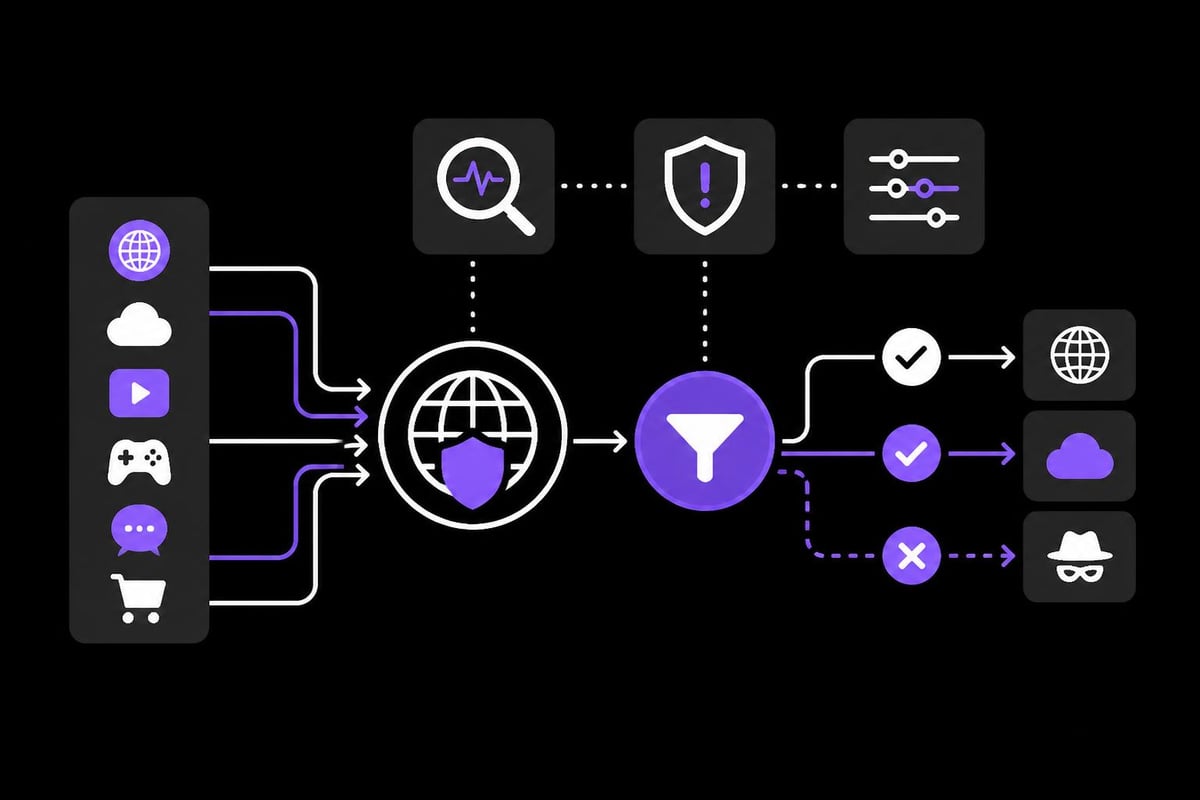
Traditional proxies operated solely at the network layer, making binary allow/deny decisions. Today's solutions analyze application signatures, identifying specific functions within web applications. This granular control enables policies like:
- Permitting LinkedIn browsing while blocking messaging features
- Allowing Google Drive viewing but preventing file uploads
- Enabling YouTube streaming for training while blocking comments
- Restricting cloud storage synchronization during business hours
Threat prevention integration represents another critical advancement. The proxy doesn't just filter known malicious sites; it actively analyzes downloaded files, executes sandboxing for suspicious content, and blocks zero-day exploits using machine learning models.
Traffic Shaping and Bandwidth Management
Beyond security, the palo alto web proxy provides powerful traffic management capabilities ensuring critical business applications receive priority. Quality of Service (QoS) policies can:
- Allocate guaranteed bandwidth for video conferencing applications
- Throttle streaming media during peak business hours
- Prioritize cloud application traffic over general web browsing
- Implement per-user bandwidth limits preventing network congestion
Organizations leveraging high-speed datacenter proxies for legitimate business purposes benefit from understanding how corporate web proxies handle cascaded proxy scenarios where internal proxies forward to external proxy services.
Performance Optimization Strategies
Even the most secure proxy implementation fails if performance degradation disrupts business operations. The palo alto web proxy requires careful tuning balancing security depth against responsiveness.
Caching and Acceleration Techniques
Strategic caching reduces bandwidth consumption and improves response times:
- Static content caching stores frequently accessed files locally
- DNS caching eliminates repetitive lookups for popular domains
- SSL session caching accelerates encrypted connection establishment
- Compression algorithms reduce data transfer volumes
Organizations should monitor cache hit rates, targeting 40-60% for optimal performance. Lower rates suggest cache sizing issues or policies preventing effective caching, while extremely high rates might indicate stale content delivery.
Hardware Sizing and Scaling
Proper resource allocation prevents bottlenecks:
| User Count | CPU Cores | RAM | Throughput |
|---|---|---|---|
| 100-500 | 8-12 | 16GB | 2Gbps |
| 500-2000 | 16-24 | 32GB | 5Gbps |
| 2000-5000 | 32-48 | 64GB | 10Gbps |
| 5000+ | 64+ | 128GB+ | 20Gbps+ |
Performance testing should occur during peak usage periods, measuring latency additions for both cached and uncached requests. When properly configured, users should experience minimal delay compared to direct internet access.
Compliance and Reporting Requirements
Regulatory frameworks increasingly mandate detailed logging of user internet activity. The palo alto web proxy generates comprehensive audit trails satisfying diverse compliance needs.
Regulatory Framework Alignment
Different industries face varying requirements:
Financial Services (SOX, FINRA) demand complete transaction logging with tamper-proof storage, user attribution for all web access, and retention periods extending 5-7 years minimum.
Healthcare (HIPAA) requires access logs for systems containing protected health information, tracking of data exfiltration attempts, and immediate alerting for policy violations.
Government (FedRAMP, FISMA) mandates strict access controls, detailed user activity logging, and regular compliance attestation through automated reporting.
E-commerce (PCI DSS) focuses on cardholder data environment isolation, quarterly security scans, and vulnerability management tracking.
Log Management and Analysis
The volume of proxy logs can overwhelm traditional analysis approaches. Modern implementations leverage:
- Centralized SIEM integration aggregating proxy logs with other security telemetry
- Machine learning anomaly detection identifying unusual user behavior patterns
- Automated compliance reporting generating required documentation
- Real-time alerting for high-risk activities requiring immediate investigation
Understanding proxy fundamentals and how different proxy types operate helps contextualize why web proxy logging differs from simple firewall logs, capturing application-layer details unavailable in network-only monitoring.
Common Deployment Challenges and Solutions
Every palo alto web proxy implementation encounters predictable obstacles. Anticipating these issues accelerates deployment timelines and improves outcomes.
SSL/TLS Decryption Complications
Encrypted traffic inspection creates several technical challenges:
Certificate trust distribution requires deploying the proxy's root certificate to every client device through Group Policy, MDM solutions, or manual installation. Incomplete distribution results in certificate warnings disrupting user experience.
Application compatibility issues emerge when certain applications implement certificate pinning, refusing connections when certificates don't match expected values. Organizations must maintain exception lists for these applications.
Performance overhead from decryption/re-encryption can significantly impact throughput. Hardware acceleration modules help mitigate this, but proper capacity planning remains essential.
Authentication Integration Problems
Connecting the proxy to identity sources sometimes proves challenging:
- Kerberos configuration requires precise SPN registration and time synchronization
- Multi-domain forests need careful trust relationship mapping
- Cloud identity providers demand proper SAML or OAuth integration
- Guest access provisioning requires separate authentication paths
Testing authentication with users from each domain and organizational unit before full deployment prevents widespread access issues.
Integration with Broader Security Architecture
The palo alto web proxy functions most effectively when integrated into comprehensive security frameworks rather than operating as an isolated component.
SIEM and SOC Integration
Security Operations Centers require consolidated visibility across all security tools. Proper integration involves:
- Standardized log formatting using CEF or LEEF protocols
- Correlation rule development linking proxy events with endpoint and network data
- Automated incident response triggering playbooks based on proxy-detected threats
- Threat intelligence feeds enriching proxy decisions with external reputation data
Organizations maintaining extensive proxy infrastructure for multiple use cases understand the importance of distinguishing legitimate proxy usage from potential security threats in log analysis.
Zero Trust Architecture Alignment
Modern security models eliminate implicit trust, requiring verification at every access point. The web proxy contributes by:
- Enforcing least-privilege access regardless of network location
- Validating user identity before permitting web access
- Continuously assessing risk based on behavior and context
- Segmenting traffic flows preventing lateral movement
When following security best practices documented by Palo Alto Networks, organizations create defense-in-depth strategies where web proxy controls complement firewall policies, endpoint protection, and identity management systems.
Cloud and Hybrid Environment Considerations
Traditional on-premises proxy architectures struggle as organizations adopt cloud services and remote work models. The palo alto web proxy adapts through flexible deployment options.
Multi-Cloud Strategy Support
Organizations using multiple cloud providers need consistent security controls:
AWS deployments leverage VM-Series instances in VPCs, integrating with Transit Gateways for centralized inspection of traffic across accounts and regions.
Azure implementations utilize Virtual WAN integration, positioning proxies in hub networks inspecting traffic from spoke VNets regardless of subscription boundaries.
GCP architectures employ shared VPC designs where proxy instances protect multiple projects while maintaining performance through regional placement.
This distributed approach maintains policy consistency while minimizing latency by inspecting traffic near its origin.
Remote Workforce Protection
Securing work-from-home users requires extending proxy controls beyond corporate networks:
- Cloud-delivered proxy services inspect remote user traffic without VPN backhauling
- Split tunneling policies route business traffic through proxies while permitting direct internet for personal use
- Device posture assessment verifies endpoint security status before granting proxy access
- Bandwidth optimization prevents overwhelming residential connections with excessive inspection
Organizations balancing security with user experience often implement tiered policies providing deeper inspection for high-risk activities while minimizing friction for routine browsing.
Cost Optimization and ROI Measurement
Justifying security investments requires demonstrating tangible value. The palo alto web proxy provides multiple cost-saving opportunities beyond pure security benefits.
Bandwidth and Infrastructure Savings
Effective proxy implementation reduces WAN costs through:
| Optimization Method | Typical Savings | Implementation Complexity |
|---|---|---|
| Content caching | 20-40% bandwidth | Low |
| Application blocking | 10-25% bandwidth | Medium |
| Compression | 15-30% bandwidth | Low |
| Protocol optimization | 5-15% latency | High |
Organizations also avoid costs associated with security incidents. Blocking malware downloads prevents remediation expenses, compliance violations, and business disruption that far exceed proxy licensing costs.
Productivity Enhancement Metrics
While often overlooked, proxy technology improves organizational efficiency:
- Reducing time wasted on non-business websites
- Preventing malware infections that disrupt operations
- Accelerating legitimate web access through caching
- Enabling safer BYOD policies expanding workforce flexibility
Tracking metrics like incident reduction rates, bandwidth savings, and policy violation trends helps quantify ROI for executive stakeholders.
Future Trends and Emerging Technologies
The web proxy landscape continues evolving rapidly as threats and technologies advance. Understanding emerging trends helps organizations plan long-term strategies.
AI and Machine Learning Integration
Artificial intelligence transforms proxy capabilities beyond rule-based filtering:
Behavioral analysis engines establish baselines for individual users and groups, detecting anomalous web access patterns indicating compromised credentials or insider threats.
Predictive threat blocking identifies malicious sites before reputation databases update, analyzing page characteristics and hosting infrastructure to assess risk scores.
Automated policy optimization suggests refinements based on usage patterns, balancing security requirements against user productivity impacts.
Privacy-Enhancing Technologies
Regulatory focus on data privacy influences proxy architecture:
- Encrypted DNS (DoH/DoT) complicates traditional DNS-based filtering, requiring new inspection approaches
- Privacy-focused browsers implement aggressive anti-fingerprinting defeating some proxy controls
- Decentralized protocols like IPFS challenge traditional proxy models requiring adaptation
- Quantum-resistant encryption will eventually require proxy infrastructure upgrades
Organizations must balance legitimate privacy concerns against security requirements, implementing policies respecting user privacy while maintaining necessary protections.
Vendor Ecosystem and Support Resources
Successfully operating a palo alto web proxy requires leveraging available resources and understanding the broader ecosystem of complementary technologies.
Professional Services and Training
Palo Alto Networks maintains extensive support infrastructure:
- Certification programs training engineers on proxy configuration and management
- Professional services assisting with complex deployments and migrations
- Technical support tiers providing troubleshooting assistance and guidance
- User communities sharing best practices and configuration examples
Investing in proper training prevents costly misconfigurations and ensures teams can leverage advanced features effectively.
Third-Party Integration Partners
The proxy ecosystem extends beyond Palo Alto's own technologies:
Organizations using specialized proxy services for web scraping and data collection must understand how corporate web proxies interact with external proxy providers, ensuring legitimate business tools function properly while maintaining security controls.
CASB vendors complement proxy controls by providing deeper visibility into cloud application usage and data movement.
DLP solutions integrate with proxies preventing sensitive data exfiltration through web channels.
Identity providers supply authentication services enabling sophisticated access policies based on user attributes and risk scores.
Selecting compatible technologies and properly integrating them maximizes security effectiveness while minimizing operational complexity.
Understanding palo alto web proxy architecture, configuration, and integration requirements enables organizations to build comprehensive web security strategies protecting against evolving threats while maintaining user productivity. Whether you're securing internal corporate traffic or need reliable external proxy services for business operations like web scraping and data collection, choosing the right solution matters. PinguProxy delivers high-speed datacenter and mobile proxies with complete IPv4/IPv6 support, zero-log privacy protection, and 1ms rotation for businesses requiring secure, anonymous access with 10Gbps bandwidth and round-the-clock support.