
Reverse Proxy SSL: Security, Setup & Best Practices
Securing web infrastructure has become paramount in 2026, with data breaches and cyber threats reaching unprecedented levels. A reverse proxy SSL configuration stands as one of the most effective methods to protect backend servers while maintaining optimal performance. This powerful architecture allows organizations to handle SSL/TLS encryption at the proxy layer, offloading computational overhead from application servers while centralizing certificate management. Whether you're running web scraping operations, managing multiple services, or protecting sensitive customer data, understanding how to properly implement reverse proxy SSL is essential for modern network security.
What Is Reverse Proxy SSL and Why It Matters
A reverse proxy SSL setup involves placing a proxy server between client requests and backend servers, where the proxy handles all SSL/TLS encryption and decryption. This architectural pattern, detailed in comprehensive reverse proxy guides, creates a security boundary that protects internal infrastructure from direct exposure to the internet.
The reverse proxy terminates encrypted connections from clients, decrypts the traffic, and then forwards requests to backend servers. This process offers several critical advantages:
- Centralized certificate management across multiple services
- Reduced computational load on application servers
- Enhanced security through a single hardened entry point
- Simplified compliance for regulatory requirements
- Better performance through SSL session caching
SSL Termination vs SSL Passthrough
When implementing reverse proxy SSL, organizations face a fundamental choice between SSL termination and SSL passthrough. SSL termination decrypts traffic at the proxy layer, allowing inspection, modification, and re-encryption before forwarding to backends. This approach provides maximum flexibility for caching, content manipulation, and security scanning.
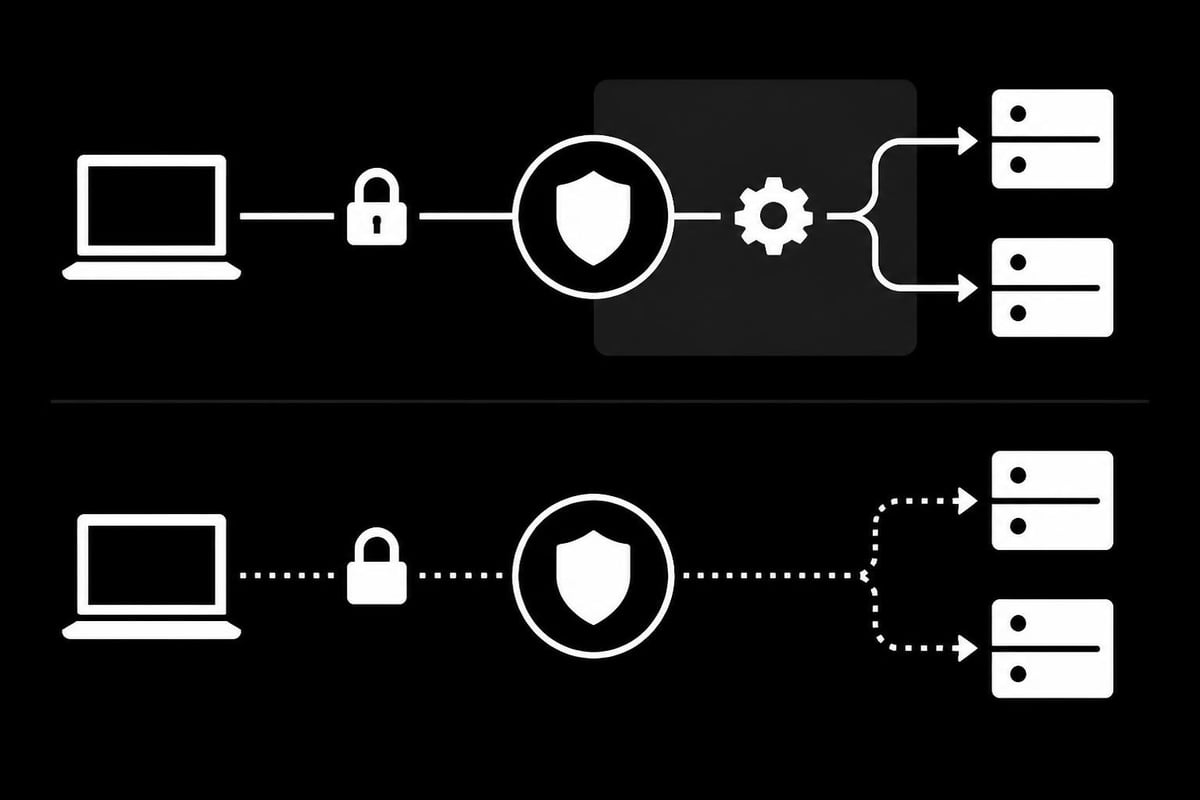
SSL passthrough, conversely, maintains end-to-end encryption by forwarding encrypted traffic directly to backend servers without decryption. While this preserves complete encryption throughout the chain, it sacrifices the ability to inspect or modify traffic at the proxy layer.
| Feature | SSL Termination | SSL Passthrough |
|---|---|---|
| Certificate Management | Centralized at proxy | Distributed across backends |
| Performance Impact | Lower backend load | Higher backend load |
| Traffic Inspection | Full visibility | No visibility |
| Caching Capability | Supported | Limited |
| Security Scanning | Possible | Not possible |
Most production environments benefit from SSL termination, particularly when using high-speed datacenter proxies that can handle encryption overhead efficiently.
Implementing Reverse Proxy SSL Configuration
Setting up a reverse proxy SSL infrastructure requires careful planning and execution. The most popular solution in 2026 remains Nginx due to its performance, stability, and extensive documentation. According to detailed Nginx SSL configuration guides, proper setup involves multiple layers of configuration.
Obtaining and Installing SSL Certificates
The first step involves acquiring SSL/TLS certificates. Let's Encrypt has revolutionized certificate management by providing free, automated certificates that renew every 90 days. For production environments, many organizations opt for commercial certificates offering extended validation and warranty protection.
Certificate installation requires placing both the certificate and private key in secure directories with restricted permissions. Best practices dictate:
- Store certificates in
/etc/ssl/certs/or equivalent protected directory - Set private key permissions to 600 (readable only by owner)
- Use strong key lengths (minimum 2048-bit RSA or 256-bit ECC)
- Implement automated renewal processes
- Monitor certificate expiration dates
Core Nginx Configuration for Reverse Proxy SSL
A production-ready Nginx reverse proxy SSL configuration encompasses multiple directives that control encryption, proxy behavior, and security headers. The configuration must balance security requirements with performance needs, particularly for high-traffic scenarios like e-commerce applications.
Key configuration elements include:
- SSL certificate and key paths
- Supported TLS protocol versions
- Cipher suite selection
- Proxy headers for backend communication
- Timeout and buffer settings
- Security headers
Optimizing SSL Protocol and Cipher Selection
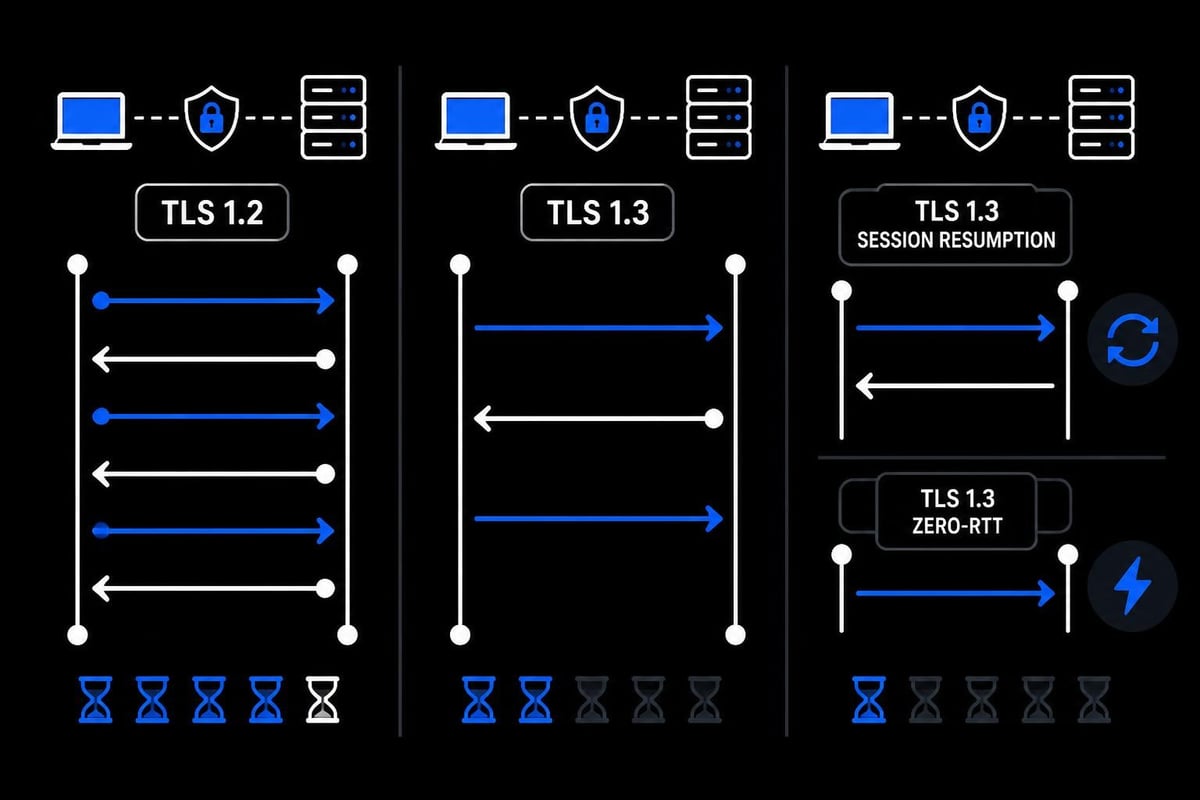
Modern reverse proxy SSL implementations must support current security standards while maintaining compatibility with legitimate clients. As of 2026, TLS 1.2 remains the minimum acceptable version, with TLS 1.3 preferred for its improved performance and security.
Cipher suite selection significantly impacts both security and performance. Strong cipher suites protect against various attacks while maintaining reasonable connection speeds. The configuration should prioritize:
- Forward secrecy through ECDHE key exchange
- Authenticated encryption with AES-GCM
- Removal of deprecated ciphers (RC4, 3DES, MD5)
- Server-preferred cipher ordering
- Session resumption for performance
Advanced Security Features and Headers
Beyond basic SSL configuration, production reverse proxies require additional security layers. Best practices for secure service exposure emphasize implementing multiple defense mechanisms that work together to protect infrastructure.
Essential Security Headers
Security headers instruct browsers to apply additional protections when interacting with your services. These headers prevent common attack vectors and enhance overall security posture:
- Strict-Transport-Security (HSTS): Forces browsers to use HTTPS exclusively
- X-Frame-Options: Prevents clickjacking attacks
- X-Content-Type-Options: Blocks MIME-type sniffing
- Content-Security-Policy: Controls resource loading and execution
- X-XSS-Protection: Enables browser XSS filters (legacy browsers)
Implementing these headers at the reverse proxy level ensures consistent application across all backend services. This centralized approach simplifies security management, particularly in microservices architectures.
Rate Limiting and DDoS Protection
Reverse proxy SSL configurations should include rate limiting to prevent abuse and protect backend infrastructure. Rate limiting operates at multiple levels:
- Connection rate limiting: Restricts new connections per IP
- Request rate limiting: Controls requests per time window
- Bandwidth throttling: Limits data transfer rates
- Geographic filtering: Blocks or allows specific regions
These protections prove especially valuable for services requiring rotating proxy capabilities where traffic patterns may appear automated.
Load Balancing with SSL Termination
Combining load balancing with reverse proxy SSL creates highly available, scalable infrastructure. The proxy distributes encrypted traffic across multiple backend servers while maintaining session persistence and health monitoring.
Load Balancing Algorithms
Different distribution algorithms suit different use cases. Selecting the appropriate algorithm impacts performance, reliability, and user experience:
| Algorithm | Use Case | Session Persistence |
|---|---|---|
| Round Robin | Uniform workloads | No |
| Least Connections | Variable request times | No |
| IP Hash | Session-dependent apps | Yes |
| Weighted | Heterogeneous servers | Configurable |
| Least Time | Performance-critical | No |
IP hash algorithms provide built-in session persistence by directing clients to the same backend server based on IP address. This approach works well for stateful applications but may create uneven distribution when clients share IP addresses.
Health Checks and Failover
Robust reverse proxy SSL implementations continuously monitor backend server health. Active health checks probe servers at regular intervals, removing failed instances from the pool and restoring them once healthy. This automation ensures high availability without manual intervention.
Passive health checks monitor actual request outcomes, marking servers unhealthy based on error rates or response times. Combining both approaches creates comprehensive health monitoring that maintains service quality even during partial failures.
Performance Optimization Techniques
While reverse proxy SSL provides security benefits, encryption introduces computational overhead. Nginx reverse proxy performance tuning focuses on minimizing this impact through various optimization strategies.
SSL Session Caching and Resumption
SSL/TLS handshakes consume significant CPU resources. Session caching allows clients to resume previous connections without full handshakes, reducing latency and server load. Proper cache sizing depends on traffic volume and connection patterns.
Session cache optimization parameters:
- Cache size: 10-20 MB per million active users
- Timeout: 5-10 minutes for security-sensitive applications
- Shared cache: Enable for multi-worker configurations
- Session tickets: Implement for distributed environments
Connection Pooling and Keep-Alive
Maintaining persistent connections between the reverse proxy and backend servers eliminates connection overhead. Keep-alive connections reduce latency and CPU usage by reusing existing connections for multiple requests.
Connection pooling should be tuned based on:
- Backend server capacity
- Expected concurrent connections
- Request frequency and patterns
- Network latency between proxy and backends
These optimizations prove particularly valuable for high-traffic scraping operations where thousands of requests flow through the proxy infrastructure.
Certificate Management at Scale
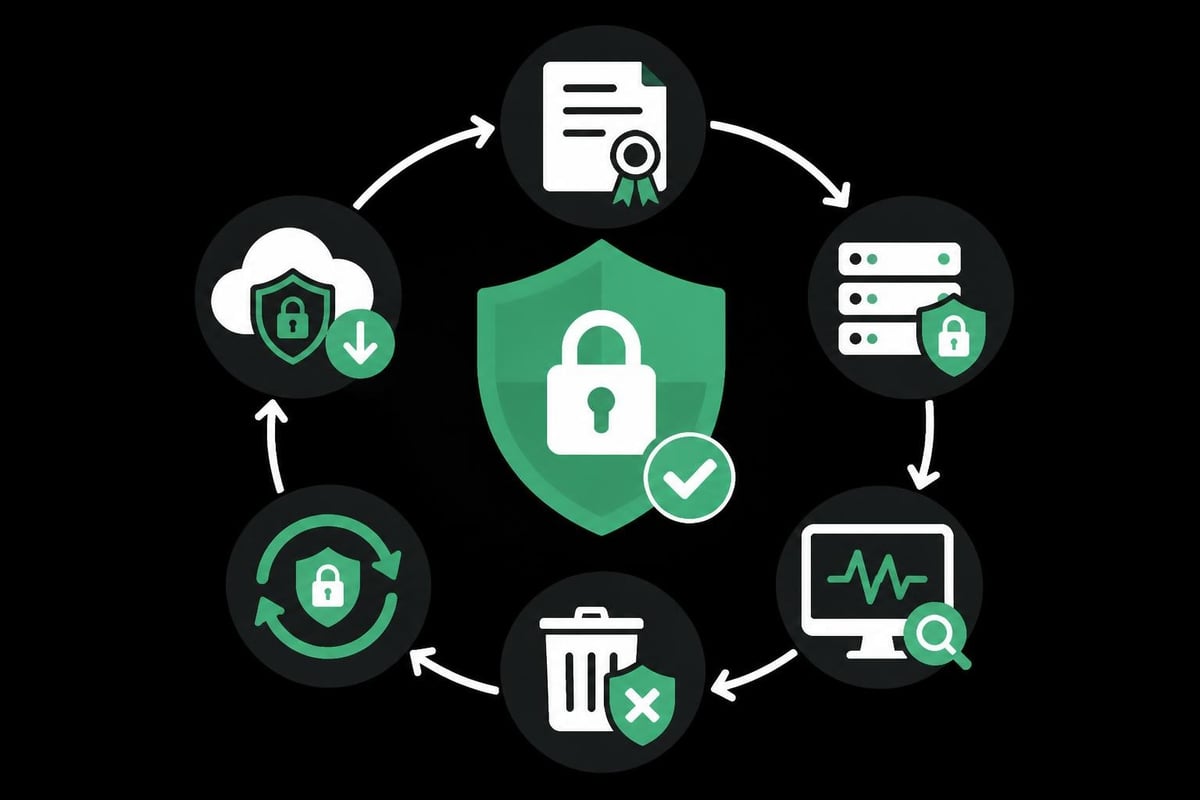
Managing SSL certificates across large deployments presents operational challenges. Automated certificate management systems have become essential in 2026, with most organizations implementing continuous certificate lifecycle management.
Automated Certificate Renewal
Let's Encrypt certificates expire after 90 days, necessitating automated renewal processes. Modern implementations use ACME protocol clients that handle renewal, validation, and deployment without manual intervention. Critical considerations include:
- Schedule renewals 30 days before expiration
- Implement validation method appropriate for environment
- Test certificates in staging before production deployment
- Configure notifications for renewal failures
- Maintain certificate revocation monitoring
Multi-Domain and Wildcard Certificates
Organizations managing multiple services face decisions about certificate scope. Single-domain certificates offer isolation but increase management complexity. Wildcard certificates simplify management but expand the impact of potential compromise.
Subject Alternative Name (SAN) certificates provide middle ground, covering specific domains without wildcard exposure. This approach works well for known service inventories but requires reissuance when adding new services.
Monitoring and Troubleshooting SSL Issues
Effective reverse proxy SSL operations require comprehensive monitoring and rapid troubleshooting capabilities. Understanding common SSL configuration pitfalls helps prevent issues before they impact users.
Key Metrics to Monitor
SSL-related monitoring should track both security and performance indicators:
- Certificate expiration dates and renewal status
- SSL handshake success rates and failure reasons
- Cipher suite usage distribution
- Protocol version adoption
- Connection latency and throughput
- Error rates by type (certificate validation, protocol mismatch, etc.)
- Client compatibility issues
Performance monitoring tools should integrate with alerting systems to notify administrators of anomalies before they escalate into outages.
Common Configuration Problems
Several frequent issues plague reverse proxy SSL deployments. Certificate chain problems occur when intermediate certificates are missing or incorrectly ordered. Browsers receive incomplete certificate chains and fail validation, resulting in security warnings.
Protocol and cipher mismatches happen when client and server cannot negotiate compatible encryption. This often affects older clients or overly restrictive server configurations. Balancing security with compatibility requires understanding your client base and their capabilities.
Mixed content warnings emerge when HTTPS pages load HTTP resources. The reverse proxy must handle redirects and rewrites to ensure all content loads securely, particularly for applications not originally designed for SSL deployment.
Integrating Reverse Proxy SSL with Existing Infrastructure
Deploying reverse proxy SSL into established environments requires careful planning to avoid service disruption. Migration strategies should account for application dependencies, client behavior, and operational procedures.
Gradual Migration Strategies
Rather than sudden cutover, staged migrations reduce risk. Initial phases involve:
- Deploy reverse proxy in parallel with existing infrastructure
- Configure SSL termination for non-critical services
- Test thoroughly with production-like traffic
- Gradually migrate services based on criticality
- Monitor performance and security metrics
- Decommission old infrastructure after validation
This approach allows teams to identify and resolve issues without affecting production services. Testing should include various client types, particularly when supporting diverse use cases from different geographic regions.
Application Compatibility Considerations
Backend applications may require modifications to work correctly behind a reverse proxy SSL termination point. Common adjustments include:
- Trusting forwarded headers (X-Forwarded-For, X-Forwarded-Proto)
- Generating URLs with correct protocol (HTTPS instead of HTTP)
- Setting secure cookie flags appropriately
- Handling WebSocket upgrades through the proxy
- Adjusting timeout values for proxy chain
Applications performing client IP validation need special attention. The reverse proxy should preserve original client IPs through forwarded headers, which backend applications must process correctly.
Security Hardening Beyond Basic SSL
While reverse proxy SSL provides strong encryption, additional hardening measures further protect infrastructure. Defense in depth principles suggest implementing multiple security layers that complement SSL encryption.
Certificate Pinning and Mutual TLS
For critical services requiring maximum security, certificate pinning restricts accepted certificates to specific known values. This prevents man-in-the-middle attacks even if certificate authorities are compromised. However, pinning increases operational complexity and risk of service outage if not managed carefully.
Mutual TLS (mTLS) extends authentication by requiring clients to present certificates, not just servers. This approach, detailed in research on identity enforcement across trust boundaries, creates strong authentication for service-to-service communication or high-security client access.
Web Application Firewall Integration
Integrating Web Application Firewalls (WAF) with reverse proxy SSL provides additional protection against application-layer attacks. The WAF inspects decrypted traffic for malicious patterns, blocking SQL injection, cross-site scripting, and other common vulnerabilities.
WAF deployment options include:
| Deployment Model | Pros | Cons |
|---|---|---|
| Integrated Module | Lower latency, simpler architecture | Limited to specific proxy software |
| Separate Service | Specialized features, independent scaling | Additional network hop, complexity |
| Cloud-Based | Easy deployment, managed updates | Data leaves infrastructure, recurring costs |
Choosing the right model depends on security requirements, infrastructure constraints, and operational capabilities.
Future Trends in Reverse Proxy SSL
The SSL/TLS landscape continues evolving in 2026. Post-quantum cryptography development accelerates as quantum computing capabilities advance. Organizations should begin planning transitions to quantum-resistant algorithms, though widespread deployment remains several years away.
HTTP/3 and QUIC protocols gain adoption, requiring reverse proxy support for these newer standards. These protocols offer improved performance and reliability, particularly for mobile connections and high-latency networks. Modern reverse proxy implementations must support both traditional TCP-based connections and UDP-based QUIC.
Zero-trust architecture principles increasingly influence reverse proxy design. Rather than simple SSL termination, proxies participate in continuous authentication and authorization decisions. This shift requires integration with identity providers, policy engines, and comprehensive logging systems for compliance and security analysis.
Implementing reverse proxy SSL transforms infrastructure security and performance, providing centralized encryption management, enhanced protection, and optimized resource utilization. Whether you're securing web services, protecting data collection operations, or managing distributed applications, proper reverse proxy SSL configuration forms the foundation of modern security architecture. PinguProxy delivers the high-performance infrastructure needed to support these demanding configurations, with 10Gbps bandwidth, complete IPv4/IPv6 support, and 24/7 expert assistance to ensure your proxy infrastructure operates securely and efficiently at scale.