When businesses need to scale web operations, automate data collection, or protect their infrastructure, they turn to specialized networking solutions that balance performance with anonymity. Data center proxies have emerged as one of the most popular choices for organizations requiring high-speed, reliable connections without the overhead of residential IP infrastructure. These proxies route traffic through servers housed in professional data centers, offering speeds that can reach 10Gbps while maintaining cost efficiency. Unlike residential or mobile proxies that rely on real user devices, data center proxies leverage dedicated server infrastructure to deliver consistent performance at scale.
Understanding Data Center Proxy Architecture
Data center proxies operate from servers located in professional hosting facilities rather than residential networks. This fundamental architectural difference shapes everything from performance characteristics to detection patterns.
Infrastructure and Hosting Models
The backbone of data center proxies consists of servers deployed across tier-3 and tier-4 data centers worldwide. These facilities provide redundant power, climate control, and network connectivity that ensure uptime exceeds 99.9 percent in most cases. When you connect through a data center proxy, your requests pass through equipment managed by hosting providers like Amazon Web Services, Google Cloud Platform, or dedicated proxy infrastructure operators.
Key infrastructure components include:
- High-capacity network switches with 10Gbps+ throughput
- Redundant internet backbone connections from multiple tier-1 carriers
- Geographic distribution across strategic global locations
- Load balancing systems for traffic distribution
- Automated failover mechanisms for continuous availability
According to Google Cloud's documentation on target proxies and load balancing, modern datacenter environments implement sophisticated proxy layers to manage HTTPS traffic efficiently. This same infrastructure powers commercial data center proxies, allowing providers to route millions of requests per hour through optimized pathways.
IP Address Allocation Methods
Data center proxies utilize IP addresses allocated specifically to hosting providers and data centers. These addresses differ significantly from residential IP ranges assigned to internet service providers. ASN (Autonomous System Number) databases catalog these allocations, making data center IPs identifiable to websites and security systems.
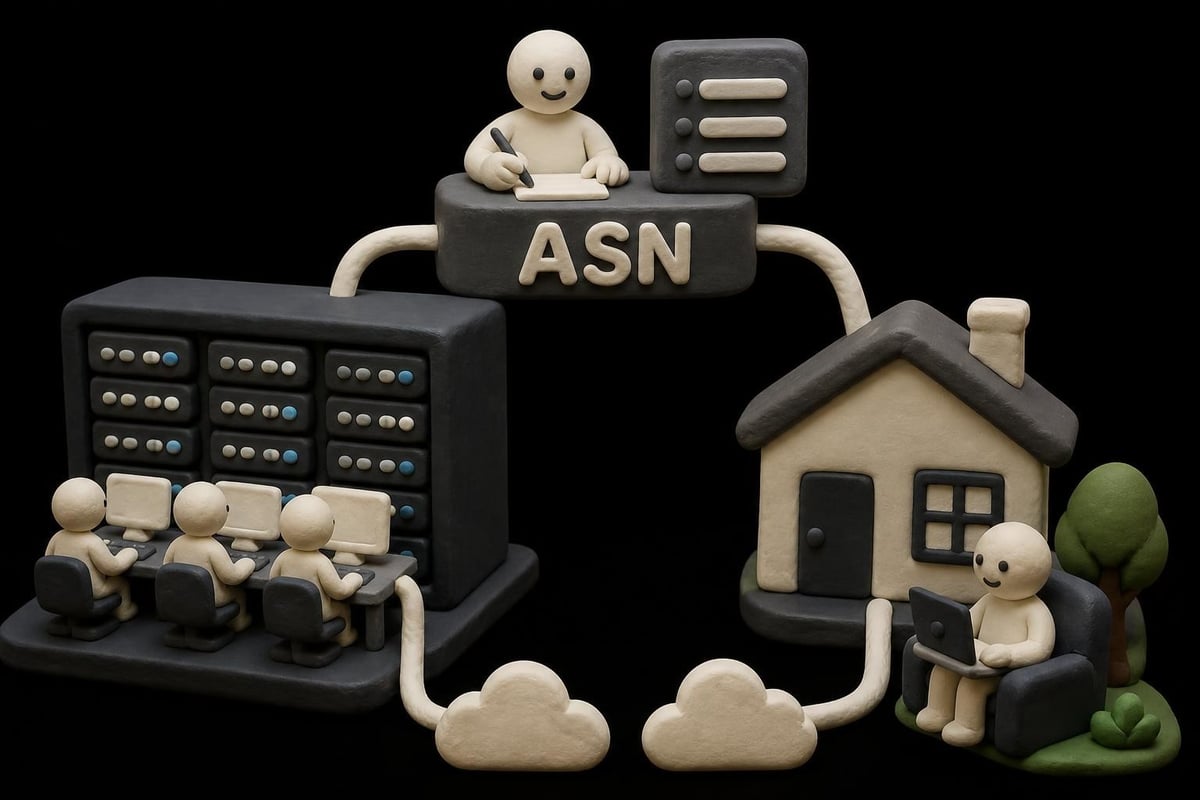
Modern proxy services implement several allocation strategies. Dedicated IPs assign specific addresses exclusively to individual clients, while shared pools rotate users through a common address bank. Hybrid models combine both approaches, offering dedicated IPs for sensitive operations alongside shared pools for bulk requests.
Performance Characteristics and Speed Advantages
Speed represents the primary competitive advantage of data center proxies over alternative proxy types. The combination of enterprise-grade hardware, optimized network routes, and minimal latency overhead creates performance profiles that residential and mobile proxies cannot match.
Bandwidth and Latency Metrics
Typical data center proxy connections deliver bandwidth between 1Gbps and 10Gbps, depending on the provider's infrastructure investment. Latency to target servers often measures between 10ms and 100ms, significantly lower than residential proxies which introduce additional routing hops through consumer ISP networks.
| Metric | Data Center Proxies | Residential Proxies | Mobile Proxies |
|---|---|---|---|
| Bandwidth | 1-10 Gbps | 10-100 Mbps | 5-50 Mbps |
| Typical Latency | 10-100 ms | 100-500 ms | 150-800 ms |
| Connection Stability | 99.9%+ | 95-98% | 90-95% |
| Cost per GB | $0.50-$3 | $5-$20 | $10-$30 |
The performance gap becomes particularly apparent in high-volume operations. Web scraping projects processing millions of requests daily rely on data center proxies to maintain throughput without bottlenecks. Gaming applications requiring real-time responses benefit from the consistent latency profiles that data center infrastructure provides.
Protocol Support and Technical Capabilities
Modern data center proxies support both HTTP/HTTPS and SOCKS5 protocols, with many providers now offering complete IPv4 and IPv6 compatibility. The IETF RFC 9484 on proxying IP in HTTP establishes standards for how proxies handle forwarded traffic, ensuring interoperability across different implementation approaches.
Technical capabilities include:
- Simultaneous connections: Handle hundreds of concurrent sessions per IP
- Protocol flexibility: Support for HTTP, HTTPS, SOCKS4, and SOCKS5
- Authentication methods: IP whitelisting, username/password, API tokens
- Session persistence: Maintain consistent IPs across multiple requests
- Geographic targeting: Route traffic through specific country or city locations
Detection Patterns and Countermeasures
Websites and security systems employ multiple techniques to identify and block data center proxy traffic. Understanding these detection methods helps businesses implement effective countermeasures and choose appropriate proxy solutions for specific use cases.
Common Detection Techniques
Security platforms analyze several characteristics to flag data center proxy connections. ASN lookups reveal whether an IP belongs to a hosting provider rather than a residential ISP. Behavioral analysis detects patterns like rapid-fire requests, identical user agents across multiple IPs, or missing browser fingerprint elements that real users would possess.
Research from NDSS on detecting probe-resistant proxies demonstrates how advanced detection systems identify even obfuscated proxy traffic through timing analysis and protocol fingerprinting. These sophisticated methods examine TCP handshake patterns, TLS certificate chains, and HTTP header sequences to distinguish automated proxy traffic from human browsing.
Geographic inconsistencies also trigger alarms. When IP geolocation data shows an address in one country while browser language settings, timezone, or payment information indicate another location, security systems flag the connection as suspicious.
Mitigation Strategies
Successful data center proxy usage requires thoughtful mitigation of detection risks. Rotation strategies stand as the first line of defense, with providers like PinguProxy offering 1ms rotation capabilities to distribute requests across large IP pools. This rapid rotation prevents any single IP from accumulating suspicious request volumes.
Effective countermeasures include:
- Request throttling to mimic human browsing speeds
- User agent rotation with realistic browser fingerprints
- Cookie and session management that maintains logical browsing patterns
- Header enrichment to include referrer, accept-language, and other typical browser headers
- Geographic consistency between IP location and browser settings

Business Applications and Use Cases
Organizations across industries deploy data center proxies to solve specific operational challenges. The combination of speed, scalability, and cost efficiency makes these proxies ideal for use cases where performance outweighs the need for residential IP authenticity.
Web Scraping and Data Intelligence
Market intelligence firms, price comparison services, and competitive analysis platforms depend on data center proxies for large-scale web scraping operations. When collecting product pricing across e-commerce sites, monitoring competitor inventory levels, or aggregating review data, the volume of requests demands infrastructure that residential proxies cannot economically support.
A typical enterprise scraping operation might process 10 million pages daily across hundreds of target domains. At this scale, the speed advantage of data center proxies directly translates to operational efficiency. Tasks that would require 48 hours through residential proxies complete in 6-8 hours through optimized datacenter infrastructure.
Ad Verification and Brand Protection
Digital advertising teams use data center proxies to verify ad placements across different geographic markets. By routing requests through proxies located in target countries, advertisers confirm their campaigns display correctly, compete for appropriate keywords, and reach intended audiences without fraud or misplacement.
Brand protection services similarly leverage datacenter proxies to monitor for counterfeit products, unauthorized resellers, and trademark infringement across global marketplaces. The ability to check thousands of listings hourly requires the throughput that only data center proxies deliver efficiently.
SEO Monitoring and SERP Analysis
Search engine optimization professionals rely on data center proxies to track keyword rankings across different locations without triggering CAPTCHA challenges or rate limits. Modern SEO tools query search engines thousands of times daily, analyzing ranking fluctuations, featured snippet changes, and competitor movements.
| Use Case | Daily Request Volume | Primary Requirement | Recommended Proxy Type |
|---|---|---|---|
| Enterprise Scraping | 1M-10M+ | Speed & Cost | Data Center |
| Ad Verification | 100K-1M | Geographic Coverage | Data Center |
| SEO Monitoring | 10K-100K | Consistency | Data Center |
| Social Media Management | 1K-10K | Authenticity | Residential |
For comprehensive SEO analysis across multiple markets, professionals often explore various proxy use cases to match their specific monitoring requirements with appropriate infrastructure.
Security Considerations and Risk Management
While data center proxies offer performance advantages, they introduce security considerations that organizations must address through proper configuration and vendor selection.
Privacy and Logging Policies
The proxy provider's logging policy determines what activity data is collected, stored, and potentially shared. Zero-log policies commit providers to not recording user activity, request destinations, or timestamps beyond what's necessary for immediate traffic routing. This approach protects client privacy but requires trust in the provider's implementation.
According to SANS research on network security trends, organizations increasingly prioritize vendors with independently audited security practices and transparent data handling policies. When selecting data center proxies for business operations, verifying the provider's privacy commitments through third-party audits reduces compliance and reputational risks.
Encryption and Data Protection
Secure proxy connections encrypt traffic between the client and proxy server, preventing ISPs and network observers from intercepting sensitive data. HTTPS proxies establish encrypted tunnels for all traffic types, while SOCKS5 proxies support selective encryption based on application requirements.
Security best practices include:
- TLS 1.3 enforcement for all proxy connections
- IP whitelisting to prevent unauthorized proxy access
- Authentication rotation with regular credential updates
- Traffic isolation separating different business operations across proxy pools
- Monitoring and alerting for unusual activity patterns
Compliance and Regulatory Alignment
Data protection regulations like GDPR, CCPA, and industry-specific frameworks impose requirements on how organizations handle personal data, even when routing through proxies. Companies must ensure their proxy usage aligns with data localization requirements, consent mechanisms, and processing limitations.

Cost Analysis and Economic Considerations
Understanding the economics of data center proxies helps businesses optimize their infrastructure spending while maintaining operational requirements.
Pricing Models and Structures
Proxy providers implement various pricing models based on bandwidth consumption, number of IP addresses, concurrent connections, or flat monthly subscriptions. Bandwidth-based pricing charges per gigabyte transferred, typically ranging from $0.50 to $3.00 per GB for data center proxies. This model suits variable workloads where usage fluctuates significantly month to month.
IP-based pricing allocates a fixed number of addresses for a monthly fee, with costs varying by pool size and geographic distribution. Port-based models charge per simultaneous connection, regardless of bandwidth consumed. Organizations can review detailed pricing structures to determine which model aligns with their usage patterns and budget constraints.
Total Cost of Ownership
Beyond direct proxy costs, businesses must account for implementation time, integration development, and operational overhead. In-house proxy infrastructure requires server provisioning, IP acquisition, network configuration, and ongoing maintenance. These costs typically exceed $5,000 monthly for even modest deployments, before accounting for staff time and opportunity costs.
Managed proxy services eliminate infrastructure overhead but charge premium rates for convenience and reliability. The break-even point between self-hosted and managed solutions depends on scale, with managed services proving more economical for organizations processing under 50TB monthly.
Comparing Alternatives and Hybrid Approaches
Data center proxies exist within a broader ecosystem of proxy types, each offering distinct trade-offs between authenticity, speed, and cost.
Residential vs. Data Center Proxies
Residential proxies route traffic through real user devices and ISP-assigned IP addresses, making them significantly harder to detect than datacenter IPs. However, this authenticity comes at 5-10 times the cost and substantially reduced performance. Residential connections average 10-100 Mbps bandwidth compared to multi-gigabit datacenter speeds.
The choice between residential and datacenter proxies hinges on the target website's detection sophistication. E-commerce platforms, social networks, and sites with aggressive bot protection often require residential IPs to avoid blocks. Corporate websites, public databases, and less sensitive targets typically allow data center proxy access without issues.
Research documented in the ArXiv paper on free proxy ecosystems reveals significant risks in free proxy services, including content manipulation, credential theft, and service instability. This longitudinal study reinforces the importance of choosing reputable paid providers for business-critical operations.
Mobile Proxies for Specific Applications
Mobile proxies utilize IP addresses assigned to cellular carriers, offering the highest trust scores from websites but at premium costs often exceeding $10 per GB. These proxies excel at social media management, mobile app testing, and scenarios where mobile-specific content rendering is required.
A hybrid approach combines proxy types based on use case requirements. Bulk web scraping runs through cost-effective data center proxies, while account creation and sensitive authentication flows route through residential or mobile IPs. This strategy optimizes both performance and budget allocation.
Implementation Best Practices
Successful data center proxy deployment requires attention to configuration details, monitoring systems, and operational procedures that maximize reliability while minimizing detection risks.
Configuration and Integration
Proxy integration begins with selecting appropriate authentication methods based on security requirements and application constraints. IP whitelisting offers the simplest setup but limits flexibility for distributed teams. Username/password authentication provides portability across networks, while API token systems enable programmatic rotation and management.
Integration steps include:
- Configure proxy endpoint URLs with proper protocol (HTTP/HTTPS/SOCKS5)
- Implement authentication credentials in application settings or environment variables
- Set timeout values appropriate for target response times (typically 30-60 seconds)
- Enable retry logic with exponential backoff for failed requests
- Implement connection pooling to reuse established proxy sessions
- Configure geographic targeting based on content requirements
Modern proxy services provide detailed documentation across multiple languages to support international teams during implementation.
Monitoring and Performance Optimization
Effective proxy operations require continuous monitoring of success rates, response times, and block rates across different target domains. Dashboard systems should track metrics at both aggregate and per-domain levels, identifying problematic targets that require rotation strategy adjustments.
| Metric | Acceptable Range | Action Threshold | Response |
|---|---|---|---|
| Success Rate | >95% | <90% | Increase rotation frequency |
| Average Response Time | <2 seconds | >5 seconds | Check proxy health, optimize routing |
| Block Rate | <5% | >10% | Switch to residential IPs or reduce request volume |
| Proxy Uptime | >99.5% | <99% | Contact provider support |
Performance optimization involves balancing request volume against detection thresholds. Start with conservative request rates (1-2 requests per second per IP) and gradually increase while monitoring block rates. When blocks increase, scale back and implement longer delays between requests to the same domain.
Understanding Cloudflare's primer on proxies provides foundational knowledge for distinguishing between forward proxies (which data center proxies represent) and reverse proxies, helping teams architect appropriate solutions for their specific networking requirements.
Advanced Techniques and Future Developments
The proxy industry continues evolving with new technologies that address emerging detection methods and operational challenges.
Protocol-Level Optimizations
Advanced proxy implementations leverage HTTP/2 and HTTP/3 protocols to improve performance and reduce detection signatures. These newer protocols multiplex multiple requests over single connections, reducing overhead and mimicking modern browser behavior more accurately.
The NIST publication on service mesh proxy models describes how cloud-native architectures integrate proxying at the infrastructure level, creating opportunities for more sophisticated traffic management and security controls. While primarily focused on service-to-service communication, these patterns influence commercial proxy offerings.
Machine Learning and Adaptive Rotation
Next-generation proxy systems employ machine learning algorithms to predict and prevent blocks before they occur. These systems analyze historical block patterns, identify risky request signatures, and automatically adjust rotation strategies based on real-time feedback.
Adaptive rotation algorithms monitor response patterns from target sites, detecting subtle changes in response times, header configurations, or content that signal impending blocks. By proactively rotating IPs when these early warning signs appear, advanced systems maintain higher success rates than static rotation schedules.
IPv6 Adoption and Expansion
The transition to IPv6 dramatically expands available address space, enabling proxy providers to offer unprecedented pool sizes. While IPv4 exhaustion limits datacenter proxy pools to millions of addresses, IPv6's 340 undecillion addresses enable pools measured in billions or trillions.
However, IPv6 adoption remains incomplete across many websites and infrastructure components. Providers offering dual-stack support for both IPv4 and IPv6 deliver maximum compatibility, automatically selecting the appropriate protocol based on target site capabilities.
Data center proxies deliver the performance and scalability essential for modern business operations requiring high-speed, reliable connections at scale. Whether you're running enterprise web scraping operations, conducting global market research, or managing distributed authentication systems, selecting the right proxy infrastructure directly impacts both efficiency and costs. PinguProxy combines datacenter speed with residential authenticity through its comprehensive proxy portfolio, offering 10Gbps bandwidth, complete IPv4 and IPv6 support, and 1ms rotation capabilities backed by 24/7 technical support. Our zero-log policy and unlimited access plans ensure your operations scale securely without compromising privacy or performance.