
Oxy Proxy Guide: Secure Browsing Made Simple in 2025
In 2025, secure and private internet browsing is more important than ever. With cyber threats growing smarter and data privacy concerns at an all-time high, everyone wants a smooth and safe online experience.
Today’s online world demands more than just basic protection. People and businesses need advanced tools to keep their information safe and ensure their browsing stays fast and reliable.
That’s where oxy proxy comes in. This next-generation solution is designed for anyone who wants both strong security and easy setup.
This guide will walk you through what makes oxy proxy unique. You’ll discover its features, learn how to set it up, and see how it can make secure browsing simple for everyone.
Understanding Oxy Proxy: The Next-Gen Secure Proxy Framework
Oxy proxy is redefining what a secure, high-performance proxy can be in 2025. With online threats growing more complex, this framework stands out for its modern architecture and robust capabilities. It is engineered for both developers and everyday users, making advanced secure browsing accessible to all.
What is Oxy Proxy?
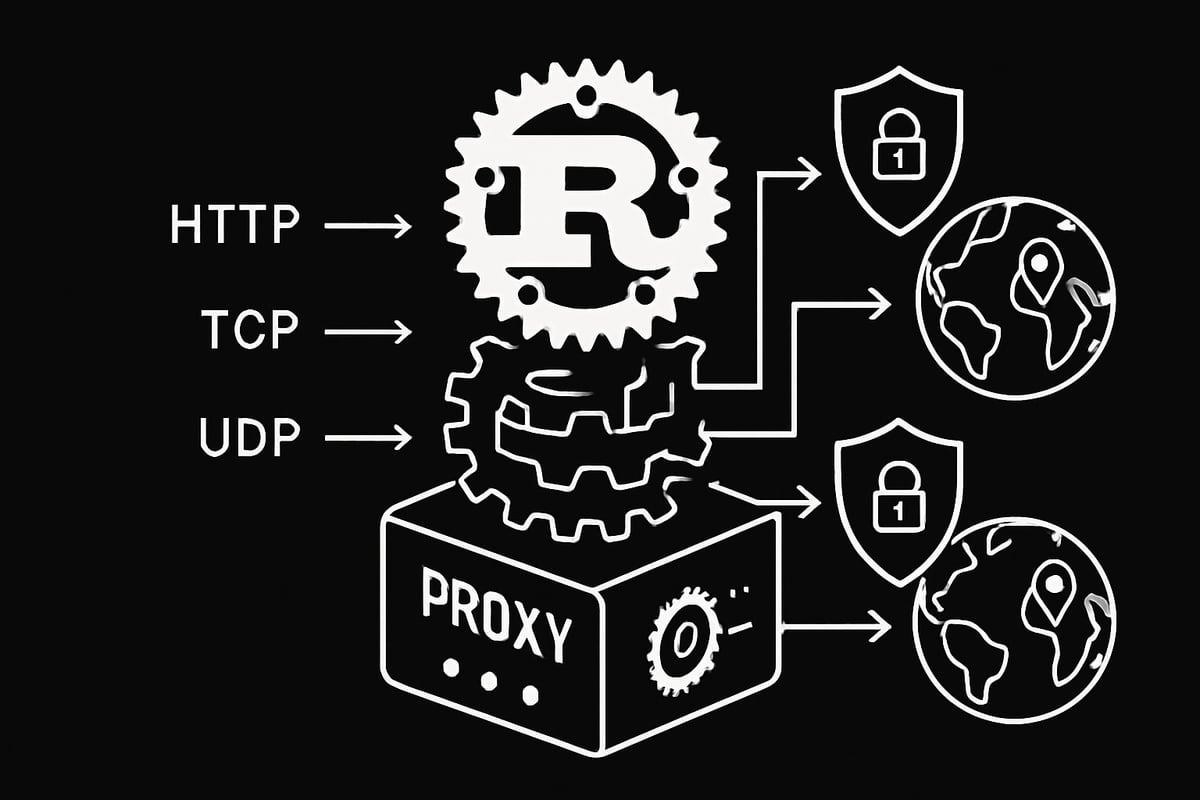
Oxy proxy is Cloudflare’s cutting-edge proxy framework, built in Rust for speed, safety, and flexibility. Unlike legacy proxies such as NGINX, it uses a modular, extensible architecture that handles today’s multi-protocol web traffic with ease.
Designed for both developers and end-users, oxy proxy powers major platforms like Cloudflare’s Zero Trust Gateway and Apple’s iCloud Private Relay. This framework excels at managing complex traffic flows and supporting modern security needs. For a deeper dive into its origins and design, check out Cloudflare's Oxy Proxy Framework.
Key Features and Capabilities
Oxy proxy supports a wide array of protocols, including HTTP/1, HTTP/2, HTTP/3, TCP, UDP, IP, and even ICMP. This multi-protocol support means it can handle almost any traffic you throw at it.
It offers advanced traffic analysis and manipulation at multiple OSI layers (3 through 7), giving granular control over how data is processed. Built-in DNS resolution and caching, along with customizable resolvers, make oxy proxy efficient and adaptable.
Another standout is geographical egress, which allows routing traffic from various global locations for privacy and performance. Integration with modern security standards and protocols ensures oxy proxy remains future-proof. Its flexibility makes it ideal for both enterprise and consumer applications.
Oxy Proxy’s Security Model
Security is at the heart of oxy proxy. All connections are encrypted end-to-end using TLS v1.3, with optional mutual TLS (mTLS) for client authentication. The framework validates certificate chains, performs revocation checks, and can dynamically generate certificates as needed.
Oxy proxy is built on zero-trust principles, offering deep traffic inspection, filtering, and support for data loss prevention (DLP). Enterprises can enable FIPS-compliant cryptography for the highest level of security.
A real-world example is Cloudflare’s secure egress routing, which uses oxy proxy to enforce strict security policies and protect sensitive data. This robust security model sets it apart from traditional proxies.
Performance and Reliability
Oxy proxy leverages Rust’s memory safety and concurrency to deliver outstanding performance. It utilizes open-source projects like hyper and tokio for robust, scalable networking.
With 99.9% uptime, oxy proxy supports high-load, low-latency applications and features automated failover with tunnel timeout logic. In production, it handles massive daily traffic volumes with minimal code complexity, making oxy proxy a top choice for demanding environments.
How Oxy Proxy Works: Architecture and Core Components
Understanding the inner workings of oxy proxy is key to unlocking its full potential. This next-generation proxy framework is built for flexibility, security, and performance, making it a standout solution for modern browsing and network needs. Let’s break down the core components that drive oxy proxy and see how its architecture sets it apart.
On-Ramps and Off-Ramps: Handling Ingress and Egress Traffic
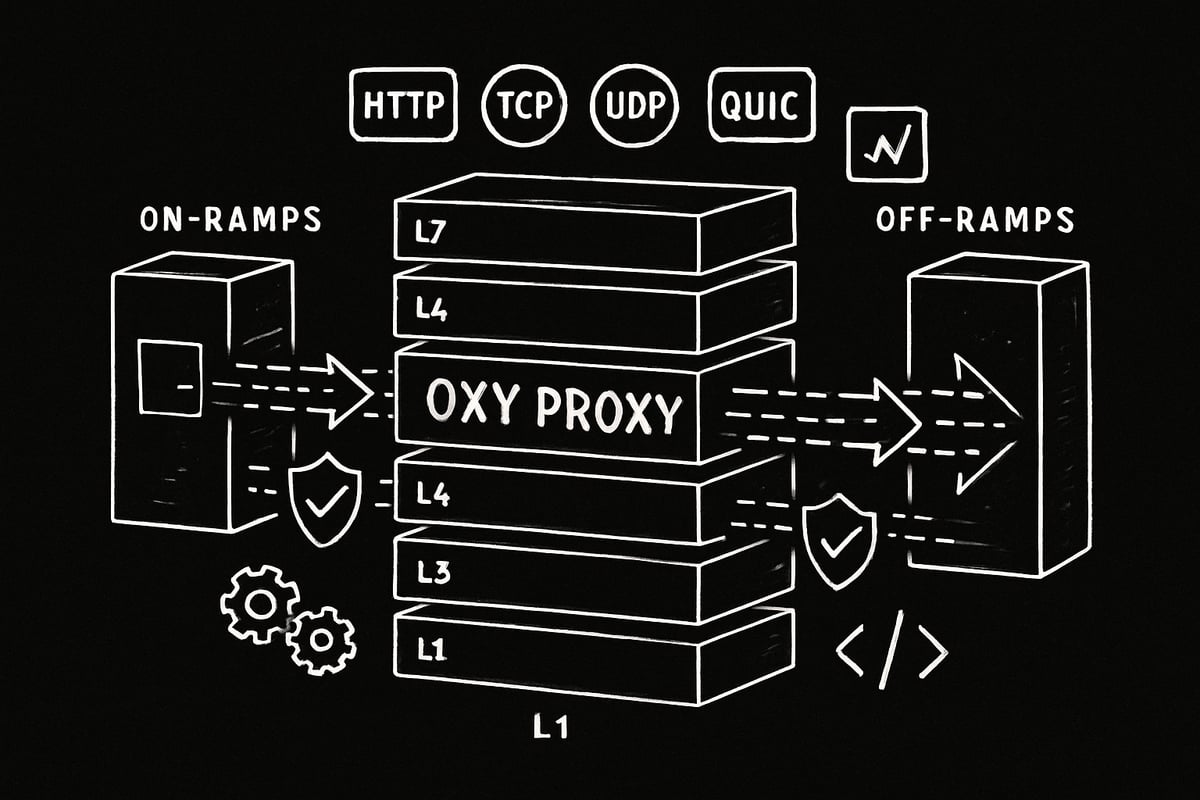
Oxy proxy’s architecture revolves around the concepts of on-ramps (ingress) and off-ramps (egress). On-ramps serve as the entry points for network traffic, supporting a range of protocols like HTTP/1, HTTP/2, HTTP/3, TCP, UDP, and even raw IP. These entry points can be configured to use different socket types, giving administrators and developers granular control over how traffic enters the system.
Off-ramps, on the other hand, manage how traffic exits oxy proxy. With flexible protocol options and internal DNS resolution, you can direct traffic to specific endpoints or regions, optimizing for performance and compliance. This design allows for application-level control over routing and traffic flow.
A key advantage is the ability to analyze encapsulated traffic across multiple layers. For example, oxy proxy can decapsulate IP packets to inspect underlying UDP or HTTP/3 data, enabling advanced filtering and routing decisions. This multi-layer approach ensures that only authorized and safe data passes through, providing robust security and flexibility.
Tunneling, Request Handling, and Protocol Upgrades
Oxy proxy excels at handling complex tunneling scenarios. It supports stateful tunnels for TCP, UDP, QUIC, and IP traffic, making it suitable for everything from secure web browsing to low-latency gaming. The framework also provides HTTP tunneling capabilities, including support for CONNECT-UDP and CONNECT-IP, allowing recursive payload processing for modern application needs.
Streaming analysis of HTTP bodies is built in, enabling extraction of data without disrupting the flow of traffic. For instance, oxy proxy can filter HTTP/3 requests that arrive as raw IP packets, ensuring that security policies are enforced at every step.
Efficient handling of both API services and direct HTTP traffic is a hallmark of oxy proxy. The architecture is designed to upgrade protocols seamlessly, adapting to the requirements of each connection. This adaptability ensures that both legacy and cutting-edge applications benefit from the same level of protection and performance.
Encryption and Privacy Features
Security is at the heart of oxy proxy. The framework features a dual BoringSSL implementation, offering both FIPS-compliant and full-featured cryptographic modes. Administrators can switch between these modes in real time, depending on compliance or performance needs.
Oxy proxy supports dynamic certificate generation for HTTPS inspection and data loss prevention. This enables secure, real-time analysis of encrypted traffic without compromising privacy. Internal communications can use raw public keys for added efficiency, while mutual TLS (mTLS) is available for extracting client authentication details from x509 certificates.
These encryption and privacy features ensure that data is protected from ingress to egress. By integrating end-to-end encryption and robust certificate management, oxy proxy provides a secure foundation for both individual users and large organizations.
Monitoring, Logging, and Extensibility
Visibility and customization are essential in today’s security landscape, and oxy proxy delivers on both fronts. It offers built-in support for monitoring tools like Sentry, Prometheus, and Kibana, making real-time analytics and distributed tracing straightforward. Automated audit logs capture every transaction for compliance and billing, while an integration testing framework ensures deployments are robust.
One of the standout features is extensibility. Oxy proxy allows configuration via YAML files and Rust hooks, supporting multi-tenancy with unique settings for each endpoint. Developers can write custom hooks to analyze, filter, or route traffic, tailoring the proxy to specific needs. For an in-depth look at how these hooks drive customization, check out Oxy's Extensibility with Hooks.
This combination of monitoring, logging, and extensibility empowers organizations to adapt oxy proxy for any use case. Whether you need granular audit trails or advanced traffic manipulation, the framework is ready to scale and evolve with your requirements.
Step-by-Step Guide: Setting Up Oxy Proxy for Secure Browsing in 2025
Getting started with oxy proxy is easier than you might think. This guide will walk you through every step, from installation to advanced configuration. Whether you are a beginner or a seasoned developer, you will find the process straightforward and adaptable to your needs.

Prerequisites and Installation
Before installing oxy proxy, double-check your environment. Here is what you need:
| Requirement | Details |
|---|---|
| OS | Linux, macOS, or Windows |
| CPU/RAM | 2+ cores, 2GB+ RAM |
| Dependencies | Rust toolchain (if building) |
| Disk Space | 100MB+ |
You can download pre-built oxy proxy binaries or build from source using Cargo. To install on Linux/macOS:
curl -L https://github.com/cloudflare/oxy/releases/latest/download/oxy-proxy.tar.gz | tar xz
cd oxy-proxy
./oxy --help
For source builds, ensure rustc and cargo are installed. Verify your installation with ./oxy --version. If you run into issues, check for missing dependencies or permission errors. Oxy proxy’s installation process is designed to be reliable, even for first-time users.
Configuring On-Ramps and Off-Ramps
Once installed, it is time to configure oxy proxy’s traffic entry and exit points. This is done through a YAML config file, where you define on-ramps (ingress) and off-ramps (egress).
Sample YAML for multi-protocol setup:
onramps:
  - protocol: http
    listen: 0.0.0.0:8080
  - protocol: tcp
    listen: 0.0.0.0:9000
offramps:
  - protocol: udp
    connect: 1.2.3.4:5353
  - protocol: http
    connect: 5.6.7.8:80
Specify endpoints, enable protocol upgrades, and add geographical egress as needed. This flexibility is one reason organizations choose oxy proxy for secure and high-performance routing. After editing, restart oxy proxy to apply changes.
Enabling Encryption and Security Policies
Security is at the heart of oxy proxy. Enable TLS v1.3 and mTLS by updating your config file. Set certificate validation, revocation checks, and choose between FIPS-compliant or standard crypto modes.
Example snippet:
security:
  tls:
    enabled: true
    min_version: TLSv1.3
    mtls:
      enabled: true
      ca_cert: /etc/oxy/ca.pem
      client_auth: require
  dlp:
    enabled: true
    rules: /etc/oxy/dlp_rules.yaml
Configure HTTPS inspection for data loss prevention. Enforce zero-trust policies to ensure only authenticated users access your network. Oxy proxy makes these advanced security features accessible to both individuals and enterprises.
Advanced Traffic Routing and Filtering
Oxy proxy offers powerful traffic routing and filtering capabilities. Define rules based on protocol, IP, or geo-location within your YAML file. For custom logic, write Rust hooks to extend authentication or access control.
For example, to route gaming traffic through a specific egress:
rules:
  - match:
      protocol: udp
      dest_port: 27015
    action:
      egress: eu-west
You can also implement L4/L7 firewalls with minimal code. Oxy proxy’s extensibility allows you to tailor traffic management for latency-sensitive applications or regulatory compliance. With the right configuration, your browsing and data flows stay optimized and secure.
Monitoring, Logging, and Troubleshooting
Reliable monitoring is crucial for any secure proxy setup. Oxy proxy supports Prometheus metrics, Sentry error reporting, and audit logs for compliance.
To view real-time logs, integrate with Kibana or similar tools. Run built-in integration tests to validate your deployment. For troubleshooting, refer to the Troubleshooting Proxy Connections guide for step-by-step solutions on common issues like connection failures or misconfigurations.
Regularly review logs and alerts to ensure oxy proxy is running smoothly. Proactive monitoring helps you catch issues before they impact security or performance.
Upgrading, Scaling, and Maintaining Oxy Proxy
Keep oxy proxy updated for optimal security and features. Use package managers or automation scripts to streamline upgrades and rollback if needed. For high traffic, scale horizontally by deploying multiple instances and load balancing between them.
Enable graceful restarts and seccomp hardening for improved reliability. Plan for future protocol support and regularly review your configuration to stay ahead of emerging threats. With these maintenance practices, oxy proxy will remain a robust foundation for secure browsing in 2025 and beyond.
Real-World Applications of Oxy Proxy in 2025
The versatility of oxy proxy shines in a wide range of real-world scenarios in 2025. Whether you are a business, a privacy-focused user, or a developer, oxy proxy adapts to your needs. Let’s explore how different industries and user groups are leveraging this next-generation proxy framework for secure, private, and high-performance browsing.

Secure Enterprise Browsing and Zero Trust Networks
Organizations are increasingly turning to oxy proxy as a secure gateway for remote and hybrid workforces. By integrating with Zero Trust architectures and SASE platforms, enterprises can enforce granular access controls and protect sensitive data. Financial institutions, for example, rely on oxy proxy to secure egress points and meet strict compliance standards.
A key benefit is the ability to inspect, filter, and log traffic at multiple network layers. According to Oxy's Role in Cloudflare's Infrastructure, Cloudflare leverages oxy proxy to handle secure routing at scale, demonstrating its robustness in demanding environments.
Privacy-First Consumer Browsing and Content Access
For individual users, oxy proxy offers powerful tools for anonymous browsing and bypassing geo-restrictions. Journalists, activists, and privacy enthusiasts appreciate the enhanced security and flexibility. With support for multi-protocol and geographical egress, users can access streaming services or social media from different regions without exposing personal data.
Recent statistics show a significant rise in demand for privacy proxies among consumers. Oxy proxy’s ease of use and strong encryption make it a top choice for those seeking both privacy and performance.
API Security, Web Scraping, and Automation
Oxy proxy is a game-changer for API security and web automation. Businesses use it to secure outbound API requests, automate data collection, and avoid scraping bans through advanced traffic routing. For e-commerce and SEO monitoring, oxy proxy enables endpoint rotation and IP masking with minimal configuration.
A typical setup might involve configuring multiple egress points and implementing custom traffic manipulation rules. This flexibility allows organizations to scale their automation efforts securely and efficiently.
Gaming, IoT, and Low-Latency Applications
The gaming industry benefits from oxy proxy’s ability to route traffic for reduced latency and DDoS protection. Cloud gaming platforms use encrypted tunnels to ensure smooth gameplay, while IoT device manufacturers rely on secure proxying to protect device communications.
Real-world gaming tests have shown measurable latency improvements when using oxy proxy. The framework’s support for UDP, QUIC, and advanced routing options ensures reliable connections for both gamers and IoT deployments.
Developer Use Cases and Custom Proxy Solutions
Developers value oxy proxy for its extensibility and customization options. By leveraging Rust hooks and YAML configuration, teams can build custom proxy logic, multi-tenant setups, or secure SaaS offerings. Startups often integrate oxy proxy to provide secure user access and manage traffic in complex environments.
The open-source nature of oxy proxy and its use of modern dependencies encourage community contributions and rapid innovation. This adaptability makes it ideal for evolving networking needs in 2025.
Expert Tips for Maximizing Security and Performance with Oxy Proxy
Looking to get the most out of oxy proxy? Here are expert-backed strategies to help you lock down your proxy setup, boost performance, and future-proof your network security. Whether you are deploying for a single user or scaling enterprise-wide, these actionable tips will help you maximize both security and speed.
Best Practices for Secure Configuration
Start with the basics - secure every layer of your oxy proxy deployment. Enforce strong encryption by enabling TLS v1.3 and mutual TLS (mTLS) for all connections. Regularly update certificates and cryptographic libraries to prevent vulnerabilities from outdated components.
Limit access to YAML configuration files and management endpoints. Use strict file permissions and network ACLs to restrict who can modify proxy rules. Automated scripts can help rotate certificates, ensuring your oxy proxy setup stays compliant and secure.
- Enable mTLS for all ingress and egress points.
- Schedule automated certificate rotations.
- Restrict config file access to trusted admins.
A well-configured oxy proxy instance forms the backbone of a robust zero-trust network.
Optimizing Performance and Reliability
To unlock the full performance potential of oxy proxy, leverage Rust’s concurrency for high throughput. Fine-tune tunnel timeouts, connection pooling, and DNS caching parameters to reduce latency and prevent bottlenecks.
Monitor system resource usage closely, especially during peak loads. Use built-in metrics to identify and address any performance dips before they impact users. Benchmark your oxy proxy deployment with simulated traffic to ensure it handles real-world demands.
- Adjust connection pool sizes for optimal resource use.
- Tune DNS cache expiry for your environment.
- Test with different tunnel timeout values.
Consistent monitoring and tuning will keep your oxy proxy deployment running smoothly, even as your user base grows.
Advanced Customization with Hooks and Extensibility
One of the most powerful aspects of oxy proxy is its flexibility. Write custom Rust hooks for advanced traffic analysis, filtering, and routing. Extend YAML configurations to introduce new features, endpoints, or authentication logic without heavy code changes.
Multi-tenancy is straightforward - deploy multiple endpoints with unique configs to serve different teams or projects. For more on extending oxy proxy, check out the Advanced Proxy Features and Usage guide.
- Write hooks for protocol-specific filtering.
- Use YAML to define custom egress policies.
- Separate configs for tenants or business units.
This extensibility lets you tailor oxy proxy to complex, evolving requirements with minimal friction.
Integrating Oxy Proxy with Existing Security Tools
Oxy proxy fits seamlessly into your broader security ecosystem. Connect it to SIEM platforms like Prometheus, Kibana, or Sentry for centralized monitoring and real-time alerts. Export logs for compliance, audit, and forensic analysis.
Combine oxy proxy with data loss prevention (DLP), firewall, and IDS/IPS solutions for layered defense. Set up alerting rules to catch suspicious traffic patterns or policy violations as they happen.
- Enable Prometheus metrics for traffic insights.
- Forward logs to Kibana for real-time visualization.
- Integrate with DLP and intrusion detection systems.
This integration ensures oxy proxy amplifies your organization's security posture, not just your browsing privacy.
Staying Ahead: Future-Proofing Your Proxy Setup
The network landscape never stands still, and neither should your oxy proxy deployment. Monitor updates to protocols like HTTP/3 and QUIC, and stay current with security standards. Engage with the Rust and oxy proxy open-source communities to learn about new features and best practices.
Plan for emerging threats by regularly reviewing your configuration and adapting to compliance shifts. For fresh perspectives and community insights, explore the Oxy Framework Discussion on Hacker News.
- Subscribe to security advisories for timely updates.
- Participate in open-source discussions and forums.
- Review and update configs quarterly.
Staying proactive with oxy proxy ensures your setup remains resilient, adaptable, and secure in the face of tomorrow’s challenges.
Comparing Oxy Proxy to Other Proxy Solutions in 2025
Choosing the right proxy solution in 2025 means looking beyond basic features. The market now offers everything from legacy servers to cutting-edge frameworks like oxy proxy. Let’s break down how oxy proxy stacks up to traditional, managed, and open-source competitors, so you can make an informed decision for your needs.
Oxy Proxy vs. Traditional Proxy Servers
When comparing oxy proxy to legacy proxy servers like NGINX or Squid, the differences stand out. Oxy proxy uses Rust for memory safety, concurrency, and modern protocol support, while older proxies often rely on C or Go. This means oxy proxy offers better performance, lower latency, and fewer security vulnerabilities.
| Feature | Oxy Proxy | Traditional Proxies |
|---|---|---|
| Language | Rust | C/Go/Java |
| Protocol Support | HTTP/1/2/3, TCP, UDP, ICMP | HTTP/1, TCP |
| Security | Zero Trust, mTLS, FIPS | Basic TLS |
| Extensibility | YAML, Rust hooks | Plugins, scripts |
For a deeper dive into proxy types and how oxy proxy fits into the landscape, check out the Types of Proxy Servers Explained. Migration from traditional proxies is common as organizations seek advanced security and extensibility.
Oxy Proxy vs. Managed Proxy Services
Oxy proxy provides full self-hosted control, making it ideal for enterprises needing custom security and compliance. Managed proxy services (SaaS) offer convenience and outsourced management but often limit customization and data privacy.
With oxy proxy, you can implement advanced routing, enforce strict zero trust, and integrate with internal tools. Managed services may be better for small teams or when rapid deployment matters most, but oxy proxy shines when privacy and flexibility are top priorities.
Cost-wise, oxy proxy can reduce long-term expenses by eliminating recurring SaaS fees. It also gives organizations the freedom to adapt configurations and security policies without waiting for vendor updates.
Oxy Proxy and Open-Source Alternatives
Open-source proxies like Envoy and HAProxy are popular for their flexibility and community support. However, oxy proxy brings unique advantages: multi-protocol support, geographical egress, and a modern Rust foundation. This leads to better performance and memory safety, especially under high loads.
Oxy proxy’s extensibility with YAML and Rust hooks means you can customize traffic handling for any use case. While open-source alternatives are robust, oxy proxy stands out for its zero trust features and seamless integration with modern security standards.
Collaboration is encouraged, too. Oxy proxy leverages open-source libraries and welcomes community contributions, making it a strong choice for forward-thinking teams.
Key Decision Factors: Choosing the Right Proxy in 2025
How do you decide if oxy proxy is right for you? Here’s a checklist to help:
- Is advanced security (mTLS, FIPS) a must?
- Do you need multi-protocol, geo-egress, or zero trust?
- Are customization and extensibility important?
- What are your uptime, latency, and scaling needs?
- Is community support and documentation available?
Evaluate each proxy on security, performance, compliance, and ease of use. Oxy proxy excels in environments where adaptability and robust security are non-negotiable.
Frequently Asked Questions About Oxy Proxy
Curious about setup, compatibility, or maintenance? Oxy proxy supports Linux and macOS, with simple YAML configs for quick onboarding. Security best practices include enforcing mTLS and regular certificate updates.
Need troubleshooting tips? The official documentation covers common issues and integration examples. For readers new to proxies, the Beginner's Guide to Proxies is a helpful resource to get started.
For ongoing support, oxy proxy’s community and vendor channels provide updates and guidance. Stay proactive by monitoring new protocol features and security advisories.If you are ready to take the next step toward safer, faster, and more private browsing in 2025, now is the perfect moment to put what you have learned into action. Oxy Proxy’s advanced features, combined with PinguProxy’s high-performance infrastructure, make it easy for anyone to enjoy secure browsing without the stress. Whether you are protecting your personal data, managing remote teams, or accessing global content, you deserve a solution that puts your privacy first. Why not start experiencing the difference today? Get Started Now and see just how simple secure browsing can be!