
Buy Residential Rotating Proxies: 2026 Complete Guide
When you decide to buy residential rotating proxies, you're investing in one of the most sophisticated tools for maintaining anonymity and accessing web resources at scale. Unlike datacenter proxies that originate from cloud servers, residential proxies route your traffic through IP addresses assigned by Internet Service Providers to actual homes and devices. The "rotating" element adds an additional layer of protection by automatically switching your IP address at set intervals or with each request, making your activity appear to come from different users in different locations. This technology has become essential for businesses conducting market research, competitive analysis, ad verification, and large-scale data collection in 2026.
Understanding Residential Rotating Proxy Architecture
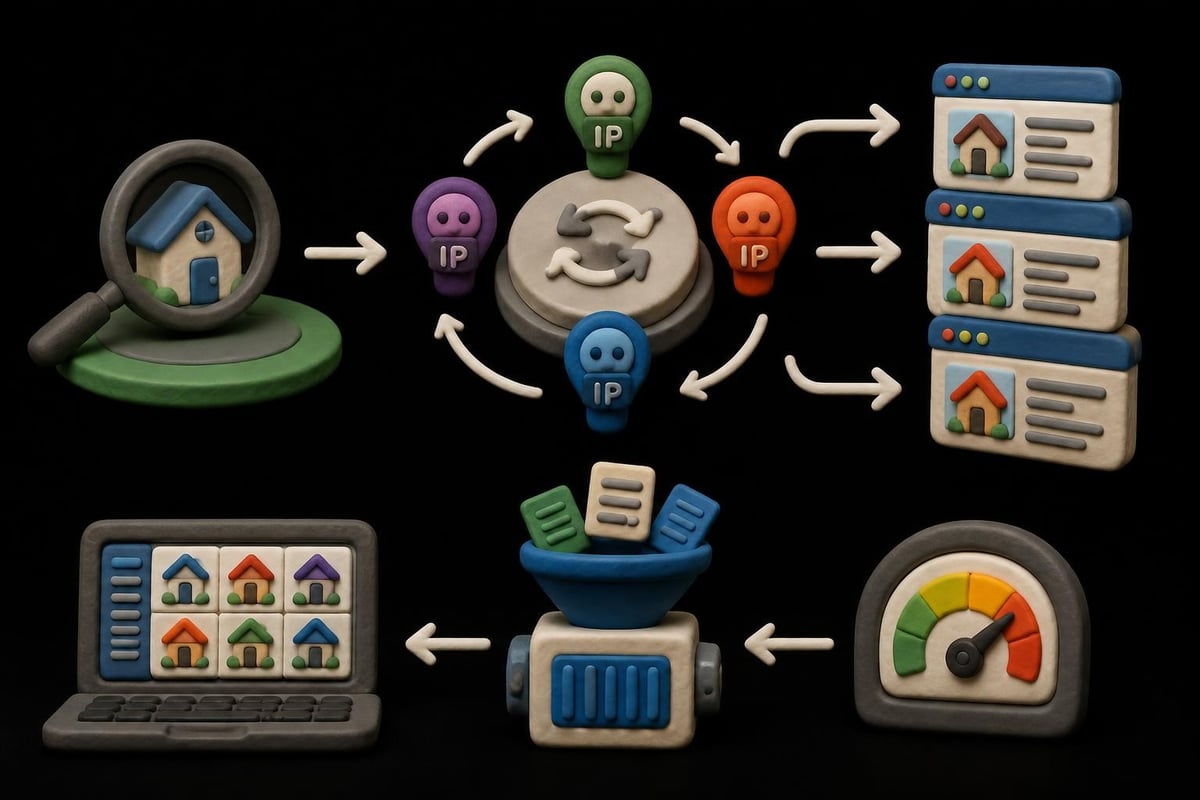
Residential rotating proxies operate through a distributed network of real residential IP addresses. Each connection your application makes can route through a different endpoint, cycling through thousands or even millions of available IPs. This rotation happens automatically based on parameters you configure, whether that's time-based intervals, per-request rotation, or session-based switching.
The fundamental advantage lies in authenticity. When you buy residential rotating proxies, you're essentially borrowing the digital identity of legitimate internet users. Websites see requests coming from what appears to be ordinary consumers browsing from home connections, not automated scrapers or bots operating from data centers. This distinction matters enormously for accessing content behind geographical restrictions or strict anti-bot systems.
How IP Rotation Cycles Work
Modern proxy services implement several rotation strategies:
- Per-request rotation: Each HTTP request uses a completely different IP address
- Session-based rotation: Maintains the same IP for a defined session duration (5-30 minutes typically)
- Time-interval rotation: Switches IPs every X seconds regardless of request volume
- Sticky sessions: Holds the same IP until you explicitly request a change
The choice between these approaches depends heavily on your use case. E-commerce price monitoring benefits from per-request rotation to avoid triggering rate limits, while account management tasks require sticky sessions to maintain consistent login states.

Critical Selection Criteria When You Buy Residential Rotating Proxies
The residential proxy market has matured significantly, with dozens of providers offering seemingly similar services. However, the differences in quality, ethics, and operational capabilities separate premium services from problematic offerings.
IP Pool Size and Geographic Distribution
A larger pool directly correlates with better rotation diversity and lower detection risk. Providers with millions of IPs spread across 150+ countries offer far more flexibility than those limited to thousands of addresses in a handful of regions. When evaluating services, examine:
| Feature | Premium Tier | Mid-Range | Budget |
|---|---|---|---|
| IP Pool Size | 10M+ addresses | 1M-10M | Under 1M |
| Country Coverage | 150+ countries | 50-100 | 10-30 |
| City-Level Targeting | Available | Limited | Rarely |
| ISP Diversity | 500+ ISPs | 100+ ISPs | Major ISPs only |
Geographic precision matters for location-specific tasks. If you're verifying ads in Austin, Texas, you need providers offering city-level targeting, not just US-wide pools. The best services maintain granular control over state, city, and even ZIP code selection.
Rotation Speed and Reliability
The claim of "1ms proxy rotation" represents the server-side switching time, not the full connection establishment. When you buy residential rotating proxies, pay attention to actual connection speeds and uptime metrics. Residential connections inherently experience more variability than datacenter infrastructure because you're routing through real user devices that may go offline, change networks, or experience connectivity issues.
Key performance indicators to evaluate:
- Average response time across different geos (should be under 2 seconds for most regions)
- Success rate for connection establishment (95%+ is acceptable, 98%+ is excellent)
- Bandwidth throttling policies (unlimited is ideal, but many impose fair-use limits)
- IPv4 and IPv6 support (dual-stack offers maximum compatibility)
Understanding bot detection and mitigation strategies helps you appreciate why even residential IPs face scrutiny. Advanced platforms now use machine learning to identify residential proxy networks, making rotation speed and pattern diversity increasingly important.
Compliance and Ethical Considerations
The residential proxy industry exists in a complex regulatory environment. When you buy residential rotating proxies, you're entering a market where providers source IPs through varying means, some more ethical than others. Understanding these distinctions protects you from legal exposure and reputation damage.
IP Sourcing Models
Legitimate residential proxy providers typically acquire IP addresses through:
- Peer-to-peer networking applications where users consent to share bandwidth
- VPN services that include proxy functionality in their terms of service
- SDK partnerships with mobile app developers who compensate users
- Direct partnerships with ISPs in certain markets
The OWASP Bot Management and Anti-Automation Cheat Sheet outlines defensive measures sites employ, but also highlights the importance of transparent, consented data collection. Providers operating without explicit user consent raise significant ethical and legal concerns.
Research from Spamhaus on residential proxy networks reveals how compromised devices and unwitting participants create IP reputation problems. When residential IPs from a proxy pool engage in spam, fraud, or abuse, innocent users face blocklisting and service disruptions.
Data Protection Obligations
For businesses operating in or targeting European markets, understanding GDPR compliance requirements becomes crucial. Routing traffic through residential endpoints means processing data potentially linked to identifiable individuals. Your terms of service, privacy policies, and data handling practices must account for this.
Questions to ask providers before you buy residential rotating proxies:
- How do you obtain consent from IP source users?
- What visibility do end-users have into how their connection is used?
- Do you maintain logs that could identify downstream users?
- What measures prevent your network from being used for illegal activity?
Primary Use Cases Driving Demand
Organizations buy residential rotating proxies for legitimate business purposes that require authentic residential IP addresses and rotation capabilities. The technology serves specific operational needs that datacenter proxies cannot fulfill effectively.
Web Scraping and Data Intelligence
Market research firms, price comparison engines, and competitive intelligence teams rely heavily on residential rotating proxies. When monitoring competitor pricing across e-commerce platforms, datacenter IPs get blocked almost immediately. Residential IPs appear as regular shoppers browsing products.
The rotation element prevents any single IP from making too many requests to the same domain. A scraper might distribute 10,000 daily requests across 5,000 different residential IPs, with each address only making 2-3 requests. This pattern mimics organic traffic far better than 10,000 requests from a single datacenter IP.
Ad Verification and Brand Protection
Advertising agencies and brands buy residential rotating proxies to verify their ads appear correctly in different geographic markets. Digital ad fraud costs the industry billions annually, with bad actors using sophisticated geo-spoofing to steal ad budgets.
By routing verification requests through actual residential IPs in target markets, advertisers confirm:
- Ads display in the correct geographic regions
- Creative assets render properly across different ISPs
- Landing pages aren't being replaced with malicious content
- Impression and click metrics align with campaign settings
Research from F5 Labs on scraper activity demonstrates how bad actors use residential proxies for click fraud. Legitimate verification requires the same technology to combat these threats effectively.
SEO and SERP Monitoring
Search engine results vary dramatically by location, device type, and user history. SEO professionals buy residential rotating proxies to check rankings across different cities and countries without personalization skewing results.
A typical SERP monitoring setup might:
- Query Google from 50 different US cities simultaneously
- Rotate IPs between queries to avoid CAPTCHA challenges
- Maintain different sessions to simulate unique users
- Compare results to identify local ranking variations
Technical Implementation Best Practices
Successfully operating residential rotating proxies requires more than just purchasing access. The difference between smooth operations and constant troubleshooting often comes down to proper configuration and realistic expectations.
Connection Management and Session Handling
When you buy residential rotating proxies, you're dealing with connections that behave differently than datacenter infrastructure. Residential endpoints experience latency variations, occasional timeouts, and unpredictable availability.
Implementation guidelines:
- Implement robust retry logic: Set at least 3 retry attempts with exponential backoff
- Handle connection failures gracefully: Don't assume 100% uptime on any individual IP
- Monitor response times: Flag and exclude consistently slow endpoints
- Respect sticky sessions: Don't force rotation mid-transaction when context matters
The AWS guidance on bot threats and operations provides practical frameworks for designing resilient automation that works with proxy infrastructure.
Fingerprinting and Detection Avoidance
IP rotation alone doesn't guarantee anonymity. Modern web platforms employ sophisticated fingerprinting techniques that identify automated clients regardless of IP address. Research on assessing web fingerprinting risk quantifies how browser characteristics, TLS fingerprints, and behavioral patterns expose automation.
To maximize the effectiveness of rotating residential proxies:
- Rotate user agents in sync with IP changes
- Implement realistic timing patterns between requests
- Handle cookies and session data appropriately for your use case
- Vary request headers and TLS configurations
- Monitor for CAPTCHA rates as an indicator of detection
For Spanish-speaking audiences interested in residential IP fundamentals, resources like residential IP guidance provide localized context on implementation strategies.
Cost Structures and Pricing Models
Pricing for residential rotating proxies varies significantly based on pool quality, features, and volume commitments. Understanding the economics helps you budget appropriately and avoid unexpected charges.
Common Billing Approaches
| Model | Description | Best For | Typical Rate |
|---|---|---|---|
| Pay-per-GB | Charged by bandwidth consumed | Predictable, low-volume use | $3-$15/GB |
| Pay-per-IP | Fixed price per IP address per month | Dedicated IPs for specific tasks | $1.50-$5/IP |
| Unlimited | Flat monthly fee for unlimited usage | High-volume operations | $300-$2000/mo |
| Request-based | Charge per successful request | Sporadic or variable usage | $0.001-$0.01/req |
Premium providers offering features like IPv6 support, 10Gbps bandwidth, and 24/7 technical support command higher prices but deliver better reliability and performance. The calculation should factor in opportunity cost - cheap proxies that fail 20% of the time waste more money in lost productivity than premium services with 98% success rates.
Hidden Costs to Consider
When evaluating options to buy residential rotating proxies, look beyond the advertised rate:
- CAPTCHA solving services (if needed for target sites)
- Development time for integration and maintenance
- Infrastructure costs for managing proxy rotation logic
- Compliance and legal review expenses
- Monitoring and alerting systems
Infrastructure Requirements and Scaling
Operating residential rotating proxies at scale demands appropriate technical infrastructure. Your architecture choices impact performance, reliability, and cost-efficiency.
Proxy Management Layer
Rather than connecting directly from application code, implement a proxy management layer that:
- Maintains a pool of tested, working IPs
- Routes requests to appropriate geolocations
- Implements failover when IPs become unavailable
- Tracks success rates and performance metrics
- Enforces rate limiting to prevent abuse
This abstraction layer lets you swap proxy providers, implement multi-provider strategies, or shift between residential and datacenter proxies based on task requirements.
Monitoring and Observability

Effective proxy operations require comprehensive visibility into:
- Request success and failure rates by provider, geography, and target domain
- Average response times and latency distribution
- Bandwidth consumption and cost per successful request
- Detection incidents (CAPTCHA, blocks, timeouts)
- IP pool health and rotation effectiveness
Built-in monitoring helps identify when target sites implement new anti-bot measures, when certain geographic regions experience connectivity issues, or when you need to adjust rotation strategies.
Residential vs. Mobile and Datacenter Alternatives
The decision to buy residential rotating proxies makes sense for specific scenarios, but alternatives serve different use cases more effectively. Understanding the trade-offs guides optimal architecture decisions.
Residential proxies offer the best balance of authenticity and availability for most web scraping and verification tasks. Mobile proxies, which route through cellular networks, provide even higher trust signals but come with limited bandwidth and higher costs. Datacenter proxies deliver superior speed and reliability but face immediate blocking on many platforms.
Comparison across key dimensions:
- Trust level: Mobile > Residential > Datacenter
- Speed: Datacenter > Residential > Mobile
- Cost per GB: Datacenter < Residential < Mobile
- Pool size: Residential > Datacenter > Mobile
- Reliability: Datacenter > Residential > Mobile
Many operations benefit from hybrid approaches - using residential rotating proxies for scraping product data while employing datacenter proxies for API calls to your own infrastructure, or mobile proxies specifically for social media tasks where cellular IPs face less scrutiny.
IPv4 Scarcity and IPv6 Adoption Impact
The global IPv4 address exhaustion affects residential proxy pools in ways many users don't initially consider. Understanding these infrastructure realities helps set appropriate expectations when you buy residential rotating proxies.
Materials from RIPE on IPv4 scarcity explain how Carrier-Grade NAT (CGNAT) deployment means multiple households now share single public IPv4 addresses. This sharing reduces the effective pool size and can cause IP addresses to appear in multiple proxy services simultaneously, increasing detection risk.
IPv6 adoption in residential networks creates new opportunities. Providers supporting both IPv4 and IPv6 offer:
- Vastly larger address pools (IPv6's 340 undecillion addresses vs IPv4's 4.3 billion)
- Reduced CGNAT complications
- Better future-proofing as web infrastructure migrates to IPv6
- Potential cost advantages as IPv6 residential addresses become abundant
However, many target websites still don't fully support IPv6, requiring dual-stack capability for maximum compatibility. Services offering comprehensive IPv6 and IPv4 support position clients for both current needs and future network evolution.
Provider Selection Framework
With dozens of companies offering residential rotating proxies in 2026, systematic evaluation prevents costly mistakes. Apply this framework to shortlist candidates:
Technical Evaluation
- Request a trial: Test actual performance with your specific use cases
- Verify pool claims: Check if advertised IP counts match reality
- Test rotation mechanisms: Confirm rotation works as specified
- Assess documentation: Quality docs indicate operational maturity
- Benchmark performance: Compare response times across geolocations
Business Evaluation
- Reputation research: Check independent reviews and community feedback
- Support responsiveness: Test support channels before committing
- Terms of service review: Ensure acceptable use policies align with your needs
- Billing transparency: Verify no hidden fees or surprise charges
- Service level agreements: Understand uptime guarantees and remedies
Compliance Verification
Before you buy residential rotating proxies, confirm:
- Provider's IP sourcing methodology and consent mechanisms
- Data handling and logging policies
- Geographic restrictions and prohibited use cases
- Compliance with relevant regulations in your jurisdiction
- Transparency about how end-user devices participate in the network
Operational Security and Privacy
Using residential rotating proxies introduces security considerations beyond typical network operations. Your traffic routes through third-party infrastructure and exit points you don't control, requiring appropriate safeguards.
Critical security measures:
- Encrypt all sensitive data: Use HTTPS/TLS for all requests, never send credentials in clear text
- Implement authentication carefully: Avoid exposing API keys or tokens through proxy connections
- Validate SSL certificates: Don't disable certificate validation despite connection complexity
- Monitor for interception: Watch for unexpected redirects or modified responses
- Segregate proxy traffic: Use dedicated environments for proxy-based operations
Reputable providers maintain zero-log policies and implement technical measures to prevent traffic inspection, but you should never assume complete privacy when traffic leaves your direct control. Design systems with defense-in-depth principles.
Selecting the right residential rotating proxy service requires balancing technical capabilities, compliance considerations, and operational requirements specific to your use cases. The market has matured significantly, offering sophisticated rotation strategies, global coverage, and dual-stack protocol support that make these tools indispensable for legitimate data collection and verification workflows. When you're ready to implement enterprise-grade residential rotating proxies with 10Gbps bandwidth, comprehensive IPv4 and IPv6 support, and 1ms rotation capabilities backed by 24/7 technical support, explore how PinguProxy delivers the reliability and performance your operations demand.