
IPRoyal Residential Proxy: Complete 2026 Guide
Residential proxy services have transformed how businesses approach web scraping, ad verification, and global market research in 2026. Among the established players in this space, IPRoyal has built a reputation for providing ethically-sourced residential IP addresses that enable users to access content and data without triggering anti-bot systems. An iproyal residential proxy routes your web traffic through real residential IP addresses assigned by internet service providers to homeowners and mobile users, making your requests appear as legitimate consumer traffic. This fundamental approach helps businesses overcome geographic restrictions, conduct accurate market research, and verify digital advertising campaigns across different regions. Understanding how these services work, their legitimate applications, and the security considerations involved is essential for any organization evaluating residential proxy solutions.
What Makes IPRoyal Residential Proxies Different
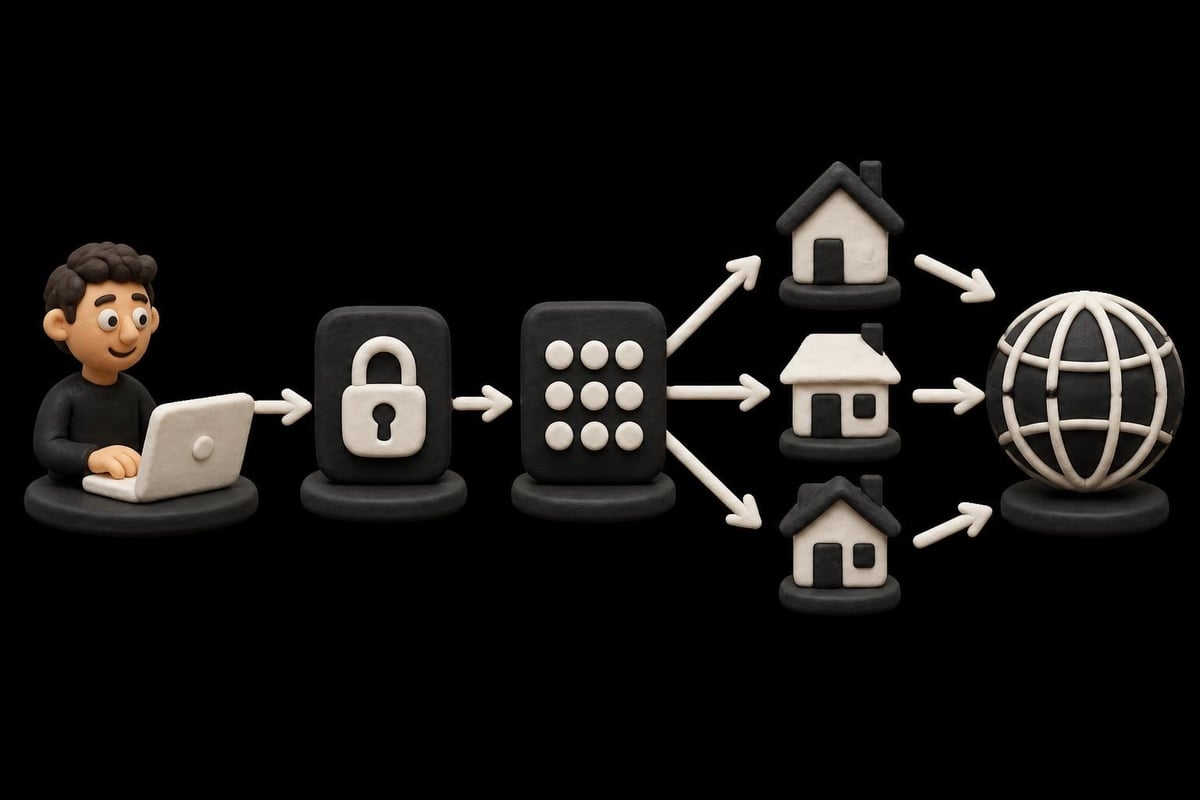
The iproyal residential proxy network operates by routing traffic through a distributed pool of genuine residential IP addresses rather than datacenter infrastructure. This distinction matters significantly when accessing websites with sophisticated bot detection systems.
Key differentiators include:
- Real ISP-assigned IP addresses from residential networks globally
- Session control options including sticky and rotating configurations
- Geographic targeting down to city-level precision in many regions
- HTTP and SOCKS5 protocol support for diverse applications
Unlike datacenter proxies that originate from hosting facilities, residential proxies from IPRoyal come from actual home and mobile internet connections. This authentication method proves harder for websites to detect and block.
Official IPRoyal documentation outlines how their service manages session persistence and rotation, allowing users to maintain the same IP for extended periods or rotate frequently depending on use case requirements.
Session Types and Configuration Options
IPRoyal provides two primary session management approaches that serve different business needs.
Sticky sessions maintain the same residential IP address for a specified duration, typically ranging from 10 minutes to 24 hours. This configuration proves essential for:
- Shopping cart transactions requiring session continuity
- Social media account management across multiple sessions
- Price monitoring where session interruption invalidates data
- Multi-step authentication processes
Rotating sessions automatically assign a new residential IP for each request or after a set time interval. Organizations conducting large-scale data collection benefit from this approach because it distributes requests across thousands of unique IP addresses, minimizing detection risk.
The iproyal residential proxy service allows configuration through standard authentication methods, including username and password credentials embedded in the proxy URL or passed through authentication headers.
Pricing Structure and Pool Composition
Understanding the economic model behind residential proxy services helps businesses budget appropriately and evaluate whether the investment aligns with their operational needs.
| Plan Tier | Traffic Volume | Price per GB | Geographic Coverage | Best For |
|---|---|---|---|---|
| Starter | 1-10 GB | $7-8/GB | Limited regions | Testing, small projects |
| Professional | 50-100 GB | $5-6/GB | Global coverage | Regular scraping needs |
| Enterprise | 500+ GB | $3-4/GB | Full global access | Large-scale operations |
IPRoyal's pricing reflects the higher operational costs of maintaining residential infrastructure compared to datacenter alternatives. The premium accounts for:
- Bandwidth costs paid to residential endpoint providers
- Quality assurance to verify IP reputation and connectivity
- Geographic diversity maintaining pools across 195+ countries
- Compliance infrastructure ensuring ethical sourcing practices
The residential proxy pool composition varies by provider. IPRoyal focuses on maintaining a balance between pool size and IP quality rather than maximizing raw numbers. Smaller, well-maintained pools often outperform massive networks filled with low-quality or flagged addresses.
Legitimate Business Applications
When deployed responsibly, an iproyal residential proxy enables valuable business intelligence and verification activities that would otherwise prove impossible or unreliable.
Market Research and Competitive Intelligence
Companies analyzing international markets need to view content exactly as local consumers see it. Residential proxies enable:
- Price monitoring across e-commerce platforms without triggering anti-scraping measures
- Advertisement verification to confirm campaigns display correctly in target markets
- SERP tracking to understand how search results vary by geographic location
- Competitor analysis gathering publicly available data for strategic planning
Global retailers use these capabilities to optimize pricing strategies based on regional competition and local purchasing power. PinguProxy offers similar residential proxy capabilities with unlimited bandwidth options that support continuous monitoring workflows.
SEO and Content Optimization
Search engine optimization professionals rely on accurate location-based search results to develop effective strategies.
Search engines personalize results based on the searcher's location, browsing history, and device type. An iproyal residential proxy allows SEO specialists to:
- Verify keyword rankings from specific cities or countries
- Identify local competitors appearing in regional search results
- Test landing page variations across different markets
- Monitor SERP features like local packs and knowledge panels
This data informs content strategies, helping businesses create regionally-relevant content that addresses local search intent.

Brand Protection and Ad Fraud Prevention
Cybersecurity teams and brand protection specialists deploy residential proxies to investigate threats and verify advertising placements.
Ad verification scenarios include:
- Confirming advertisements appear on approved websites only
- Detecting click fraud patterns across different geographic regions
- Identifying unauthorized affiliate marketing practices
- Monitoring brand mentions and unauthorized product listings globally
Ad networks lose billions annually to sophisticated fraud schemes that route fake traffic through residential proxies. Organizations combating this fraud ironically need the same technology to investigate suspicious patterns from the attacker's perspective.
Security and Privacy Considerations
While residential proxies serve legitimate purposes, they also introduce security and privacy implications that deserve careful consideration before deployment.
Detection and Countermeasures
Website operators increasingly deploy advanced detection systems to identify and block proxy traffic. Cloudflare's machine learning approach to residential proxy detection demonstrates how defenders analyze behavioral patterns beyond simple IP reputation checks.
Detection methods include:
- TLS fingerprinting comparing encryption handshakes to known client patterns
- Behavioral analysis identifying automated interaction patterns
- Cookie and storage testing detecting inconsistencies in session data
- Timing analysis measuring response patterns impossible for human users
An iproyal residential proxy may bypass IP-based blacklists, but sophisticated systems examine dozens of signals simultaneously. Organizations should understand that no proxy service guarantees complete invisibility to all detection systems.
Ethical and Legal Implications
The residential proxy industry faces ongoing scrutiny regarding endpoint sourcing and consent. Research analyzing residential proxy services highlights concerns about whether all endpoint providers fully understand how their bandwidth is being used.
Ethical considerations include:
- Whether residential endpoint users provide informed consent
- How proxy traffic might impact endpoint users' network performance
- Potential liability when proxy traffic violates terms of service
- The balance between privacy rights and accountability for misuse
Responsible providers like IPRoyal emphasize transparent sourcing from users who knowingly opt into sharing bandwidth, typically through applications that compensate them for network access. This model differs significantly from malware-based networks that compromise devices without owner knowledge.
Network Security Risks
ISP research on residential proxy ecosystems reveals how compromised residential endpoints can create unexpected security vulnerabilities for both proxy users and endpoint hosts.
Risks include:
- Exposure of internal network segments if residential devices have inadequate segmentation
- Malware propagation when compromised endpoints distribute infected traffic
- Legal liability if proxy traffic engages in clearly illegal activities
- Data leakage when session management fails to properly isolate requests
Organizations deploying residential proxies should implement additional security layers, including endpoint verification, traffic monitoring, and contractual provisions addressing misuse scenarios. The OWASP testing guidance provides frameworks for assessing session security when proxies are involved.
Comparing Residential Proxy Alternatives
Evaluating whether an iproyal residential proxy meets your specific requirements involves comparing it against both competitive residential services and alternative proxy types.
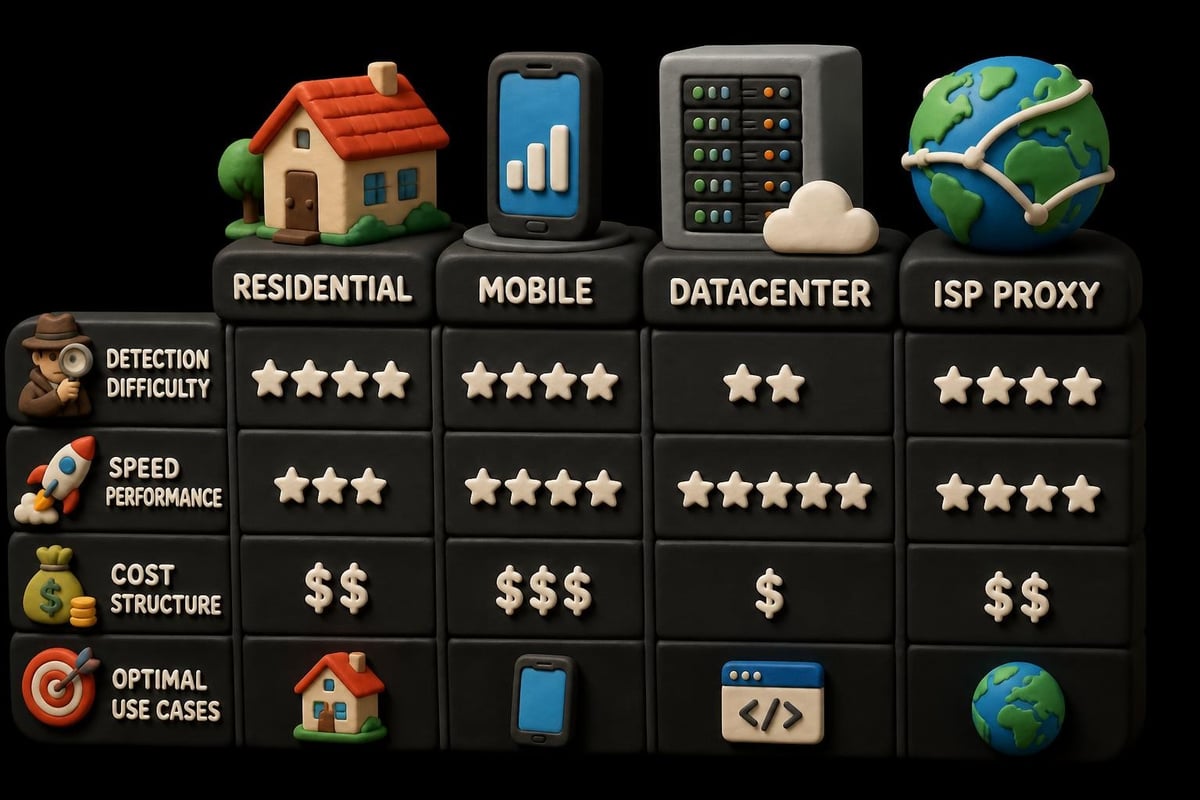
| Proxy Type | Origin | Detection Difficulty | Speed | Cost per GB | Best Use Case |
|---|---|---|---|---|---|
| Residential | Home ISPs | Very Hard | Moderate | $3-8 | Anti-bot evasion |
| Mobile | Cellular networks | Extremely Hard | Slower | $10-20 | Mobile-specific content |
| Datacenter | Cloud hosts | Easy | Very Fast | $0.10-1 | High-volume scraping |
| ISP | Datacenter with ISP IPs | Hard | Fast | $2-5 | Balance of speed/stealth |
Datacenter proxies offer superior speed and lower costs but face higher detection rates on sophisticated platforms. They work well for accessing APIs, testing infrastructure, and scraping sites without advanced bot protection.
Mobile proxies route traffic through cellular network IP addresses, providing the highest level of legitimacy for mobile-focused applications. The premium pricing reflects limited pool availability and higher operational costs.
ISP proxies represent a hybrid approach, combining datacenter hosting with IP addresses registered to residential internet service providers. This configuration offers faster speeds than residential proxies while maintaining better reputation than pure datacenter IPs.
Performance Optimization Strategies
Maximizing value from an iproyal residential proxy deployment requires strategic configuration and monitoring practices that balance performance, cost, and detection avoidance.
Request Distribution and Throttling
Aggressive request patterns increase detection risk regardless of IP quality. Implementing intelligent throttling protects both your operations and the residential endpoints handling your traffic.
Throttling best practices:
- Randomize delays between requests (2-10 seconds typical)
- Distribute requests across multiple IPs rather than concentrating on few addresses
- Mirror human browsing patterns including navigation paths and session duration
- Implement exponential backoff when encountering rate limits or errors
Organizations scraping at scale should calculate sustainable request rates based on pool size and rotation frequency. A 10,000 IP pool rotating every 10 minutes theoretically supports 16,000 requests per minute, but practical limits account for geographic targeting, session requirements, and website-specific restrictions.
Geographic Targeting Precision
IPRoyal's city-level targeting enables precise local market research but requires understanding of how geographic precision affects pool availability.
- Country-level targeting provides maximum pool depth and fastest response times
- State/province filtering reduces available IPs by 70-90% depending on region
- City-level targeting may limit pools to hundreds rather than thousands of addresses
Applications requiring city-specific data should test pool availability during planning phases to ensure sufficient IP diversity for rotation requirements.
Monitoring and Quality Assurance
Continuous monitoring identifies degraded endpoints, blacklisted IPs, and configuration issues before they impact operations.
Key metrics include:
- Success rate percentages across different target domains
- Average response times by geographic region and session type
- IP reputation scores using third-party blacklist checks
- Session persistence reliability for sticky configurations
Many organizations integrate proxy performance monitoring into existing observability platforms, triggering alerts when success rates drop below acceptable thresholds or when specific IPs consistently fail.
Technical Integration Patterns
Implementing an iproyal residential proxy into existing workflows requires consideration of authentication methods, error handling, and failover strategies.
Authentication and Credential Management
IPRoyal supports standard proxy authentication through credentials embedded in connection URLs or passed via headers.
URL-based authentication format:
http://username:password@proxy-host:port
Organizations managing multiple projects or team members should leverage IPRoyal's sub-user system, creating isolated credentials for different applications. This separation enables:
- Per-project usage tracking to allocate costs accurately
- Security isolation limiting breach exposure to single credentials
- Permission management restricting geographic regions or features by user
- Traffic analysis identifying performance patterns by application
Credential rotation policies should align with security requirements while considering the operational overhead of updating configurations across distributed systems.
Error Handling and Retry Logic
Residential proxies introduce additional failure modes beyond standard network errors, requiring robust error handling.
Common failure scenarios include:
- IP reputation blocks where target sites blacklist specific residential addresses
- Geographic restrictions when requested location lacks available endpoints
- Session expiration in sticky configurations exceeding maximum duration
- Endpoint connectivity when residential devices disconnect from networks
Sophisticated implementations classify errors by type, applying appropriate retry strategies. Transient network issues warrant immediate retry with exponential backoff, while IP-specific blocks require rotation to different addresses.
Future Trends and Industry Evolution
The residential proxy landscape continues evolving as websites deploy increasingly sophisticated detection systems while legitimate business use cases expand.
Academic research on proxy vulnerabilities reveals ongoing security challenges affecting the entire ecosystem. Organizations should expect continued arms race dynamics between detection technologies and proxy service improvements.
Emerging trends include:
- AI-powered detection analyzing behavioral patterns across multiple dimensions simultaneously
- Blockchain verification providing transparent endpoint sourcing audit trails
- Bandwidth tokenization enabling peer-to-peer residential endpoint marketplaces
- 5G integration expanding mobile proxy pools as cellular adoption grows
The increasing sophistication of both detection and evasion technologies creates pressure on proxy providers to maintain higher-quality pools with better endpoint verification. Organizations evaluating long-term proxy strategies should prioritize providers demonstrating commitment to ethical sourcing and technical innovation.
Regulatory Landscape Changes
Government attention to data privacy and automated data collection affects how organizations can legally deploy residential proxies across different jurisdictions.
The European Union's data protection framework, similar regulations in California and other states, and emerging international privacy standards create compliance considerations for:
- Data collected through proxy-enabled scraping activities
- Storage and processing of information obtained from restricted regions
- Disclosure requirements when automated systems gather personal information
- Cross-border data transfer restrictions affecting proxy traffic routing
Organizations operating globally should consult legal counsel regarding proxy usage in highly regulated industries like healthcare, finance, and telecommunications where data handling requirements impose strict limitations.
Residential proxies like those offered by IPRoyal serve essential business intelligence and verification functions when deployed ethically and strategically. Understanding the technical capabilities, security implications, and appropriate use cases helps organizations leverage these tools effectively while managing associated risks. Whether you need city-level targeting for market research, session persistence for account management, or high-volume rotation for data collection, PinguProxy delivers enterprise-grade residential and mobile proxy solutions with unlimited bandwidth, complete IPv4 and IPv6 support, and 24/7 technical support to keep your operations running smoothly.