
Oxylabs Residential Proxies: Complete Analysis 2026
Oxylabs residential proxies represent one of the most established solutions in the proxy market today. With millions of IP addresses spanning nearly every country, Oxylabs has built a reputation for delivering reliable residential proxy infrastructure. For businesses engaged in web scraping, market research, ad verification, or competitive intelligence, understanding what oxylabs residential proxies offer-and how they compare to alternatives-is critical for making informed procurement decisions in 2026.
Understanding Residential Proxy Infrastructure
Residential proxies differ fundamentally from datacenter alternatives in their IP origin. While datacenter proxies come from cloud providers and hosting facilities, residential IPs belong to actual ISP-assigned connections at homes and businesses. This distinction matters tremendously for accessing websites that employ sophisticated bot detection.
How Oxylabs Sources Their IP Pool
The oxylabs residential proxies network comprises over 100 million IP addresses acquired through multiple partnerships and programs. According to the Oxylabs Residential Proxy Acquisition Handbook, their sourcing methodology emphasizes ethical acquisition through legitimate SDK partnerships and user consent mechanisms.
Key sourcing channels include:
- Browser extension partnerships with explicit user consent
- SDK integrations in mobile applications
- Bandwidth-sharing programs with transparent terms
- Commercial partnerships with network operators
The proxy pool rotates continuously, with IPs entering and leaving the network based on user activity. This dynamic nature creates both opportunities and challenges for sustained data collection operations.
Geographic Coverage and Distribution
Oxylabs maintains residential proxies across 195+ countries. However, IP density varies significantly by region. North America and Western Europe account for the highest concentration, while emerging markets show sparser coverage.
| Region | Estimated IP Count | Average Success Rate |
|---|---|---|
| North America | 35M+ | 97.2% |
| Europe | 40M+ | 96.8% |
| Asia-Pacific | 18M+ | 94.5% |
| Latin America | 5M+ | 92.1% |
| Africa/Middle East | 2M+ | 89.3% |

These success rates reflect connection establishment probability rather than request completion, which depends heavily on target website behavior and filtering mechanisms.
Technical Specifications and Performance
The official Oxylabs developer documentation outlines comprehensive technical capabilities. Oxylabs residential proxies support both HTTP/HTTPS and SOCKS5 protocols, enabling versatile application across different use cases.
Authentication and Session Management
Oxylabs offers two primary authentication methods:
- Username-password authentication with customizable session parameters
- IP whitelisting for infrastructure-level access control
Session duration can be controlled through username formatting, allowing sticky sessions from 1 to 30 minutes. This flexibility proves valuable when scraping multi-page workflows requiring consistent identity.
Session control syntax example:
username-session-randomstring123:password@pr.oxylabs.io:7777
The session identifier maintains the same exit IP for the specified duration, critical for maintaining shopping carts, authentication states, or sequential page navigation.
Rotation Strategies and Request Handling
Beyond manual session control, oxylabs residential proxies provide automatic rotation with each request when no session parameter is specified. This approach distributes requests across the pool, minimizing per-IP request rates and reducing detection probability.
Response times average between 1.2 and 3.5 seconds depending on geographic target and proxy location matching. This latency significantly exceeds datacenter proxies but remains acceptable for most scraping operations where authenticity outweighs speed.
The GitHub repository examples demonstrate integration patterns for popular programming languages including Python, Node.js, PHP, and Java, streamlining implementation for development teams.
Pricing Structure and Cost Analysis
Oxylabs positions itself at the premium end of residential proxy pricing. Their cost model centers on traffic consumption rather than concurrent connections, with entry-level plans starting at $300 monthly for 20GB.
Pricing Tiers Breakdown
- Starter: $300/month (20GB) = $15/GB
- Advanced: $1,000/month (100GB) = $10/GB
- Enterprise: Custom pricing (500GB+) = $6-8/GB negotiated
These rates place oxylabs residential proxies among the more expensive options in the 2026 market. According to Proxyway's proxy market research, average residential proxy pricing ranges from $5 to $12 per GB, with premium providers commanding higher rates through service differentiation.
Cost comparison considerations:
- Overages typically billed at $15-17/GB beyond plan limits
- Unused bandwidth does not roll over between billing cycles
- Annual commitments may unlock 10-15% discounts
- Traffic to certain restricted regions may incur surcharges
For businesses evaluating alternatives, platforms like PinguProxy offer competitive residential proxy options with transparent pricing structures and bandwidth flexibility.
Detection Challenges and Mitigation
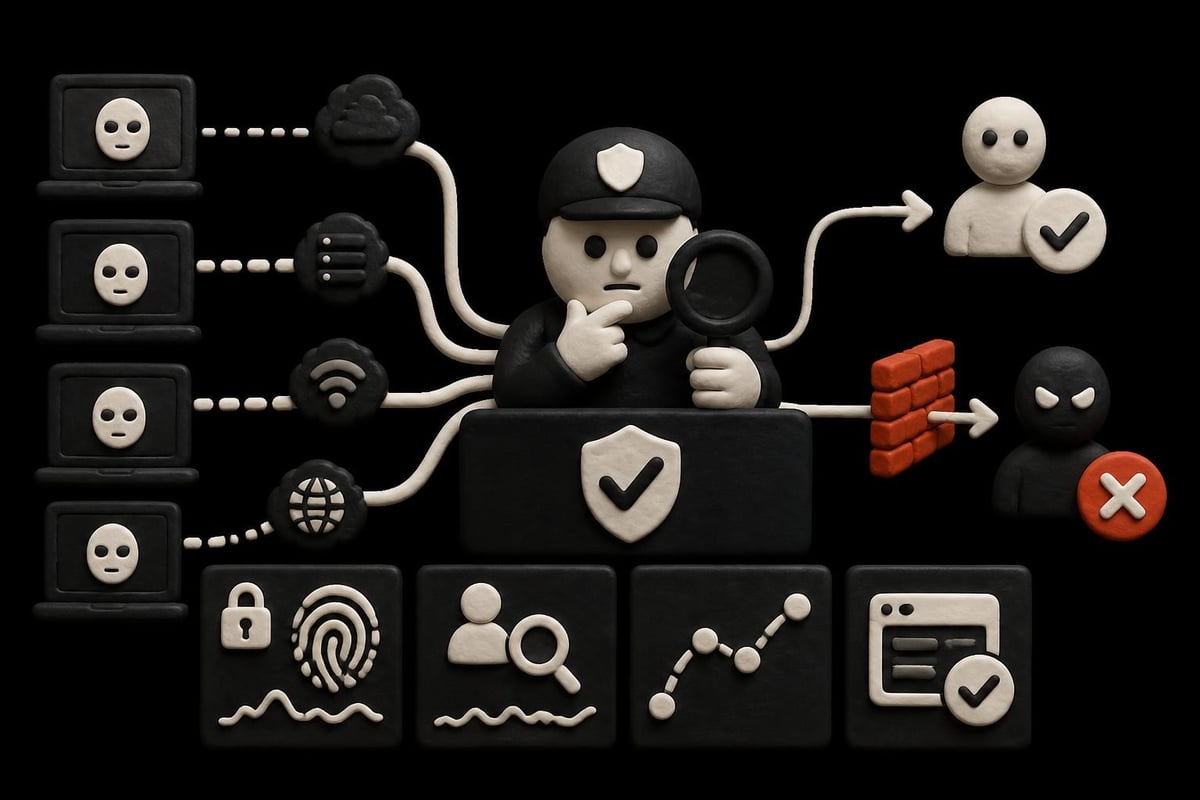
Even residential proxies face increasing scrutiny from sophisticated anti-bot systems. Cloudflare's machine learning approach to residential proxy detection highlights how major platforms identify proxy traffic through behavioral signals, TLS fingerprinting, and cross-request correlation.
Common Detection Vectors
Modern bot detection examines multiple dimensions beyond simple IP reputation:
- TLS/SSL fingerprinting analyzing handshake characteristics
- Browser fingerprinting comparing hundreds of client attributes
- Behavioral analysis detecting non-human interaction patterns
- Cross-session correlation linking requests across IP changes
The academic paper CalcuLatency: Leveraging Cross-Layer Network Latency Measurements demonstrates how latency inconsistencies between network layers can expose proxy usage, presenting challenges even for residential solutions.
Mitigation Strategies
Successfully using oxylabs residential proxies requires more than just IP rotation:
- Match geolocation to target content region (requesting US content from US IPs)
- Implement realistic request pacing avoiding inhuman speed patterns
- Rotate user agents consistently with browser fingerprint capabilities
- Maintain session coherence for multi-step workflows
- Monitor block rates and adjust strategies when detection increases
According to OWASP research on browser fingerprinting, inconsistencies between proxy IP geolocation and browser language/timezone settings frequently trigger security systems, emphasizing the importance of holistic request construction.
Use Case Applications
Oxylabs residential proxies serve diverse business applications where authentic residential IPs prove essential for accessing target content.
Web Scraping and Data Collection
For e-commerce price monitoring, market research, and competitive intelligence, oxylabs residential proxies enable large-scale data collection across geo-restricted or bot-protected websites. The residential IP source mimics organic user traffic, reducing block rates compared to datacenter alternatives.
Optimal scraping configurations:
- Distribute requests across multiple geographic regions
- Implement exponential backoff on errors
- Respect robots.txt and crawl-delay directives
- Monitor and adapt to changing detection patterns
The arXiv paper on web scraping ethics provides comprehensive guidance on legal and ethical considerations when collecting data through proxies, addressing compliance with terms of service, copyright, and data protection regulations.
Ad Verification and Brand Protection
Marketing teams use residential proxies to verify ad placement accuracy, detect fraudulent impressions, and monitor brand representation across different geographic markets. The ability to view advertisements exactly as local users see them proves invaluable for campaign optimization.
SEO and SERP Monitoring
Search engine results vary significantly by location. Oxylabs residential proxies enable SEO professionals to track ranking positions across multiple markets without location bias. This geographic precision supports international SEO strategies and competitive analysis.
| Use Case | Recommended Session Duration | Typical Bandwidth Usage |
|---|---|---|
| Price Scraping | 5-10 minutes | 50-200MB per 1000 products |
| SERP Monitoring | 1-3 minutes | 10-30MB per 100 queries |
| Ad Verification | Rotating (no session) | 5-15MB per 100 verifications |
| Social Media Management | 15-30 minutes | 100-500MB per account daily |
Performance Benchmarks and Reliability
Real-world performance testing reveals important distinctions between provider claims and operational reality. Independent testing of oxylabs residential proxies shows strong but imperfect reliability metrics.
Success Rate Analysis
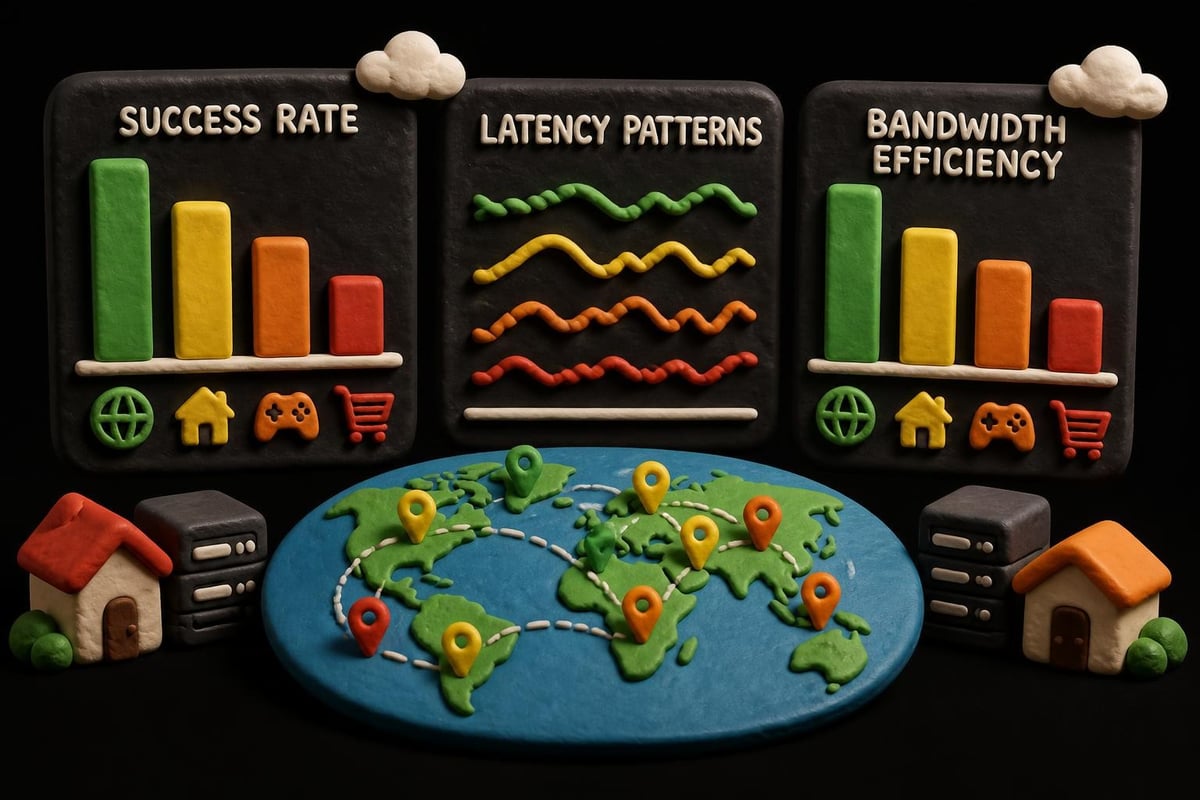
Connection establishment succeeds above 95% for most tier-one countries, but request completion rates vary based on target websites. Sites with aggressive bot protection may show success rates as low as 70-80% even with residential IPs.
Factors affecting success rates:
- Target website security sophistication
- Request volume and rate patterns
- Geographic matching between proxy and target
- Time of day and network congestion
- Session consistency requirements
Organizations should budget for 10-20% overhead in bandwidth consumption due to failed requests and retries.
Speed and Latency Considerations
Response times for oxylabs residential proxies average 2.1 seconds globally, with significant variance:
- Same-continent requests: 1.2-1.8 seconds average
- Cross-continent requests: 2.5-4.2 seconds average
- Emerging market proxies: 3.0-5.5 seconds average
These latencies represent full round-trip time including proxy negotiation, target server response, and data transfer. For time-sensitive applications, geographic optimization becomes critical.
Comparing Alternatives in 2026
The residential proxy market has evolved considerably, with numerous providers offering competitive alternatives to oxylabs residential proxies. Understanding market options helps optimize cost-performance tradeoffs.
Key Competitive Differentiators
| Feature | Oxylabs | Alternative Providers | PinguProxy |
|---|---|---|---|
| IP Pool Size | 100M+ | 10M-50M typical | Competitive pool with IPv4/IPv6 |
| Starting Price/GB | $15 | $7-12 | Transparent, flexible pricing |
| Protocol Support | HTTP/HTTPS, SOCKS5 | Varies by provider | HTTP/HTTPS, SOCKS5, IPv4/IPv6 |
| Session Control | 1-30 minutes | 10-60 minutes typical | 1ms rotation + custom sessions |
| Bandwidth Limits | Plan-based caps | Unlimited common | Unlimited access |
| Support | 24/7 email/chat | Business hours typical | 24/7 customer support |
Alternative considerations extend beyond pricing to operational factors like API capabilities, documentation quality, and dashboard usability. Some providers excel in specific verticals (SEO monitoring, sneaker bots, social media automation) while maintaining smaller general-purpose pools.
Free Proxy Risk Profile
The arXiv study on free proxy vulnerabilities documents severe security and reliability issues plaguing free residential proxy services. These include data interception, malware injection, credential theft, and unstable connections averaging under 60% reliability.
Business operations requiring consistency and security should avoid free alternatives regardless of apparent cost savings.
Integration and Implementation
Deploying oxylabs residential proxies requires careful technical planning beyond simple endpoint configuration.
Development Framework Compatibility
Modern scraping frameworks integrate seamlessly with residential proxies through standard proxy protocols:
- Python: Requests library, Scrapy framework, Selenium WebDriver
- JavaScript/Node.js: Axios, Puppeteer, Playwright
- PHP: Guzzle, cURL libraries
- Java: Apache HttpClient, OkHttp
For Apache-based reverse proxy architectures, resources like the Apache HTTP proxy configuration guide provide implementation patterns applicable across various proxy providers.
Monitoring and Optimization
Successful residential proxy deployments implement robust monitoring:
- Request success/failure tracking by target domain
- Response time distribution identifying performance outliers
- Geographic performance analysis optimizing proxy location selection
- Cost tracking correlating bandwidth consumption with business outcomes
- Block rate monitoring detecting deteriorating access conditions
These metrics inform continuous optimization, balancing cost against performance requirements.
Infrastructure and Network Topology
Understanding residential proxy network architecture provides insight into performance characteristics and limitations.
The CAIDA 2023 Annual Report provides authoritative background on Internet topology and IP address ecosystem dynamics relevant to residential proxy operations. IP churn rates in residential pools typically range from 15-30% weekly as users connect and disconnect from networks.
Network Path Characteristics
Residential proxy requests traverse complex network paths:
- Client application initiates request to proxy endpoint
- Proxy infrastructure selects appropriate residential exit node
- Request routes through residential ISP connection
- Target website processes request as residential user
- Response traverses reverse path to client
Each hop introduces latency and potential failure points. Geographic proximity between proxy exit node and target server minimizes latency while maintaining location authenticity.
Security and Privacy Considerations
Using residential proxies creates security obligations for both providers and users.
Data Protection Responsibilities
When routing traffic through residential IPs, businesses must consider:
- Data minimization: Collect only necessary information
- Encryption: Use HTTPS for sensitive data transmission
- Access controls: Limit proxy credentials to authorized personnel
- Audit logging: Track proxy usage for compliance documentation
- Vendor due diligence: Verify provider ethical sourcing practices
Oxylabs maintains SOC 2 Type II certification and GDPR compliance, addressing enterprise security requirements. However, data transmission security remains a shared responsibility between provider and customer.
Zero-Trust Architecture Integration
Modern security frameworks emphasize zero-trust principles. When integrating residential proxies, implement:
- Credential rotation schedules
- Network segmentation isolating proxy traffic
- Behavioral anomaly detection identifying compromised credentials
- Regular security assessments of proxy-dependent workflows
Understanding oxylabs residential proxies requires evaluating technical capabilities, cost structures, and operational considerations within your specific use case context. While Oxylabs offers robust infrastructure and extensive geographic coverage, the premium pricing and technical complexity demand careful assessment of alternatives. PinguProxy delivers competitive residential proxy solutions with unlimited bandwidth, comprehensive IPv4/IPv6 support, and 1ms rotation capabilities backed by 24/7 support-providing enterprise-grade performance without the enterprise price tag. Whether you're scaling web scraping operations, managing multi-region SEO campaigns, or conducting market research, choosing the right residential proxy provider impacts both operational success and bottom-line costs.