
Shadowsocks: The Encrypted Proxy for Privacy & Security
In an era where internet censorship and surveillance continue to expand globally, maintaining online privacy has become increasingly challenging. Shadowsocks emerged as a powerful solution to these problems, offering users a lightweight, fast, and secure method to circumvent restrictions while protecting their digital footprint. Originally developed in 2012 by a Chinese programmer known as "clowwindy," this open-source encrypted proxy protocol has evolved into one of the most effective tools for accessing unrestricted internet content. Unlike traditional VPNs that can be easily detected and blocked, shadowsocks uses sophisticated encryption techniques and flexible deployment options that make it remarkably difficult for censorship systems to identify and filter.
Understanding the Shadowsocks Protocol Architecture
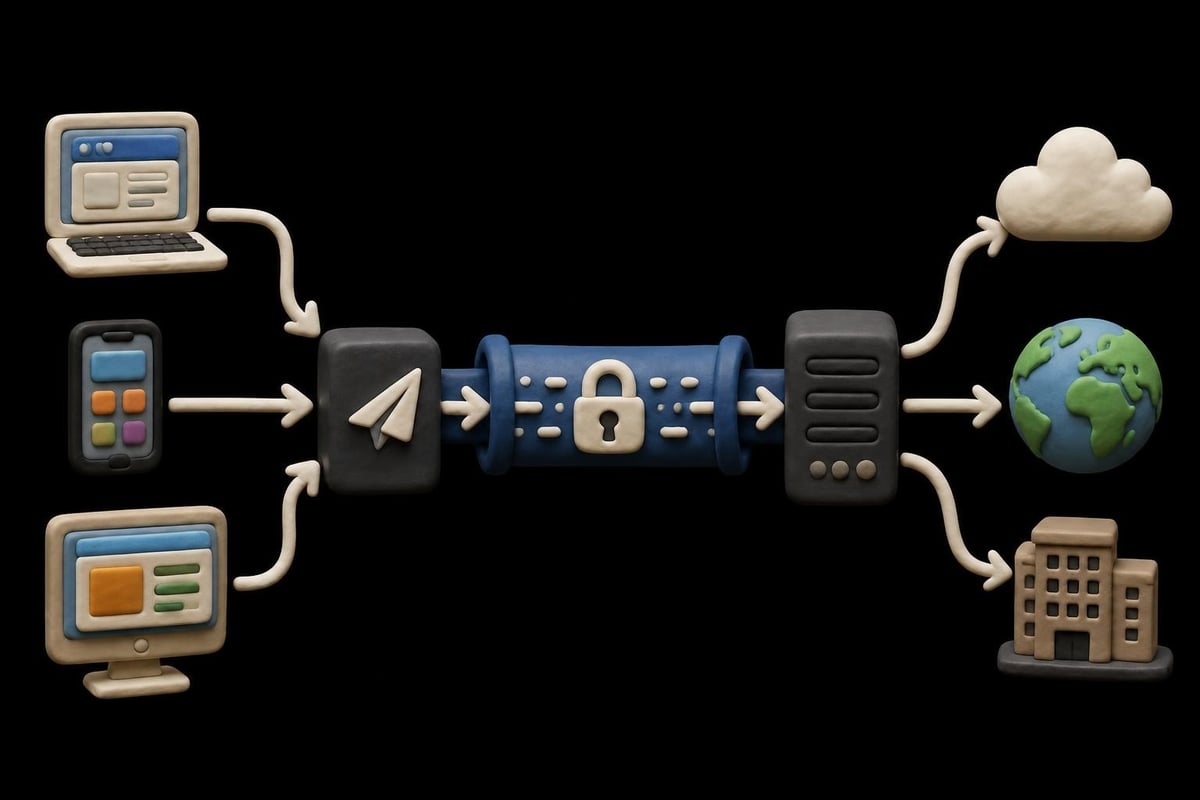
Shadowsocks operates on a fundamentally different principle than conventional VPNs or proxy services. The protocol functions as a SOCKS5 proxy that encrypts traffic between the client and server, creating a secure tunnel for data transmission. This approach delivers several advantages over traditional solutions, particularly in environments where network monitoring and deep packet inspection are prevalent.
The architecture consists of two primary components: a local client and a remote server. When you initiate a connection, the client software running on your device receives requests from applications and encrypts them before forwarding to the remote server. The server then decrypts these requests, connects to the destination website or service, and returns the response through the same encrypted channel.
Core Components and Data Flow
The shadowsocks ecosystem relies on several interconnected elements that work together seamlessly:
- Client application that intercepts local network traffic
- Encryption layer using modern AEAD ciphers
- Remote server that acts as the exit point
- Configuration parameters including port, password, and cipher method
- Plugin system for additional obfuscation when needed
According to the official Shadowsocks protocol specification, the 2022 edition introduced significant improvements to address cryptographic weaknesses identified in earlier versions. These enhancements include stronger encryption algorithms, better replay attack protection, and improved header formats that reduce fingerprinting risks.
Encryption Methods and Security Considerations
Modern shadowsocks implementations support various encryption ciphers, though not all offer equal security. The protocol initially used stream ciphers, but these have been deprecated in favor of authenticated encryption with associated data (AEAD) ciphers. The getting started documentation recommends specific cipher suites that balance performance with security.
| Cipher Suite | Security Level | Performance | Use Case |
|---|---|---|---|
| AES-256-GCM | High | Excellent | General purpose |
| ChaCha20-Poly1305 | High | Very Good | Mobile devices |
| AES-128-GCM | Good | Excellent | Low-latency applications |
| 2022-blake3-aes-256-gcm | Very High | Good | Maximum security |
Research from IACR ePrint highlights cryptographic considerations that impact protocol security, emphasizing the importance of proper implementation and cipher selection. Organizations deploying shadowsocks must carefully evaluate their security requirements against performance needs.
Deployment Strategies and Configuration Best Practices
Setting up shadowsocks requires careful planning to maximize both security and performance. Whether you're configuring a personal server or managing infrastructure for web scraping operations, following established best practices ensures optimal results. The deployment process varies depending on your operating system and specific requirements, but core principles remain consistent across platforms.
Server-Side Configuration Steps
- Select a reliable hosting provider with servers in strategic geographic locations
- Install the shadowsocks server software using package managers or Docker containers
- Generate strong passwords using cryptographically secure random number generators
- Configure firewall rules to allow shadowsocks traffic while blocking unauthorized access
- Enable automatic updates to patch security vulnerabilities promptly
- Monitor performance metrics including bandwidth usage, connection counts, and latency
The choice of hosting location significantly impacts performance, especially for time-sensitive applications like gaming or real-time data collection. Services like PinguProxy understand these requirements and provide globally distributed infrastructure that minimizes latency while maintaining high throughput.
Client Configuration and Management
Client setup has become increasingly user-friendly across all major platforms. The Shadowsocks Android client demonstrates how mobile implementations prioritize battery efficiency while maintaining strong encryption. Desktop clients offer similar ease of use with additional features for power users.
Essential configuration parameters include:
- Server address and port number
- Encryption method matching server settings
- Password or key for authentication
- Local SOCKS5 port for application connections
- Optional plugin configuration for enhanced obfuscation
For Android users seeking open-source alternatives, the F-Droid package provides a trusted distribution channel free from proprietary modifications. This transparency matters for security-conscious users who want to verify exactly what code runs on their devices.
Circumventing Detection and Blocking Mechanisms
As shadowsocks gained popularity, censorship systems evolved to detect and block the protocol. Research published at USENIX Security documents how advanced firewalls use active probing and traffic analysis to identify circumvention tools. Understanding these detection mechanisms helps users configure shadowsocks to evade filtering effectively.

Active Probing Countermeasures
Sophisticated censorship infrastructure doesn't just passively monitor traffic-it actively probes suspected proxy servers to confirm their nature. When a firewall detects suspicious traffic patterns, it may send specially crafted requests to the destination server. If the server responds in ways characteristic of shadowsocks, the connection gets blocked and the server IP address blacklisted.
Several strategies mitigate active probing risks:
- Implement strict authentication that rejects unauthorized connection attempts
- Use random padding to disguise traffic patterns and packet sizes
- Deploy plugins like v2ray-plugin or obfs4 for additional protocol obfuscation
- Rotate server IPs regularly to stay ahead of blacklist updates
- Restrict access to known client IP addresses when possible
Studies from arXiv analyzing censorship evasion demonstrate that combining multiple obfuscation techniques significantly improves resilience against detection. The layered approach makes traffic analysis computationally expensive for censors while maintaining reasonable performance for legitimate users.
Traffic Fingerprinting and Mitigation
Even with encryption, traffic patterns can reveal information about the underlying protocol. Packet size distributions, timing characteristics, and connection behaviors create unique fingerprints that sophisticated systems can identify. Academic research from the University of Helsinki examines how censorship systems have specifically targeted shadowsocks based on these observable patterns.
| Detection Method | How It Works | Countermeasure |
|---|---|---|
| Packet Size Analysis | Statistical distribution patterns | Random padding injection |
| Timing Correlation | Request/response intervals | Traffic shaping and delays |
| Port Scanning | Identifying common proxy ports | Non-standard port selection |
| TLS Fingerprinting | Identifying encryption handshakes | Plugin-based encapsulation |
Performance Optimization for Production Environments
Organizations using shadowsocks for business applications like web scraping, market research, or competitive intelligence need reliable, high-performance configurations. The protocol's lightweight design already provides advantages over heavier VPN solutions, but proper tuning can yield significant additional improvements.
Bandwidth and Throughput Management
The technical background provided in Stony Brook's networking lectures explains how proxy architectures impact throughput and latency. Shadowsocks benefits from minimal protocol overhead, but real-world performance depends on multiple factors including network conditions, encryption overhead, and server resources.
Key optimization strategies:
- Enable TCP Fast Open to reduce connection establishment latency
- Tune kernel parameters for high-concurrency scenarios
- Implement connection pooling for frequent requests to the same destinations
- Monitor and adjust MTU settings to prevent fragmentation
- Use server-side caching where appropriate for repeated content requests
For scraping operations requiring thousands of concurrent connections, infrastructure considerations become critical. The PinguProxy blog regularly covers topics related to proxy optimization and best practices for data-intensive applications.
Multi-Server Configurations and Load Balancing
Single-server deployments create bottlenecks and single points of failure. Production environments benefit from distributing traffic across multiple shadowsocks servers in different geographic regions. This approach improves reliability, reduces latency for distributed users, and provides geographic diversity for accessing region-specific content.
- Deploy servers in strategic locations matching your access requirements
- Implement health checking to detect and route around failing instances
- Configure client-side failover to automatically switch servers when problems occur
- Monitor performance metrics across all servers to identify optimization opportunities
- Rotate usage among servers to prevent any single endpoint from becoming overloaded

Security Implications and Privacy Considerations
While shadowsocks provides strong encryption for data in transit, understanding its security model helps users make informed decisions about deployment. The protocol protects against eavesdropping and tampering between client and server, but doesn't provide anonymity by itself. Your shadowsocks server knows both your real IP address and the destinations you're accessing-a different trust model than networks like Tor.
Threat Model and Trust Boundaries
Operating your own shadowsocks server means you control the exit point and logging policies. This offers significant advantages over commercial VPN providers whose logging practices may not align with privacy claims. However, server hosting providers still have visibility into network metadata, making provider selection crucial.
Critical security considerations include:
- Server providers can observe connection patterns even without decrypting traffic
- DNS queries may leak information about browsing habits if not properly configured
- Time correlation attacks can potentially link client and destination traffic
- Compromised servers expose both user IP addresses and browsing destinations
- Weak passwords or outdated encryption ciphers create vulnerability windows
Organizations handling sensitive data should implement defense-in-depth strategies that complement shadowsocks with additional security layers. The zero-log policy and rapid rotation features offered by professional proxy services add important protections beyond basic protocol encryption.
Operational Security Best Practices
Maintaining security requires ongoing vigilance and regular updates to configurations. The shadowsocks ecosystem continues evolving to address newly discovered vulnerabilities and adapt to changing threat landscapes. Staying current with protocol improvements and security patches protects against known attack vectors.
Recommended operational practices:
- Rotate passwords and encryption keys on a regular schedule
- Monitor logs for unusual connection patterns or failed authentication attempts
- Keep client and server software updated to the latest stable releases
- Use separate servers for different sensitivity levels or use cases
- Implement proper access controls and authentication mechanisms
- Regularly audit configurations against current best practice recommendations
Integration with Business Applications and Workflows
Beyond personal privacy use cases, shadowsocks has proven valuable for various business applications requiring reliable proxy access. Companies engaged in competitive intelligence, SEO monitoring, ad verification, and market research rely on proxy infrastructure that combines performance with geographic flexibility.
Web Scraping and Data Collection
Data collection operations face increasing challenges from anti-bot systems and rate limiting. Shadowsocks provides a foundation for distributed scraping architectures that appear as residential traffic rather than datacenter connections. When combined with proper request throttling and user-agent rotation, it enables sustainable large-scale data collection.
The protocol's efficiency makes it particularly suitable for high-volume scraping scenarios where VPN overhead would create unacceptable performance penalties. Organizations can deploy shadowsocks infrastructure close to target markets, reducing latency and improving success rates for geo-restricted content access.
Gaming and Low-Latency Applications
Competitive gaming increasingly requires low-latency connections to distant servers. Shadowsocks helps gamers bypass regional restrictions and connect to servers offering optimal ping times. The protocol's minimal overhead preserves gaming performance while providing the flexibility to route traffic through strategically positioned servers.
Professional esports teams and gaming organizations use proxy infrastructure to practice on different regional servers, test game versions not yet released in their markets, and maintain competitive advantages through optimal server selection. The combination of encryption and low latency makes shadowsocks particularly well-suited to these demanding applications.
Shadowsocks remains a powerful tool for maintaining privacy and circumventing censorship in 2026, offering flexibility and performance that traditional VPNs struggle to match. Whether you're protecting personal privacy, conducting business intelligence, or running large-scale data collection operations, understanding proper deployment and security practices ensures optimal results. For organizations requiring enterprise-grade proxy infrastructure with guaranteed uptime and global coverage, PinguProxy delivers high-speed datacenter, residential, and mobile proxies with complete IPv4 and IPv6 support, zero-log policies, and 24/7 expert support to keep your operations running smoothly.