The evolution of proxy protocols has fundamentally changed how businesses and individuals protect their online privacy and access global content. Among these protocols, socks 5 stands as the most advanced and widely adopted solution for routing internet traffic through intermediary servers. Unlike its predecessors and alternative proxy methods, socks 5 offers a unique combination of flexibility, security, and performance that makes it indispensable for modern web scraping, anonymity networks, and secure browsing applications.
Understanding the SOCKS 5 Protocol Architecture
SOCKS 5 represents the fifth version of the Socket Secure protocol, designed to route network packets between a client and server through a proxy server. This protocol operates at the session layer of the OSI model, making it application-agnostic and capable of handling any type of traffic, from HTTP and HTTPS to FTP and even real-time protocols.
The fundamental difference between socks 5 and earlier versions lies in its enhanced authentication capabilities and support for both IPv4 and IPv6 addressing. When a client initiates a socks 5 connection, it first negotiates authentication methods with the proxy server. The Username/Password Authentication for SOCKS V5 standard defines how credentials are securely transmitted during this handshake process.
Key Technical Advantages
Performance benefits of socks 5 include:
- UDP protocol support for faster, connectionless data transmission
- DNS resolution flexibility (remote or local)
- No protocol-specific limitations on traffic types
- Efficient packet routing without modification
Security enhancements over previous versions:
- Multiple authentication method support
- GSS-API integration capability
- Reduced information leakage during connection establishment
- Better error handling and connection status reporting
The protocol's versatility has made it the preferred choice for applications requiring both speed and security. Modern implementations leverage socks 5 for everything from residential proxy networks to enterprise-grade web scraping infrastructure.
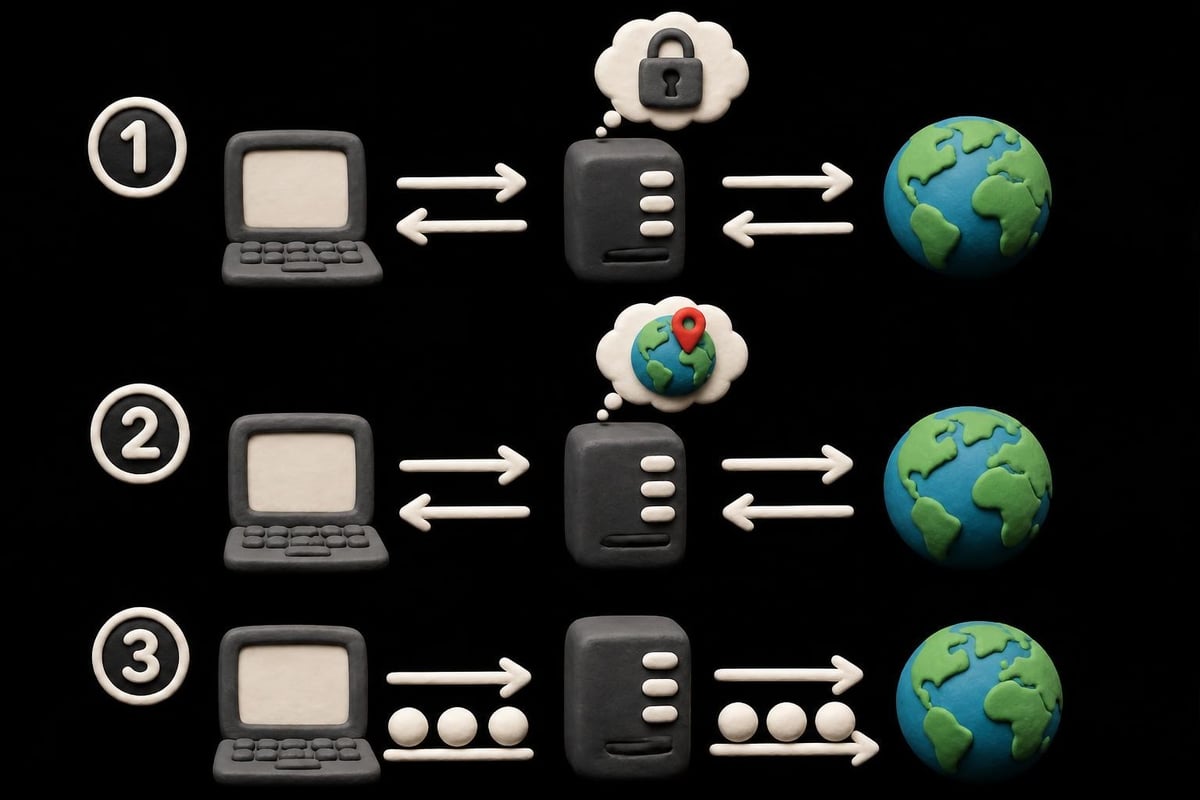
Authentication Methods and Security Considerations
Authentication represents one of the most critical aspects of socks 5 deployment. The IANA SOCKS Methods registry maintains the official list of authentication method identifiers, ranging from no authentication required (0x00) to username/password (0x02) and GSSAPI (0x01).
| Authentication Method | Code | Use Case | Security Level |
|---|---|---|---|
| No Authentication | 0x00 | Internal networks, testing | Low |
| GSSAPI | 0x01 | Enterprise environments | High |
| Username/Password | 0x02 | General proxy services | Medium-High |
| IANA Reserved | 0x03-0x7F | Future standards | Varies |
| Private Methods | 0x80-0xFE | Custom implementations | Varies |
When deploying socks 5 proxies for business applications, username/password authentication strikes the optimal balance between security and ease of implementation. However, organizations handling sensitive data should consider additional layers of encryption, such as tunneling socks 5 connections through SSH or TLS wrappers.
DNS Resolution and Privacy Implications
One often overlooked feature of socks 5 is its handling of DNS requests. Unlike HTTP proxies that only work with web traffic, socks 5 can be configured to perform DNS resolution either locally (on the client) or remotely (on the proxy server). Remote DNS resolution prevents DNS leaks that could reveal your browsing destinations to your ISP or local network administrator.
The Tor Project's SOCKS extensions document describes how Tor leverages this capability to enhance anonymity. By resolving hostnames at the exit node, Tor prevents observers on the client's network from seeing which domains are being accessed. This same principle applies to commercial proxy services, where remote DNS resolution is crucial for maintaining privacy.
Implementing SOCKS 5 in Modern Applications
Integration of socks 5 support varies significantly across different platforms and programming environments. Understanding these implementation patterns helps developers and system administrators deploy proxy solutions effectively.
Browser and Operating System Configuration
Modern browsers have built-in support for socks 5 proxies, though the configuration interface varies. The Microsoft Edge proxy support documentation illustrates how enterprise administrators can configure proxy settings through group policies. These settings typically include:
- Proxy server address and port
- Authentication credentials (if required)
- Bypass rules for local addresses
- Protocol preference (SOCKS5 vs HTTP)
For command-line tools and automated workflows, socks 5 configuration is often more straightforward. The curl documentation shows how developers can specify socks 5 proxies using flags like --socks5 for standard connections or --socks5-hostname when remote DNS resolution is desired.

Developer Integration Patterns
Python developers frequently use socks 5 through libraries like:
- The PySocks implementation for direct integration
- Requests library with SOCKS proxy support
- Urllib3 with custom transport adapters
- Scrapy middleware for web scraping projects
The Everything curl guide to proxies provides comprehensive insights into how libcurl handles socks 5 connections, including important nuances about hostname resolution modes. When using CURLPROXY_SOCKS5, curl resolves hostnames locally, while CURLPROXY_SOCKS5_HOSTNAME delegates resolution to the proxy server.
This distinction matters significantly for privacy-conscious applications. Local DNS resolution can leak information about your intended destinations, while remote resolution keeps all traffic metadata within the proxy tunnel.
Performance Optimization and Best Practices
Maximizing socks 5 performance requires understanding both the protocol's capabilities and common deployment challenges. The protocol's support for UDP makes it particularly well-suited for applications requiring low latency, such as gaming or real-time communication.
Connection Pooling and Reuse
Strategies for efficient socks 5 usage:
- Maintain persistent connections when possible
- Implement connection pooling for high-volume applications
- Use keep-alive mechanisms to reduce handshake overhead
- Monitor connection establishment latency
For high-throughput scenarios like web scraping, the initial socks 5 handshake can become a bottleneck if connections aren't reused effectively. Professional proxy services address this through optimized routing infrastructure and connection management.
Bandwidth and Latency Considerations
The overhead introduced by socks 5 is minimal compared to other proxy protocols. A typical socks 5 handshake requires just a few round trips:
- Client sends method selection (identifying supported authentication types)
- Server responds with chosen method
- Client provides authentication credentials (if required)
- Client sends connection request with destination
- Server confirms connection establishment
After this initial negotiation, data flows through the tunnel with minimal additional overhead. Services offering 10Gbps bandwidth capabilities can fully leverage socks 5's efficient packet routing to deliver maximum throughput.
Security Risks and Mitigation Strategies
While socks 5 provides robust proxying capabilities, security depends heavily on implementation quality and deployment context. The research paper "Free Proxies Unmasked" reveals significant security concerns with publicly available proxy services, including traffic interception, credential harvesting, and malware injection.
| Risk Category | Threat | Mitigation |
|---|---|---|
| Traffic Interception | Man-in-the-middle attacks | Use end-to-end encryption (HTTPS, TLS) |
| Credential Exposure | Password transmission | Implement strong authentication methods |
| DNS Leaks | Local resolution revealing targets | Configure remote DNS resolution |
| Logging | Proxy provider tracking | Choose zero-log providers |
| Connection Failures | Service interruptions | Deploy multiple proxy endpoints |
Verifying Proxy Configuration
Proper verification ensures your socks 5 configuration actually protects your privacy. The Tor Project's guidance on checking for leaks provides valuable testing methodologies applicable to any socks 5 deployment.
Essential verification steps include:
- Confirming your public IP matches the proxy endpoint
- Testing DNS resolution to ensure queries route through the proxy
- Checking for WebRTC leaks in browser environments
- Validating that all application traffic uses the proxy tunnel
These tests should be performed during initial setup and periodically thereafter to catch configuration drift or application updates that bypass proxy settings.

Use Cases and Industry Applications
The versatility of socks 5 makes it valuable across numerous industries and applications. Its protocol-agnostic nature allows it to handle diverse traffic types while maintaining consistent security and performance characteristics.
Web Scraping and Data Collection
Data extraction professionals rely on socks 5 proxies to distribute requests across multiple IP addresses, avoiding rate limits and IP bans. The protocol's efficiency makes it ideal for high-volume scraping operations where connection overhead must be minimized.
Advantages for web scraping:
- Supports both HTTP/HTTPS and alternative protocols
- Enables geographic distribution of requests
- Reduces fingerprinting through IP rotation
- Compatible with all major scraping frameworks
When combined with residential or mobile proxy networks, socks 5 provides the authenticity needed to access sophisticated anti-bot systems. Fast proxy rotation (1ms intervals) helps maintain anonymity while preventing detection.
Privacy and Anonymity Applications
Individuals and organizations use socks 5 proxies to protect their digital privacy in increasingly surveilled online environments. Unlike VPNs that route all traffic, socks 5 offers application-level control over which programs use the proxy.
This granular control makes socks 5 particularly useful for:
- Accessing geo-restricted content while maintaining other traffic locally
- Protecting specific applications without system-wide routing changes
- Bypassing network restrictions in corporate or educational environments
- Reducing tracking and fingerprinting during research activities
Gaming and Real-Time Applications
The UDP support in socks 5 enables its use for gaming and other latency-sensitive applications. Players use proxies to reduce ping times by connecting through geographically optimized endpoints or to access region-locked game servers.
Choosing Professional SOCKS 5 Services
Selecting a reliable socks 5 provider requires evaluating multiple factors beyond just price and speed. The security research on free proxies demonstrates why trustworthy, paid services are essential for business and privacy applications.
Essential Service Characteristics
| Feature | Why It Matters | What to Look For |
|---|---|---|
| IPv4/IPv6 Support | Future-proofing and compatibility | Dual-stack capability |
| Authentication Options | Security and access control | Username/password minimum |
| Logging Policy | Privacy protection | Verified zero-log commitment |
| Connection Speed | Application performance | 10Gbps+ bandwidth availability |
| Geographic Coverage | Access and latency optimization | Global endpoint distribution |
| Support Availability | Issue resolution | 24/7 technical assistance |
Professional proxy services distinguish themselves through transparent operations, responsive support, and proven reliability. Features like unlimited access and rapid proxy rotation enhance both performance and anonymity.
Technical Support and Documentation
Quality support infrastructure separates professional services from commodity providers. When implementing socks 5 proxies for business-critical applications, access to knowledgeable support staff becomes essential.
Critical support capabilities include:
- Configuration assistance for various platforms and applications
- Troubleshooting connection issues and performance problems
- Integration guidance for custom development projects
- Security best practices and compliance requirements
Comprehensive documentation should cover common use cases, from browser configuration to programmatic integration through libraries like PySocks.
IPv6 Readiness and Future Compatibility
As the internet continues transitioning to IPv6, socks 5 support for both addressing schemes becomes increasingly important. Many websites and services now operate on IPv6-only infrastructure, making dual-stack proxy support essential for comprehensive access.
The socks 5 protocol inherently supports both IPv4 and IPv6 addresses through its flexible addressing format. During connection establishment, clients specify the address type (IPv4, IPv6, or domain name) in the connection request, allowing the proxy to handle either protocol seamlessly.
Benefits of IPv6-capable socks 5 proxies:
- Access to IPv6-only destinations
- Reduced NAT-related connection issues
- Larger address space for proxy rotation
- Better support for modern infrastructure
Organizations deploying proxy infrastructure in 2026 should prioritize providers offering complete IPv4 and IPv6 support to ensure long-term viability and comprehensive access to internet resources.
Understanding socks 5 fundamentals and best practices enables you to leverage proxy technology effectively for privacy, access, and performance optimization. Whether you're scraping data, protecting your identity, or accessing global content, choosing the right infrastructure makes all the difference. PinguProxy delivers enterprise-grade socks 5 proxies with complete IPv4/IPv6 support, zero-logging guarantees, and 10Gbps bandwidth backed by 24/7 expert support. Experience unlimited access with 1ms rotation and industry-leading reliability for all your proxy needs.