
Free SOCKS5 Proxy List: What You Need to Know in 2026
Finding a reliable free socks5 proxy list has become increasingly challenging in 2026 as internet privacy concerns grow and website security measures become more sophisticated. While these free proxy lists might seem like an attractive option for budget-conscious users, understanding their limitations, security risks, and proper use cases is essential before implementing them in any serious application. This comprehensive guide explores everything you need to know about free SOCKS5 proxies, from how they work to the critical trade-offs you'll face when choosing between free and premium solutions.
Understanding SOCKS5 Proxies and Their Applications
SOCKS5 represents the latest version of the SOCKS (Socket Secure) protocol, offering a versatile method for routing internet traffic through an intermediary server. Unlike HTTP proxies that only handle web traffic, SOCKS5 proxies can manage any type of traffic, making them ideal for various applications.
The protocol operates at a lower level than HTTP proxies, which means it doesn't interpret or modify the data passing through it. This characteristic makes SOCKS5 particularly useful for activities requiring complete data integrity and protocol flexibility.
Key Advantages of SOCKS5 Protocol
SOCKS5 proxies offer several technical benefits that distinguish them from other proxy types:
- Support for UDP connections, enabling streaming and gaming applications
- Authentication capabilities for enhanced security
- No protocol restrictions, allowing use with email, FTP, torrents, and more
- Better performance with reduced errors compared to older proxy protocols
- IPv6 compatibility for modern networking requirements
The versatility of SOCKS5 makes it popular among developers, researchers, and privacy-conscious users. However, the source of your SOCKS5 proxy matters significantly more than the protocol itself.
The Reality of Free SOCKS5 Proxy Lists
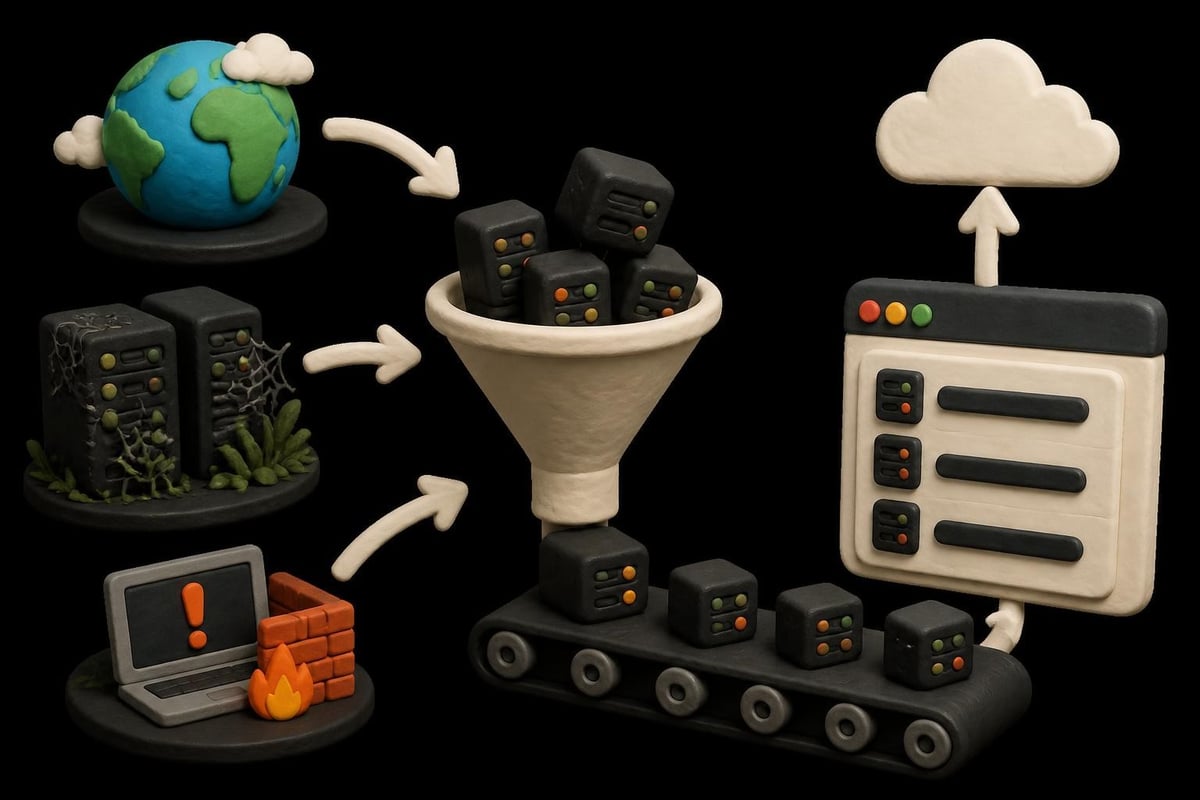
A free socks5 proxy list typically consists of publicly available proxy servers that anyone can access without payment. These lists are compiled from various sources, including abandoned servers, misconfigured systems, and servers intentionally set up for public use.
Several websites maintain these lists, such as Scrappey's SOCKS5 proxy aggregator and ProxySpace's updated SOCKS5 list, which refresh their databases every 15-20 minutes. While convenient, these resources come with significant caveats.
How Free Proxy Lists Are Compiled
Free proxy aggregators use automated scripts to scan IP ranges and identify open proxy servers. This process involves:
- Port scanning across common SOCKS5 ports (typically 1080, 1081, and others)
- Connection testing to verify the proxy responds to SOCKS5 protocol requests
- Speed and latency measurements to assess basic performance
- Geographic identification using IP geolocation databases
- Publication of working proxies to public lists
The entire process is automated, which means there's minimal verification of proxy ownership, security, or intent. This lack of vetting creates substantial risks that users must understand before implementation.
Critical Security Risks and Limitations
Research from a comprehensive longitudinal study on free web proxies reveals alarming security vulnerabilities associated with free proxy usage. The 30-month study identified significant risks to user privacy and potential data manipulation by proxy operators.
Major security concerns include:
- Traffic interception: Free proxy operators can view all unencrypted data
- Malware injection: Some proxies actively modify traffic to insert malicious code
- Credential harvesting: Login credentials sent through unsecured proxies are exposed
- SSL stripping: Downgrading secure connections to intercept sensitive data
- Data logging and selling: Your browsing history becoming a revenue source
Performance and Reliability Issues
Beyond security, free socks5 proxy list options suffer from practical limitations that make them unsuitable for professional applications:
| Issue | Impact | Frequency |
|---|---|---|
| Connection failures | Interrupted workflows | 60-80% of free proxies |
| Slow speeds | Reduced productivity | 90%+ of free proxies |
| Limited uptime | Unreliable access | Average 15-20% uptime |
| Geo-blocking | Location restrictions | Varies by region |
| Port blocking | Application limitations | Common |
These performance problems stem from overuse, limited resources, and lack of maintenance. A proxy that works one hour may be completely unavailable the next.
Legitimate Use Cases for Free Proxies
Despite their limitations, free SOCKS5 proxies have specific scenarios where they might be appropriate. Understanding when free proxies make sense helps you make informed decisions.
Testing and Development
Developers building proxy-aware applications can use free proxies for initial testing before investing in premium services. This allows verification of connection handling, error recovery, and proxy rotation logic without financial commitment.
Appropriate testing scenarios:
- Verifying application proxy compatibility
- Testing connection failure handling
- Developing proxy rotation algorithms
- Educational purposes and learning proxy protocols
However, never use free proxies for testing with real user data or production-level security requirements.
Low-Risk Browsing
Casual users seeking basic IP masking for non-sensitive browsing might find free proxies acceptable. This includes accessing geo-restricted content that doesn't involve personal accounts or sensitive information.
When considering proxy solutions discussed on Reddit, community members consistently emphasize that free options should never handle financial transactions, login credentials, or confidential business data.

How to Safely Use Free SOCKS5 Proxies
If you decide to use a free socks5 proxy list despite the risks, implementing proper safety measures is essential. These precautions minimize exposure while acknowledging the inherent limitations.
Security Best Practices
- Always use HTTPS for any website requiring login or personal information
- Avoid sensitive activities including banking, shopping, or work-related tasks
- Use additional encryption through VPN layering when possible
- Verify proxy authenticity by testing with known-safe websites first
- Monitor for suspicious behavior including unexpected redirects or modified content
Additionally, consider using browser isolation or virtual machines when testing unknown proxies. This compartmentalization prevents potential malware from affecting your primary system.
Evaluation Criteria for Free Proxies
Not all free proxies are equally unreliable. When selecting from a free socks5 proxy list, evaluate candidates using these criteria:
- Response time: Proxies under 300ms latency are preferable
- Anonymity level: Transparent proxies leak your real IP
- Protocol support: Verify SOCKS5 compatibility, not just SOCKS4
- Geographic location: Choose proxies matching your target region
- Recent verification: Use lists updated within the last hour
Resources like Socks5Proxies.com provide detailed metrics including uptime and latency, helping you make more informed selections from their free offerings.
Comparing Free vs Premium SOCKS5 Services
Understanding the value proposition of premium proxy services requires direct comparison with free alternatives. The differences extend far beyond simple reliability metrics.
Feature and Performance Comparison
| Feature | Free Proxies | Premium Services (PinguProxy) |
|---|---|---|
| Connection Speed | 50-500 Kbps | Up to 10Gbps |
| Uptime Guarantee | None | 99.9%+ |
| IP Rotation | Manual only | Automated 1ms rotation |
| Support | None | 24/7 customer support |
| Security | Unverified | Zero-log policy, encryption |
| Protocol Support | Limited | SOCKS5, HTTP, IPv4/IPv6 |
| Concurrent Connections | 1-2 | Unlimited |
| Geographic Coverage | Random | Global network |
The performance gap becomes particularly evident in professional applications like web scraping, where reliability and speed directly impact project success. Datacenter proxies offer consistent performance that free alternatives simply cannot match.
Cost-Benefit Analysis
While free proxies have zero upfront cost, hidden expenses accumulate quickly:
Time investment: Hours spent finding working proxies, testing connections, and troubleshooting failures translate to significant labor costs for businesses.
Opportunity costs: Slow speeds and frequent disconnections reduce productivity, potentially delaying projects and revenue generation.
Security risks: Data breaches or compromised credentials can result in substantial financial and reputational damage far exceeding premium proxy costs.
For serious applications, the question isn't whether to invest in premium proxies, but rather which premium solution offers the best value for your specific needs.
Finding and Accessing Free SOCKS5 Lists
For those determined to experiment with free options, knowing where to find current lists and how to access them efficiently can save considerable time.
Reputable Free Proxy Sources
Several platforms maintain regularly updated proxy lists with varying quality levels:
- Stormsia's open-source proxy list automatically validates and publishes free proxies for developers
- ProxySpace offers country-specific filtering and plain text downloads
- Public proxy forums where users share working proxies (though quality varies significantly)
- GitHub repositories maintained by community contributors with automated updates
Video tutorials on obtaining free SOCKS5 proxies demonstrate the process of finding, testing, and implementing these proxies, though they often oversimplify the security implications.
Implementation Tips
Once you've identified potential proxies from a free socks5 proxy list, implementation requires proper configuration:
Browser configuration typically involves accessing connection or network settings and entering the SOCKS5 proxy IP address and port. Most modern browsers support SOCKS5 natively.
Application-specific setup varies by software, but generally requires proxy server details in network preferences. Some applications, particularly those handling sensitive data, may warn against using untrusted proxies.
Testing procedures should include verifying your IP address changes, checking for DNS leaks, and confirming the proxy supports your intended protocols. Tools like WhatIsMyIP can confirm successful IP masking.
Alternative Proxy Solutions for Different Needs
Recognizing that free proxies aren't suitable for many applications, exploring alternative solutions helps identify the right proxy strategy for your specific requirements.
When to Consider Premium Options
Professional use cases demand reliability that only premium services provide. Buying SOCKS5 proxies becomes essential when:
- Business operations depend on consistent connectivity
- Data security cannot be compromised
- Performance requirements exceed free proxy capabilities
- Scalability needs grow beyond single connections
- Compliance obligations mandate verified service providers
Specialized Proxy Types
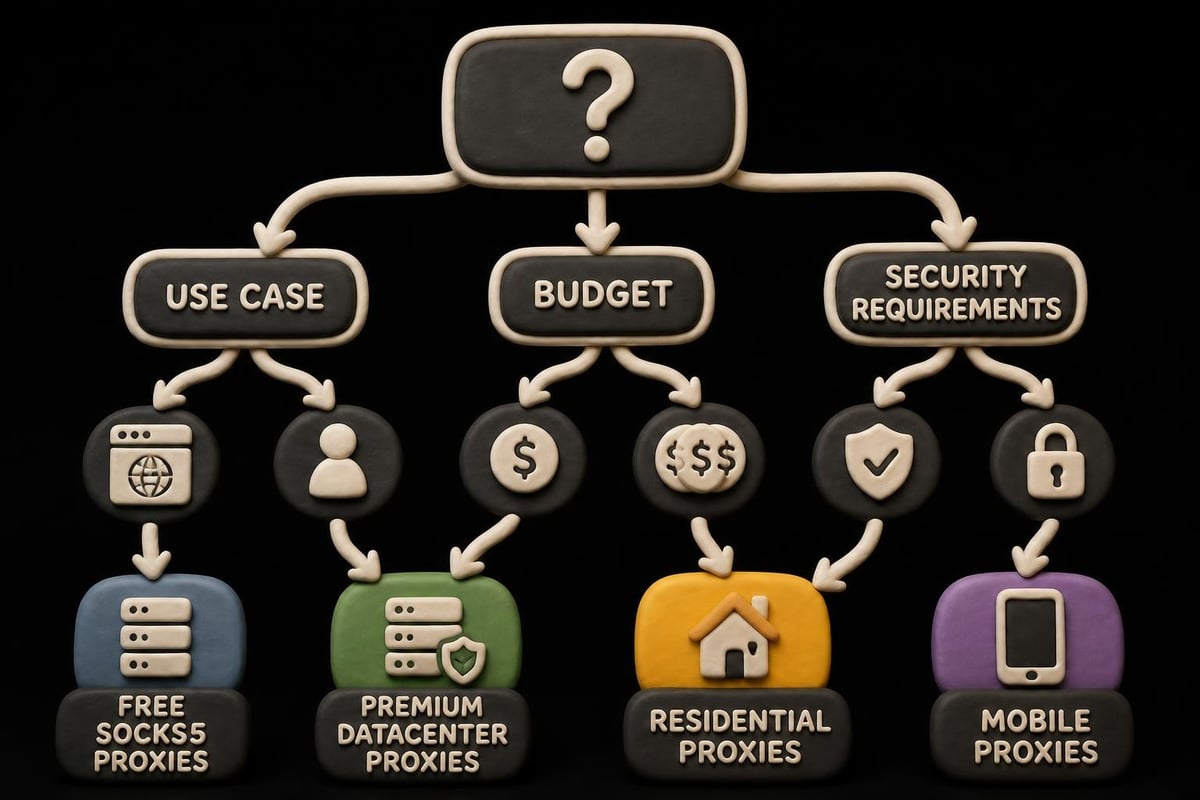
Different applications benefit from specific proxy configurations beyond basic SOCKS5:
Mobile proxies use cellular network IPs, making them ideal for social media management and mobile app testing where authentic mobile traffic is required.
Residential proxies appear as genuine home internet connections, offering the highest trust levels for accessing restricted services and conducting market research.
HTTP proxies excel at web scraping and browser automation when SOCKS5's protocol flexibility isn't necessary.
Each proxy type serves distinct purposes, and understanding these differences helps optimize both cost and performance for your specific applications.
The Future of Free and Premium Proxy Services
The proxy landscape continues evolving as websites implement more sophisticated detection methods and users demand greater privacy protections. These trends shape both free and premium proxy markets.
Emerging Trends in 2026
AI-powered detection systems now identify proxy traffic patterns with increasing accuracy, making traditional free proxies less effective for accessing protected resources.
Protocol improvements including SOCKS6 proposals aim to enhance security and performance, though widespread adoption remains years away.
Regulatory changes in various jurisdictions affect proxy legality and usage, particularly regarding data privacy and content access restrictions.
Decentralized proxy networks emerge as blockchain-based alternatives, though their practicality and security remain subjects of debate within technical communities.
Industry Best Practices
Leading proxy providers compared by TechRadar consistently demonstrate several key characteristics that define quality service:
- Transparent operations with clear privacy policies and documented practices
- Robust infrastructure ensuring consistent performance and uptime
- Responsive support addressing technical issues promptly
- Regular updates maintaining compatibility with evolving web technologies
- Competitive pricing balanced against service quality
These standards represent the minimum expectations for professional proxy services, highlighting why free alternatives fall short for serious applications.
Making the Right Proxy Decision
Selecting between a free socks5 proxy list and premium alternatives ultimately depends on your specific requirements, risk tolerance, and budget constraints. However, understanding the true costs of free proxies extends beyond simple financial calculations.
Assessment Framework
Evaluate your proxy needs using these critical questions:
What data will traverse the proxy? Personal information, business data, and credentials require premium security measures that free proxies cannot guarantee.
How much downtime can you tolerate? Applications requiring high availability cannot depend on free proxies' typical 15-20% uptime rates.
What are the consequences of IP blocking? If your IP getting blacklisted impacts business operations, premium proxies with guaranteed replacements become essential.
Do you need consistent performance? Data-intensive tasks like web scraping benefit dramatically from premium proxy speeds, making free alternatives impractical.
Can you monitor and maintain proxy infrastructure? Free proxies require constant attention to identify working servers, while premium services handle maintenance automatically.
Building a Hybrid Strategy
Some organizations successfully combine free and premium proxies for different use cases. This approach dedicates premium resources to critical operations while using free proxies for non-sensitive testing and development.
However, managing hybrid infrastructures increases complexity and requires clear policies preventing accidental use of free proxies for sensitive operations. The administrative overhead often negates any cost savings from incorporating free proxies.
While free socks5 proxy list options offer zero-cost access to basic proxy functionality, their security risks, reliability issues, and performance limitations make them unsuitable for most professional applications. Understanding these trade-offs helps you make informed decisions about your proxy infrastructure. When your operations demand consistent performance, guaranteed uptime, and robust security, PinguProxy delivers enterprise-grade datacenter, residential, and mobile proxies with complete IPv4/IPv6 support, zero-log privacy, and 24/7 support to ensure your projects succeed without compromise.