
この記事は現在英語のみで提供されています。
英語で読むBest Mobile Proxy: Complete 2026 Guide for Businesses
Mobile proxies have become essential tools for businesses requiring authentic IP addresses that perfectly mimic real user behavior. Unlike datacenter or residential proxies, mobile proxies route traffic through actual mobile devices connected to cellular networks, providing the highest level of anonymity and trust. Finding the best mobile proxy service requires understanding your specific needs, budget constraints, and the technical capabilities of different providers in 2026's competitive landscape.
Understanding Mobile Proxy Technology
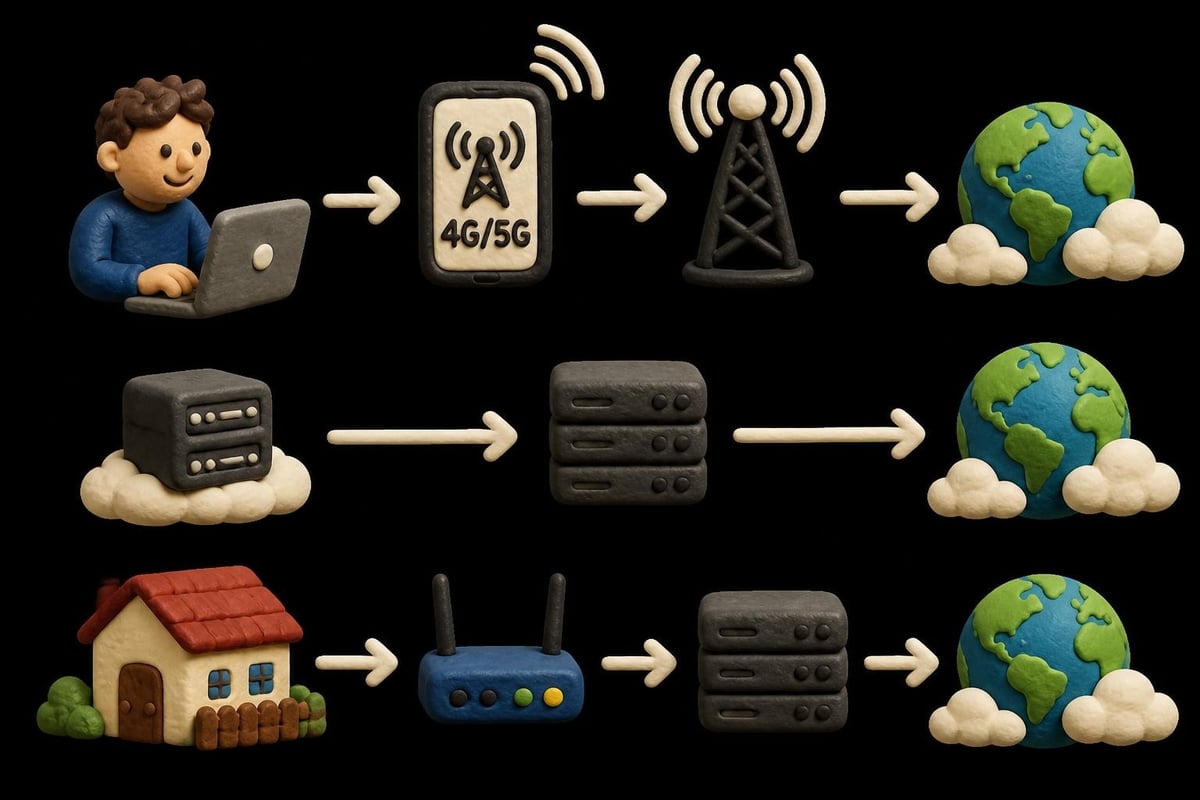
Mobile proxies operate fundamentally differently from traditional proxy types. They utilize IP addresses assigned by mobile carriers (AT&T, Verizon, T-Mobile, and others) to real smartphones and tablets connected to 4G LTE or 5G networks.
These IPs are inherently more trustworthy because websites and platforms recognize them as legitimate mobile users rather than potential bots or scrapers. The dynamic nature of mobile IPs, which change frequently as devices move between cell towers or reconnect to networks, creates an additional layer of anonymity.
Key Technical Advantages
When evaluating the best mobile proxy options, several technical features distinguish premium services:
- Carrier-grade NAT (CGNAT) sharing: Multiple users share the same IP address simultaneously, making individual activity nearly impossible to isolate
- Automatic IP rotation: IPs change naturally through carrier behavior or can be rotated on demand
- Geographic precision: Target specific cities or regions through actual device locations
- Protocol support: HTTP, HTTPS, and SOCKS5 compatibility for diverse applications
The infrastructure behind mobile proxies involves real SIM cards in devices connected to cellular networks. Some providers manage physical device farms, while others aggregate connections from user-donated devices or partnered networks.
Selecting the Best Mobile Proxy Provider
The best proxy providers in 2026 offer distinct advantages depending on your use case. Mobile proxies command premium pricing due to infrastructure costs, but they deliver unmatched success rates for challenging applications.
Critical Evaluation Criteria
| Feature | Why It Matters | What to Look For |
|---|---|---|
| IP Pool Size | Larger pools reduce detection risk | 1M+ unique mobile IPs |
| Network Coverage | Geographic targeting capabilities | Multiple carriers and countries |
| Rotation Speed | Balances anonymity with stability | Configurable from 1min to sticky sessions |
| Success Rates | Actual performance metrics | 95%+ for social platforms |
| Bandwidth Limits | Cost management | Unlimited or high caps |
| Support Quality | Problem resolution speed | 24/7 availability with technical expertise |
Premium providers differentiate themselves through authentic carrier relationships and infrastructure quality. The best mobile proxy services maintain direct partnerships with mobile network operators rather than relying on resold or aggregated connections.
Pricing Models and Value Assessment
Mobile proxy pricing varies significantly based on several factors. Most providers offer:
- Per-GB pricing: Charging for bandwidth consumption, typically $50-$150 per gigabyte
- Per-port pricing: Monthly fees per concurrent connection, ranging from $75-$200
- Unlimited plans: Fixed monthly rates with bandwidth caps or fair use policies
According to comprehensive mobile proxy comparisons, the average market rate has stabilized in 2026 around $80-$100 per port monthly for quality services. Budget options exist but often compromise on IP quality, rotation reliability, or customer support.
Best Mobile Proxy Use Cases
Different applications benefit from mobile proxies in unique ways. Understanding which use case aligns with your needs helps justify the investment.
Social Media Management
Platforms like Instagram, Facebook, TikTok, and Twitter aggressively detect and ban suspicious activity. Managing multiple accounts requires authentic IP addresses that don't trigger security algorithms.
Mobile proxies excel here because social platforms expect mobile traffic and apply less stringent verification. Account managers running dozens or hundreds of profiles can assign dedicated mobile IPs to each account, creating natural usage patterns indistinguishable from regular users.
The best mobile proxy services for social media provide:
- Sticky sessions lasting hours or days
- Location targeting matching account profiles
- Clean IPs with no previous ban history
- Fast rotation when switching between accounts
Web Scraping and Data Collection
While datacenter proxies offer speed and residential proxies provide scale, mobile proxies solve the hardest scraping challenges. E-commerce sites, classified platforms, and search engines increasingly fingerprint and block non-mobile traffic.
Scraping mobile-specific content requires genuine mobile IPs. App-based data, mobile search results, and location-based services only expose full functionality to mobile connections. Research from academic proxy ecosystem studies confirms that mobile IPs face significantly fewer CAPTCHAs and blocks compared to other proxy types.

Ad Verification and Market Research
Advertisers spend billions ensuring their campaigns appear correctly across platforms and regions. The best mobile proxy solutions enable verification teams to:
- View ads exactly as mobile users see them
- Detect fraudulent impressions and click farms
- Monitor competitor ad placements
- Test geo-targeted campaign delivery
Market researchers use mobile proxies to gather pricing data, track product availability, and monitor consumer sentiment across different markets without triggering anti-bot measures.
Technical Configuration and Integration
Implementing mobile proxies requires understanding connection protocols and authentication methods. Most providers support both HTTP proxy protocols and SOCKS5, with authentication through username/password or IP whitelisting.
Connection Parameters
Proxy Format: carrier.provider.com:port
Authentication: username:password@carrier.provider.com:port
Protocol: HTTP/HTTPS/SOCKS5
Rotation: URL parameter or timed automatic
The best mobile proxy providers offer flexible rotation controls. Sticky sessions maintain the same IP for extended periods, ideal for account-based activities. Rotating sessions change IPs on each request or at specified intervals, maximizing anonymity for scraping.
Integration with automation tools varies by platform:
- Selenium and Puppeteer require proxy configuration in browser launch options
- Python requests libraries accept proxy parameters directly
- API clients configure proxies through environment variables or settings
Performance Optimization
Mobile proxy speed depends on several factors beyond provider infrastructure. The cellular network quality, device location, and carrier congestion affect latency and throughput.
| Optimization Strategy | Impact | Implementation Difficulty |
|---|---|---|
| Regional targeting | Reduces latency by 40-60% | Easy |
| Concurrent connections | Increases throughput 3-5x | Medium |
| Request throttling | Improves success rates 20% | Easy |
| Session persistence | Reduces connection overhead | Easy |
| Carrier selection | Varies by region/use case | Medium |
Proper error handling becomes critical with mobile proxies. Timeouts, connection resets, and temporary IP blocks occur more frequently than with datacenter alternatives. Implementing retry logic with exponential backoff ensures reliability.
Comparing Top Mobile Proxy Providers
The mobile proxy market has matured significantly, with established players offering distinct advantages. Reviews of leading services highlight performance variations across providers.
Provider Comparison Matrix
Based on 2026 market analysis and industry awards, top providers differentiate through:
Tier 1 Providers (Premium pricing, largest pools):
- Offer 5M+ mobile IPs across 100+ countries
- Provide 99.9% uptime SLAs
- Include advanced features like API access and custom rotation
- Charge $100-$200+ per port monthly
Tier 2 Providers (Mid-market balance):
- Maintain 1M+ IPs in 50+ countries
- Deliver 99% uptime without formal SLAs
- Offer standard rotation and protocol support
- Price $60-$100 per port monthly
Tier 3 Providers (Budget-focused):
- Provide 100K+ IPs in 10-20 countries
- Target 95%+ uptime
- Support basic HTTP/SOCKS5 connectivity
- Cost $30-$60 per port monthly
Feature Differentiation
Beyond basic connectivity, the best mobile proxy services include:
- Dashboard analytics: Track bandwidth usage, success rates, and IP performance
- API management: Programmatic IP rotation and whitelist control
- Multi-protocol support: Simultaneous HTTP and SOCKS5 configurations
- Dedicated account managers: Enterprise-level support for high-volume users
- Custom targeting: Specific carriers, cities, or ASN selection
According to use case specific analysis, provider selection should align with your primary application. Social media managers prioritize IP cleanliness and stickiness, while scrapers value rotation speed and pool diversity.
Mobile Proxy Security Considerations
Security and privacy differentiate quality mobile proxy providers from questionable services. The best mobile proxy companies implement strict policies protecting both users and the broader network.
Zero-Log Policies and Data Protection
Reputable providers never log user activity, connection timestamps, or browsing data. This zero-knowledge architecture ensures privacy even if servers are compromised or legal demands arise. Verify providers maintain:
- No activity logging beyond connection diagnostics
- Encrypted transmission for all proxy traffic
- Secure authentication mechanisms preventing credential exposure
- Regular security audits by third parties
The infrastructure security matters equally. Providers should isolate user traffic, prevent IP leaking through WebRTC or DNS, and maintain hardened servers resistant to attacks.
Avoiding Proxy Pitfalls
Not all mobile proxies deliver equal quality. Common issues include:
- Blacklisted IPs: Poor providers recycle IPs without adequate cooling periods
- Shared credentials: Mass-sold access reduces anonymity and success rates
- False advertising: Claimed pool sizes exceeding actual available IPs
- Connection instability: Inadequate infrastructure causing frequent disconnects
- Hidden bandwidth throttling: Advertised speeds not matching actual performance
Research providers thoroughly before committing. Stats-driven provider comparisons offer objective performance metrics rather than marketing claims.

IPv4 vs IPv6 Mobile Proxies
The transition to IPv6 creates new opportunities and challenges in mobile proxy services. While IPv4 addresses remain scarce and expensive, mobile carriers increasingly deploy IPv6 for new connections.
Protocol Advantages
IPv4 mobile proxies offer:
- Universal compatibility with all websites and services
- Established reputation systems recognizing legitimate IPs
- Higher trust scores on platforms with IPv4 expectations
- Mature infrastructure with proven reliability
IPv6 mobile proxies provide:
- Massive address space enabling larger pools
- Lower costs due to abundant availability
- Native support from modern platforms
- Future-proofing as IPv4 exhaustion continues
The best mobile proxy providers support both protocols, allowing users to choose based on target compatibility. Social platforms and modern websites handle IPv6 seamlessly, while legacy systems may require IPv4.
Maximizing Mobile Proxy ROI
Mobile proxies represent significant investments requiring strategic deployment for optimal returns. Businesses maximize value through careful planning and monitoring.
Cost Management Strategies
Smart businesses implement several approaches to control mobile proxy expenses:
- Hybrid proxy architectures: Use mobile proxies only for high-value activities, falling back to cheaper datacenter proxies for less sensitive tasks
- Bandwidth optimization: Compress data, cache responses, and eliminate unnecessary requests
- Session reuse: Maintain sticky sessions to reduce rotation overhead and bandwidth consumption
- Performance monitoring: Track success rates by IP and provider to identify optimal configurations
Activity scheduling reduces costs by concentrating usage during off-peak hours when possible. Some providers offer lower rates for non-prime-time traffic or volume commitments.
Scaling Considerations
As operations grow, mobile proxy requirements evolve. Plan for scalability by:
- Choosing providers with large available pools supporting expansion
- Implementing centralized proxy management across teams and projects
- Automating IP rotation and error handling to reduce manual intervention
- Monitoring performance metrics to identify optimization opportunities
- Maintaining relationships with multiple providers for redundancy
Businesses processing millions of requests monthly often negotiate custom packages combining volume discounts with dedicated infrastructure.
Enterprise Mobile Proxy Requirements
Large organizations face unique challenges requiring specialized mobile proxy capabilities. Mobile proxy networks designed for serious users address enterprise needs through enhanced features and support.
Compliance and Governance
Enterprises must ensure mobile proxy usage complies with:
- Data protection regulations: GDPR, CCPA, and regional privacy laws
- Terms of service: Target platform policies regarding automated access
- Industry standards: Specific compliance frameworks for healthcare, finance, or government
- Internal policies: Corporate security and acceptable use requirements
The best mobile proxy providers assist with compliance through documentation, configurable logging (where required), and transparent operational practices.
Multi-User Management
Enterprise deployments require centralized control over distributed teams. Essential features include:
| Capability | Business Value | Technical Implementation |
|---|---|---|
| Role-based access | Security and cost control | User authentication with permissions |
| Usage quotas | Budget management | Per-user bandwidth limits |
| Audit trails | Compliance and troubleshooting | Activity logging (without content) |
| Unified billing | Financial tracking | Consolidated invoicing with breakdowns |
| API provisioning | Automation and integration | Programmatic user/proxy management |
Dedicated support becomes critical at enterprise scale. The best mobile proxy providers assign account managers familiar with your infrastructure, use cases, and growth trajectory.
Future Trends in Mobile Proxy Technology
The mobile proxy landscape continues evolving with technological advancements and market demands. Understanding emerging trends helps businesses make forward-looking decisions.
5G Network Integration
Fifth-generation cellular networks offer dramatically improved speeds and lower latency. Mobile proxies leveraging 5G infrastructure provide:
- Download speeds exceeding 1Gbps in optimal conditions
- Latency under 20ms enabling real-time applications
- Enhanced reliability through network slicing
- Improved handling of concurrent connections
Early 5G mobile proxy deployments show 2-3x performance improvements over 4G LTE in bandwidth-intensive applications. As 5G coverage expands globally through 2026, expect broader availability and competitive pricing.
AI-Powered Proxy Management
Machine learning algorithms increasingly optimize mobile proxy operations:
- Predictive IP rotation avoiding blocks before they occur
- Intelligent load balancing across IPs and carriers
- Automated retry strategies adapting to target behavior
- Anomaly detection identifying compromised or blacklisted IPs
These capabilities reduce manual configuration while improving success rates and efficiency.
Edge Computing Integration
Distributed edge infrastructure enables mobile proxy providers to offer:
- Reduced latency through geographically closer endpoints
- Enhanced privacy with localized data processing
- Improved reliability through multi-region redundancy
- Better performance for location-sensitive applications
The convergence of edge computing and mobile networks creates opportunities for hyper-localized proxy services targeting specific neighborhoods or venues.
Selecting the best mobile proxy requires balancing performance, reliability, and cost against your specific business requirements. Whether managing social accounts, scraping competitive data, or verifying ad placements, mobile proxies deliver the authenticity and anonymity that other proxy types cannot match. PinguProxy combines high-speed mobile, residential, and datacenter proxies with complete IPv4 and IPv6 support, zero-log privacy, and 24/7 expert assistance to power your most demanding applications. Explore our flexible solutions and experience the difference that enterprise-grade proxy infrastructure makes for your business success.