
Data Center Proxy: The Complete Guide for 2026
When businesses need fast, reliable IP masking for large-scale operations, a data center proxy typically becomes their first choice. Unlike residential or mobile proxies that use real device IPs, data center proxies originate from server farms and cloud providers, delivering exceptional speed and scalability at competitive price points. In 2026, these proxies have evolved significantly, now supporting advanced features like IPv6 protocol compatibility, rapid rotation intervals, and enhanced security measures that make them indispensable for modern internet operations. Understanding how they work and when to deploy them can dramatically improve your operational efficiency while reducing costs.
What Makes a Data Center Proxy Different
A data center proxy is essentially an IP address that comes from a secondary corporation, not an internet service provider. These proxies route your internet traffic through servers housed in professional data centers, which creates a layer of anonymity between your actual location and the websites you access.
The fundamental difference lies in the origin. Data center IPs are generated and managed by hosting companies rather than assigned by ISPs to residential users. This distinction creates both advantages and limitations that businesses must consider when selecting their proxy types.
Speed and Performance Characteristics
Data center proxies deliver exceptional performance metrics:
- Connection speeds reaching up to 10Gbps bandwidth
- Latency rates as low as 1ms for optimal proxy rotation
- Consistent uptime often exceeding 99.9% reliability
- Unlimited concurrent connections for enterprise operations
These performance characteristics make them ideal for operations requiring rapid data collection or real-time processing. The infrastructure behind data center proxies typically includes enterprise-grade hardware with redundant network connections.

| Feature | Data Center Proxy | Residential Proxy | Mobile Proxy |
|---|---|---|---|
| Speed | 1-10 Gbps | 10-100 Mbps | 5-50 Mbps |
| Cost | Low | Medium-High | High |
| Detection Risk | Medium | Low | Very Low |
| IP Pool Size | Large | Very Large | Medium |
| Use Case Fit | High-volume scraping | Social media, E-commerce | App testing, Gaming |
Primary Use Cases for Data Center Proxies
The versatility of data center proxies makes them suitable for numerous business applications. Companies across industries leverage these tools to gain competitive advantages and streamline operations.
Web Scraping and Data Collection
Organizations conducting web scraping operations benefit tremendously from data center proxy infrastructure. The high-speed connections enable rapid page loads and data extraction across thousands of URLs simultaneously.
Key advantages for scraping include:
- Processing massive datasets within tight timeframes
- Rotating IPs to avoid rate limiting and blocks
- Maintaining consistent connection quality throughout lengthy operations
- Scaling operations without infrastructure constraints
Price comparison engines, market research firms, and competitive intelligence teams rely heavily on these capabilities. When combined with proper IP rotation strategies, data center proxies can handle millions of requests daily.
SERP Monitoring and SEO Analysis
Digital marketing professionals use data center proxies for SERP monitoring to track search engine rankings across different geographic locations. This application requires speed and reliability rather than the residential authenticity needed for social media automation.
The ability to query search engines repeatedly without triggering CAPTCHAs or temporary bans makes data center proxies particularly valuable. SEO agencies monitor hundreds of keywords daily, collecting ranking data that informs strategy adjustments.
E-Commerce and Price Intelligence
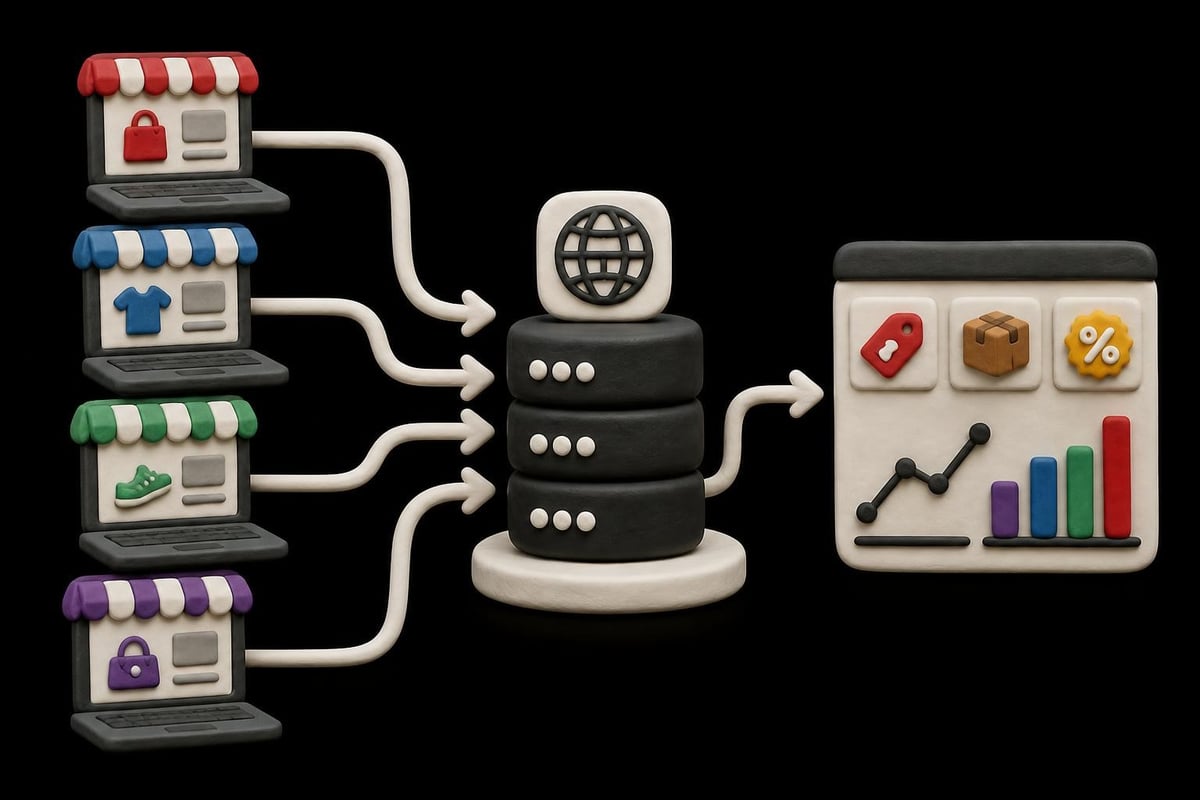
Retailers leverage data center proxies for e-commerce competitive monitoring, tracking competitor pricing, inventory levels, and promotional strategies. The speed advantage enables real-time price matching and dynamic pricing adjustments.
Common e-commerce applications:
- Product availability monitoring across multiple marketplaces
- Price comparison and competitive intelligence gathering
- Review and rating aggregation from various platforms
- Market trend analysis and demand forecasting
Technical Architecture and Infrastructure
Understanding the technical foundation helps businesses make informed decisions about proxy deployment. Data center proxies operate within sophisticated network architectures designed for performance and reliability.
IP Address Allocation and Management
Data center operators acquire large IP blocks from regional internet registries. These addresses get configured across server infrastructure, creating pools of available proxies. Modern providers implement intelligent allocation systems that distribute requests across their entire network.
The architecture typically includes load balancers that distribute traffic, authentication systems that verify user credentials, and monitoring tools that track performance metrics. When you access advanced features like rotation intervals, these systems coordinate to provide seamless IP switching.
Protocol Support and Compatibility
In 2026, comprehensive protocol support has become standard. Leading data center proxy providers now offer complete IPv4 and IPv6 compatibility, ensuring future-proof infrastructure as the internet transitions toward IPv6 adoption.
Supported protocols include:
- HTTP/HTTPS for standard web traffic
- SOCKS4/SOCKS5 for versatile application support
- IPv6 addressing for modern network requirements
- Custom authentication methods including username/password and IP whitelisting
This flexibility allows businesses to integrate proxies into diverse technology stacks without compatibility concerns.
Benefits and Limitations to Consider
Every technology presents trade-offs, and data center proxies are no exception. Evaluating both strengths and weaknesses ensures optimal deployment for specific business requirements.
Distinct Advantages
Cost efficiency stands out as perhaps the most compelling benefit. Data center proxies typically cost 60-80% less than residential alternatives while delivering superior speed. For operations prioritizing throughput over authenticity, this creates significant value.
The unlimited scalability available through modern proxy services enables businesses to expand operations without infrastructure investments. Whether you need 10 proxies or 10,000, provisioning happens instantly through API-based proxy creation.
Geographic diversity represents another strength. Quality providers maintain data centers across continents, offering IP addresses from dozens of countries. This geographic distribution supports localization testing and region-specific data collection.
Understanding the Limitations
Target websites increasingly employ sophisticated detection methods that identify data center IP ranges. When a platform detects traffic originating from known data center networks, it may trigger additional verification steps or impose restrictions.
The limitations of data center proxies become apparent in scenarios requiring high authenticity. Social media platforms, financial services, and ticketing websites often scrutinize data center traffic more heavily.
| Scenario | Data Center Suitability | Recommended Alternative |
|---|---|---|
| High-volume scraping | Excellent | None needed |
| Social media automation | Poor | Residential/Mobile |
| Market research | Excellent | None needed |
| Sneaker/ticket buying | Fair | Mobile preferred |
| API testing | Excellent | None needed |
| Account creation | Poor | Residential preferred |
Implementation Best Practices
Successful deployment requires more than simply purchasing proxy access. Strategic implementation maximizes return on investment while minimizing operational disruptions.
Configuration and Setup Strategies
Start with thorough proxy testing before committing to large-scale deployment. Verify that proxies work correctly with your specific target websites and applications. Connection timeouts and protocol incompatibilities become apparent during testing, allowing preemptive troubleshooting.
Essential configuration steps:
- Authenticate properly using provided credentials or IP whitelisting
- Configure rotation settings appropriate to your use case
- Implement error handling for connection failures and rate limits
- Monitor performance metrics to identify optimization opportunities
- Adjust concurrency levels based on target website tolerance
When experiencing issues, consult resources on troubleshooting connection timeouts and protocol compatibility for quick resolution.
Rotation Strategies for Different Applications
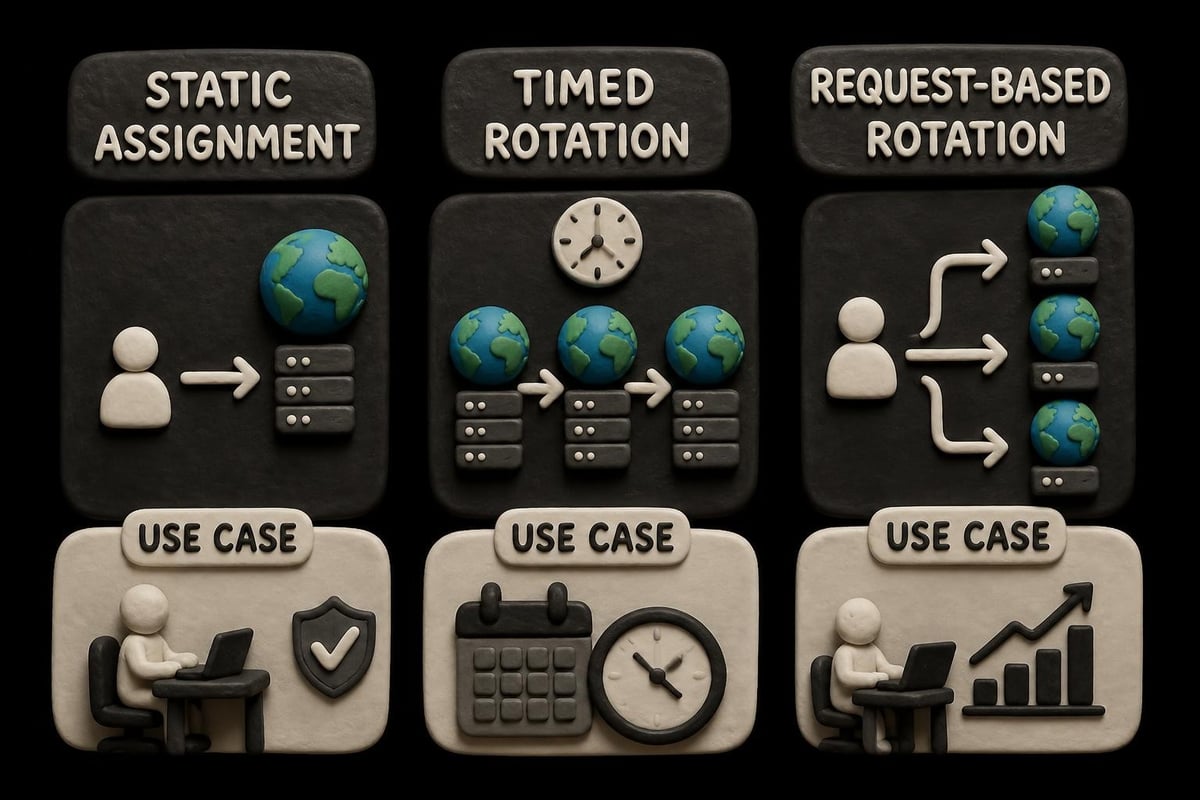
Static IP assignments work well for certain applications, while others benefit from aggressive rotation. Understanding when to implement each approach optimizes both performance and success rates.
For general web scraping, rotating proxies every 1-10 requests prevents individual IPs from accumulating too many requests. This distribution reduces detection likelihood and extends proxy lifespan. Modern providers offer rotating proxy features with configurable intervals.
Rotation timing recommendations:
- Search engines: Every 5-15 requests
- E-commerce sites: Every 10-30 requests
- Social media: Use residential instead
- Public databases: Every 50-100 requests
Selecting the Right Data Center Proxy Provider
The proxy market has expanded significantly, with dozens of providers competing for business. Differentiating quality services from substandard offerings requires evaluating specific criteria beyond basic features.
Essential Evaluation Criteria
Network size and diversity directly impact operational capability. Providers with larger IP pools reduce the likelihood of IP exhaustion during intensive campaigns. Geographic coverage determines whether you can access region-specific content or conduct localized testing.
Security measures deserve careful scrutiny. Reputable providers implement zero-log policies, ensuring your browsing activity remains private. Encryption standards, authentication methods, and data handling practices all contribute to overall security posture.
When comparing the best data center proxy providers, consider support availability. Operations running 24/7 require responsive assistance when issues arise. Email-only support may prove inadequate for time-sensitive business operations.
Pricing Models and Value Assessment
Understanding pricing structures helps identify the most cost-effective solution for your specific usage patterns. Providers typically offer several pricing models:
- Pay-per-GB: Charges based on bandwidth consumption
- Pay-per-IP: Fixed price for specific number of proxies
- Unlimited plans: Flat monthly fee with no usage caps
- Custom enterprise: Negotiated rates for large-scale operations
For businesses with predictable, high-volume needs, unlimited access plans often deliver the best value. The ability to scale without worrying about overage charges simplifies budgeting and removes usage anxiety.
Advanced Features Driving Modern Proxy Services
The proxy industry continues evolving, with providers introducing sophisticated capabilities that extend beyond basic IP masking. These advanced features differentiate premium services from commodity offerings.
Intelligent Proxy Pools and Management
Modern providers maintain diverse proxy pools segmented by characteristics like geography, subnet, and performance metrics. Intelligent algorithms automatically select optimal proxies based on request parameters.
This automation reduces manual configuration overhead while improving success rates. Instead of manually rotating through IP addresses, smart pool management handles selection and rotation transparently.
Real-Time Monitoring and Analytics
Leading services provide dashboards displaying real-time metrics including request success rates, average response times, bandwidth consumption, and geographic distribution. These insights enable data-driven optimization of proxy usage patterns.
Critical metrics to monitor:
- Request success vs. failure rates
- Average response latency by geographic region
- Bandwidth utilization trends
- Detection and blocking incidents
- Cost per successful request
Analytics capabilities transform proxies from simple tools into strategic assets with measurable ROI.
Industry-Specific Applications
Different industries leverage data center proxies in unique ways, tailoring implementations to sector-specific requirements and challenges.
Travel and Hospitality
Travel aggregators use proxies for travel aggregation, collecting pricing and availability data across airlines, hotels, and booking platforms. The time-sensitive nature of travel inventory makes speed critical, playing to data center proxy strengths.
Real Estate and Property Intelligence
Real estate professionals employ proxies for property data collection, monitoring listings, price trends, and market dynamics across multiple listing services. The large data volumes and frequent updates demand high-speed, reliable connections.
Cybersecurity and Threat Intelligence
Security teams leverage proxies for threat intelligence gathering, monitoring dark web forums, analyzing malicious infrastructure, and conducting security research. The anonymity provided by proxies protects investigators while enabling thorough threat analysis.
Brand Protection and Ad Verification
Companies protecting their brand reputation use proxies for ad verification, ensuring advertisements appear correctly across different geographic regions and platforms. This application requires checking hundreds of ad placements daily, making speed essential.
Future Trends Shaping Data Center Proxies
As we progress through 2026, several trends are reshaping the proxy landscape. Understanding these developments helps businesses prepare for evolving requirements and opportunities.
IPv6 Adoption and Infrastructure
The gradual transition toward IPv6 addresses creates both challenges and opportunities. Forward-thinking providers have already implemented full IPv6 support, ensuring their infrastructure remains relevant as more websites and services adopt the newer protocol standard.
AI-Powered Detection Evasion
Target websites deploy increasingly sophisticated AI models to detect proxy traffic. In response, proxy providers implement machine learning algorithms that adapt request patterns to mimic human behavior more accurately. This technological arms race continues accelerating.
Green Data Center Initiatives
Environmental concerns are driving data center operators toward renewable energy sources and more efficient cooling systems. Businesses increasingly factor sustainability into vendor selection, favoring providers with demonstrated environmental commitments.
Integration with Development Workflows
Modern proxy services offer comprehensive APIs that integrate seamlessly with development workflows. From getting started with installation to quick setup guides, providers recognize that developer experience impacts adoption and retention.
Security Considerations and Best Practices
While proxies enhance privacy and enable anonymous browsing, they also introduce security considerations that require attention. Implementing proper security measures protects both your operations and your data.
Authentication and Access Control
Never use proxies without proper authentication. Username/password combinations or IP whitelisting prevent unauthorized access to your proxy resources. Implement different credentials for different teams or projects to maintain granular access control.
Security checklist:
- Enable two-factor authentication when available
- Rotate credentials quarterly or after team changes
- Use encrypted connections (HTTPS/SOCKS5) exclusively
- Monitor access logs for suspicious activity patterns
- Implement IP whitelisting for additional security layers
Data Privacy and Compliance
Organizations handling sensitive data must ensure proxy providers maintain appropriate data handling standards. Zero-log policies prevent the provider from retaining browsing history, protecting your competitive intelligence and research activities.
Compliance requirements vary by industry and jurisdiction. Financial services, healthcare, and government contractors face specific regulations governing data transmission and privacy. Verify that your proxy provider meets relevant compliance standards.
Data center proxies remain an essential tool for businesses requiring high-speed, scalable IP masking in 2026, particularly for applications like web scraping, market research, and competitive intelligence. While they may not suit every scenario, their combination of speed, affordability, and reliability makes them invaluable for data-intensive operations. Whether you're monitoring search rankings, collecting market data, or conducting security research, PinguProxy delivers enterprise-grade data center proxies with 10Gbps bandwidth, unlimited access, complete IPv4/IPv6 support, and 24/7 expert assistance to ensure your operations run smoothly.