
이 글은 현재 영어로만 제공됩니다.
영어로 읽기SOCKS5 Residential Proxy: Ultimate Guide for 2026
When it comes to maintaining online anonymity and accessing geo-restricted content, a socks5 residential proxy stands out as one of the most powerful tools available in 2026. Unlike traditional datacenter proxies, these specialized proxies route your internet traffic through real residential IP addresses, making your requests appear as if they're coming from genuine household connections. This unique characteristic makes them virtually undetectable by even the most sophisticated anti-bot systems and content delivery networks.
Understanding SOCKS5 Residential Proxy Technology
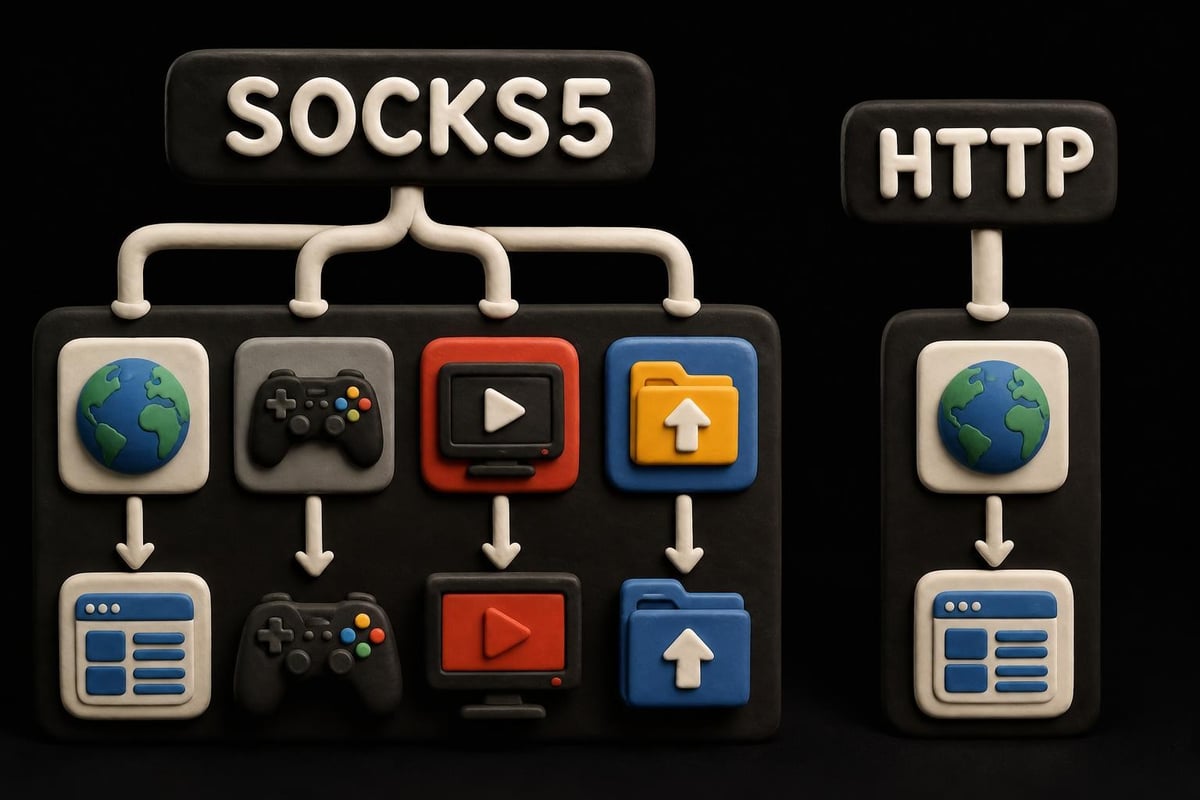
A socks5 residential proxy combines two critical elements: the SOCKS5 protocol and residential IP addresses. The SOCKS5 protocol represents the latest iteration of the Socket Secure (SOCKS) internet protocol, offering superior performance compared to its predecessors and even HTTP proxies in certain scenarios.
Key technical advantages include:
- Full protocol support (HTTP, HTTPS, FTP, SMTP, and more)
- UDP protocol compatibility for real-time applications
- Authentication mechanisms for enhanced security
- No packet header modification, ensuring data integrity
Residential IPs come from Internet Service Providers (ISPs) and are assigned to real physical locations. When you combine these with SOCKS5 technology, you get a proxy solution that's both versatile and authentic. Major proxy providers in 2026 have recognized this combination as the gold standard for users requiring maximum anonymity and reliability.
Protocol Comparison
| Feature | SOCKS5 | HTTP/HTTPS | SOCKS4 |
|---|---|---|---|
| Protocol Support | All protocols | HTTP/HTTPS only | TCP only |
| UDP Support | Yes | No | No |
| Authentication | Advanced | Basic | Limited |
| Speed | High | Medium | Medium |
| Use Cases | Universal | Web browsing | Legacy systems |
The technical superiority of SOCKS5 becomes evident when you need to work with applications beyond standard web browsers. Whether you're running automated scripts, gaming clients, or torrent applications, this protocol handles everything seamlessly.
Primary Use Cases and Applications
Web Scraping and Data Collection
Web scraping represents one of the most demanding applications for any proxy service. A socks5 residential proxy excels in this domain because target websites perceive requests as coming from legitimate residential users rather than suspicious datacenter IPs.
Modern anti-bot systems in 2026 have become increasingly sophisticated, employing machine learning algorithms to detect and block suspicious traffic patterns. Residential proxies effectively bypass these measures because they originate from genuine ISP-assigned addresses. When combined with proper SOCKS5 configuration, scrapers can maintain high success rates even on heavily protected websites.
Best practices for scraping include:
- Rotating IP addresses regularly (ideally every 1-5 requests)
- Implementing realistic request timing patterns
- Using diverse geographic locations
- Maintaining proper session management
- Respecting robots.txt guidelines
E-commerce and Sneaker Copping
The competitive world of limited-edition product releases has made proxies essential tools. Retailers often implement strict one-purchase-per-IP policies to prevent resellers from buying entire inventories. Research into proxies for sneaker releases shows that residential proxies significantly outperform datacenter alternatives in successful checkout rates.
Using a socks5 residential proxy allows buyers to create multiple checkout sessions that appear as separate customers from different locations. The SOCKS5 protocol's speed advantage becomes crucial during high-traffic release moments when milliseconds determine success or failure.
Social Media Management
Managing multiple social media accounts from a single location raises red flags with platform security systems. Instagram, Twitter, and Facebook actively monitor for suspicious login patterns and can permanently ban accounts that appear to violate their terms of service.
A socks5 residential proxy provides each account with a unique, authentic-looking IP address, reducing the risk of detection and account suspension. This approach proves particularly valuable for digital marketing agencies managing dozens or hundreds of client accounts. For those specifically focused on Instagram, dedicated mobile proxy solutions offer even better results by mimicking mobile device connections.
Geographic Targeting and Location Control
One of the most valuable features of residential proxies involves precise geographic control. Unlike datacenter proxies that often cluster in specific hosting locations, residential IPs exist wherever people have internet connections.
Location-Based Benefits
When accessing streaming content, conducting market research, or verifying ad placements, the ability to appear in specific cities or regions becomes invaluable. A socks5 residential proxy from PinguProxy allows users to select from global locations, ensuring access to region-specific content and services.
Common geographic targeting scenarios:
- Testing localized website versions
- Accessing region-locked streaming platforms
- Conducting competitive price analysis across markets
- Verifying international ad campaign delivery
- Testing SEO rankings in different countries
The legitimacy of residential IPs means you can maintain long-term connections to region-specific services without triggering security alerts. This stability proves essential for businesses requiring consistent access to international resources throughout 2026 and beyond.

Security and Privacy Considerations
While a socks5 residential proxy offers significant advantages, understanding the security landscape remains critical. Recent academic research examining residential proxy security concerns has revealed potential vulnerabilities in some proxy ecosystems, particularly those involving mobile devices and free services.
Authentication and Encryption
SOCKS5 itself doesn't encrypt traffic by default, but it supports various authentication methods. When combined with encrypted connections (HTTPS, SSL/TLS), you maintain both authentication security and data privacy.
| Security Feature | SOCKS5 Capability | Recommended Implementation |
|---|---|---|
| User Authentication | Username/password | Always enable |
| Traffic Encryption | Not native | Use with HTTPS/VPN |
| IP Rotation | Protocol-agnostic | 1ms rotation intervals |
| Zero-Log Policy | Provider-dependent | Essential requirement |
| DNS Leak Protection | Configurable | Enable DNS-through-proxy |
Reputable providers implement zero-log policies, ensuring that your browsing activity isn't stored or monitored. This proves particularly important for businesses handling sensitive competitive research or proprietary data collection.
Avoiding Malicious Proxies
Studies of free proxy ecosystems have documented concerning rates of malicious activity, including traffic interception, cookie theft, and malware injection. Free residential proxies pose even greater risks because they often involve unknowing participants whose devices have been compromised.
Red flags indicating unreliable proxies:
- No clear business model or pricing structure
- Promises of "completely free" residential IPs
- Lack of technical documentation or support
- Anonymous ownership or unclear company information
- Unrealistic performance guarantees
Professional services like PinguProxy maintain transparent operations, offer 24/7 support, and implement strict security measures including zero-log policies and regular infrastructure audits.
Performance Optimization and Configuration
Maximizing the effectiveness of your socks5 residential proxy requires proper configuration and optimization. The flexibility of the SOCKS5 protocol means it can be adapted to virtually any application or workflow.
Connection Parameters
Speed represents a critical factor for most proxy use cases. While residential proxies traditionally ran slower than datacenter alternatives, modern infrastructure in 2026 has largely eliminated this gap. Premium providers now offer 10Gbps bandwidth capabilities, ensuring that residential authenticity doesn't mean sacrificing performance.
Optimization strategies include:
- Selecting geographically close proxy servers when speed takes priority over specific location requirements
- Implementing connection pooling to reduce authentication overhead
- Using sticky sessions for applications requiring consistent IP addresses
- Configuring appropriate timeout values based on application requirements
- Monitoring response times and switching proxy pools when performance degrades
Application-Specific Setup
Different applications require different approaches to SOCKS configuration. Web browsers typically support SOCKS5 through built-in settings or extensions, while command-line tools might require environment variables or configuration files.
For developers working with tools like curl, specialized proxy server configurations enable seamless integration with existing workflows. The universal nature of SOCKS5 means once properly configured, it works reliably across diverse software ecosystems.

Residential vs. Datacenter Proxies
Understanding when to use residential versus datacenter proxies helps optimize both costs and performance. While a socks5 residential proxy offers unmatched authenticity, datacenter proxies deliver superior speed and lower costs for appropriate use cases.
Comparative Analysis
| Aspect | Residential Proxies | Datacenter Proxies |
|---|---|---|
| IP Source | Real ISP addresses | Hosting providers |
| Detection Risk | Very Low | Moderate to High |
| Speed | High (10Gbps capable) | Very High |
| Cost | Higher | Lower |
| Best For | Bot-sensitive sites | High-volume tasks |
| Availability | Limited by geography | Extensive |
Datacenter proxies excel at high-volume, speed-critical tasks where target websites don't employ sophisticated bot detection. They're ideal for accessing APIs, performing bulk operations on friendly services, or any scenario where the proxy's datacenter origin doesn't trigger restrictions.
Residential proxies become essential when accessing bot-protected websites, managing social media accounts, conducting e-commerce activities, or any situation where appearing as a genuine residential user matters more than raw speed or cost efficiency.
Hybrid Strategies
Many businesses in 2026 employ hybrid approaches, using residential proxies for sensitive operations and datacenter proxies for high-volume background tasks. This strategy optimizes both budget and effectiveness, deploying each proxy type where it delivers maximum value.
Market Landscape and Provider Selection
The residential proxy market has matured significantly, with comprehensive comparisons of leading providers revealing substantial differences in pool sizes, geographic coverage, and feature sets. When evaluating providers, several factors deserve careful consideration.
Essential Provider Characteristics
A reliable socks5 residential proxy service should offer transparent pricing, robust infrastructure, and comprehensive support. The provider's IP pool size directly impacts your ability to maintain diverse, rotating connections without repetition.
Critical evaluation criteria:
- IP Pool Size: Larger pools reduce repetition and detection risk
- Geographic Coverage: Presence in your target regions
- Protocol Support: Native SOCKS5 implementation, not just HTTP
- Rotation Capabilities: Automated IP rotation at configurable intervals
- Support Quality: 24/7 availability with technical expertise
- Compliance: Clear terms of service and ethical IP sourcing
Studies examining residential proxy usage patterns highlight the importance of understanding how providers source their IPs. Ethical providers partner with users who voluntarily share their bandwidth in exchange for compensation, while questionable services may leverage compromised devices.
Pricing Models
Residential proxy pricing typically follows one of three models: pay-per-IP, pay-per-bandwidth, or pay-per-request. Each model suits different use cases and consumption patterns.
- Per-IP pricing works well for users requiring specific, long-term IPs
- Bandwidth-based pricing suits high-volume scraping and data collection
- Request-based pricing benefits occasional users with unpredictable needs
Advanced Features and Capabilities
Modern socks5 residential proxy services extend far beyond basic IP masking. Advanced features enable sophisticated workflows and address complex business requirements that have emerged throughout 2026.
Rotation and Session Management
Intelligent IP rotation represents one of the most powerful features available. Rather than manually switching IPs, automated rotation occurs at predetermined intervals or after specific events (request counts, time periods, or detection triggers).
Rotation strategies:
- Time-based: Rotate every N minutes
- Request-based: New IP every N requests
- Session-based: Maintain IP for entire session duration
- Event-triggered: Rotate upon specific conditions
Premium providers offer rotation intervals as low as 1ms, ensuring maximum anonymity even during intensive operations. This rapid rotation makes pattern detection virtually impossible while maintaining connection stability.
IPv4 and IPv6 Support
As the internet continues its IPv6 transition, proxy services must support both protocols. While IPv4 remains dominant in 2026, certain services and regions increasingly rely on IPv6 addressing.
A comprehensive socks5 residential proxy service provides complete support for both protocols, ensuring compatibility regardless of target website requirements. This dual-protocol capability prevents connectivity issues and maintains access to the full spectrum of internet resources.
Bandwidth and Performance Guarantees
Unlike the early days of residential proxies, modern services deliver impressive performance. The 10Gbps bandwidth capabilities now standard among premium providers eliminate speed as a limiting factor for most applications.
Performance guarantees typically include uptime commitments (99.9% or higher), minimum speed thresholds, and response time maximums. These service-level agreements ensure reliability for business-critical operations.
Legal and Ethical Considerations
Using a socks5 residential proxy involves navigating complex legal and ethical questions. While proxies themselves are legal tools with legitimate purposes, their application determines legal compliance.
Legitimate Use Cases
Proxies serve numerous lawful purposes: security testing, competitive analysis, ad verification, market research, and protecting personal privacy. Businesses use them to monitor brand mentions, verify international content delivery, and test services from different geographic perspectives.
Legally compliant applications include:
- Conducting authorized security assessments
- Verifying your own ad placements and campaigns
- Monitoring competitor public-facing pricing
- Accessing services you're entitled to use
- Protecting corporate research activities
Terms of Service Compliance
Even when proxy usage itself is legal, you must respect target website terms of service. Many platforms explicitly prohibit automated access, scraping, or multi-account management. Violating these terms can result in account termination, IP bans, or in extreme cases, legal action.
Responsible proxy users balance business needs with ethical considerations, avoiding activities that harm services, violate privacy, or breach contractual agreements. This ethical approach ensures sustainable, long-term access and maintains the proxy industry's reputation.
Integration and Technical Implementation
Successfully deploying a socks5 residential proxy requires proper integration with your applications and workflows. The SOCKS5 protocol's versatility means it works with virtually any internet-connected software, but configuration details vary.
Browser Configuration
Modern browsers provide built-in SOCKS5 support, either through native settings or extensions. Configuration typically requires the proxy server address, port number, and authentication credentials.
For Firefox, navigate to network settings and specify the SOCKS5 host. Chrome and Edge users often prefer extensions that simplify proxy management and enable quick switching between different proxy servers or direct connections.
Programming Language Support
Developers integrating proxies into custom applications find extensive library support across major programming languages. Python's requests library, Node.js's axios, and similar tools in Ruby, Java, and PHP all support SOCKS5 proxies through straightforward configuration.
Example connection parameters:
- Server: proxy.example.com
- Port: 1080
- Protocol: SOCKS5
- Authentication: username/password
Automation and Scripting
For users running automated workflows, proper SOCKS5 proxy services integrate seamlessly with scheduling tools, scraping frameworks, and bot management platforms. API access enables programmatic proxy management, including IP rotation, session handling, and performance monitoring.
Troubleshooting Common Issues
Even well-configured proxy setups occasionally encounter problems. Understanding common issues and their solutions minimizes downtime and maintains productivity.
Connection Failures
Failed connections typically stem from incorrect credentials, firewall restrictions, or service outages. Systematic troubleshooting begins with verifying basic connectivity, testing credentials, and checking provider status pages.
Diagnostic steps:
- Verify proxy server address and port accuracy
- Confirm authentication credentials haven't expired
- Test direct internet connectivity
- Check firewall rules for SOCKS5 port blocking
- Contact provider support for service status
Performance Degradation
Slow proxy performance can result from geographic distance, server load, bandwidth limitations, or target website throttling. Addressing performance issues often requires testing alternative proxy locations or adjusting rotation settings.
Detection and Blocking
Despite residential IP authenticity, some websites still detect and block proxy traffic through behavioral analysis, browser fingerprinting, or timing patterns. Overcoming detection requires adjusting request patterns, implementing realistic delays, and rotating user agents alongside IP addresses.
Understanding and effectively utilizing a socks5 residential proxy opens up powerful capabilities for businesses requiring anonymity, geographic flexibility, and reliable access to protected resources in 2026. Whether you're scraping data, managing multiple accounts, or accessing region-specific content, the combination of SOCKS5's technical versatility and residential IP authenticity provides unmatched effectiveness. PinguProxy delivers enterprise-grade residential and mobile proxies with complete IPv4 and IPv6 support, 10Gbps bandwidth, 1ms rotation capabilities, and 24/7 expert support to ensure your operations run smoothly and securely across all use cases.