
cURL Proxy Server: Complete Guide for 2026
Working with a curl proxy server has become essential for developers, data scientists, and security professionals who need to route HTTP requests through intermediary servers. Whether you're building web scrapers, testing applications, or accessing geo-restricted content, understanding how to configure cURL with proxy servers unlocks powerful capabilities for managing network requests. This comprehensive guide explores everything you need to know about implementing curl proxy server configurations in 2026, from basic setup to advanced authentication techniques.
Understanding cURL Proxy Server Fundamentals
cURL is a command-line tool and library for transferring data using various network protocols. When combined with proxy servers, it becomes an invaluable asset for routing requests through intermediary servers that mask your original IP address and location.
A curl proxy server acts as a gateway between your local machine and the destination server. Instead of connecting directly to a website, your request first goes to the proxy, which then forwards it to the target server. The response follows the same path in reverse, creating a layer of separation between you and the destination.
Why Use Proxy Servers with cURL
The primary benefits of using proxies with cURL include:
- Anonymity and privacy protection for sensitive operations
- Bypassing geographic restrictions and content blocks
- Load distribution across multiple IP addresses
- Web scraping without triggering rate limits
- Testing applications from different network perspectives
- Enhanced security through encrypted proxy connections
For businesses engaged in web scraping or competitive intelligence, proxy integration with cURL represents standard operational practice. Modern proxy services support both IPv4 and IPv6 protocols, ensuring compatibility across all network environments.

Basic cURL Proxy Server Configuration
Setting up a curl proxy server requires understanding the command-line syntax and available options. The most straightforward method uses the -x or --proxy flag followed by the proxy server address.
Simple HTTP Proxy Setup
curl -x http://proxy.example.com:8080 https://www.targetsite.com
This command routes your request through the specified proxy server. The format follows the pattern protocol://hostname:port. If you omit the protocol, cURL defaults to HTTP proxy mode.
Key configuration elements include:
- Proxy protocol specification (HTTP, HTTPS, SOCKS4, SOCKS5)
- Hostname or IP address of the proxy server
- Port number on which the proxy accepts connections
- Authentication credentials when required
For users working with services offering rotating proxies, the basic syntax remains identical, but the proxy endpoint handles IP rotation automatically behind the scenes.
Environment Variable Configuration
Rather than specifying proxy settings with every command, you can configure environment variables that cURL reads automatically. The environment variable approach simplifies workflows when consistently using the same proxy infrastructure.
| Variable Name | Purpose | Example Value |
|---|---|---|
| http_proxy | HTTP requests | http://proxy.example.com:8080 |
| https_proxy | HTTPS requests | http://proxy.example.com:8080 |
| all_proxy | All protocols | socks5://proxy.example.com:1080 |
| no_proxy | Bypass list | localhost,127.0.0.1,.local |
Setting these variables in your shell profile ensures consistent proxy usage across all cURL commands without repetitive flag specification.
Proxy Authentication Methods
Most professional proxy services require authentication to prevent unauthorized access. A curl proxy server typically supports multiple authentication mechanisms depending on the proxy type and security requirements.
Username and Password Authentication
The simplest authentication method embeds credentials directly in the proxy URL:
curl -x http://username:password@proxy.example.com:8080 https://api.example.com
Alternatively, use the -U or --proxy-user flag to specify credentials separately, which offers better security by keeping passwords out of command history:
curl -x http://proxy.example.com:8080 -U username:password https://api.example.com
Best practices for credential management:
- Store credentials in environment variables rather than shell scripts
- Use credential files with appropriate file permissions (600)
- Implement credential rotation for long-running applications
- Consider OAuth or token-based authentication when available
For enterprises managing multiple proxy types across different projects, centralized credential management becomes crucial for maintaining security and operational efficiency.
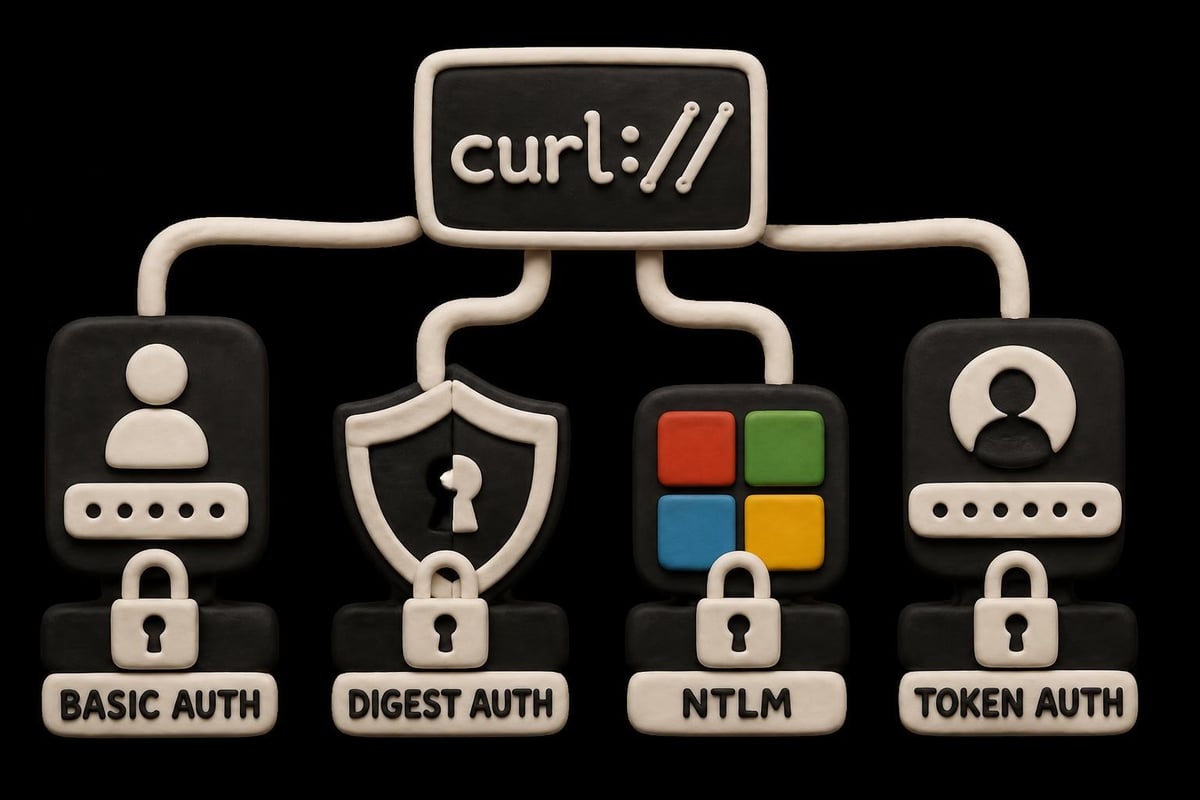
Advanced Authentication Schemes
Beyond basic authentication, curl proxy server configurations support digest authentication, NTLM, and Kerberos protocols. These advanced schemes provide enhanced security for corporate environments and sensitive operations.
The --proxy-digest flag enables digest authentication, while --proxy-ntlm activates NTLM for Windows-based proxy servers. Each authentication method has specific use cases depending on your infrastructure requirements.
Working with Different Proxy Protocols
Not all proxies operate identically. Understanding the distinctions between HTTP, HTTPS, and SOCKS proxies helps you choose the right protocol for your specific requirements.
HTTP and HTTPS Proxies
HTTP proxies represent the most common proxy type for web traffic. When you configure a curl proxy server with HTTP protocol, it handles standard web requests efficiently. The official cURL documentation provides detailed explanations of HTTP proxy mechanics.
For HTTPS traffic through HTTP proxies, cURL establishes a tunnel using the CONNECT method. This approach encrypts end-to-end communication while still routing through the proxy server.
SOCKS Proxy Implementation
SOCKS proxies operate at a lower network level than HTTP proxies, making them protocol-agnostic. They can handle any type of traffic, not just HTTP/HTTPS requests.
SOCKS proxy syntax variations:
- SOCKS4:
curl -x socks4://proxy.example.com:1080 https://target.com - SOCKS4A:
curl -x socks4a://proxy.example.com:1080 https://target.com - SOCKS5:
curl -x socks5://proxy.example.com:1080 https://target.com - SOCKS5 with hostname resolution:
curl -x socks5h://proxy.example.com:1080 https://target.com
The 'h' suffix in SOCKS5h instructs the proxy server to resolve DNS queries, preventing DNS leaks that could expose your actual location. This feature proves particularly valuable for threat intelligence operations requiring complete anonymity.
Troubleshooting Common Issues
Working with curl proxy server configurations inevitably presents challenges. Understanding common problems and their solutions accelerates development and reduces downtime.
Connection Timeouts and Failures
Proxy connection failures typically stem from incorrect configuration, network issues, or proxy server problems. The verbose flag (-v) provides detailed information about connection attempts:
curl -v -x http://proxy.example.com:8080 https://target.com
Common connection issues include:
- Incorrect proxy hostname or IP address
- Wrong port number specification
- Firewall blocking proxy connections
- Proxy server requiring authentication
- Network connectivity problems
For persistent timeout issues, consult troubleshooting guides on connection timeouts that address protocol-specific considerations.
Proxy Blocks and Detection
Modern websites employ sophisticated detection mechanisms to identify proxy traffic. When your curl proxy server requests get blocked, several strategies can help maintain access.
The ScrapingBee guide on cURL proxy usage discusses practical approaches for avoiding detection, including header customization and request pattern randomization.
| Detection Method | Countermeasure | Implementation |
|---|---|---|
| IP reputation | Rotate IP addresses | Use rotating proxy pools |
| Request headers | Customize user agents | Add -H "User-Agent: ..." |
| Request timing | Randomize delays | Script sleep intervals |
| Cookie handling | Maintain sessions | Use -c and -b flags |
Implementing IP rotation with minimal intervals helps distribute requests across multiple addresses, reducing the likelihood of blocks.

Advanced Configuration Techniques
Professional curl proxy server usage extends beyond basic commands into sophisticated configurations that optimize performance and reliability.
Proxy Chain Configuration
Some scenarios require routing traffic through multiple proxy servers sequentially. While cURL doesn't natively support proxy chains, you can achieve this through tools like ProxyChains or by configuring intermediate proxies.
Single proxy configurations remain most common for performance reasons, but understanding chaining possibilities expands your technical toolkit for specialized security requirements.
Custom Headers and SSL Considerations
When working with HTTPS through proxies, SSL certificate verification sometimes causes problems. The -k or --insecure flag bypasses certificate verification, though this reduces security:
curl -k -x https://proxy.example.com:8443 https://secure-site.com
For production environments, proper certificate configuration ensures both security and functionality. The --proxy-cacert option specifies a CA certificate bundle for verifying the proxy's SSL certificate.
Header customization options include:
- Custom User-Agent strings for compatibility
- Accept-Language headers for localization testing
- Referer headers to simulate natural browsing
- Cookie injection for authenticated sessions
These techniques prove essential for ad verification and localization testing where accurate request simulation matters.
Performance Optimization Strategies
Maximizing curl proxy server performance requires attention to connection management, bandwidth utilization, and request efficiency.
Connection Reuse and Keep-Alive
Modern proxy servers support persistent connections that reduce overhead from repeatedly establishing new connections. cURL automatically uses HTTP/1.1 keep-alive when available, but you can control this behavior with specific flags.
The --keepalive-time option sets the interval for sending keep-alive probes on idle connections, preventing premature timeouts during long-running operations.
Bandwidth and Speed Considerations
High-bandwidth proxies deliver better performance for data-intensive operations. Services offering 10Gbps bandwidth enable rapid data collection without bottlenecks.
Performance optimization checklist:
- Use compression with
--compressedflag - Enable HTTP/2 with
--http2when supported - Configure appropriate timeout values
- Implement concurrent requests for bulk operations
- Monitor bandwidth usage and adjust accordingly
For users concerned about bandwidth limitations, understanding these optimization techniques helps maximize available resources.
Practical Use Cases and Applications
Understanding theoretical curl proxy server configuration means little without real-world application. These practical scenarios demonstrate how professionals leverage proxy-enabled cURL across industries.
Web Scraping and Data Collection
Data scientists and analysts rely on curl proxy server setups for collecting information from websites at scale. By rotating IP addresses and managing request patterns, they avoid triggering anti-bot measures while gathering competitive intelligence.
The comprehensive tutorial from cURL documentation provides foundational knowledge that applies directly to scraping scenarios. Combining this with rotating residential proxies creates robust scraping infrastructure.
API Testing and Development
Developers use proxies with cURL to test API behavior from different geographic locations and network conditions. This validation ensures applications function correctly for users worldwide.
Testing APIs through proxies helps identify region-specific issues, latency problems, and content delivery variations. The practice becomes standard for applications serving global audiences.
Security Research and Penetration Testing
Security professionals employ curl proxy server configurations for reconnaissance and vulnerability assessment. Proxies provide anonymity while testing system defenses and identifying potential attack vectors.
Security research applications include:
- Anonymous vulnerability scanning
- Bypassing IP-based access controls for testing
- Simulating attacks from various geographic locations
- Testing firewall and WAF configurations
- Validating security policy enforcement
These operations require understanding both technical implementation and ethical boundaries. The Curl Cookbook's proxy recipes offer practical examples for security testing scenarios.
Protocol Compatibility and IPv6 Support
Modern networks increasingly rely on IPv6 addressing, making protocol compatibility essential for curl proxy server implementations.
Dual-Stack Configuration
Professional proxy services in 2026 support both IPv4 and IPv6 protocols, enabling seamless operation across legacy and modern network infrastructure. Understanding IPv4 and IPv6 compatibility ensures your configurations work regardless of network environment.
cURL automatically handles protocol negotiation when connecting to dual-stack proxies. You can force IPv4 or IPv6 using the -4 and -6 flags respectively:
curl -4 -x http://proxy.example.com:8080 https://target.com
curl -6 -x http://proxy.example.com:8080 https://target.com
Protocol-Specific Considerations
Different protocols require distinct configuration approaches. HTTP/2 and HTTP/3 support in cURL continues evolving, with proxy compatibility varying by provider.
| Protocol | Proxy Support | Configuration Notes |
|---|---|---|
| HTTP/1.1 | Universal | Default, widely supported |
| HTTP/2 | Common | Use --http2 flag |
| HTTP/3 | Emerging | Limited proxy support in 2026 |
| WebSocket | Selective | Requires CONNECT tunneling |
Understanding protocol compatibility issues helps prevent unexpected failures when implementing advanced configurations.
Automating Proxy Configuration
Manual proxy configuration works for occasional use, but automation becomes necessary for production systems and continuous operations.
Scripting and Integration
Shell scripts, Python applications, and other programming environments can leverage curl proxy server functionality programmatically. Environment variable configuration simplifies integration across different execution contexts.
Automation best practices include:
- Centralizing proxy configuration in environment files
- Implementing health checks for proxy availability
- Building automatic failover between proxy servers
- Logging proxy usage for debugging and analytics
- Rotating credentials on defined schedules
For organizations managing multiple proxy endpoints, the quick setup documentation provides structured approaches to deployment and configuration management.
Dynamic Proxy Selection
Advanced implementations select proxies dynamically based on target geography, current load, or specific requirements. This approach optimizes performance while maintaining reliability.
Scripts can query proxy APIs to obtain current endpoints, implement round-robin selection, or choose proxies based on response time metrics. These sophisticated patterns support e-commerce price monitoring and SERP monitoring at scale.
Enterprise Considerations
Organizations deploying curl proxy server infrastructure face unique requirements around compliance, security, and operational management.
Compliance and Privacy
Zero-log policies protect user privacy while meeting regulatory requirements in 2026. When selecting proxy providers, verify their logging practices and data retention policies align with your compliance obligations.
The Novada blog's best practices guide addresses reliability considerations that impact enterprise deployments.
Cost Management and Resource Optimization
Enterprise proxy usage requires balancing performance needs against budget constraints. Unlimited access plans eliminate concerns about bandwidth caps or request limits during critical operations.
Cost optimization strategies:
- Implement request caching to reduce duplicate queries
- Use datacenter proxies for non-sensitive operations
- Reserve residential proxies for detection-sensitive tasks
- Monitor usage patterns to right-size proxy pools
- Leverage rotating proxies instead of maintaining static IPs
Understanding your specific use case helps identify the most cost-effective proxy configuration. The pricing page provides transparent information for capacity planning.
Security and Privacy Considerations
Implementing curl proxy server solutions requires careful attention to security implications and privacy protection.
Encryption and Data Protection
Always use HTTPS for proxy connections when transmitting sensitive data. While the proxy sees your traffic, encryption prevents intermediate network observers from intercepting information.
For maximum privacy, SOCKS5 proxies with DNS resolution at the proxy level prevent local DNS leaks that could expose your browsing patterns to ISPs or network administrators.
Credential Security
Proxy credentials require protection equivalent to any other authentication system. Avoid embedding passwords in scripts committed to version control. Instead, use environment variables or secure credential stores.
Security hardening checklist:
- Rotate proxy credentials quarterly minimum
- Implement IP whitelisting when available
- Monitor authentication logs for suspicious activity
- Use dedicated credentials per application
- Enable two-factor authentication if supported
Following these practices protects both your infrastructure and the proxy service from unauthorized access.
Mastering curl proxy server configuration empowers you to build sophisticated data collection systems, test applications globally, and maintain privacy across network operations. The techniques covered here represent current best practices for 2026, from basic setup through advanced automation strategies. Whether you're scraping competitive data, testing APIs, or conducting security research, PinguProxy delivers the high-speed datacenter, residential, and mobile proxies you need with complete IPv4/IPv6 support, unlimited bandwidth, and 24/7 support to ensure your operations run smoothly.