
HTTP SOCKS Proxy: A Complete Guide for 2026
When navigating the complex landscape of proxy services in 2026, understanding the distinction between HTTP and SOCKS proxies is fundamental to choosing the right solution for your needs. These two proxy types serve different purposes and operate at different layers of the network stack, making each better suited for specific use cases. Whether you're managing web scraping operations, protecting your online privacy, or accessing geo-restricted content, knowing when to deploy an http socks proxy configuration can significantly impact your success and security posture.
Understanding Proxy Protocol Fundamentals
Proxies function as intermediaries between your device and the internet, routing your traffic through a separate server before it reaches its destination. This basic concept applies to both HTTP and SOCKS protocols, but the implementation differs substantially.
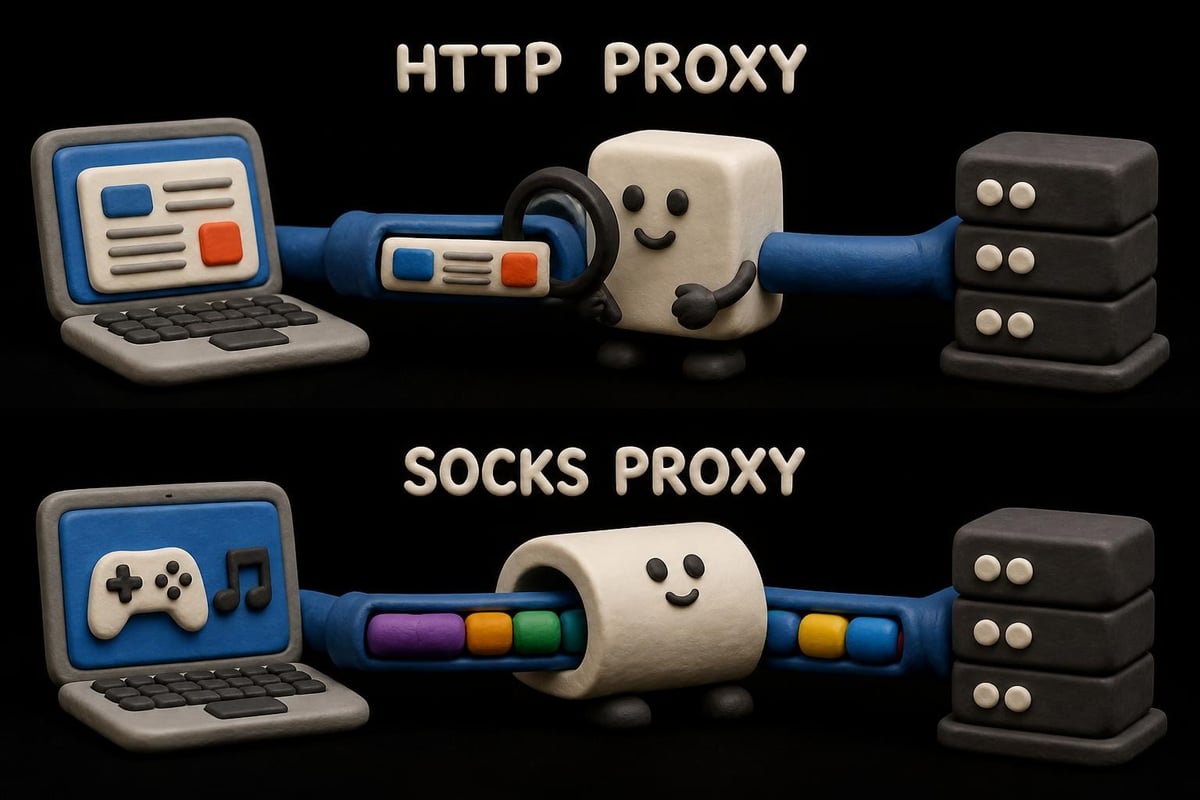
HTTP proxies operate at the application layer, specifically designed to handle web traffic. They understand HTTP protocol commands and can interpret, modify, and cache web requests. This intelligence allows them to perform advanced filtering and content optimization.
SOCKS proxies work at a lower network level, functioning as a general-purpose proxy that doesn't interpret the data it transmits. SOCKS5, the most current version, provides a versatile tunneling solution that supports various protocols beyond just HTTP.
Key Protocol Differences
The fundamental architecture of these proxy types creates distinct operational characteristics:
- Layer operation: HTTP works at Layer 7 (Application), while SOCKS operates at Layer 5 (Session)
- Protocol support: HTTP handles only web traffic, SOCKS supports any protocol including FTP, SMTP, and P2P
- Authentication: Both support authentication, but SOCKS5 offers more flexible methods
- Speed: HTTP proxies can cache content for faster repeated requests, SOCKS proxies typically offer lower latency for non-web protocols
Understanding how SOCKS proxies function provides valuable context for choosing the right proxy type for your specific application needs.
When to Choose HTTP Proxies
HTTP proxies excel in web-focused scenarios where you need intelligent traffic handling and content optimization. Their application-layer awareness enables capabilities that general-purpose proxies cannot provide.
For web scraping operations, HTTP proxies offer several advantages. They can handle cookies, manage sessions, and interpret redirect commands automatically. This makes them ideal for extracting data from websites that require authentication or session management. Many enterprise web scraping tools integrate seamlessly with HTTP proxies because of their native HTTP protocol support.
HTTP Proxy Use Cases
Content filtering and monitoring represents another strong use case. Organizations deploy HTTP proxies to inspect web traffic, block specific content categories, and enforce acceptable use policies. The proxy's ability to read and interpret HTTP headers makes this granular control possible.
- Corporate network management: Filter websites, monitor bandwidth usage, enforce security policies
- Web acceleration: Cache frequently accessed content to reduce bandwidth and improve load times
- SEO monitoring: Track search engine results across different locations and devices
- Ad verification: Confirm advertisements display correctly in various geographic markets
- Price monitoring: Compare product prices across regions for competitive intelligence
For businesses looking to buy HTTP proxies, understanding these specific advantages helps align proxy selection with business objectives.
| Feature | HTTP Proxy | Benefit |
|---|---|---|
| Header modification | Supported | Custom user agents, referrers |
| Content caching | Yes | Faster repeated requests |
| SSL inspection | HTTPS variant | Deep packet inspection |
| Cookie handling | Native | Automated session management |
When to Choose SOCKS Proxies
SOCKS proxies provide superior versatility when you need to route traffic beyond standard web browsing. Their protocol-agnostic design makes them the preferred choice for applications that HTTP proxies simply cannot handle effectively.
Gaming and P2P applications benefit enormously from SOCKS5 proxies. These applications use proprietary protocols that HTTP proxies cannot interpret or forward correctly. A SOCKS proxy simply tunnels the data packets without trying to understand them, maintaining full compatibility.
The differences between SOCKS and HTTP proxies become particularly evident when handling non-web protocols. SOCKS5 supports UDP traffic, enabling real-time applications like voice calls, video streaming, and online gaming to function smoothly through the proxy.
SOCKS Proxy Advantages
Enhanced privacy stands as a key SOCKS benefit. Because SOCKS proxies don't inspect or modify traffic, they leave fewer fingerprints and provide more genuine anonymity. This makes them popular for privacy-conscious users who want minimal interference with their data streams.
- Protocol flexibility: Route any TCP or UDP traffic through the same proxy
- Firewall bypassing: Tunnel through restrictive networks that block specific protocols
- Lower overhead: Minimal processing means faster performance for non-cacheable traffic
- Email and FTP: Support protocols that HTTP proxies cannot handle
Developers frequently need to configure SSH SOCKS proxies for secure remote access and development workflows that involve multiple protocols simultaneously.

Combining HTTP and SOCKS Proxy Strategies
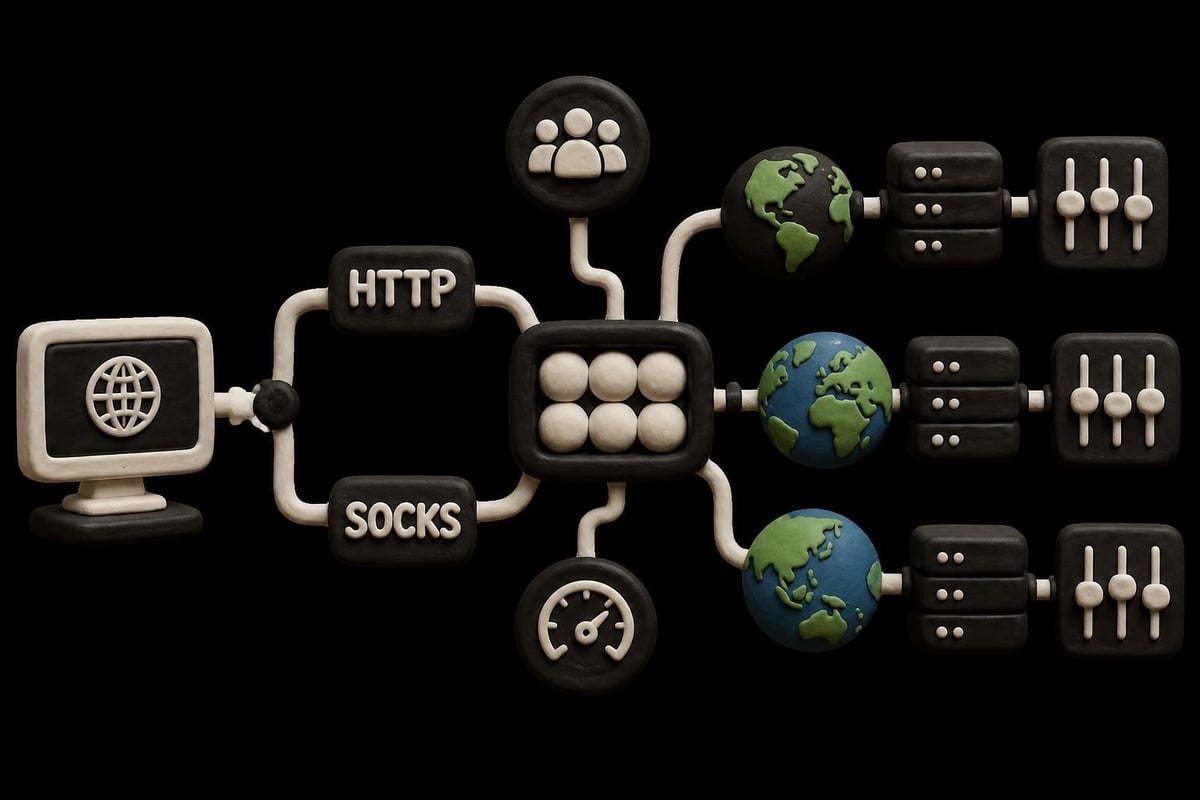
Many sophisticated operations benefit from deploying both proxy types strategically. An http socks proxy architecture allows you to route different traffic types through the most appropriate proxy protocol.
Multi-protocol scraping operations exemplify this hybrid approach. You might use HTTP proxies for standard web page requests while deploying SOCKS proxies for API calls, WebSocket connections, or media downloads that require different protocol support.
Configuration Best Practices
Setting up dual proxy configurations requires careful planning to avoid routing conflicts and ensure each traffic type reaches the appropriate proxy. Modern proxy management systems allow rule-based routing that automatically selects the correct proxy based on destination, protocol, or application.
Authentication coordination becomes critical when managing multiple proxy types. Ensure consistent credential management across both HTTP and SOCKS proxies to simplify administration and reduce security risks from credential sprawl.
| Scenario | Recommended Type | Reason |
|---|---|---|
| Website browsing | HTTP/HTTPS | Caching, header control |
| API testing | Either | Depends on protocol needs |
| Email routing | SOCKS5 | SMTP/IMAP support |
| Streaming media | SOCKS5 | UDP support, less overhead |
| Enterprise filtering | HTTP | Content inspection capability |
The research on free HTTP proxy ecosystems reveals important security considerations that apply equally to SOCKS proxies, particularly regarding trust and data handling practices.
Performance Optimization Techniques
Maximizing proxy performance requires understanding how each protocol handles connections, manages bandwidth, and processes data. The inherent architectural differences between HTTP and SOCKS proxies create unique optimization opportunities.
Connection pooling works differently across proxy types. HTTP proxies benefit from persistent connections and keep-alive headers that reduce overhead for multiple requests to the same domain. SOCKS proxies establish direct tunnels that maintain connection state efficiently for long-running sessions.
Latency Reduction Strategies
Geographic proximity between your location, the proxy server, and the target destination dramatically affects performance. Calculate the total round-trip time and position proxies strategically to minimize latency.
- Proxy server location: Choose servers closest to target resources
- Protocol selection: Use HTTP for web requests, SOCKS for everything else
- Connection reuse: Leverage persistent connections where protocol allows
- Bandwidth allocation: Prioritize critical traffic through higher-tier proxy pools
When configuring proxies for Android devices, understanding platform-specific performance characteristics helps optimize mobile application performance across varying network conditions.
Bandwidth management becomes essential when operating at scale. HTTP proxies can implement compression and caching to reduce bandwidth consumption, while SOCKS proxies excel at maintaining consistent throughput for time-sensitive applications.
Security Considerations for Proxy Deployment
Both HTTP and SOCKS proxies introduce security implications that require careful evaluation. Understanding the security model of each proxy type helps you implement appropriate safeguards and avoid common vulnerabilities.
Authentication mechanisms vary significantly between protocols. HTTP proxies typically use basic or digest authentication embedded in headers, while SOCKS5 supports multiple authentication methods including username/password, GSS-API, and no authentication for trusted networks.
Data Privacy and Encryption
Unencrypted proxies transmit data in plain text between your device and the proxy server, creating an interception risk. HTTPS proxies encrypt the connection to the proxy, but the proxy itself can still inspect traffic. SOCKS proxies similarly don't encrypt data unless you layer additional encryption like TLS.
Logging policies represent a critical security consideration. Proxies can record every request, including sensitive data like authentication credentials, personal information, and browsing patterns. Premium services implement zero-log policies to protect user privacy, while free proxies often monetize by collecting and selling user data.
To effectively evaluate proxy performance and security, regular testing of latency, anonymity level, and connection stability helps identify compromised or underperforming proxies before they impact operations.
Common Security Risks
- Man-in-the-middle attacks: Malicious proxies intercepting and modifying traffic
- DNS leaks: Proxy misconfiguration exposing true IP through DNS requests
- WebRTC leaks: Browser features bypassing proxy and revealing real IP
- Credential theft: Unencrypted proxies capturing login information
- Traffic analysis: Proxy operators monitoring patterns to identify users
Implementing proxy configurations on iPhone devices requires particular attention to iOS-specific security features and potential leak vectors unique to the platform.
Integration and Implementation Guidelines
Successfully deploying an http socks proxy infrastructure requires understanding how different applications and platforms handle proxy configurations. Modern software environments provide varying levels of proxy support and configuration flexibility.
Application-level proxy settings allow individual programs to use different proxies simultaneously. Web browsers, download managers, and specialized tools often include built-in proxy configuration interfaces that support both HTTP and SOCKS protocols.
System-Wide Configuration
Operating system proxy settings affect all applications that respect system-level configurations. Windows, macOS, and Linux each handle system proxies differently, with varying degrees of per-application override capability.
When configuring websockets with proxies, understanding protocol-specific requirements ensures real-time features function correctly through proxy infrastructure without breaking bidirectional communication.
Environment variables provide another configuration method, particularly useful in development environments and automated systems. Variables like HTTP_PROXY, HTTPS_PROXY, and SOCKS_PROXY allow scripts and command-line tools to automatically use proxies without code modifications.
| Configuration Method | Scope | Best For |
|---|---|---|
| Application settings | Single program | Program-specific needs |
| System settings | OS-wide | General browsing |
| Environment variables | Shell session | Development, automation |
| PAC files | Network-based | Enterprise deployment |
Choosing the Right Proxy Type for Your Needs
Selecting between HTTP and SOCKS proxies depends on your specific requirements, technical constraints, and use case priorities. A systematic evaluation process helps identify which proxy type aligns with your operational needs.
Protocol requirements form the foundation of this decision. If you exclusively need web access, HTTP proxies provide optimized performance with useful features like caching and header manipulation. Applications requiring multiple protocols or non-HTTP traffic necessitate SOCKS proxies.
Decision Framework
Performance expectations influence proxy selection significantly. HTTP proxies excel when caching benefits repeated requests to the same resources. SOCKS proxies minimize overhead for streaming, gaming, and other real-time applications where caching provides no advantage.
- Web scraping: HTTP for standard pages, SOCKS for dynamic content and APIs
- Privacy browsing: SOCKS5 for minimal fingerprinting
- Corporate filtering: HTTP for content inspection capabilities
- Development testing: Both, depending on application requirements
- Gaming and streaming: SOCKS5 for protocol support and low latency
Exploring resources that compare HTTP, HTTPS, and SOCKS5 proxies provides additional perspective on selecting the optimal proxy scheme for different operational contexts.
Budget considerations also play a role. High-quality proxies of either type require investment, but SOCKS proxies sometimes command premium pricing due to their versatility and infrastructure requirements.
Advanced Proxy Management Strategies
Organizations operating at scale require sophisticated proxy management capabilities beyond basic configuration. Effective proxy rotation, pool management, and failure handling separate amateur implementations from professional-grade solutions.
Automatic proxy rotation prevents detection and reduces the risk of IP blocking. Rotating proxies at appropriate intervals, based on request volume and target website policies, maintains operation continuity while minimizing the fingerprint associated with any single IP address.
Pool Management Techniques
Health monitoring ensures proxy pools contain only functional, performant proxies. Automated testing systems continuously verify proxy availability, latency, and anonymity levels, removing degraded proxies before they impact operations.
Geographic distribution of proxy pools enables location-specific testing and access to geo-restricted content. Maintaining proxies across multiple countries and regions provides flexibility for international operations and accurate regional testing.
- Monitor proxy health: Regular latency and availability checks
- Rotate intelligently: Balance between rotation frequency and consistency
- Segment pools: Separate proxies by use case, region, and quality tier
- Scale dynamically: Add capacity during peak demand periods
- Track metrics: Monitor success rates, speed, and anonymity levels
Consulting comprehensive proxy source documentation helps identify diverse proxy providers and configuration options suitable for building resilient, high-performance proxy infrastructure.
Technical Specifications and Standards
Understanding the technical specifications governing HTTP and SOCKS protocols ensures proper implementation and troubleshooting capability. These standards define how proxies communicate, authenticate, and handle various network scenarios.
HTTP proxy specifications follow the HTTP/1.1 standard, with proxies implementing the CONNECT method for SSL tunneling. Modern HTTP/2 and HTTP/3 protocols introduce additional complexity for proxy implementations, though most HTTP proxies still primarily handle HTTP/1.1 traffic.
SOCKS5 specification (RFC 1928) defines the current standard for SOCKS proxies. It supports both TCP and UDP protocols, multiple authentication methods, and IPv6 addressing. Earlier SOCKS4 remains in use but lacks UDP support and advanced authentication.
Protocol Capabilities Comparison
| Capability | HTTP Proxy | SOCKS5 Proxy |
|---|---|---|
| TCP support | Yes | Yes |
| UDP support | No | Yes |
| IPv6 support | Yes | Yes |
| Authentication methods | Basic, Digest, NTLM | Username/password, GSSAPI, None |
| Header modification | Yes | No |
| Protocol awareness | HTTP only | Protocol-agnostic |
Understanding these technical foundations helps diagnose connectivity issues, optimize configurations, and select proxies that meet your specific protocol requirements.
Whether you choose HTTP proxies for web-focused operations or SOCKS proxies for versatile protocol support, understanding the strengths of each type ensures optimal performance and security. For businesses requiring reliable, high-performance proxy infrastructure that supports both HTTP and SOCKS protocols, PinguProxy delivers enterprise-grade solutions with unlimited access, 10Gbps bandwidth, and zero-log privacy protection. With comprehensive IPv4 and IPv6 support plus 24/7 customer assistance, PinguProxy provides the robust proxy infrastructure your operations demand.