
Luminati Proxies: What You Need to Know in 2026
When discussing residential and peer-sourced proxy networks, one name consistently appears in industry conversations: Luminati. Though the company officially rebranded to Bright Data in 2020, the term "luminati proxies" remains widely used by developers, data scientists, and businesses seeking large-scale web scraping and data collection solutions. Understanding what luminati proxies were, how they worked, and what they became offers valuable context for anyone evaluating proxy services in 2026.
The legacy of luminati proxies extends beyond simple IP rotation. This network pioneered the commercialization of residential proxy infrastructure at unprecedented scale, fundamentally changing how businesses approach data collection, market research, and competitive intelligence. However, the technology also sparked significant debates about privacy, consent, and the ethical boundaries of proxy networks.
The Origins and Evolution of Luminati Proxies
Luminati Networks launched in 2014 with an innovative yet controversial approach: leveraging peer-to-peer networks to create a massive residential proxy infrastructure. The company built its initial proxy pool by partnering with consumer applications, most notably the free VPN service Hola, which shared bandwidth from its users to power what became luminati proxies.
This model allowed Luminati to offer millions of residential IP addresses from real devices worldwide. Unlike traditional datacenter proxies, these residential IPs appeared as legitimate consumer traffic, making them highly effective for accessing geo-restricted content and conducting large-scale web scraping without triggering anti-bot measures.
The Bright Data Transformation
In 2020, Luminati Networks underwent a significant rebrand, becoming Bright Data. According to the company's official explanation, this change reflected a shift toward transparency, ethical data collection practices, and enterprise-focused solutions. The rebrand addressed growing concerns about consent and privacy in residential proxy networks.
The transformation included:
- Enhanced disclosure requirements for peer network participants
- Stricter vetting of business use cases
- Improved compensation models for bandwidth contributors
- Expanded compliance frameworks for data protection regulations
Despite the rebrand, many technical communities continue referring to "luminati proxies" when discussing residential proxy technology, much like people still say "Google it" regardless of search engine preferences.
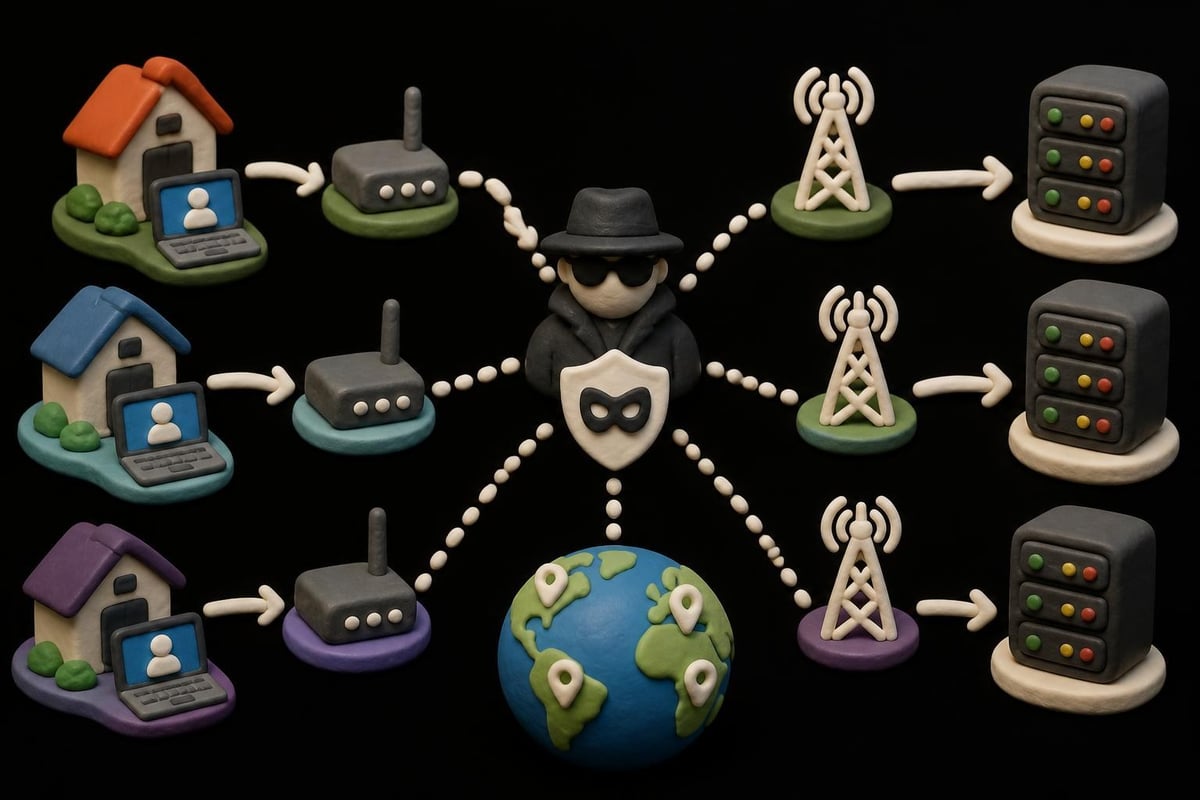
Technical Capabilities of Luminati Proxies
Understanding what made luminati proxies distinctive requires examining their technical architecture and capabilities. The network offered several proxy types, each serving different use cases and performance requirements.
Residential Proxy Infrastructure
The core offering consisted of residential proxies sourced from real user devices. These proxies provided:
Geographic Coverage
- Access to IPs from virtually every country
- City-level targeting in major markets
- ASN-specific routing for carrier testing
Rotation Options
- Session-based persistence for multi-step workflows
- Random rotation for distributed scraping
- Sticky sessions lasting from minutes to hours
Protocol Support
- HTTP/HTTPS for web scraping
- SOCKS5 for application-level routing
- Custom implementations through the open-source Luminati proxy manager
| Feature | Residential | Datacenter | Mobile |
|---|---|---|---|
| IP Source | Peer devices | Cloud servers | Cellular networks |
| Detection Rate | Very Low | Medium-High | Very Low |
| Speed | Moderate | Very High | Low-Moderate |
| Cost | High | Low | Very High |
Advanced Targeting and Control
Beyond basic IP rotation, luminati proxies offered sophisticated targeting capabilities that remain benchmarks for the industry in 2026. Businesses could specify not just country and city, but also connection type, carrier, and even device characteristics.
This granularity proved essential for:
- Testing localized content and pricing
- Verifying ad placement across regions
- Monitoring brand presence in specific markets
- Conducting competitive research without detection
The SOCKS protocol implementation allowed applications beyond web browsers to leverage the proxy network, expanding use cases to include mobile apps, desktop software, and automated testing frameworks.
Legal and Ethical Considerations
The residential proxy industry, largely pioneered by luminati proxies, has faced significant legal scrutiny. The tension between data collection needs and platform terms of service reached a critical point in 2024 when Meta Platforms sued Bright Data over scraping practices.
Landmark Legal Decisions
In January 2024, a California court ruled in favor of Bright Data in Meta's lawsuit, establishing important precedents for web scraping and proxy use. The court's opinion addressed several key questions about breach of contract claims and the enforceability of terms of service against third parties.
According to legal analysis from Proskauer Rose, this decision has significant implications for businesses using proxies for data collection. The ruling suggests that simply using automated tools to access public information does not necessarily constitute unauthorized access, even when platform terms prohibit scraping.
However, businesses must still navigate a complex landscape:
- Platform policies may change and become more restrictive
- Rate limiting and technical countermeasures are legitimate
- Personal data collection faces stricter regulatory scrutiny
- Copyright and database rights vary by jurisdiction

Security and Privacy Concerns
While luminati proxies offered powerful capabilities, the residential proxy model raises important security and privacy questions that persist across the industry in 2026. Understanding these concerns helps businesses make informed decisions about proxy providers.
Risks in Residential Proxy Networks
Research has documented several vulnerabilities specific to residential and peer-sourced proxy infrastructure. An academic study published in 2024 examined privacy risks and ethical implications of residential proxy services, finding significant concerns around:
- Inadequate disclosure to bandwidth contributors
- Potential exposure of peer devices to malicious traffic
- Unclear liability when proxies are used for harmful purposes
- Data leakage between proxy users sharing infrastructure
A comprehensive analysis of free proxy services revealed that many proxy networks suffer from stability issues, traffic manipulation, and security vulnerabilities that could compromise user data.
Best Practices for Secure Proxy Use
Organizations using residential proxies should implement several safeguards:
- Verify provider transparency about IP sourcing and consent
- Implement encryption for all proxy traffic
- Monitor for data leakage through DNS and WebRTC
- Rotate credentials regularly to limit exposure
- Maintain audit logs of proxy usage for compliance
Understanding how to properly configure HTTP proxies becomes essential for preventing common security mistakes that could expose sensitive data or credentials.
Modern Alternatives to Luminati Proxies
While Bright Data continues operating the former Luminati infrastructure, the proxy market has evolved significantly since 2014. Businesses in 2026 have numerous alternatives offering different trade-offs between cost, performance, ethics, and capabilities.
Datacenter Proxies for Speed and Scale
For use cases where residential IPs aren't strictly necessary, datacenter proxies offer compelling advantages:
- 10Gbps+ bandwidth for rapid data collection
- Lower costs due to infrastructure efficiency
- Simpler compliance without peer network concerns
- Better reliability from controlled infrastructure
Modern datacenter proxy providers have improved detection resistance through techniques like IP rotation, user-agent randomization, and behavioral mimicry that make them viable for many scraping tasks.
Mobile Proxies for Maximum Legitimacy
Mobile proxies route traffic through cellular networks, providing IPs that closely resemble organic mobile users. These proxies excel when:
- Accessing mobile-specific content or APIs
- Testing location-based services
- Verifying mobile ad placement
- Bypassing aggressive anti-bot systems
The trade-off comes in speed and cost, as mobile bandwidth typically costs more and performs slower than datacenter alternatives.
Hybrid Approaches
Leading proxy providers in 2026 offer flexible solutions combining multiple proxy types. This allows businesses to optimize for each use case:
| Use Case | Recommended Type | Priority |
|---|---|---|
| Price monitoring | Residential | Geographic accuracy |
| Content scraping | Datacenter | Speed and volume |
| Ad verification | Mobile | Platform matching |
| SEO monitoring | Residential | Search personalization |
| API testing | Datacenter | Reliability |
Evaluating Proxy Providers in 2026
Choosing a proxy service requires balancing multiple factors beyond simple IP count or geographic coverage. The luminati proxies legacy teaches important lessons about what to prioritize.
Essential Provider Criteria
Technical Performance
- Minimum 99.5% uptime guarantees
- Sub-second response times for most requests
- Support for both IPv4 and IPv6 protocols
- Flexible rotation mechanisms (sticky sessions, random, timed)
Compliance and Ethics
- Clear documentation of IP sourcing methods
- Transparent consent for residential networks
- GDPR and regional privacy law compliance
- Acceptable use policies that prevent abuse
Support and Documentation
- 24/7 technical support for enterprise users
- Comprehensive API documentation
- Integration guides for common frameworks
- Active community or knowledge base
Red Flags to Avoid
When evaluating proxy providers, watch for warning signs that suggest unreliable or unethical operations:
- Suspiciously low pricing compared to market rates
- Vague descriptions of IP sourcing methods
- Lack of clear terms of service or privacy policies
- No technical documentation or API specifications
- Missing compliance certifications for regulated industries

Integration and Implementation Strategies
Successfully deploying proxy infrastructure requires more than simply purchasing access. The complexity of luminati proxies and similar services demands careful planning and implementation.
Development Environment Setup
Start with a controlled testing environment before production deployment:
- Configure authentication using API keys or username/password schemes
- Test rotation mechanics to understand session persistence
- Implement retry logic for failed requests
- Monitor rate limits to avoid service throttling
- Validate IP selection meets geographic requirements
Following proper installation procedures ensures your proxy implementation works reliably from the start.
Optimizing for Different Use Cases
Different applications require different proxy configurations. A one-size-fits-all approach typically underperforms across all scenarios.
For Web Scraping
- Use session-based rotation to complete multi-step forms
- Implement exponential backoff for rate limiting
- Randomize user agents and headers
- Respect robots.txt when legally appropriate
For Market Research
- Prioritize geographic accuracy over speed
- Use sticky sessions for consistent browsing patterns
- Clear cookies between research sessions
- Document methodology for reproducibility
For Ad Verification
- Match proxy type to ad platform (mobile for mobile ads)
- Verify actual rendering, not just HTTP responses
- Rotate frequently to sample diverse placements
- Compare results across proxy types for validation
Cost Considerations and ROI
Proxy services represent significant operational expenses for data-intensive businesses. Understanding the economics helps justify investment and optimize spending.
Pricing Models Across Providers
The proxy industry offers several pricing structures:
- Pay-per-GB charges for actual bandwidth consumed
- Subscription tiers provide fixed monthly access limits
- Concurrent connections limit simultaneous active sessions
- IP access fees charge for geographic or ASN-specific routing
Former luminati proxies pioneered premium pricing justified by network quality and scale. In 2026, competitive pressure has moderated pricing while improving service quality across the industry.
Calculating Business Value
Determine ROI by comparing proxy costs against business outcomes:
Monthly Revenue from Proxy-Enabled Activities
- Monthly Proxy Service Costs
- Development and Maintenance Costs
- Opportunity Cost of Alternative Methods
= Net Monthly Value
For many businesses, proxies enable revenue opportunities that would be impossible otherwise, making them highly profitable despite high absolute costs.
The story of luminati proxies illustrates how rapidly the proxy industry has evolved over the past decade, from controversial beginnings to mainstream business infrastructure. Today's proxy users benefit from improved transparency, better performance, and clearer legal frameworks shaped by this evolution. Whether you need residential IPs for market research, datacenter proxies for high-speed scraping, or mobile endpoints for ad verification, PinguProxy delivers enterprise-grade performance with complete IPv4 and IPv6 support, zero-log privacy protection, and 24/7 expert support to help you succeed in competitive data-driven markets.