
Bu makale şu anda yalnızca İngilizce olarak sunulmaktadır.
İngilizce okuPIA Proxy SOCKS5: Complete Guide for 2026
Understanding proxy protocols has become essential for businesses navigating online operations in 2026. The pia proxy socks5 solution represents a specialized approach to routing internet traffic, offering enhanced privacy and flexibility compared to traditional HTTP proxies. Whether you're managing web scraping operations, accessing geo-restricted content, or protecting your digital footprint, knowing how SOCKS5 proxies function within the PIA ecosystem can significantly impact your operational efficiency.
What Makes PIA Proxy SOCKS5 Different
SOCKS5 stands apart from other proxy protocols through its versatile architecture. Unlike HTTP proxies that only handle web traffic, SOCKS5 operates at a lower level, routing any type of internet protocol. This fundamental difference allows the pia proxy socks5 implementation to support applications beyond web browsing, including email clients, gaming platforms, and P2P file sharing.
Protocol Layer Advantages
The technical superiority of SOCKS5 stems from its position in the networking stack. Operating at Layer 5 of the OSI model, it creates a general-purpose proxy solution that doesn't interpret or modify the traffic passing through it. This design means fewer bottlenecks and faster throughput compared to application-layer proxies.
Key benefits include:
- Support for TCP and UDP protocols
- No protocol-specific limitations
- Reduced packet inspection overhead
- Better compatibility with diverse applications
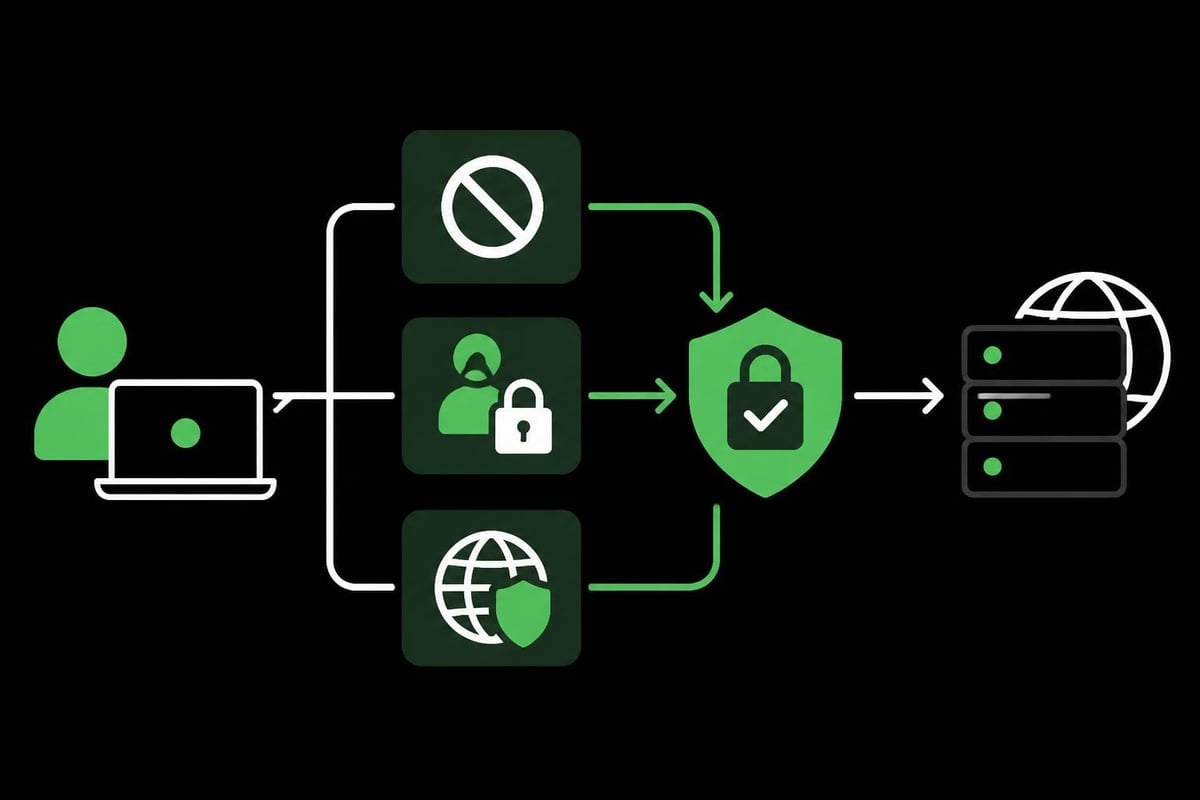
Authentication mechanisms in pia proxy socks5 implementations add another security layer. The protocol supports multiple authentication methods, ensuring that only authorized users can access the proxy infrastructure. This becomes particularly valuable for businesses managing team access or implementing strict security policies.
Setting Up PIA Proxy SOCKS5 Connections
Configuration varies depending on your application and operating system, but the core principles remain consistent. Understanding SOCKS5 setup procedures helps streamline the implementation process and avoid common pitfalls.
Browser Configuration
Most modern browsers support SOCKS5 proxies natively. For Firefox, navigate to network settings and manually configure your proxy preferences. Chrome and Edge users typically configure system-wide proxy settings or use extensions for granular control.
- Access your browser's network or connection settings
- Select manual proxy configuration
- Enter the pia proxy socks5 server address and port
- Input authentication credentials when prompted
- Test the connection with a leak test tool
Application-Specific Setup
Beyond browsers, many applications benefit from SOCKS5 routing. Torrent clients like qBittorrent and Deluge include built-in SOCKS5 support, allowing you to route peer-to-peer traffic through the proxy while keeping other traffic direct.
| Application Type | Configuration Location | Authentication Support |
|---|---|---|
| Web Browsers | Network Settings | Yes |
| Torrent Clients | Connection Preferences | Yes |
| Gaming Platforms | Network Configuration | Varies |
| Development Tools | Environment Variables | Yes |
| Mobile Apps | System Proxy Settings | Limited |
For businesses running web scraping operations, integrating pia proxy socks5 into Python scripts requires libraries like PySocks or requests with SOCKS support. The implementation typically involves specifying the proxy URL with credentials in your request headers or session configuration.
Performance Characteristics and Benchmarks
Speed represents a critical factor when evaluating proxy solutions. The pia proxy socks5 service performance depends on multiple variables including server location, network congestion, and encryption overhead. Independent proxy evaluations provide valuable insights into real-world performance metrics.
Latency Considerations
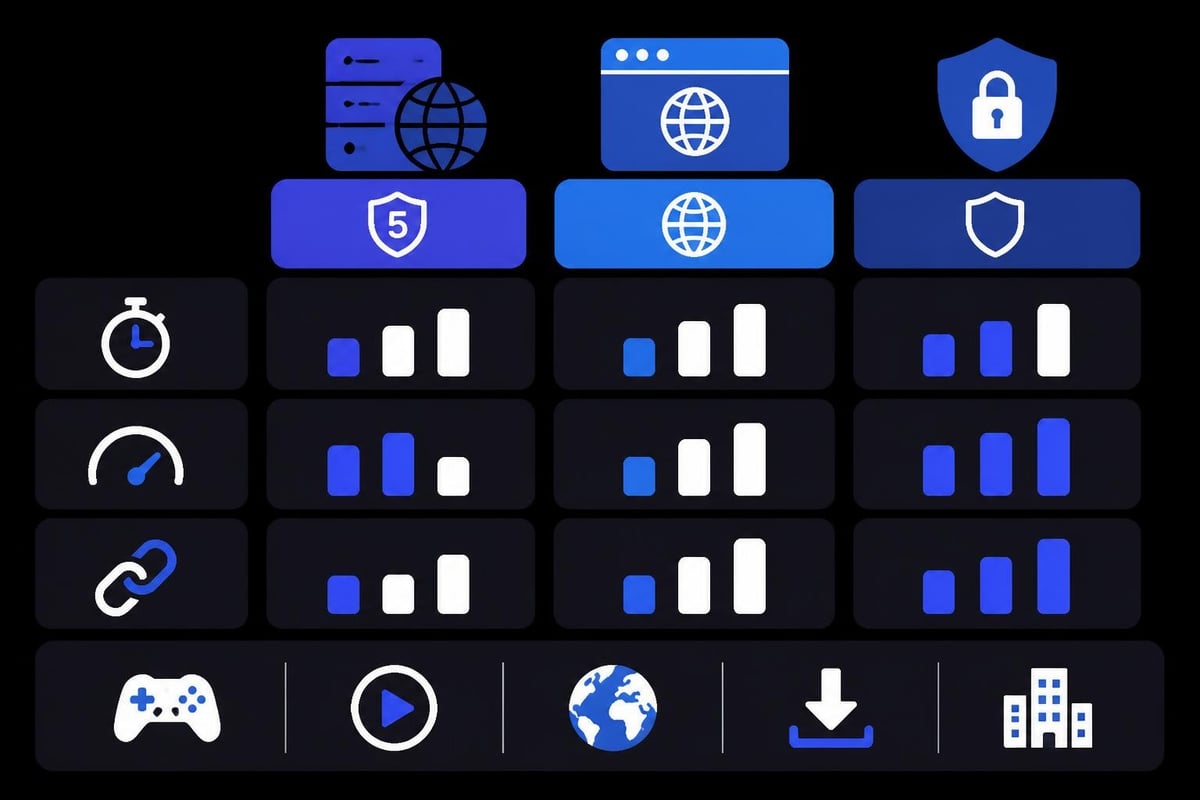
SOCKS5 proxies introduce minimal latency compared to VPN tunnels because they don't encrypt traffic by default. This characteristic makes them ideal for latency-sensitive applications like online gaming or real-time data collection. However, the actual latency you experience depends heavily on the physical distance between your location and the proxy server.
Typical latency ranges:
- Local servers (same continent): 10-50ms additional latency
- Cross-continental connections: 100-200ms additional latency
- High-traffic periods: +20-30% latency increase
Bandwidth throughput with pia proxy socks5 generally exceeds VPN performance because of the reduced processing overhead. Without encryption encapsulation, packets move through the proxy server more efficiently, making SOCKS5 particularly suitable for high-volume data transfer scenarios.
Connection Stability
Maintaining persistent connections matters for operations requiring extended sessions. SOCKS5's design supports long-lived TCP connections better than HTTP proxies, which were initially designed for stateless request-response cycles. This stability proves essential for applications like academic research requiring continuous data collection.
Security and Privacy Implications
While pia proxy socks5 offers privacy benefits, understanding its security limitations remains crucial. Unlike VPNs, standard SOCKS5 implementations don't encrypt traffic between your device and the proxy server, leaving data vulnerable to interception on untrusted networks.
Authentication Security
The username-password authentication method in SOCKS5 transmits credentials in plain text unless wrapped in an encrypted tunnel. This vulnerability means attackers on the same network could potentially intercept your proxy credentials. Combining SOCKS5 with SSL/TLS at the application layer mitigates this risk.
| Security Feature | SOCKS5 Native | With TLS Wrapper | VPN Equivalent |
|---|---|---|---|
| Traffic Encryption | No | Yes | Yes |
| Credential Protection | Limited | Yes | Yes |
| IP Masking | Yes | Yes | Yes |
| DNS Leak Protection | Requires Config | Yes | Yes |
Research on proxy behavior and security highlights the importance of understanding proxy limitations. The pia proxy socks5 infrastructure addresses many traditional proxy vulnerabilities through authenticated access and monitored server environments, but users must still implement application-layer security where appropriate.
Privacy Advantages
Despite lacking native encryption, SOCKS5 proxies excel at IP masking and bypassing geographic restrictions. Your internet traffic appears to originate from the proxy server's location, effectively hiding your actual IP address from destination servers. This capability supports various use cases from ad verification to accessing region-locked content.
Practical Applications for Businesses
The versatility of pia proxy socks5 makes it valuable across numerous business contexts. Understanding which scenarios benefit most from SOCKS5 versus alternative solutions helps optimize your proxy strategy.
Data Collection and Market Research
Companies gathering competitive intelligence or market data often leverage SOCKS5 proxies to distribute requests across multiple IP addresses. This approach prevents rate limiting and reduces the risk of IP bans when collecting publicly available information. SERP monitoring particularly benefits from the protocol's efficiency and reliability.
Common data collection scenarios:
- Price monitoring across e-commerce platforms
- Social media sentiment analysis
- Search engine result tracking
- Real estate listing aggregation
- Travel fare comparison
Development and Testing
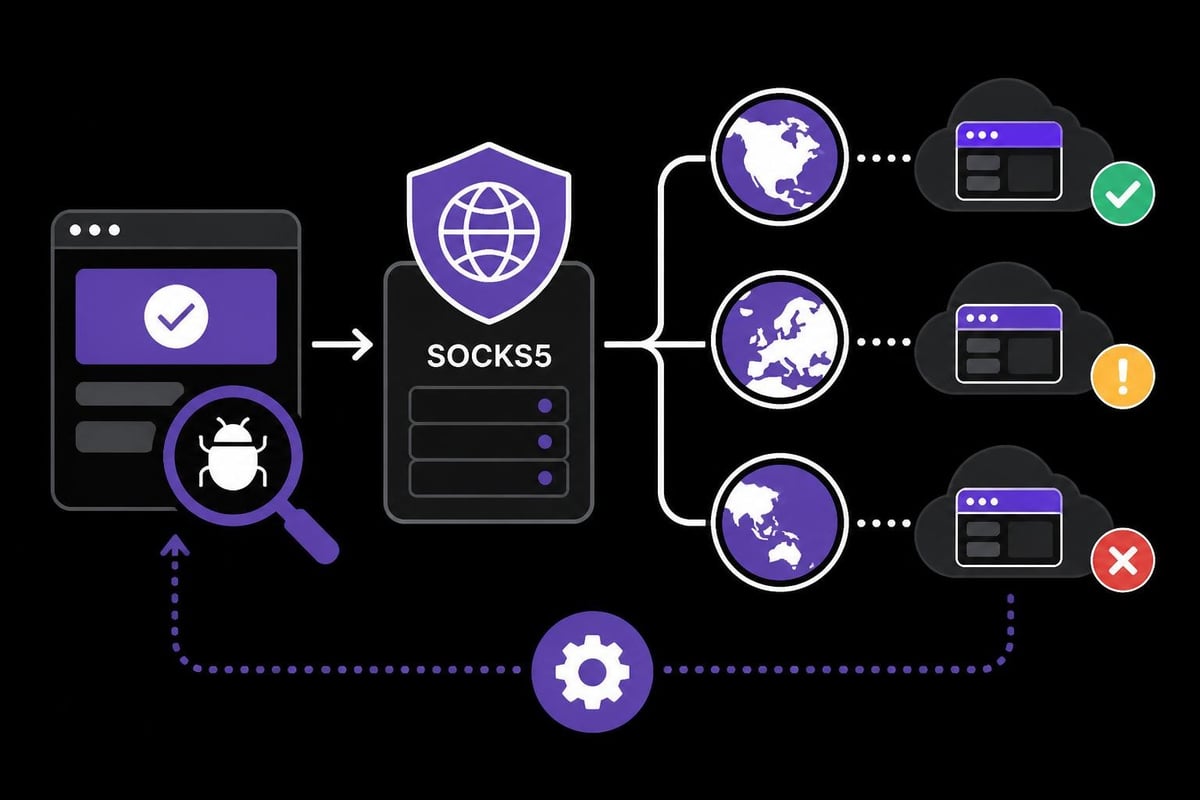
Quality assurance teams use pia proxy socks5 to test how applications behave when accessed from different geographic locations. Localization testing requires validating that content, pricing, and features display correctly for users in various regions. SOCKS5 proxies enable testers to simulate these conditions without physical relocation.
Comparing PIA with Alternative Solutions
The proxy market offers numerous options, each with distinct characteristics. While PIA's SOCKS5 residential proxy network provides specific advantages, evaluating alternatives helps determine the best fit for your requirements.
Datacenter vs Residential Proxies
PIA primarily offers residential SOCKS5 proxies, which route traffic through real user IP addresses. This contrasts with datacenter proxies that use server IPs. Residential proxies generally face fewer blocks on platforms with strict anti-bot measures, though they typically cost more and offer slower speeds than datacenter alternatives.
| Proxy Type | Detection Rate | Speed | Cost | Best For |
|---|---|---|---|---|
| Residential SOCKS5 | Low | Moderate | Higher | Social Media, Sneakers |
| Datacenter SOCKS5 | Moderate | High | Lower | Scraping, Testing |
| Mobile SOCKS5 | Very Low | Variable | Highest | Mobile Apps, Gaming |
| Rotating SOCKS5 | Low | Moderate | Variable | Large-scale Operations |
The choice between pia proxy socks5 and alternatives depends on your specific requirements. Platforms like PinguProxy offer both datacenter and mobile proxies with rotating capabilities, providing flexibility for operations requiring different proxy characteristics.
HTTP vs SOCKS5 Protocol Selection
HTTP proxies work well for simple web browsing tasks but fall short for applications requiring protocol flexibility. If your operations involve only HTTP/HTTPS traffic with no need for UDP support, the protocol choice matters less. However, for diverse applications or scenarios requiring lower-level network control, SOCKS5 becomes the clear choice.
Troubleshooting Common Issues
Even with proper configuration, pia proxy socks5 connections occasionally encounter problems. Systematic troubleshooting accelerates resolution and minimizes downtime.
Connection Failures
When connections fail, verify these elements in sequence:
- Confirm the proxy server address and port are correct
- Check that authentication credentials haven't expired
- Test whether the proxy server is operational (try different servers if available)
- Verify firewall rules aren't blocking SOCKS5 traffic
- Ensure your client application supports SOCKS5 properly
Network administrators sometimes block SOCKS5 traffic on port 1080 (the default). Using alternative ports configured by your proxy provider can circumvent these restrictions. Understanding proxy behavior research helps anticipate and address configuration challenges.
DNS Leak Prevention
A common vulnerability occurs when DNS requests bypass the proxy, revealing your actual location to DNS servers. Configure your applications to route DNS through the SOCKS5 tunnel or use DNS-over-HTTPS (DoH) providers that respect your privacy. Testing for DNS leaks should be a standard part of your proxy validation process.
Steps to prevent DNS leaks:
- Enable proxy DNS settings in your application
- Use SOCKS5-aware DNS resolvers
- Implement DNS-over-HTTPS or DNS-over-TLS
- Regularly test for leaks using online tools
- Consider using rotating proxies with built-in DNS protection
Performance Optimization
Slow proxy connections frustrate users and reduce operational efficiency. Select pia proxy socks5 servers geographically close to both your location and your target servers when possible. This minimizes the distance data must travel, reducing latency and improving throughput.
Advanced Configuration Techniques
Power users can extract additional value from pia proxy socks5 through advanced configurations. These techniques require technical expertise but deliver significant benefits for specific use cases.
Proxy Chaining
Chaining multiple proxies creates additional anonymity layers, though at the cost of increased latency. Configure your client to connect to a second proxy through the first, making traffic analysis considerably more difficult. This approach suits high-security scenarios where performance is secondary to privacy.
Load Balancing Strategies
Organizations running large-scale operations benefit from distributing traffic across multiple pia proxy socks5 endpoints. Implement client-side load balancing to prevent overwhelming individual servers and maintain consistent performance. Rotating between available proxies also reduces the risk of IP-based rate limiting.
| Load Balancing Method | Complexity | Effectiveness | Use Case |
|---|---|---|---|
| Round-robin | Low | Good | General Distribution |
| Least-connections | Moderate | Better | Variable Load |
| Geographic-based | Moderate | Good | Regional Targeting |
| Random Selection | Low | Fair | Simple Operations |
Understanding the HTTP(S) proxy ecosystem provides context for how different proxy types complement each other in sophisticated configurations. Some operations benefit from mixing pia proxy socks5 with HTTP proxies or app-specific proxies depending on the application requirements.
Automation and API Integration
Modern proxy workflows increasingly rely on automation. While PIA's specific API capabilities vary, most enterprise proxy operations benefit from programmatic control over proxy selection, rotation, and monitoring. Tools like proxy managers or custom scripts can switch between different pia proxy socks5 endpoints based on performance metrics or detection rates.
Cost Considerations and ROI
Evaluating the financial impact of pia proxy socks5 requires examining both direct costs and operational benefits. Proxy services typically bill based on bandwidth consumption, concurrent connections, or IP count, with residential proxies commanding premium pricing due to their higher trust levels.
Pricing Models
Understanding different pricing structures helps optimize your proxy budget:
- Pay-per-GB: Charges based on bandwidth consumption, suitable for variable usage
- Monthly subscription: Fixed cost for unlimited or capped bandwidth, ideal for predictable workloads
- Pay-per-IP: Pricing based on the number of unique IPs accessed, common for residential proxies
- Concurrent connections: Limits on simultaneous proxy sessions, affecting parallel operations
Comparing these models against your usage patterns reveals the most economical approach. High-volume scraping operations might favor unlimited plans, while occasional access needs could minimize costs with pay-per-use models.
Return on Investment
The value delivered by pia proxy socks5 extends beyond simple connectivity. Businesses using proxies for e-commerce price monitoring often discover pricing discrepancies that yield significant savings or competitive advantages. The ROI calculation should account for time saved, opportunities discovered, and risks mitigated through proxy usage.
Regulatory and Compliance Aspects
Operating proxy infrastructure or using services like pia proxy socks5 involves legal considerations that vary by jurisdiction. Responsible proxy usage aligns with applicable laws and service terms.
Acceptable Use Policies
Proxy providers establish acceptable use policies defining permitted activities. Violating these terms risks service termination and potential legal consequences. Common prohibited activities include accessing copyrighted content without authorization, conducting denial-of-service attacks, or engaging in fraudulent transactions.
Generally acceptable uses include:
- Accessing geo-restricted content you're legally entitled to view
- Conducting market research on publicly available data
- Testing applications from different geographic perspectives
- Protecting privacy on public networks
- Bypassing workplace or school restrictions (where not prohibited by local policy)
Data Protection Compliance
Organizations handling user data through proxies must ensure compliance with regulations like GDPR, CCPA, and similar frameworks. The pia proxy socks5 connection itself doesn't exempt you from data protection obligations. Implement appropriate safeguards, maintain audit trails, and ensure your proxy provider's policies align with your compliance requirements.
Future Trends in SOCKS5 Technology
The proxy landscape continues evolving as internet infrastructure and security requirements advance. Several trends will likely shape how pia proxy socks5 and similar services develop through 2026 and beyond.
IPv6 Adoption
As IPv4 address exhaustion accelerates, IPv6 support becomes increasingly critical. SOCKS5's protocol design accommodates both IPv4 and IPv6, though provider implementation varies. Services offering comprehensive IPv6 support, like those from providers with dual-stack infrastructure, position businesses for long-term success as the internet transitions to next-generation addressing.
Enhanced Security Integration
Future pia proxy socks5 implementations may incorporate additional security layers while maintaining the protocol's performance advantages. Potential developments include standardized encryption wrappers, improved authentication methods, and better integration with zero-trust security frameworks.
AI-Driven Proxy Management
Artificial intelligence and machine learning are transforming how businesses select and manage proxy infrastructure. Predictive algorithms can automatically choose optimal pia proxy socks5 endpoints based on historical performance, current network conditions, and specific task requirements, maximizing efficiency without manual intervention.
Mastering pia proxy socks5 configurations opens opportunities for businesses seeking enhanced privacy, geographic flexibility, and operational efficiency in their online activities. Whether you're conducting market research, testing applications, or accessing region-specific content, understanding the protocol's capabilities and limitations ensures you extract maximum value from your proxy investment. For businesses requiring high-performance proxy solutions with comprehensive protocol support, PinguProxy delivers enterprise-grade datacenter and mobile proxies backed by unlimited bandwidth, 1ms rotation capabilities, and 24/7 support to keep your operations running smoothly.