
Proxy USA: Complete Guide to American Proxies in 2026
American proxies have become essential tools for businesses and individuals who need reliable, fast connections through United States IP addresses. Whether you're conducting market research, accessing region-specific content, or protecting your online privacy, understanding how proxy USA services work can significantly impact your success. In 2026, the proxy landscape has evolved considerably, with new technologies and regulations shaping how these services operate and what users can expect from them.
Understanding Proxy USA Services and Their Core Functions
A proxy USA service routes your internet traffic through servers physically located in the United States, making it appear as though your requests originate from American IP addresses. This geographic routing serves multiple purposes, from accessing content restricted to U.S. viewers to conducting competitive analysis on American markets.
Why Location Matters in Proxy Services
The physical location of proxy servers directly impacts performance, compliance, and functionality. When using a proxy USA solution, your traffic travels through infrastructure positioned within American data centers or residential networks. This positioning ensures compliance with U.S. regulations and provides authentic American IP addresses that websites recognize as legitimate.
Key benefits of U.S.-based proxies include:
- Lower latency for accessing American websites and services
- Compliance with U.S. federal communication laws
- Access to geo-restricted content available only in the United States
- Better success rates when scraping U.S.-based e-commerce platforms
- Authentic user experience that matches American browsing patterns
The technical implementation often follows modern standards, with many providers now supporting HTTP-based proxy protocols that offer improved security and compatibility with current web technologies.

Types of American Proxies and Their Applications
Not all proxy USA options function identically. The type you choose depends on your specific use case, budget, and technical requirements.
Datacenter Proxies in the United States
Datacenter proxies originate from cloud hosting providers and dedicated server facilities across the U.S. These proxies offer exceptional speed and reliability, typically providing 10Gbps bandwidth capabilities that make them ideal for high-volume operations.
| Feature | Datacenter | Residential | Mobile |
|---|---|---|---|
| Speed | Excellent (10Gbps+) | Good (100-500Mbps) | Moderate (50-200Mbps) |
| Cost | Low-Medium | Medium-High | High |
| Detection Risk | Medium | Low | Very Low |
| Best For | Web scraping, automation | Ad verification, sneaker bots | Social media, app testing |
These proxies excel in scenarios requiring consistent performance and predictable IP addresses. However, some sophisticated websites can identify datacenter IP ranges, potentially limiting their effectiveness for certain applications.
Residential Proxies from American ISPs
Residential proxy USA solutions route traffic through real devices connected to American internet service providers like Comcast, AT&T, and Verizon. Websites perceive these connections as legitimate residential users, making them virtually undetectable.
For businesses conducting ethical web scraping research, residential proxies provide the authenticity needed to collect data without triggering anti-bot mechanisms. They're particularly valuable for:
- Price monitoring across e-commerce platforms
- Ad verification campaigns targeting American audiences
- Social media management requiring U.S. presence
- Market research requiring authentic browsing sessions
- Accessing streaming services with geographic restrictions
Mobile Proxies Through U.S. Carriers
Mobile proxies leverage cellular networks from carriers like T-Mobile, Verizon, and AT&T. These proxies rotate through mobile IP addresses, providing the highest level of trust since websites rarely block mobile traffic. The dynamic nature of mobile IPs, which change as devices move between cell towers, creates natural rotation patterns that enhance anonymity.
Technical Considerations for Proxy USA Deployment
Implementing American proxies effectively requires understanding several technical factors that impact performance and reliability.
IPv4 and IPv6 Support
Modern proxy USA services support both IPv4 and IPv6 protocols. While IPv4 remains dominant, IPv6 adoption is growing, especially for mobile networks and newer infrastructure. Having dual-stack support ensures compatibility across all target websites and services, regardless of their IP version requirements.
Protocol considerations:
- IPv4 provides broader compatibility with legacy systems
- IPv6 offers larger address pools and improved routing
- Dual-stack ensures maximum coverage across all targets
- Some U.S. government and enterprise sites require IPv6
Rotation Mechanisms and Session Management
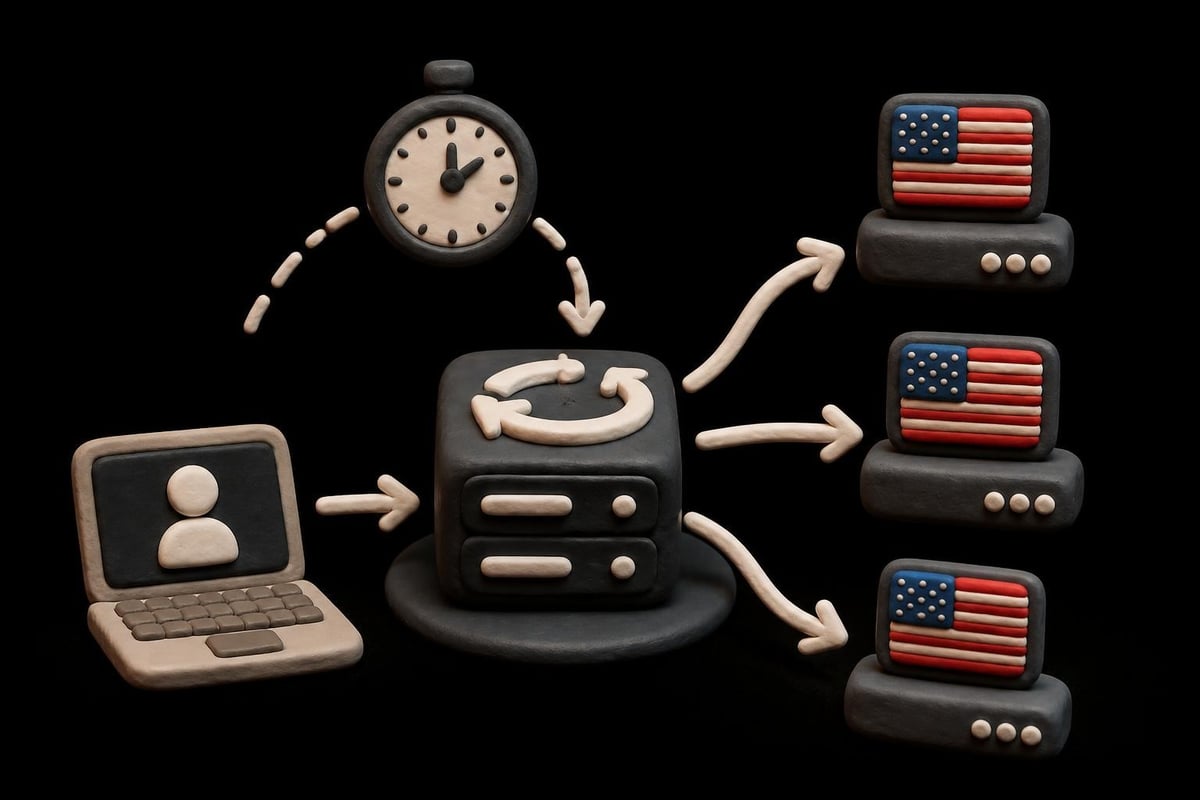
Proxy rotation prevents pattern detection by changing IP addresses at specified intervals. Advanced services offer 1ms rotation capabilities, allowing near-instantaneous IP switching between requests. This rapid rotation is crucial for high-volume scraping operations where maintaining anonymity is paramount.
Session persistence works inversely, maintaining the same IP address throughout a browsing session. This approach benefits activities requiring continuity, such as completing multi-step checkout processes or maintaining authenticated sessions.
Geolocation Accuracy and Proxy USA Verification
Understanding how geolocation works helps you select proxies that accurately represent your target location within the United States. IP geolocation services use various data points to determine an IP address's physical location, but accuracy varies significantly.
State and City-Level Targeting
Premium proxy USA providers offer granular location targeting, allowing you to route traffic through specific states or cities. This precision matters when testing location-based services or accessing content restricted to particular U.S. regions.
According to geolocation accuracy data, IP-to-location mapping in the United States achieves approximately 95% accuracy at the state level but drops to 70-80% at the city level. This variance means that while you can reliably target a state, city-level precision requires verification.
| Location Level | Typical Accuracy | Use Case |
|---|---|---|
| Country (U.S.) | 99%+ | General American access |
| State | 90-95% | Regional content testing |
| City | 70-80% | Local business research |
| ZIP Code | 50-60% | Hyper-local targeting |
Detection and Machine Learning Countermeasures
Sophisticated platforms employ machine learning to detect residential proxy traffic, analyzing behavioral patterns and network signatures. Understanding these detection methods helps you choose providers that implement proper countermeasures.
Quality proxy USA services maintain clean IP reputations by monitoring blacklists, implementing proper DNS resolution, and ensuring their traffic patterns match legitimate user behavior. These operational practices separate professional providers from budget alternatives that often use compromised or flagged IP addresses.
Privacy, Security, and Compliance in American Proxy Use
Operating proxy USA infrastructure involves navigating complex privacy regulations and security requirements specific to the United States.
Zero-Log Policies and Data Protection
A comprehensive zero-log policy ensures that your proxy provider doesn't record your browsing activity, connection timestamps, or destination URLs. This protection aligns with NIST guidelines on data de-identification and prevents potential privacy breaches.
Essential privacy features include:
- No connection logs or metadata storage
- Automatic log deletion protocols
- Encrypted transmission between client and proxy
- No DNS leak protection
- Secure authentication mechanisms
Legal Framework for Proxy Usage
While using proxies is legal in the United States, specific applications may violate terms of service or fraud statutes. Understanding the legal boundaries ensures compliant operation, particularly when scraping websites or accessing protected content.
Businesses should consider consulting legal counsel when deploying proxy USA solutions for commercial purposes, especially in regulated industries like finance, healthcare, or telecommunications.
Performance Optimization and Network Architecture
Maximizing proxy USA performance requires understanding network architecture and optimization strategies.
Bandwidth and Speed Considerations
Premium services deliver 10Gbps bandwidth through optimized routing and high-capacity peering agreements. This capacity supports concurrent connections across thousands of threads, enabling large-scale operations without throttling.
Speed testing should evaluate not just raw bandwidth but also latency, packet loss, and jitter. A proxy with 1Gbps capacity but high latency may perform worse than a 100Mbps connection with optimized routing.
Cloud Integration Patterns
Modern proxy deployments often integrate with cloud infrastructure. AWS NAT configurations and Google Cloud Secure Web Proxy services demonstrate how enterprise organizations implement proxy-like functionality within their cloud environments.
When combining proxy USA services with cloud infrastructure, consider:
- Geographic proximity between cloud regions and proxy locations
- VPC networking configurations for seamless integration
- Security group rules that permit proxy traffic
- Cost implications of data transfer between services
- Failover mechanisms for high availability

Selecting the Right Proxy USA Provider
Choosing an appropriate provider requires evaluating multiple factors beyond simple pricing comparisons.
Critical Selection Criteria
Infrastructure quality determines reliability:
- Geographic distribution of servers across U.S. regions
- Network redundancy and failover capabilities
- Hardware specifications and upgrade cycles
- Peering relationships with major ISPs
- Bandwidth allocation and throttling policies
Support and documentation separate professional services from hobbyist operations. Look for providers offering 24/7 technical support, comprehensive API documentation, and responsive customer service teams who understand proxy technology.
Trial and Testing Options
Evaluating a free trial proxy server provides hands-on experience before committing to long-term contracts. Testing should assess connection success rates, speed consistency, and compatibility with your target websites.
Create realistic test scenarios that mirror your production workload. If you plan to scrape e-commerce sites, test against those specific platforms. For streaming access, verify that the proxies successfully bypass geographic restrictions on your target services.
Use Cases Driving Proxy USA Adoption
Understanding common applications helps identify whether American proxies align with your requirements.
Web Scraping and Data Collection
E-commerce businesses use proxy USA services to monitor competitor pricing, track inventory availability, and analyze market trends across American retailers. The ability to distribute requests across thousands of IP addresses prevents rate limiting and blocking.
Scraping large platforms requires sophisticated rotation strategies, session management, and request timing that mimics human behavior. Quality providers offer these features natively, reducing development overhead.
Ad Verification and Fraud Prevention
Marketing agencies deploy American proxies to verify that advertisements display correctly across different U.S. regions and that click fraud isn't inflating campaign costs. By viewing ads as they appear to actual American users, agencies ensure campaign integrity and budget efficiency.
Social Media Management
Managing multiple social media accounts from different U.S. locations requires residential proxy USA infrastructure. Platforms like Instagram, Facebook, and Twitter monitor IP addresses for suspicious activity, flagging accounts that access from inconsistent locations.
Access to Region-Restricted Content
While consumers might use proxies to access streaming services, businesses leverage them to test how their own services appear to American users, verify content delivery networks function correctly across regions, and ensure compliance with geographic licensing restrictions.
Similar to how users might seek a thepiratebay proxy list for accessing restricted content, businesses need reliable proxy USA solutions for legitimate regional testing and verification purposes.
Future Trends in American Proxy Technology
The proxy industry continues evolving with emerging technologies and changing regulatory landscapes.
AI-Powered Traffic Optimization
Machine learning algorithms now optimize routing decisions in real-time, selecting the fastest path through proxy networks based on current congestion, target website characteristics, and historical performance data. These intelligent systems improve success rates and reduce latency without manual configuration.
Enhanced IPv6 Adoption
As more American websites and services migrate to IPv6, proxy providers expand their IPv6 address pools. By 2026, dual-stack support has become standard rather than optional, with some providers offering IPv6-only pools for forward-looking deployments.
Tighter Privacy Regulations
Data privacy legislation continues expanding across U.S. states, affecting how proxy providers operate and what data they can collect. Providers that prioritize privacy through zero-log policies and strong encryption position themselves favorably as regulations tighten.
Selecting the right proxy USA solution requires balancing performance, privacy, compliance, and cost considerations specific to your use case. Understanding the technical nuances of datacenter, residential, and mobile proxies helps you make informed decisions that align with your business objectives. PinguProxy delivers high-speed American proxies across all three categories, with unlimited bandwidth, complete IPv4 and IPv6 support, and 24/7 customer assistance to help you navigate your specific requirements. Whether you need datacenter speed for web scraping or residential authenticity for market research, our zero-log policy and 1ms rotation ensure maximum privacy and performance for your operations.