
Best Site Unblocker: Top Solutions for 2026
Internet restrictions affect millions of users worldwide in 2026, whether imposed by governments, ISPs, workplaces, or geographic licensing agreements. Finding the best site unblocker has become essential for maintaining open access to information, conducting business research, and enjoying content from different regions. The right unblocker balances speed, security, privacy, and reliability while adapting to increasingly sophisticated blocking techniques deployed across the globe.
Understanding How Website Blocking Works
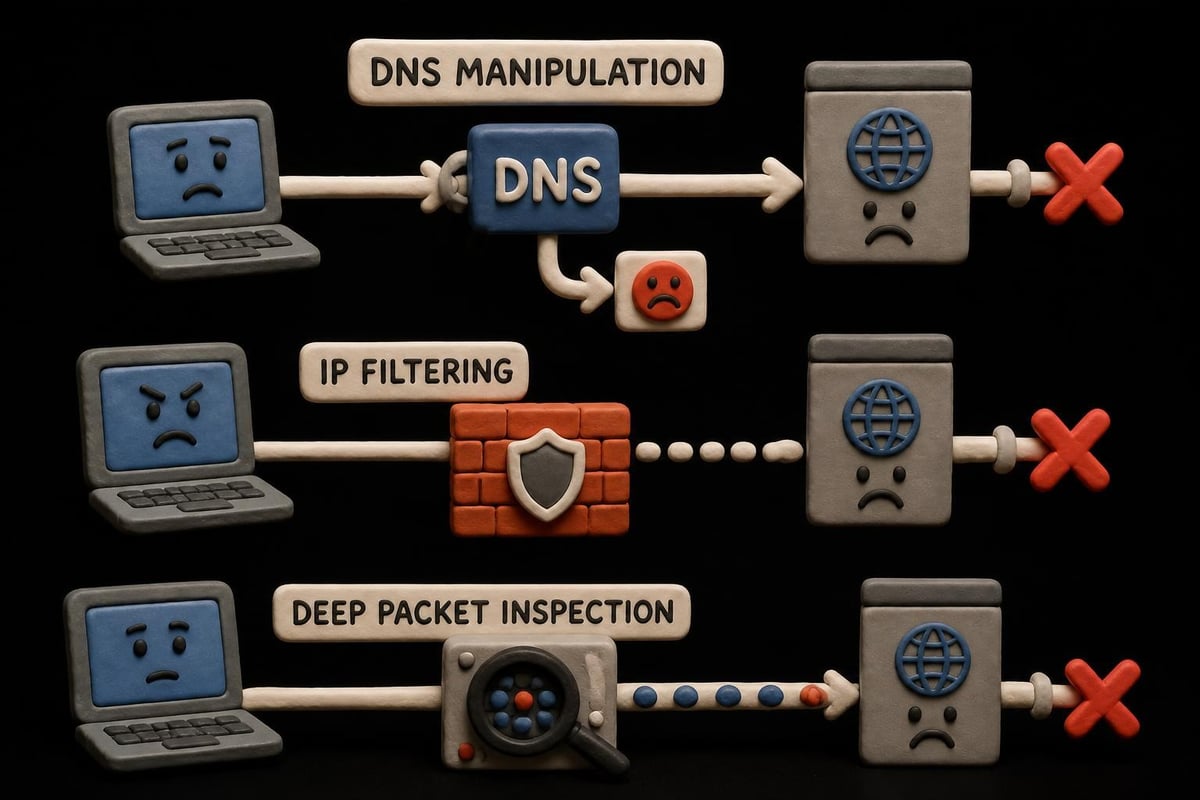
Before choosing the best site unblocker, understanding the technical mechanisms behind restrictions helps you select the most effective solution. According to research on how website blocking is implemented, censors employ several distinct methods to prevent access to specific online resources.
DNS-Based Blocking
The most common blocking technique involves DNS manipulation. When you type a website address, your device queries a DNS server to translate the domain name into an IP address. Censors can configure DNS servers to return false results, redirect users to warning pages, or simply fail to respond for blocked domains.
Key characteristics of DNS blocking:
- Easiest for authorities to implement at the ISP level
- Bypassed by changing DNS servers or using encrypted DNS (DoH/DoT)
- Often leaves telltale signs in error messages
- Can be circumvented with minimal technical knowledge
IP Address and Port Filtering
More aggressive blocking targets specific IP addresses or ranges associated with forbidden services. Firewalls inspect traffic and drop packets destined for blacklisted IPs, making the connection appear to time out.
This method affects all services hosted at a blocked IP address, sometimes creating collateral damage when multiple sites share infrastructure. Port-based filtering blocks specific protocols (like VPN ports) regardless of destination.
Deep Packet Inspection
Advanced censorship systems analyze the content of data packets themselves. Deep packet inspection (DPI) can identify encrypted VPN traffic patterns, detect specific keywords in unencrypted connections, and block based on application signatures.
Modern DPI equipment examines Server Name Indication (SNI) during TLS handshakes, revealing which website you're visiting even when using HTTPS. This technique has become widespread as encryption adoption increased, prompting development of solutions like Encrypted Client Hello to counter SNI-based blocking.
Types of Site Unblockers
The best site unblocker for your needs depends on your threat model, technical requirements, and use case. Each technology offers distinct advantages and limitations.
Proxy Services
Proxy servers act as intermediaries between your device and target websites. Your requests route through the proxy, which fetches content on your behalf and returns it to you. The destination site sees the proxy's IP address instead of yours.
| Proxy Type | Speed | Anonymity | Best For |
|---|---|---|---|
| Datacenter | Excellent (10Gbps+) | Moderate | Web scraping, bulk requests |
| Residential | Good | High | Accessing geo-restricted content |
| Mobile | Good | Very High | Social media management, ad verification |
| IPv6 | Excellent | Moderate | Future-proofing, specific platforms |
Advantages of proxy-based unblockers:
- Typically faster than VPNs due to minimal encryption overhead
- Can rotate IPs automatically for enhanced anonymity
- Support both HTTP/HTTPS and SOCKS protocols
- Often provide granular control over routing rules
- Scale efficiently for high-volume applications
Professional proxy services have evolved significantly, with providers now offering comprehensive solutions that combine multiple proxy types. Understanding proxy security features helps you evaluate which service delivers the protection level you require.
Virtual Private Networks
VPNs create encrypted tunnels between your device and a VPN server in another location. All internet traffic flows through this tunnel, appearing to originate from the server's location.
The Electronic Frontier Foundation's VPN guide emphasizes understanding your threat model before selecting a VPN provider. Not all VPNs offer equal privacy protections or performance characteristics.
VPN considerations in 2026:
- Protocol selection matters: WireGuard offers speed, OpenVPN provides compatibility
- Jurisdiction affects data retention requirements
- No-log policies vary in veracity and enforceability
- Split-tunneling enables selective routing
- Kill switches prevent accidental exposure
Smart DNS Services
Smart DNS technology selectively reroutes DNS queries and certain traffic to bypass geographic restrictions without encrypting all data. This approach maintains higher speeds for streaming while still unblocking content.
Unlike full VPNs or proxies, Smart DNS doesn't hide your IP address or encrypt traffic. It works specifically for accessing geo-restricted streaming services and similar platforms that check location via DNS.
Browser-Based Solutions
Browser extensions and built-in features offer convenient unblocking for casual use. However, these tools present significant privacy risks if poorly implemented, particularly regarding WebRTC leaks and DNS exposure.
The OWASP security cheat sheets document various browser-side privacy risks that can compromise even seemingly secure unblockers. WebRTC can leak your real IP address even when using a proxy or VPN, requiring explicit configuration to prevent.
Evaluating Unblocker Effectiveness

Determining the best site unblocker requires systematic evaluation across multiple dimensions beyond simple "does it work" testing.
Speed and Performance Metrics
Unblocker overhead impacts user experience significantly. Measure these performance indicators:
- Latency increase: Additional delay introduced by routing through intermediary servers
- Bandwidth capacity: Maximum throughput available (10Gbps has become standard for premium services in 2026)
- Connection stability: Frequency of disconnections or IP changes
- Protocol efficiency: HTTP/2 and HTTP/3 support for modern web applications
High-speed datacenter proxies typically outperform VPNs for bandwidth-intensive applications, while residential proxies offer better success rates against sophisticated detection systems.
Privacy and Security Features
The strongest unblocker is worthless if it compromises your privacy or security. Essential features include:
Zero-log policies
- Verified through independent audits
- Clearly defined in terms of service
- Enforceable under provider's jurisdiction
Encryption standards
- TLS 1.3 for proxy connections
- AES-256 for VPN tunnels
- Perfect forward secrecy implementation
IP rotation capabilities
- 1ms rotation for maximum anonymity
- Session persistence options when needed
- IPv4 and IPv6 support for comprehensive coverage
Detection Resistance
Websites and services actively work to identify and block unblocker traffic. The most effective solutions employ multiple evasion techniques:
- Residential IP pools: Indistinguishable from regular user traffic
- Mobile proxies: Leveraging carrier-grade NAT makes blocking impractical
- Protocol obfuscation: Disguising VPN traffic as regular HTTPS
- Fingerprint randomization: Varying browser and device characteristics
Censorship circumvention research demonstrates that detection capabilities improve constantly, requiring unblocker providers to adapt their infrastructure regularly. Static solutions become obsolete quickly against advanced filtering systems.
Use Cases for Site Unblockers
Different applications demand specific unblocker characteristics. Understanding your primary use case helps narrow the field when selecting the best site unblocker for your situation.
Web Scraping and Data Collection
Automated data extraction requires unblockers that handle high request volumes without triggering anti-bot systems. Key requirements include:
- Large IP pools to distribute requests
- Geographic diversity for location-specific data
- Session management for maintaining state
- API integration for programmatic control
Professional proxy services excel in this domain, offering better cost-per-request ratios than VPNs while maintaining the speed necessary for large-scale operations. Services providing trial access let you validate performance before committing to production workloads.
Accessing Geo-Restricted Content
Streaming services, news sites, and e-commerce platforms often limit content availability by location. Effective unblockers for this purpose must:
- Provide servers in target countries
- Avoid IP ranges known to belong to proxy/VPN providers
- Support high bandwidth for video streaming
- Maintain stable connections for long sessions
Residential proxies demonstrate superior success rates against sophisticated detection systems employed by major streaming platforms in 2026. The residential IP space is vast enough that blanket blocking remains impractical for most services.
Privacy and Anonymity
Users in restrictive countries or concerned about surveillance require unblockers prioritizing privacy over performance. Critical features include:
Multi-hop routing Chaining connections through multiple servers in different jurisdictions makes traffic analysis exponentially harder.
Traffic obfuscation Disguising unblocker traffic as ordinary HTTPS prevents deep packet inspection from identifying and blocking the connection.
No correlation points Ensuring payment methods, registration details, and usage patterns can't be linked to your identity.
The Tor Project's bridge documentation provides guidance on combining multiple privacy tools for maximum protection against sophisticated adversaries.
Business and Enterprise Applications
Corporate users accessing resources through firewalls or conducting competitive intelligence need unblockers offering:
| Requirement | Why It Matters |
|---|---|
| Dedicated IPs | Consistent identity for whitelisting |
| SOCKS5 support | Application-level routing flexibility |
| Account management | Team access with usage controls |
| Compliance features | Audit trails and activity logging |
| SLA guarantees | Uptime requirements for business continuity |
Legal and Ethical Considerations
Using site unblockers operates in legally gray areas depending on jurisdiction and application. Understanding relevant regulations helps you make informed decisions.
United States Context
While using VPNs and proxies remains legal for most purposes in the US, specific applications may violate other laws. The DMCA's anti-circumvention provisions prohibit bypassing technological protection measures, which could theoretically apply to circumventing geographic restrictions on copyrighted content.
Generally acceptable uses:
- Privacy protection on public networks
- Accessing your own accounts while traveling
- Security testing and research
- Bypassing workplace restrictions on personal devices
Legally questionable activities:
- Violating terms of service agreements
- Accessing copyrighted content outside licensed regions
- Evading fraud detection systems
- Hiding illegal activities
International Variations
Countries maintain vastly different stances on circumvention tools:
- Unrestricted: Most Western democracies permit VPN and proxy use
- Regulated: Some nations require government-approved VPN providers
- Prohibited: A handful of countries ban unauthorized circumvention entirely
The OONI measurement platform tracks internet censorship globally, providing data on which countries actively block circumvention tools and how extensively they filter content.
Terms of Service Compliance
Many websites explicitly prohibit access via proxies or VPNs in their terms of service. Violating these terms rarely carries legal consequences but may result in:
- Account suspension or termination
- Loss of access to paid services without refund
- Blacklisting of IP ranges
- Legal action in extreme cases (fraud, theft)
Understanding these risks helps you make informed choices about when and how to deploy unblockers for different purposes.
Selecting Your Best Site Unblocker
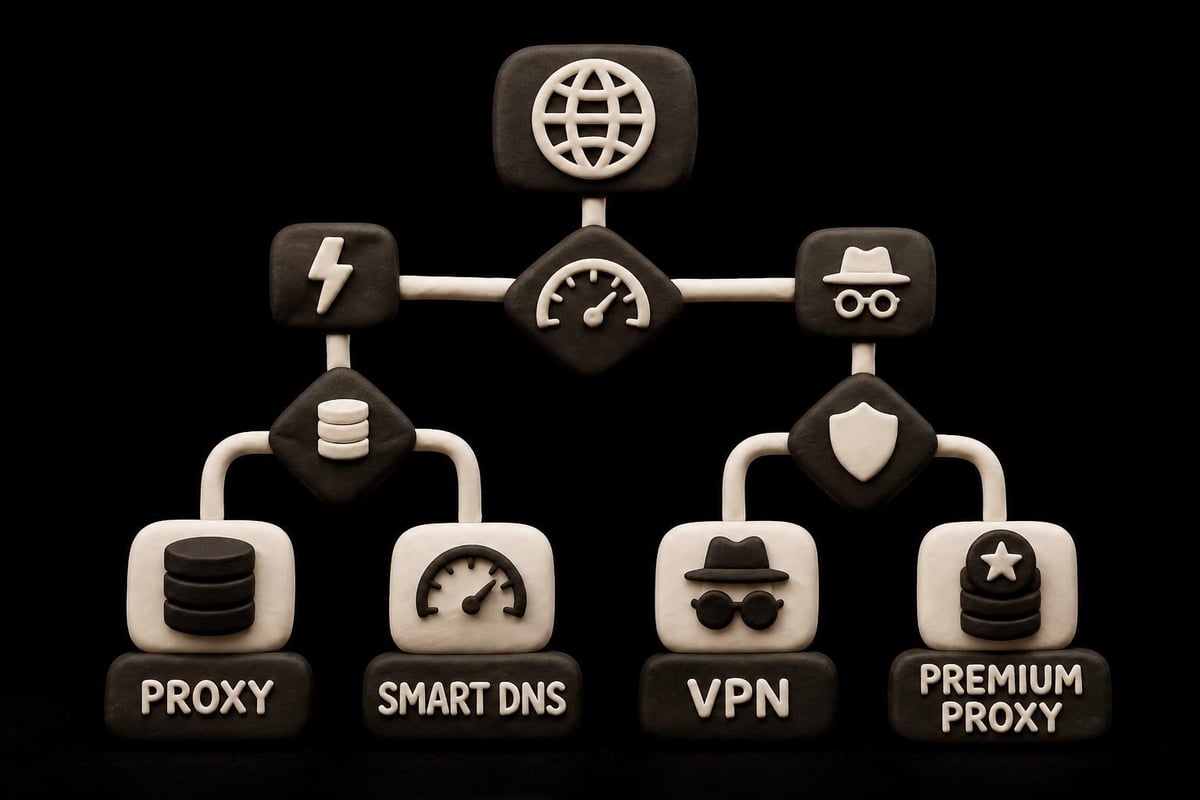
With so many options available in 2026, a systematic approach helps identify the best site unblocker for your specific requirements.
Assessment Framework
Start by answering these key questions:
- Volume: How many requests per day?
- Geographic scope: Which countries must you access?
- Detection sensitivity: How aggressive is blocking on target sites?
- Privacy priority: What's your threat model?
- Budget: What's your acceptable cost per GB or request?
Feature Prioritization
Rank these characteristics by importance for your use case:
Speed-critical applications
- Datacenter proxies with 10Gbps+ bandwidth
- Minimal encryption overhead
- Low-latency routing
- HTTP/2 and HTTP/3 support
Privacy-focused applications
- Residential or mobile proxies
- Zero-log policies with audits
- Strong encryption standards
- Multi-hop routing capabilities
Detection resistance
- Large residential IP pools
- Automatic rotation (1ms capable)
- IPv6 support for emerging platforms
- Request fingerprint randomization
Cost-sensitive applications
- Unlimited bandwidth plans
- Pay-per-GB options for variable usage
- Shared vs. dedicated IP pricing
- Trial periods for validation
Provider Evaluation Checklist
Before committing to a service, verify:
- Transparency: Clear documentation of infrastructure and policies
- Support quality: 24/7 availability with knowledgeable staff
- Infrastructure scale: Sufficient IPs and geographic coverage
- Protocol support: HTTP/HTTPS, SOCKS5, IPv4, and IPv6
- Reputation: Reviews from users with similar use cases
Comparing residential proxy offerings across providers reveals significant variation in pool sizes, rotation capabilities, and success rates against detection systems.
Advanced Unblocker Techniques
Power users combine multiple approaches for maximum effectiveness against sophisticated blocking systems.
Proxy Chaining
Routing traffic through multiple proxy servers in sequence creates additional anonymity layers and can bypass certain detection methods. Each hop sees different source and destination information, making correlation analysis difficult.
Implementation considerations:
- Performance degrades with each additional hop
- Reliability decreases multiplicatively
- Configuration complexity increases
- Use only when threat model justifies overhead
Smart Routing Rules
Modern proxy management tools enable conditional routing based on destination, application, or time of day. This approach optimizes the balance between speed and security:
- Route sensitive requests through residential proxies
- Send bulk data collection through high-speed datacenter proxies
- Bypass proxy entirely for trusted local services
- Switch protocols based on traffic type
Rotation Strategies
Strategic IP rotation defeats rate limiting and improves anonymity without unnecessary overhead:
Session-based rotation Maintain the same IP throughout a logical session (login, browse, checkout), then rotate for the next session.
Time-based rotation Change IPs at fixed intervals regardless of session state. Useful for long-running scrapers.
Request-based rotation Use a different IP for every request. Maximum anonymity but can break session-dependent applications.
Geographic rotation Cycle through IPs in different locations to appear as users from various regions.
High-quality proxy services support 1ms rotation speeds, enabling essentially instantaneous IP changes when applications require maximum distribution across address space.
Future of Site Unblockers
The technological arms race between censors and circumvention tools continues accelerating in 2026, with several emerging trends shaping the landscape.
IPv6 Adoption
While IPv4 address exhaustion drove proxy prices up historically, IPv6's enormous address space (340 undecillion addresses) fundamentally changes the economics. Unblockers increasingly support both protocols, with IPv6 offering:
- Virtually unlimited IP pool sizes
- Harder to maintain comprehensive blacklists
- Native support in modern platforms
- Lower costs per unique address
AI-Powered Detection
Machine learning systems now identify proxy traffic patterns, browser fingerprints, and behavioral anomalies that humans miss. Effective unblockers must employ AI defensively to:
- Randomize traffic patterns to avoid signatures
- Mimic legitimate user behavior accurately
- Adapt to evolving detection algorithms
- Predict and evade emerging blocking techniques
Protocol Evolution
Encrypted Client Hello and similar standards aim to close privacy gaps in existing protocols. As these mature and achieve widespread adoption, SNI-based blocking becomes ineffective, forcing censors toward blunter instruments that create more collateral damage.
Decentralized Networks
Peer-to-peer and blockchain-based unblocker solutions emerged as alternatives to centralized services, offering:
- Censorship resistance through distribution
- Economic incentives for node operators
- Reduced single points of failure
- Community governance models
However, these approaches typically sacrifice speed and ease-of-use compared to traditional proxy services.
Choosing the best site unblocker depends on carefully matching technology capabilities to your specific requirements for speed, privacy, detection resistance, and budget. Whether you need to access geo-restricted content, conduct business research, or maintain privacy online, understanding the technical foundations and evaluating providers systematically ensures you select the most effective solution. PinguProxy delivers high-speed datacenter, residential, and mobile proxies with complete IPv4 and IPv6 support, 1ms rotation capabilities, and a zero-log policy backed by 24/7 expert support, providing the performance and security modern users demand for unrestricted internet access.