
Webshare Residential Proxies: Complete 2026 Guide
Residential proxies have become essential tools for businesses and individuals who need reliable access to web content without triggering security blocks or geographic restrictions. Among the various providers in the market, webshare residential proxies have gained attention for their specific approach to proxy infrastructure and pricing models. Understanding how these services work, their benefits, limitations, and how they compare to alternatives helps users make informed decisions about their proxy needs in 2026.
Understanding Residential Proxy Technology
Residential proxies route your internet traffic through IP addresses assigned to real residential devices by internet service providers. Unlike datacenter proxies that originate from cloud servers, these IPs belong to actual households, making them appear as legitimate user traffic to websites and online platforms.
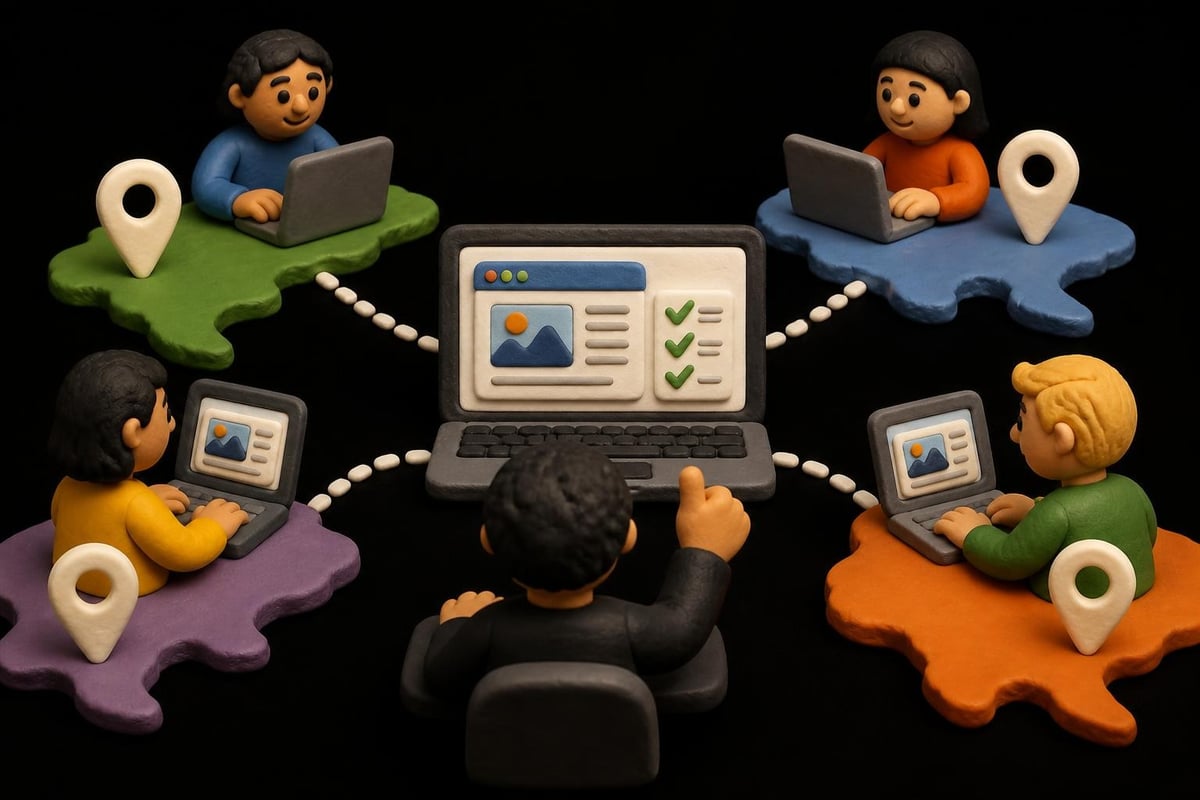
The fundamental architecture involves a network of endpoint devices, each contributing their residential IP address to a pool that customers can access. When you send a request through a residential proxy, it passes through one of these devices before reaching the target website. The response then follows the reverse path back to you.
How Residential Proxies Differ from Datacenter Solutions
The key distinction lies in IP origin and trustworthiness. Websites maintain extensive databases of datacenter IP ranges and often apply stricter rate limits or outright blocks to traffic from these sources. Residential IPs, by contrast, appear indistinguishable from regular users browsing from home.
Key differences include:
- IP reputation: Residential addresses rarely appear on blocklists
- Detection difficulty: Advanced bot detection struggles to identify legitimate residential traffic
- Rotation patterns: Residential pools offer diverse geographic and ISP distribution
- Cost structure: Residential proxies typically cost more per GB than datacenter alternatives
This technical foundation explains why businesses turn to residential solutions for sensitive operations. The technical overview of proxy types provided by Cloudflare illustrates these architectural differences in greater detail.

Webshare Residential Proxies: Features and Capabilities
Webshare residential proxies offer several features designed for both individual users and enterprise clients. Their network spans multiple countries and cities, providing geographic diversity for location-specific tasks. The service operates on a bandwidth-based pricing model, charging customers per gigabyte of data transferred rather than per proxy or port.
Network Size and Geographic Coverage
The provider maintains a substantial pool of residential IPs across major markets. Users can select proxies from specific countries or cities depending on their targeting requirements. This geographic flexibility proves valuable for:
- Market research: Accessing region-specific search results and pricing
- Ad verification: Checking how advertisements appear in different locations
- Content testing: Viewing geo-restricted content as local users see it
- E-commerce monitoring: Tracking competitor pricing across markets
Coverage includes North America, Europe, Asia, and other regions, though availability and pool size vary by location. Users should verify that their target regions have sufficient proxy density before committing to a plan.
Authentication and Session Management
Webshare residential proxies support both username/password authentication and IP whitelisting. Session persistence allows you to maintain the same IP address for a specified duration, which helps when you need consistent identity across multiple requests.
| Authentication Method | Use Case | Session Control |
|---|---|---|
| Username/Password | Dynamic applications, rotating IPs | Flexible rotation |
| IP Whitelist | Fixed infrastructure, server environments | Sticky sessions available |
| API Access | Automated workflows, integration | Programmatic management |
Session stickiness ranges from a few minutes to several hours depending on configuration. This flexibility accommodates both rapid rotation scenarios and tasks requiring persistent identities.
Common Use Cases and Applications
Businesses across various sectors rely on residential proxies to accomplish tasks that would otherwise trigger security measures or provide inaccurate data. Understanding these applications helps evaluate whether webshare residential proxies match your specific requirements.
Web Scraping and Data Collection
Web scraping represents the most common application for residential proxies. When gathering product prices, reviews, or market intelligence from e-commerce sites, residential IPs prevent rate limiting and IP bans that datacenter proxies frequently encounter.
Scraping best practices include:
- Implementing respectful rate limits to avoid overwhelming target servers
- Rotating IPs after a set number of requests to distribute load
- Mimicking human browsing patterns with realistic delays
- Respecting robots.txt directives and terms of service
Sites with sophisticated bot management and anti-automation measures may still detect automated traffic through behavioral analysis, even when using residential IPs. Combining proxies with other anti-detection techniques yields better results.
Brand Protection and Ad Verification
Companies use residential proxies to monitor how their brand appears across different regions and on various platforms. Ad verification teams check that their campaigns display correctly and reach intended audiences without fraud.
This involves accessing advertising networks from residential IPs in target markets to confirm ad placement, creative rendering, and landing page functionality. The residential nature of the connection ensures you see exactly what genuine customers in that location would see.
Social Media Management and Research
Managing multiple social media accounts from a single datacenter IP often triggers platform security alerts. Residential proxies allow agencies and businesses to operate accounts across different profiles without cross-contamination or suspension risks.
Social listening and competitive research also benefit from residential IPs. Viewing social media platforms as users in specific locations reveals regional trends, local influencers, and geographic variations in content popularity.
Performance Considerations and Limitations
While webshare residential proxies offer advantages over datacenter alternatives, they come with tradeoffs that impact performance and cost-effectiveness. Evaluating these factors against your specific needs determines whether they represent the optimal solution.
Speed and Latency Factors
Residential proxies introduce additional latency compared to datacenter proxies. Your request must route through a residential device, which may have slower upload speeds than commercial hosting infrastructure. Typical residential connections range from 10-100 Mbps, whereas datacenter proxies often connect via 1-10 Gbps links.
Performance variables include:
- Endpoint device connection quality
- Geographic distance between you, the proxy, and target site
- Network congestion at the residential ISP level
- Proxy server processing overhead
For high-volume scraping or real-time applications, this latency difference matters. Tasks requiring millisecond response times may perform better with datacenter proxies, while residential proxies excel when IP reputation outweighs speed.
Bandwidth Costs and Budgeting
The per-gigabyte pricing model of webshare residential proxies requires careful bandwidth estimation. A single page load can consume 1-5 MB depending on content, meaning 1 GB covers roughly 200-1,000 page loads. Video streaming, file downloads, or image-heavy scraping depletes bandwidth quickly.
| Activity Type | Approximate Bandwidth | 10 GB Covers |
|---|---|---|
| Text page scraping | 100-500 KB per page | 20,000-100,000 pages |
| Product page with images | 1-3 MB per page | 3,000-10,000 pages |
| Video streaming (HD) | 3 GB per hour | 3 hours |
| API requests (JSON) | 5-50 KB per request | 200,000-2,000,000 requests |
Monitoring bandwidth consumption during initial testing helps establish realistic budget requirements. Many users underestimate actual usage, leading to unexpected overage charges.
Security and Privacy Implications
Using residential proxies raises important security and privacy questions for both proxy customers and the residential endpoint providers. Understanding these implications ensures compliance with legal requirements and ethical standards.
Data Privacy and Encryption
Traffic passing through residential endpoints may be visible to the device owner unless properly encrypted. Always use HTTPS connections for sensitive data to prevent interception. Some residential proxy providers implement encryption at the proxy level, while others rely entirely on end-to-end encryption between you and the target site.
Research on residential proxy architectures reveals varying security implementations across providers. Some networks maintain strict privacy standards, while others pose risks of traffic inspection or data logging.
Ethical and Legal Considerations
The residential proxy model raises questions about consent and transparency. Does the owner of the endpoint device fully understand that their internet connection routes third-party traffic? Are they fairly compensated? Do they consent to potential legal liability if that traffic violates laws?
Reputable providers ensure explicit user consent and proper compensation for endpoint participants. However, the security analysis of free proxy services demonstrates that some networks operate through deceptive practices, embedding proxy functionality in free software without clear disclosure.

Comparing Webshare to Alternative Providers
The residential proxy market includes numerous providers with different network sizes, pricing models, and feature sets. Evaluating webshare residential proxies against alternatives helps identify the best fit for specific requirements.
Pricing and Value Analysis
Webshare positions itself in the mid-market segment, offering lower prices than premium providers while maintaining higher quality than budget options. Their bandwidth-based pricing suits users with predictable, moderate usage patterns.
Cost comparison framework:
- Calculate your monthly bandwidth needs based on use case
- Factor in the value of geographic coverage in target markets
- Consider support quality and documentation for your technical level
- Evaluate IP pool size relative to your rotation requirements
- Account for setup time and integration complexity
Services offering unlimited bandwidth at fixed monthly rates may provide better value for high-volume users, while pay-as-you-go models suit occasional or variable usage patterns.
Network Quality and IP Reputation
IP reputation varies significantly across residential proxy providers. Some networks include IPs that have been flagged for spam or malicious activity, reducing their effectiveness for sensitive applications. Testing a provider's IPs against major platforms before large-scale deployment prevents costly surprises.
Quality indicators include success rates when accessing target sites, CAPTCHA frequency, and block rates. Premium providers invest in network hygiene, removing problematic IPs and maintaining relationships with ISPs to ensure clean address pools.
Technical Integration and API Access
Implementing webshare residential proxies into existing workflows requires understanding their API capabilities and integration options. The provider offers standard proxy protocols and programmatic access for automated systems.
Proxy Protocol Support
Webshare residential proxies support HTTP, HTTPS, and SOCKS5 protocols, covering most common use cases. SOCKS5 provides greater flexibility for non-HTTP traffic, while HTTP/HTTPS proxies offer better compatibility with web scraping tools and browser automation frameworks.
Protocol selection guidelines:
- HTTP/HTTPS: Web scraping, browser automation, API requests
- SOCKS5: Custom applications, specialized protocols, full TCP/UDP support
- Sticky sessions: Tasks requiring consistent IP over multiple requests
- Rotating sessions: Maximum distribution and anonymity across requests
The IETF standards for proxying IP in HTTP provide technical background on how modern proxy protocols handle forwarding and header preservation.
API and Automation Features
The API allows programmatic proxy list retrieval, usage monitoring, and configuration management. This enables integration with scraping frameworks, automated testing suites, and custom applications without manual proxy configuration.
Users can query available IPs by country, retrieve session credentials, check remaining bandwidth, and automate IP rotation cycles through API calls. Documentation quality and code examples significantly impact implementation time for developers.
Optimization Strategies for Maximum Value
Getting the most value from webshare residential proxies requires optimization across bandwidth usage, IP rotation patterns, and configuration settings. Strategic implementation reduces costs while improving success rates.
Bandwidth Conservation Techniques
Minimizing unnecessary data transfer extends your bandwidth budget. Block external resources like ads, trackers, and analytics scripts that don't contribute to your data collection goals. Configure your scraper to request only required content rather than rendering full pages when possible.
Bandwidth-saving approaches:
- Request HTML only, parse without rendering JavaScript
- Filter requests to exclude images, CSS, and fonts when unnecessary
- Implement response caching for static content
- Use API endpoints instead of scraping HTML when available
- Compress data during transfer when supported
These techniques can reduce bandwidth consumption by 60-80% for text-focused scraping operations, significantly lowering operational costs.
Rotation and Retry Logic
Intelligent rotation prevents IP burnout while maintaining reasonable request rates. Rather than rotating after every request, group requests by logical session and rotate at natural boundaries. If you're scraping product pages, use the same IP for all pages in a category before switching.
Implement exponential backoff for retries when encountering rate limits or errors. The first retry might wait 1 second, the second 2 seconds, the third 4 seconds, and so on. This prevents hammering servers while giving temporary issues time to resolve.
Monitoring and Troubleshooting
Effective proxy usage requires ongoing monitoring of performance metrics, error rates, and bandwidth consumption. Establishing monitoring early prevents budget overruns and helps identify configuration problems before they impact operations.
Key Performance Metrics
Track success rate (successful requests divided by total requests), average response time, and error distribution across different error types. These metrics reveal whether your proxy configuration matches your use case and target site requirements.
| Metric | Target Range | Action if Outside Range |
|---|---|---|
| Success rate | >95% | Investigate error causes, adjust rotation |
| Avg response time | <3 seconds | Check endpoint quality, reduce concurrency |
| CAPTCHA rate | <5% | Slow request rate, improve fingerprinting |
| Bandwidth per request | Baseline ±20% | Check for content changes, optimize filtering |
Sudden metric changes often indicate target site updates, proxy pool quality issues, or configuration problems requiring adjustment.
Common Issues and Solutions
Residential proxies present unique troubleshooting challenges. Connection timeouts may indicate residential endpoint offline status rather than network problems. High CAPTCHA rates might reflect behavioral patterns that appear automated despite using residential IPs.
When troubleshooting, isolate variables systematically. Test direct connections, datacenter proxies, and residential proxies against the same target to determine where issues originate. Review recent configuration changes and correlate problems with specific IP ranges or geographic regions.
Advanced Applications and Emerging Trends
As machine learning improves bot detection capabilities, residential proxy users must adopt more sophisticated techniques to maintain effectiveness. The arms race between detection systems and proxy technologies continues evolving in 2026.
Behavioral Fingerprinting and Countermeasures
Modern security systems analyze behavioral patterns beyond IP reputation. Mouse movements, typing cadence, browser fingerprints, and interaction timing all contribute to bot detection algorithms. Using residential IPs helps but doesn't guarantee immunity from detection.
Combining residential proxies with browser automation tools that mimic human behavior, rotating user agents and browser fingerprints, and introducing realistic delays between actions creates more convincing traffic patterns. Some advanced users implement machine learning to generate natural-seeming interaction patterns.
IPv6 Adoption in Residential Networks
The gradual shift toward IPv6 in residential networks expands available IP addresses while introducing new challenges and opportunities. IPv6 residential proxies offer even larger pools and better geographic distribution as ISPs complete their IPv6 rollouts.
However, many websites still prioritize IPv4, and some don't properly support IPv6 connections. Dual-stack proxies supporting both IPv4 and IPv6 provide maximum flexibility, allowing automatic fallback when one protocol proves problematic.
Residential proxies remain powerful tools for legitimate business applications including market research, brand protection, and competitive intelligence when used responsibly and ethically. Webshare residential proxies offer a balanced approach for mid-market users, though success requires careful planning around bandwidth costs, performance expectations, and integration complexity. For businesses seeking a comprehensive proxy solution with enhanced features, PinguProxy delivers high-speed residential and datacenter proxies with complete IPv4 and IPv6 support, unlimited access, 1ms rotation capabilities, and 24/7 expert support to optimize your proxy operations.