
Residential Proxy Free: The Hidden Risks You Must Know
The promise of a residential proxy free service sounds appealing for businesses and individuals seeking anonymous internet access without budget constraints. Yet beneath the surface, these no-cost offerings carry significant risks that can compromise privacy, security, and operational integrity. Understanding what makes residential proxies valuable, why truly free options rarely deliver on their promises, and how to identify safer alternatives has become essential knowledge for anyone navigating the proxy landscape in 2026.
What Makes Residential Proxies Different from Datacenter Alternatives
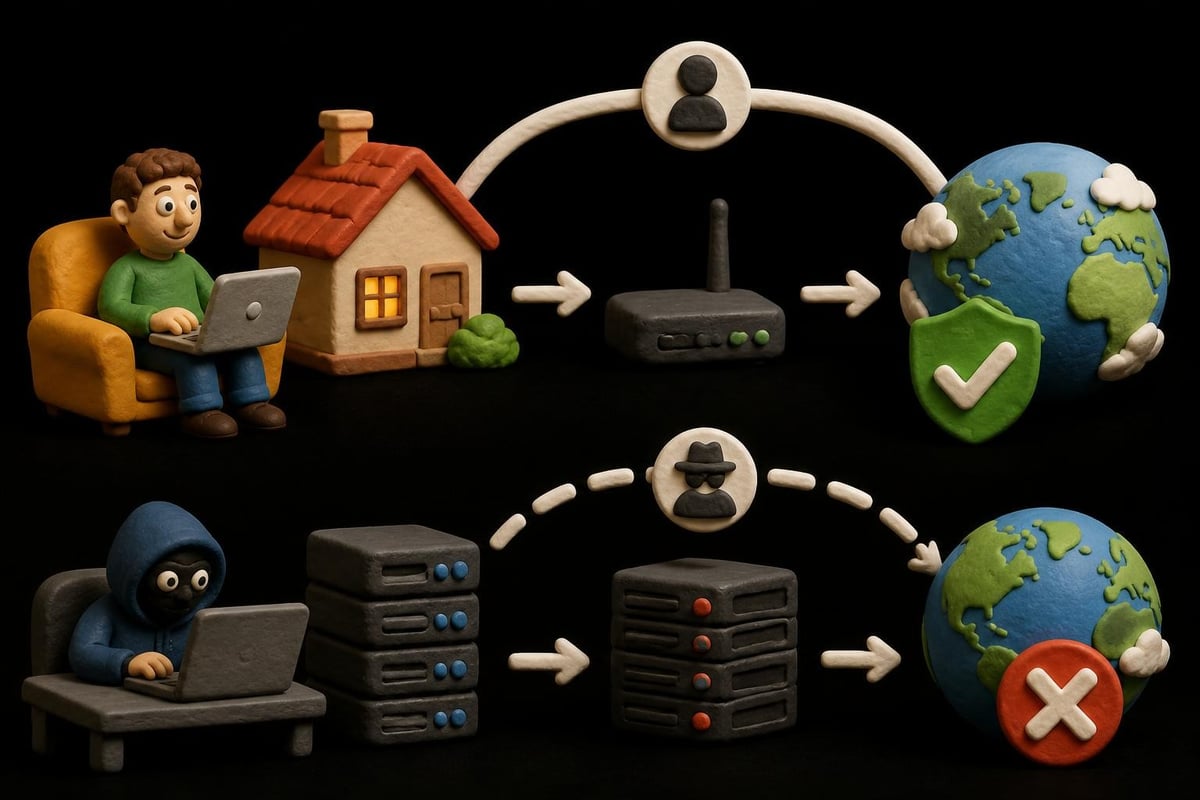
Residential proxies route traffic through IP addresses assigned to real homes and devices by internet service providers. This fundamental difference sets them apart from datacenter proxies, which originate from server farms and are easily identifiable by sophisticated detection systems.
The value of residential IPs stems from their legitimacy. Websites and platforms treat requests from home internet connections differently than those from known datacenter ranges. This authenticity makes residential proxies particularly effective for:
- Web scraping operations that must avoid detection and rate limiting
- Ad verification campaigns requiring location-specific testing
- Sneaker copping and retail automation where datacenter IPs face instant blocks
- Social media management across multiple accounts and regions
Research on classifying IP usage patterns demonstrates how organizations distinguish between residential and datacenter traffic, highlighting why this distinction matters for both legitimate businesses and platforms fighting abuse.
The Infrastructure Behind Residential Proxy Networks
Building a legitimate residential proxy network requires either partnerships with ISPs or deployment of software on millions of user devices. The latter approach, often seen in free residential proxy services, raises immediate ethical and legal questions.
Many residential proxy free offerings operate by installing applications on user devices that transform them into exit nodes. Users might consent to this arrangement knowingly or discover it buried in terms of service for "free" VPN apps, browser extensions, or mobile applications. The Cyber Security Agency of Singapore has issued warnings about how malicious applications create residential proxy networks without clear user consent.
The True Cost of Residential Proxy Free Services
When you access a residential proxy free service, you're not the customer. You're either the product or unknowingly contributing to someone else's infrastructure.
Hidden Data Collection and Monetization
Free proxy providers must generate revenue somehow. Common monetization methods include:
- Injecting advertisements into HTTP traffic passing through the proxy
- Harvesting browsing data to sell to advertisers or data brokers
- Credential theft from unencrypted login sessions
- Bandwidth reselling where your connection becomes someone else's proxy node
A comprehensive longitudinal analysis of free proxy services revealed alarming patterns of traffic manipulation, credential harvesting, and malware distribution across popular free proxy platforms. The research documented how these services systematically compromise user privacy while presenting themselves as privacy-enhancing tools.
| Risk Category | Free Proxies | Paid Professional Services |
|---|---|---|
| Traffic logging | Nearly universal | Zero-log policies available |
| HTTPS manipulation | Common (20-40%) | Rare/prohibited |
| Ad injection | Very common | Never |
| Bandwidth theft | Often (your device becomes exit node) | Never |
| Support availability | None | 24/7 professional support |
Security Vulnerabilities in No-Cost Infrastructure
Maintaining secure proxy infrastructure requires constant investment in servers, security patches, and monitoring systems. Residential proxy free services typically lack these resources, creating multiple attack vectors:
Man-in-the-middle attacks become trivial when proxy operators control your traffic flow. Even HTTPS connections can be compromised through certificate manipulation, especially on mobile devices where users routinely accept security warnings.
Malware distribution represents another significant threat. Free proxy applications often bundle cryptocurrency miners, spyware, or backdoor access tools that persist even after uninstallation.
Google's analysis of disrupting the largest residential proxy network revealed how these networks facilitate cybercrime at scale, from credential stuffing to account takeovers.
How Free Residential Proxy Networks Actually Operate
Understanding the operational model helps explain why residential proxy free offerings cannot sustain themselves ethically.
The Peer-to-Peer Model Explained
Most free residential proxies utilize peer-to-peer architectures where users exchange bandwidth. You download a "free VPN" or proxy application that:
- Routes your traffic through other users' devices when you browse
- Routes strangers' traffic through YOUR device in exchange
- Operates continuously in the background, consuming bandwidth and battery
- Exposes your IP address to potential abuse by unknown third parties
This creates legal liability. Your home IP address might appear in server logs when someone uses your connection for activities ranging from legitimate market research to credential theft or worse.
The Freemium Trap and Throttling Tactics
Some residential proxy free tiers serve as marketing funnels for paid services. These offerings typically implement:
- Severe bandwidth throttling making the service unusable for real work
- Geographic restrictions limiting access to high-demand locations
- Session interruptions forcing frequent reconnections
- Concurrent connection limits preventing scaled operations
The experience proves frustrating enough to push users toward paid plans, yet the "free" tier attracts users who unknowingly contribute their devices to the proxy pool.

Technical Research Reveals Performance and Privacy Gaps
Academic research into residential proxy networks has uncovered systematic issues affecting both free and some commercial offerings.
Traffic Analysis and Classification Studies
Research analyzing traffic classification within residential proxy networks demonstrates how these systems exhibit distinct behavioral patterns that platforms can detect. The study revealed that free residential proxies often:
- Generate abnormal connection patterns easily flagged by rate-limiting systems
- Share IP addresses across too many simultaneous users, triggering fraud detection
- Lack proper protocol support, breaking certain applications and authentication flows
- Experience high latency due to multi-hop routing through consumer connections
These technical limitations mean that even when a residential proxy free service functions, it often fails at the precise tasks users need it for, like bypassing sophisticated anti-bot systems or maintaining stable connections for automation.
The ISP and Infrastructure Perspective
Internet service providers and infrastructure operators increasingly view residential proxy networks with concern. The CableLabs analysis of security and privacy risks in overlay networks highlights how these systems create monitoring blind spots and facilitate abuse that impacts legitimate users.
When your neighbor's computer becomes an exit node for a residential proxy network, their activities might trigger ISP-level blocks or throttling that affects your entire neighborhood. This cascading impact represents a negative externality of the peer-to-peer residential proxy model.
Privacy-Preserving Alternatives Emerging in 2026
The proxy industry is evolving toward more transparent, privacy-respecting architectures that balance anonymity with accountability.
Browser-Level Privacy Solutions
Major platforms are developing integrated privacy features that reduce reliance on third-party proxies. The IP Protection project for Chrome demonstrates how browsers might handle IP privacy through first-party infrastructure rather than untrusted intermediaries.
Google's work on privacy-preserving Safe Browsing using Oblivious HTTP shows how companies can provide services without collecting identifying information, setting new standards for privacy-first architectures.
Professional Proxy Services with Ethical Infrastructure
Legitimate residential proxy providers build their networks through transparent partnerships and clear consent mechanisms. These services differ from residential proxy free alternatives in several key ways:
- Explicit user compensation for bandwidth contribution
- Clear terms of service explaining how the network operates
- Geographic diversity through partnerships rather than deceptive app distribution
- Compliance frameworks addressing legal requirements across jurisdictions
- Technical support for troubleshooting and configuration
For users exploring different proxy service options, understanding these distinctions helps identify trustworthy providers versus potentially harmful alternatives.
What Businesses Should Use Instead of Free Residential Proxies
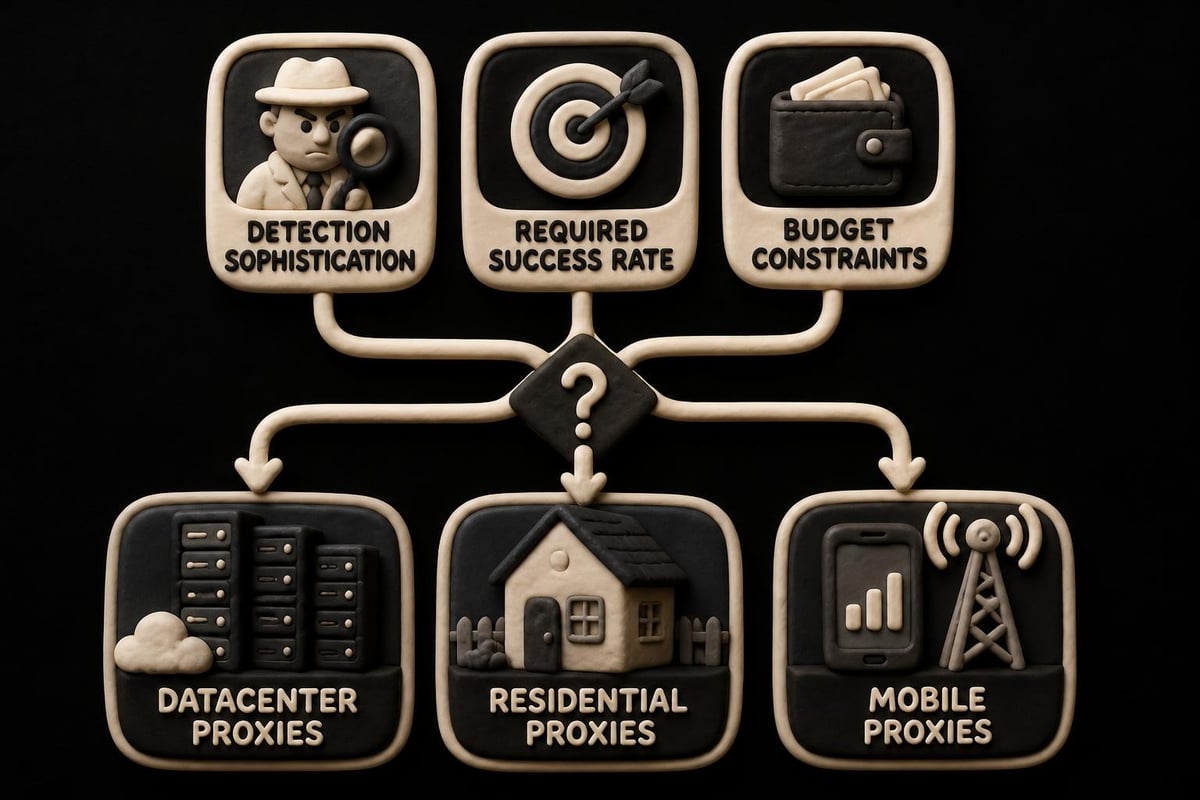
Organizations with legitimate proxy needs should evaluate options based on specific use cases, compliance requirements, and budget constraints.
Datacenter Proxies for High-Volume Operations
When residential IPs aren't strictly necessary, datacenter proxies offer superior performance and reliability:
- 10Gbps+ bandwidth capacity for large-scale data collection
- Sub-millisecond rotation for enhanced anonymity
- Predictable costs without usage-based surprises
- Lower latency than multi-hop residential routing
Many scraping operations and API access scenarios work perfectly well with datacenter IPs, making residential proxies an unnecessary expense.
Mobile Proxies for Platform-Specific Needs
Mobile proxies route traffic through cellular carrier IPs, offering another legitimate alternative to residential options. These prove particularly effective for:
- Social media automation requiring mobile-first authentication
- App testing across different carrier networks
- Geographic testing in regions where residential IPs are scarce
- Scenarios where mobile traffic receives preferential treatment
Hybrid Approaches and Intelligent Routing
Advanced proxy users increasingly deploy intelligent systems that route requests through the most appropriate proxy type based on the target and task. This optimization strategy:
- Minimizes costs by using datacenter proxies when sufficient
- Reserves residential IPs for targets with strict detection
- Rotates between proxy types to avoid pattern detection
- Adapts to failures by switching proxy categories automatically
Getting started with a professional service through proper installation and configuration enables these sophisticated routing strategies that free services cannot support.
Evaluating Proxy Providers: Red Flags and Green Flags
Whether exploring residential options or other proxy types, certain indicators separate legitimate services from potentially harmful offerings.
Warning Signs of Problematic Providers
Red flags that should prompt immediate concern include:
- No pricing transparency or suspiciously low costs
- Vague explanations of how they source residential IPs
- No clear privacy policy or data handling documentation
- Absence of business registration or contact information
- User reviews mentioning account takeovers or security issues
- Requirements to install software with unclear functionality
- Promises of "unlimited" residential bandwidth at no cost
Indicators of Trustworthy Services
Green flags that suggest a professional, legitimate provider:
- Clear documentation of network sourcing and consent mechanisms
- Transparent pricing with detailed feature breakdowns available through published plans
- Security certifications and compliance with relevant regulations
- Responsive customer support available 24/7 for troubleshooting
- Money-back guarantees reflecting confidence in service quality
- API documentation for programmatic integration
- Zero-log policies with third-party audits or verification
Compliance and Legal Considerations for Proxy Usage
Using proxies, whether free or paid, creates legal obligations that vary by jurisdiction and use case.
Terms of Service and Acceptable Use
Target websites maintain terms of service that may prohibit automated access or IP masking. Violating these terms can result in:
- Account termination and blacklisting
- Legal action for contract breach or fraud
- IP range blocks affecting other users
- Damage to business reputation
Responsible proxy use requires reviewing target site policies and operating within established boundaries, regardless of technical capabilities.
Data Protection and Privacy Regulations
Organizations operating in the EU, California, or other jurisdictions with strong privacy laws must ensure their proxy usage complies with regulations like GDPR and CCPA. This includes:
- Documenting legitimate interests for proxy use
- Ensuring proxy providers don't create additional data processing risks
- Maintaining appropriate data handling agreements with proxy vendors
- Implementing controls to prevent misuse of collected data
The residential proxy free model often conflicts with these requirements, as providers cannot guarantee data handling practices or provide necessary compliance documentation.
Building Sustainable Proxy Infrastructure for Long-Term Success
Businesses serious about web scraping, competitive intelligence, or other proxy-dependent operations should invest in sustainable infrastructure rather than chasing free options.
Cost-Benefit Analysis of Professional Services
The true cost comparison between residential proxy free services and professional alternatives reveals counterintuitive results:
| Factor | Free Services | Professional Services |
|---|---|---|
| Direct cost | $0/month | $50-500+/month |
| Time spent troubleshooting | 5-10 hours/month | <1 hour/month |
| Success rate | 30-60% | 95-99% |
| Security incident risk | High | Minimal with proper vetting |
| Scaling capability | None | Unlimited with budget |
| Developer time value (at $100/hour) | $500-1,000 wasted | ~$100 |
When factoring in developer time, failed requests, and security incident remediation costs, professional services typically cost less than "free" alternatives.
Integration and Automation Strategies
Professional proxy services enable automation through:
- RESTful APIs for programmatic proxy management
- Session persistence for multi-request workflows
- Automatic rotation with configurable timing
- Geographic targeting down to city-level precision
- Protocol flexibility supporting HTTP, HTTPS, SOCKS5
These capabilities transform proxies from a manual tool into infrastructure that scales with your business.
While residential proxy free services may seem attractive, they invariably compromise security, performance, or ethics in ways that create long-term costs exceeding any short-term savings. Professional proxy infrastructure delivers reliable performance, security, and support that free alternatives cannot match. Whether you need datacenter proxies for high-volume operations or residential IPs for sophisticated targeting, PinguProxy provides enterprise-grade solutions with 10Gbps bandwidth, 1ms rotation, zero-log privacy, and 24/7 support to power your business forward securely and efficiently.