
Residential Proxy Network Guide for 2026
A residential proxy network represents one of the most sophisticated approaches to internet privacy and data collection in 2026. Unlike traditional datacenter proxies that route traffic through server farms, residential proxies leverage IP addresses assigned to actual households by internet service providers. This fundamental architecture difference makes residential proxies virtually indistinguishable from regular user traffic, opening up legitimate business applications while simultaneously raising important security and ethical considerations that organizations must navigate.
Understanding Residential Proxy Architecture
The technical foundation of a residential proxy network relies on a distributed infrastructure of real residential IP addresses. These addresses come from home users who either knowingly or unknowingly share their internet connection through various mechanisms.
Three primary acquisition models exist:
- Peer-to-peer bandwidth sharing applications that compensate users
- SDK integrations within mobile apps and software
- Commercial partnerships with ISPs and network operators
Each residential IP in the network acts as an exit node, forwarding requests from proxy customers while appearing to target websites as legitimate residential traffic. The security implications of residential proxy infrastructure vary significantly depending on how providers source and manage these endpoints.
How Traffic Routing Works
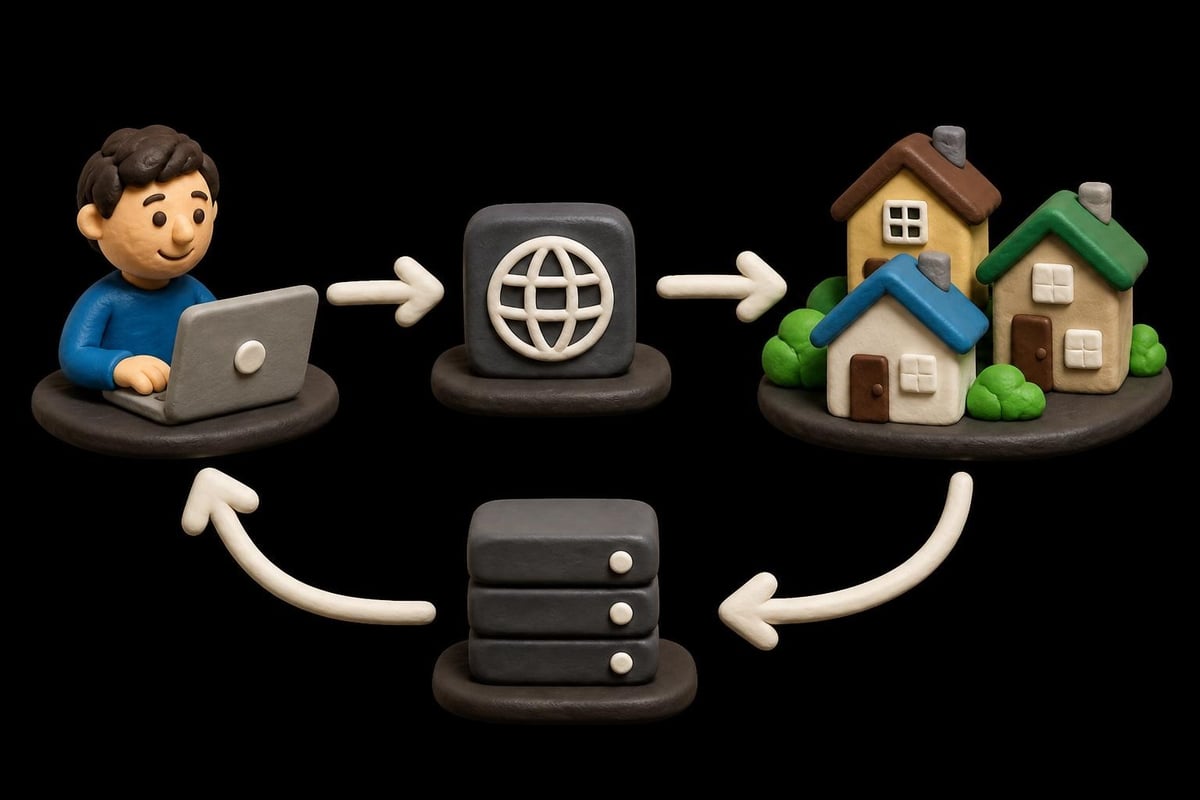
When a client connects through a residential proxy network, their request travels through multiple layers. The proxy service receives the initial request, selects an appropriate residential IP from its pool based on geographic or other targeting parameters, and forwards the traffic through that endpoint.
Modern implementations incorporate several technical enhancements:
- Session persistence to maintain the same IP across multiple requests
- Automatic rotation at configurable intervals (often 1ms minimum)
- Geographic targeting down to city or ASN level
- Protocol support for HTTP, HTTPS, SOCKS5, and both IPv4 and IPv6
The response then follows the reverse path, creating a complete circuit that masks the original requester's identity while presenting target servers with a legitimate residential fingerprint.
Legitimate Business Applications
Companies across multiple industries rely on residential proxy networks for mission-critical operations. The ability to access web resources from genuine residential IPs solves challenges that datacenter proxies cannot address.
Web Scraping and Data Intelligence
Market research firms and price comparison platforms use residential proxies to gather accurate, geographically-relevant data. E-commerce businesses monitor competitor pricing across different regions, while SEO professionals track search engine rankings from various locations without triggering anti-bot systems.
Key scraping advantages include:
- Bypassing IP-based rate limits designed to block datacenter ranges
- Accessing geo-restricted content that only displays to local users
- Collecting unbiased data not influenced by browser fingerprinting
- Maintaining 24/7 monitoring without service interruptions
The residential nature of these IPs means target websites cannot easily distinguish automated collection from organic user traffic, making data gathering more reliable and comprehensive.
Brand Protection and Ad Verification
Marketing departments deploy residential proxy networks to verify their advertisements appear correctly across different markets. This prevents ad fraud where publishers manipulate impression counts or display inappropriate content alongside brand messaging.
| Use Case | Why Residential IPs Matter | Business Impact |
|---|---|---|
| Ad verification | See actual consumer experience by location | Prevents wasted ad spend |
| Trademark monitoring | Detect unauthorized use in regional markets | Protects brand value |
| Price monitoring | Track MAP violations by retailers | Maintains pricing integrity |
| Review monitoring | Identify fake reviews and reputation attacks | Safeguards brand perception |
Compliance teams also leverage this technology to ensure their websites and services function properly in jurisdictions with specific regulatory requirements.
Access to Restricted Services
Streaming platforms, financial services, and educational institutions often implement geographic restrictions based on IP addresses. Businesses with legitimate needs to access these services from multiple locations benefit from residential proxy capabilities.
Developers testing applications across different regions rely on residential IPs to validate functionality, while corporate teams accessing site unblocking solutions for business intelligence require authentic residential connections to gather competitive insights without detection.
Security and Privacy Considerations
The dual-use nature of residential proxy networks creates complex security challenges. While enterprises deploy these tools for legitimate purposes, malicious actors exploit the same infrastructure for cybercrime, making detection and mitigation essential for network defenders.
Threat Landscape Analysis
Recent congressional discussions on residential proxy networks highlight growing policy concerns around abuse. Cybercriminals leverage residential IPs to conduct credential stuffing attacks, distribute malware, and engage in fraud that appears to originate from trusted residential sources.
The dangers outlined by threat intelligence organizations include:
- Account takeover attacks that bypass IP-based authentication
- Click fraud operations that simulate legitimate user engagement
- Data exfiltration through trusted residential exit points
- Command and control infrastructure masquerading as home users
Network operators face particular challenges because residential proxy traffic often flows through devices of unwitting users who installed bandwidth-sharing applications without fully understanding the implications.

Detection and Mitigation Strategies
Organizations defending against proxy-based threats must implement layered detection approaches. Traditional IP reputation systems struggle because residential addresses lack the clear markers that identify datacenter proxy ranges.
Modern detection techniques combine:
- Behavioral analysis examining connection patterns and session characteristics
- Device fingerprinting to identify inconsistencies in claimed vs. actual location
- Traffic analysis measuring latency and routing anomalies
- Protective DNS solutions that identify known proxy infrastructure endpoints
Research from NDSS 2026 demonstrates adversarially robust detection methods that remain effective even as proxy services evolve their evasion techniques. These two-tier approaches analyze both network-layer indicators and application-layer signals to achieve higher accuracy with lower false positive rates.
Provider Transparency and Ethical Sourcing
Responsible residential proxy network operators prioritize transparency in how they acquire IP addresses. The ethical dimension requires clear disclosure to end users whose connections become part of the proxy infrastructure.
Premium providers implement several safeguards:
- Explicit user consent through clear terms of service
- Compensation models that fairly reward bandwidth contributors
- Abuse prevention systems that block malicious traffic
- Zero-log policies that protect both proxy users and residential endpoints
- Compliance frameworks that respect regional data protection laws
Organizations selecting a residential proxy service should evaluate these ethical considerations alongside technical capabilities, ensuring their proxy usage aligns with corporate responsibility standards.
Technical Performance Factors
Performance characteristics vary significantly across residential proxy network implementations. Understanding these technical dimensions helps businesses select appropriate infrastructure for their specific requirements.
Speed and Bandwidth Considerations
Residential proxies typically exhibit higher latency than datacenter alternatives because traffic routes through home internet connections rather than optimized server infrastructure. However, 2026 advances in residential broadband have substantially narrowed this gap.
| Performance Metric | Residential Proxy | Datacenter Proxy |
|---|---|---|
| Average latency | 100-300ms | 10-50ms |
| Maximum bandwidth | 10Gbps (premium) | 100Gbps |
| Connection stability | Variable (depends on endpoint) | Highly stable |
| IP rotation speed | 1ms to hours | Instantaneous |
Premium residential proxy networks offering 10Gbps bandwidth aggregate multiple high-speed residential connections, providing enterprise-grade performance for demanding applications like real-time data scraping or high-volume API access.
IP Pool Size and Geographic Coverage
The value of a residential proxy network correlates directly with the size and diversity of its IP pool. Larger pools provide better rotation capabilities and reduce the likelihood of IP blocks or rate limiting.
Geographic distribution matters for businesses requiring specific regional access:
- Global coverage across 190+ countries for multinational operations
- City-level targeting for hyperlocal market research
- ASN diversity to avoid concentration in specific ISP ranges
- Regular pool refreshes to maintain IP reputation quality
Sophisticated networks continuously add new residential endpoints while removing compromised or blocked addresses, maintaining pool health and effectiveness.
Protocol and Configuration Flexibility
Modern residential proxy services support multiple authentication and connection protocols. HTTP/HTTPS proxies handle web traffic efficiently, while SOCKS5 support enables non-HTTP applications like gaming clients or specialized software tools.
IPv4 remains the dominant protocol, but forward-thinking providers offer complete IPv6 support as adoption accelerates. Dual-stack configurations provide maximum compatibility and future-proofing for applications that may encounter IPv6-only endpoints.
Advanced configuration options include:
- Session control for maintaining consistent IPs across workflows
- User-agent rotation synchronized with IP changes
- Custom DNS resolution to prevent leaks
- Whitelist authentication for enhanced security

Compliance and Legal Framework
Operating or using a residential proxy network requires understanding the legal landscape that governs proxy services in 2026. Regulatory frameworks vary by jurisdiction, creating compliance obligations for both providers and users.
Data Protection Regulations
European GDPR requirements affect how residential proxy networks handle personal data, including IP addresses of both proxy users and residential endpoint devices. Providers must implement data minimization, obtain proper consent, and enable data subject rights.
Similar regulations in California (CCPA), Brazil (LGPD), and other jurisdictions create overlapping compliance requirements. Businesses using residential proxies for data collection must ensure their activities align with these frameworks, particularly when scraping personal information or conducting market research involving consumer data.
Terms of Service Enforcement
Target websites maintain terms of service that may prohibit automated access or proxy usage. While residential proxies make detection difficult, legal risk remains if proxy usage violates contractual agreements with online platforms.
Organizations should implement governance frameworks that:
- Review terms of service before initiating proxy-based access
- Implement rate limiting to avoid service disruption
- Respect robots.txt and other exclusion mechanisms
- Maintain documentation of legitimate business purposes
- Consult legal counsel for high-stakes applications
Acceptable Use Policies
Reputable residential proxy network providers enforce acceptable use policies prohibiting criminal activity, copyright infringement, and other harmful behavior. These policies protect the provider's infrastructure and the residential users whose connections form the network.
Common restrictions include:
- No credential stuffing or account takeover attempts
- No distribution of malware or phishing content
- No copyright infringement or DMCA violations
- No harassment, fraud, or illegal content access
- No network scanning or vulnerability exploitation
Violation of these terms typically results in immediate service termination and may expose users to legal liability.
Selecting a Residential Proxy Provider
The residential proxy market in 2026 includes dozens of providers with varying quality, ethics, and capabilities. Due diligence separates legitimate services from questionable operations that may compromise user security or legal standing.
Evaluation Criteria
Organizations should assess potential providers across multiple dimensions before committing to a residential proxy network service.
Technical requirements checklist:
- IP pool size exceeding 1 million unique addresses
- Geographic coverage matching business operational regions
- Bandwidth capacity supporting expected traffic volumes
- Protocol support for required application types
- Rotation speed and session control capabilities
- IPv4 and IPv6 dual-stack availability
Beyond technical specifications, evaluate the provider's reputation, transparency about IP sourcing, and commitment to ethical operations. Hidden risks documented by security researchers often trace back to providers using questionable acquisition methods or inadequate abuse prevention.
Pricing Models and Value Assessment
Residential proxy pricing typically follows one of three structures: pay-per-GB, pay-per-port, or unlimited access plans. Each model suits different use cases and usage patterns.
| Pricing Model | Best For | Typical Cost (2026) |
|---|---|---|
| Pay-per-GB | Light usage, testing | $5-15 per GB |
| Pay-per-port | Consistent usage, fixed budgets | $50-300 per port/month |
| Unlimited | High volume, enterprise | $500-5000+ per month |
Unlimited access plans eliminate usage anxiety for data-intensive applications, though providers may enforce soft limits through bandwidth throttling or concurrent connection caps.
Support and Reliability Guarantees
Enterprise applications require reliable access with minimal downtime. Evaluate provider service level agreements, uptime guarantees, and support responsiveness.
Premium services offer 24/7 customer support through multiple channels, ensuring rapid resolution of connectivity issues or configuration challenges. Technical documentation quality, API completeness, and integration examples indicate provider maturity and developer experience investment.
Emerging Trends and Future Outlook
The residential proxy network landscape continues evolving as technology advances and regulatory frameworks mature. Several trends will shape the industry through the rest of this decade.
Mobile Residential Proxies
Smartphone penetration and mobile-first internet usage drive growing demand for mobile residential proxies. These services route traffic through cellular network IPs, providing even greater legitimacy for applications targeting mobile-optimized services.
Mobile proxies prove particularly valuable for:
- Social media automation and management
- Mobile app testing across carriers and regions
- Mobile-specific ad verification
- Location-based service testing
The network operator perspective on residential proxy traffic reveals how mobile proxy services integrate with cellular infrastructure and the unique detection challenges they present.
Machine Learning Integration
Providers increasingly deploy machine learning algorithms to optimize IP selection, predict blocking patterns, and automatically adjust rotation strategies. These systems analyze historical success rates across different IPs and target sites, routing requests through endpoints most likely to succeed.
Advanced implementations use reinforcement learning to adapt to changing website defenses, maintaining high success rates as anti-bot systems evolve. This arms race between proxy optimization and detection continues accelerating.
Enhanced Privacy Features
Privacy-conscious users drive demand for residential proxy networks with stronger anonymity guarantees. Zero-knowledge architectures, end-to-end encryption, and distributed trust models enhance privacy beyond traditional proxy offerings.
Providers implementing 1ms proxy rotation capabilities enable extreme IP cycling that prevents even sophisticated tracking systems from correlating activity across sessions. Combined with user-agent rotation and fingerprint randomization, these features create near-perfect anonymity for legitimate privacy-seeking applications.
Regulatory Standardization
Industry observers anticipate regulatory frameworks will mature over the next few years, potentially establishing clearer guidelines for residential proxy operations. Standardization may reduce legal ambiguity while establishing baseline ethical requirements for IP acquisition and user consent.
Operational Best Practices
Successfully deploying a residential proxy network requires more than selecting a quality provider. Organizations must implement operational practices that maximize effectiveness while minimizing legal and technical risks.
Request Rate Management
Even with residential IPs, excessive request rates trigger defensive responses from target websites. Implement intelligent rate limiting that mimics human browsing patterns, varying request timing and introducing realistic delays.
Rate limiting strategies:
- Randomize intervals between requests (3-10 seconds typical)
- Distribute scraping across multiple IPs simultaneously
- Respect server response times and back off when latency increases
- Implement exponential backoff on error responses
- Monitor block rates and adjust behavior accordingly
IP Rotation Strategies
Different applications require different rotation approaches. Real-time scraping benefits from frequent rotation, while session-based activities need IP persistence across multiple requests.
Configure rotation based on target site characteristics and detection sophistication. Sites with aggressive bot detection may require rotation after every request, while others permit dozens of requests per IP before rotation becomes necessary.
Monitoring and Observability
Implement comprehensive monitoring to track proxy performance, success rates, and potential issues. Key metrics include:
- Success rate percentage across different target sites
- Average response time by geographic region
- IP block rate indicating pool quality
- Bandwidth consumption against plan limits
- Error distribution highlighting configuration problems
Alerting on metric degradation enables rapid response before critical workflows fail.
Security Hardening
Even when using trusted residential proxy services, implement security best practices to protect sensitive data and credentials.
- Use encrypted protocols (HTTPS, SOCKS5 with TLS) for all connections
- Authenticate to proxy service using rotating credentials or IP whitelisting
- Isolate proxy traffic in dedicated network segments or VLANs
- Implement least-privilege access for applications using proxies
- Regular security audits of proxy configurations and usage patterns
Understanding residential proxy networks empowers businesses to leverage this technology responsibly while navigating the complex technical, legal, and ethical considerations that shape the industry in 2026. Whether you need reliable access for web scraping, geographic testing, or market research, PinguProxy delivers high-speed residential and mobile proxies with complete IPv4/IPv6 support, unlimited access, zero-log privacy protection, and 1ms rotation capabilities backed by 24/7 expert support to ensure your operations run smoothly and securely.