
Bài viết này hiện chỉ có sẵn bằng tiếng Anh.
Đọc bằng tiếng Anh4G Rotating Proxy: Ultimate Guide for 2026
The digital landscape of 2026 demands sophisticated tools for maintaining privacy, accessing geo-restricted content, and conducting large-scale data operations. A 4G rotating proxy represents one of the most powerful solutions available, combining the legitimacy of mobile network connections with automated IP rotation to deliver unprecedented anonymity and reliability. Unlike traditional datacenter proxies that often face detection and blocking, 4G rotating proxies leverage real mobile carrier infrastructure, making them virtually indistinguishable from regular smartphone users. This technology has become essential for businesses engaged in web scraping, market research, social media management, and competitive intelligence gathering.
Understanding 4G Rotating Proxy Technology
A 4G rotating proxy operates by routing internet traffic through mobile devices connected to cellular networks. These proxies utilize actual SIM cards from mobile carriers, creating authentic residential-style connections that websites trust implicitly. The "rotating" aspect refers to the automatic cycling of IP addresses at predetermined intervals or per request.
The core components include:
- Physical mobile devices or cellular modems with active SIM cards
- Proxy server software that manages connection routing
- Automated rotation mechanisms that switch IP addresses
- Pool management systems that distribute requests across multiple connections
The fundamental advantage stems from how websites and online services perceive these connections. When you use a 4G rotating proxy, target servers see legitimate mobile traffic from recognized carriers like Verizon, AT&T, or T-Mobile. This makes blocking extremely difficult, as websites cannot easily distinguish between proxy users and genuine mobile customers.
How Rotation Mechanisms Work
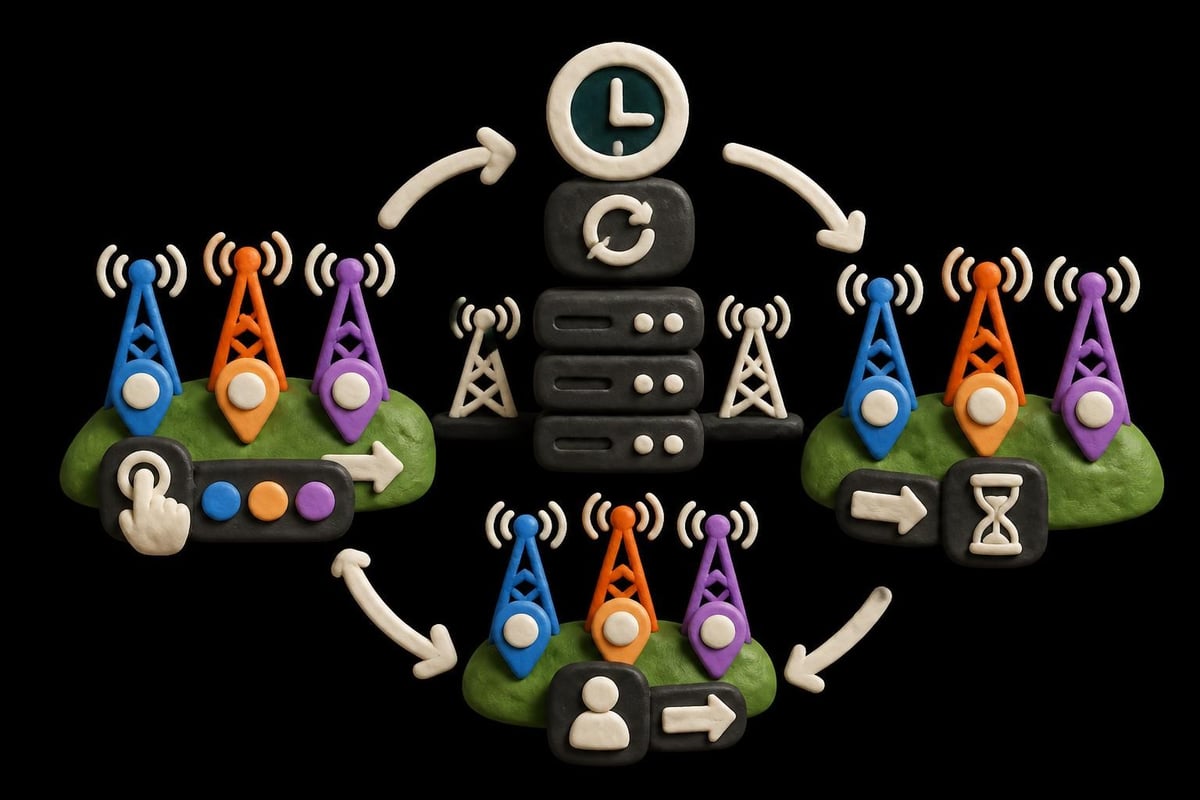
The rotation functionality operates through several distinct methods. Time-based rotation switches IP addresses after a specified duration, typically ranging from one minute to thirty minutes. Request-based rotation assigns a new IP for each individual connection, maximizing anonymity for high-frequency operations. Session-based rotation maintains the same IP throughout a complete browsing session, then switches for the next session.
Modern providers implement sophisticated algorithms that balance rotation frequency with connection stability. Too frequent rotation can disrupt ongoing sessions and trigger security alerts, while insufficient rotation reduces anonymity benefits.
| Rotation Type | Best For | Frequency | Stability |
|---|---|---|---|
| Time-based | General browsing | 5-30 minutes | High |
| Request-based | Web scraping | Per request | Medium |
| Session-based | Account management | Per session | Very High |
| Custom trigger | Specialized tasks | On-demand | Variable |
Key Advantages Over Other Proxy Types
The DataImpulse proxy service review highlights how mobile proxies outperform datacenter alternatives in detection avoidance. A 4G rotating proxy delivers benefits that make it superior for specific applications where authenticity and trust are paramount.
Primary advantages include:
- Exceptional trust scores - Mobile IPs carry inherent legitimacy that datacenter IPs cannot match
- Lower ban rates - Websites rarely block entire mobile carrier IP ranges
- Geographic flexibility - Access location-specific content through carrier-assigned regions
- Dynamic IP pools - Carrier-grade NAT provides naturally rotating addresses
- Protocol support - Full compatibility with IPv4 and IPv6 networks
The residential nature of mobile connections means these proxies bypass sophisticated detection systems that identify and block datacenter proxies. Anti-bot technologies struggle to differentiate 4G proxy traffic from genuine mobile users, creating opportunities for activities that would otherwise trigger immediate blocking.
Performance Characteristics
Speed represents a critical consideration. While 4G networks in 2026 deliver impressive bandwidth, they typically cannot match the raw speed of dedicated datacenter connections. However, the mobile proxy site functionality compensates for this through reliability and success rates.
Modern 4G LTE-Advanced and early 5G networks provide download speeds ranging from 30 Mbps to 150 Mbps under optimal conditions. This proves sufficient for most proxy use cases, including web scraping, social media automation, and content verification. The latency, while higher than datacenter proxies, remains acceptable at 30-80ms for most applications.
Implementation Strategies for Business Applications
Successfully deploying a 4G rotating proxy requires understanding both technical configuration and strategic application. Businesses must align proxy selection with specific operational requirements to maximize return on investment.
Web Scraping Operations
Data extraction represents the most common application. A 4G rotating proxy enables collection of pricing information, product details, and market intelligence without triggering anti-scraping measures. The rotation mechanism prevents IP-based rate limiting, while mobile carrier legitimacy bypasses sophisticated bot detection.
Configuration best practices:
- Set rotation intervals based on target site behavior patterns
- Implement request throttling to mimic human browsing speeds
- Use session persistence for multi-page scraping workflows
- Configure user-agent strings to match mobile device profiles
- Monitor success rates and adjust rotation frequency accordingly
For high-volume operations, distributing requests across multiple 4G rotating proxy connections prevents any single IP from exceeding threshold limits. This approach, discussed in the Smartproxy review, enables scalable data collection while maintaining stealth.
Social Media Management
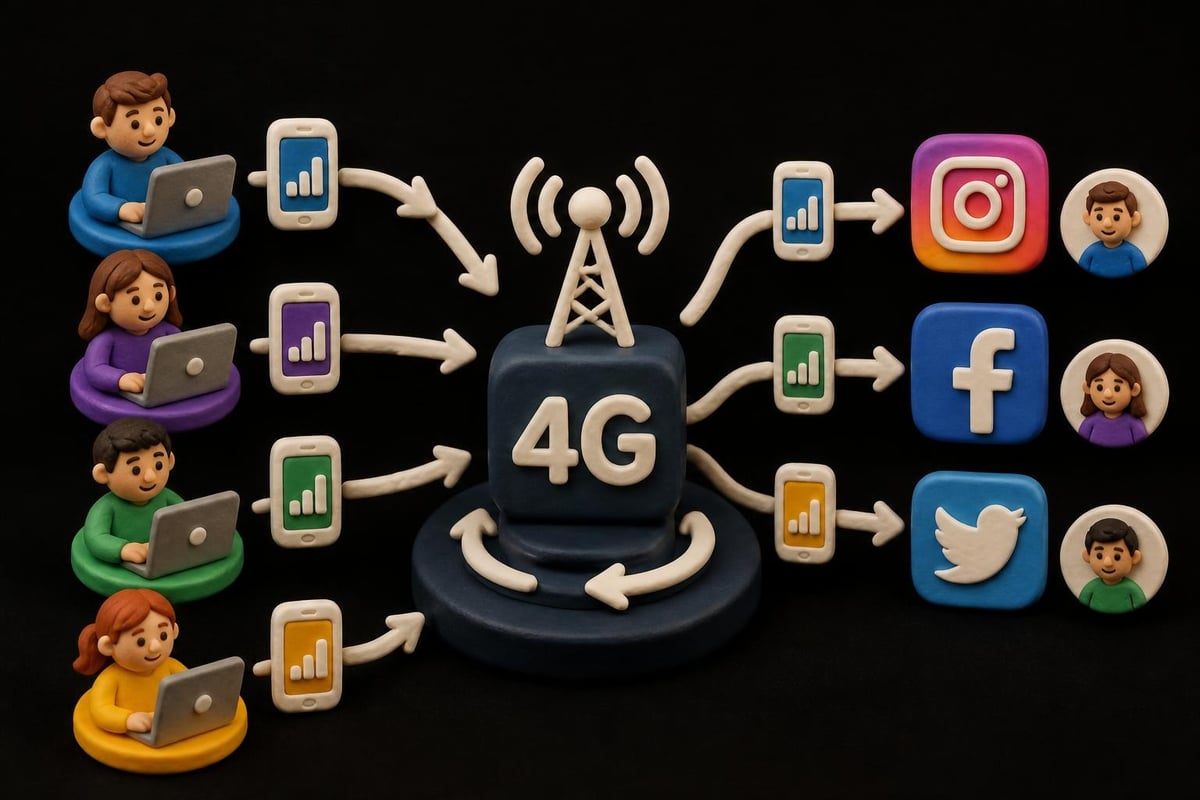
Managing multiple social media accounts requires proxies that platforms trust implicitly. A 4G rotating proxy provides the authenticity needed to operate numerous profiles without triggering security flags or account restrictions.
Different platforms require different approaches. Instagram and Facebook employ aggressive anti-automation systems that detect datacenter proxies almost instantly. By using mobile IPs that rotate naturally, businesses can manage client accounts, schedule posts, and monitor engagement without risking suspensions.
| Platform | Detection Level | Recommended Rotation | Accounts per IP |
|---|---|---|---|
| Very High | Per session | 1-2 | |
| High | Per session | 2-3 | |
| Medium | 15-30 minutes | 3-5 | |
| High | Per session | 1-2 | |
| TikTok | Very High | Per request | 1 |
Technical Configuration and Integration
Setting up a 4G rotating proxy system involves several layers of configuration. Most providers offer both API access and standard proxy protocols, enabling integration with existing tools and workflows.
The typical connection format follows standard proxy syntax: protocol://username:password@proxy-host:port. For mobile proxies, the protocol typically supports HTTP, HTTPS, and SOCKS5, providing flexibility for different applications. The authentication credentials ensure secure access while the host and port direct traffic through the proxy network.
Integration methods include:
- Direct configuration - Manual proxy settings in browsers or applications
- API integration - Programmatic control through RESTful endpoints
- Proxy managers - Third-party tools that handle rotation and distribution
- Framework plugins - Native support in scraping frameworks like Scrapy or Puppeteer
When implementing a 4G rotating proxy with automation frameworks, consider connection pooling to reduce overhead. Establishing new proxy connections for every request introduces latency; maintaining a pool of active connections improves throughput while preserving rotation benefits.
Authentication and Security
Modern proxy services implement multiple authentication layers to protect infrastructure and ensure legitimate usage. Beyond basic username-password combinations, advanced systems incorporate IP whitelisting, token-based authentication, and traffic encryption.
The best proxy Reddit discussions frequently emphasize the importance of zero-log policies. A reputable 4G rotating proxy provider should never store browsing history, connection logs, or identifying information that could compromise user privacy. This aligns with security research on authentication and privacy-preserving schemes in cellular networks.
Advanced Use Cases and Applications
Beyond basic web scraping and social media management, a 4G rotating proxy enables sophisticated applications that require mobile network authenticity and geographic distribution.
Advertising Verification
Digital advertising fraud costs businesses billions annually. Advertisers use 4G rotating proxies to verify that their campaigns display correctly across different geographic regions and mobile carriers. By rotating through various mobile IPs, ad verification teams can check placement accuracy, detect click fraud, and ensure compliance with campaign specifications.
This requires proxies distributed across multiple carriers and regions. A campaign targeting the southeastern United States needs verification from AT&T, Verizon, and T-Mobile IPs in states like Georgia, Florida, and North Carolina. The rotation ensures comprehensive coverage without alerting ad networks to verification activities.
Travel and Pricing Intelligence
The travel industry relies heavily on dynamic pricing that varies by location and user behavior. Airlines, hotels, and rental car companies adjust rates based on perceived demand and customer geographic location. A 4G rotating proxy enables travel aggregators and price monitoring services to collect accurate pricing data without triggering bot detection or receiving inflated prices.
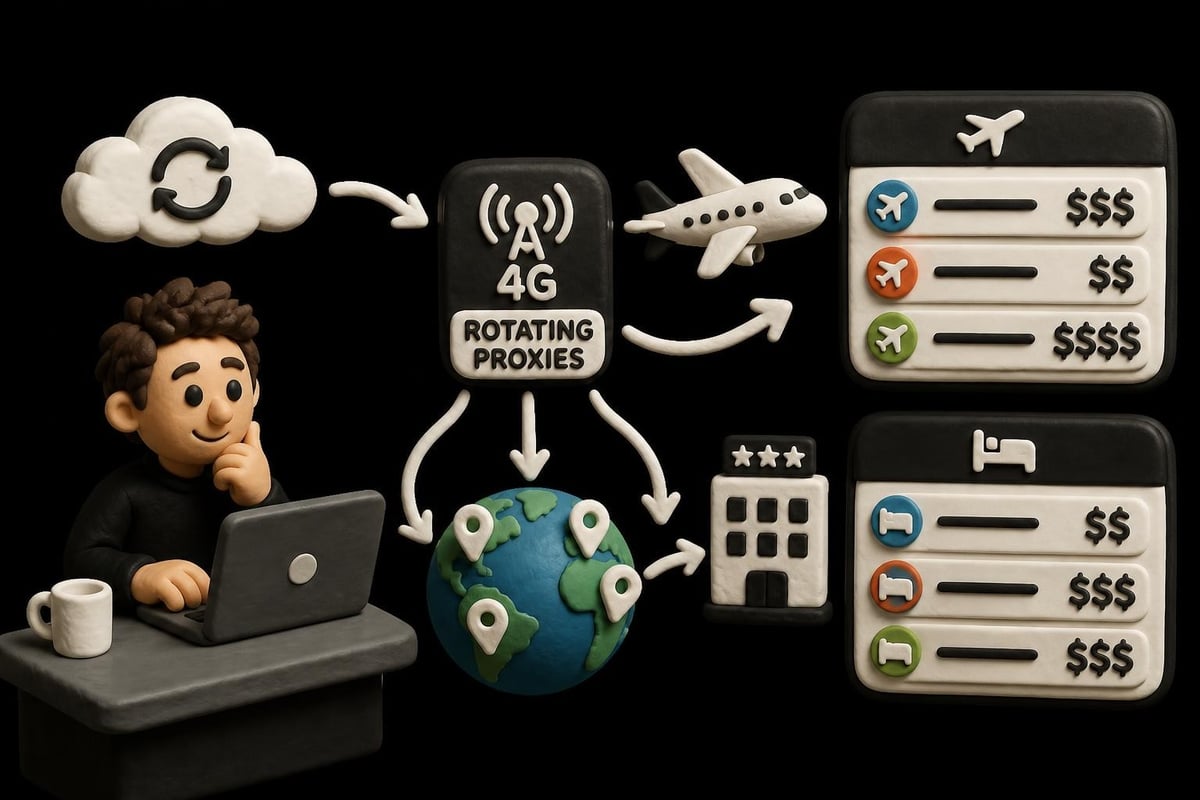
Essential features for travel monitoring:
- Geographic diversity across major metropolitan areas
- Carrier variety to represent different user demographics
- Consistent rotation to prevent profile building
- Session persistence for multi-step booking processes
- Cookie management to simulate first-time visitors
Sneaker and Retail Automation
Limited-edition product releases generate intense competition, with items selling out in seconds. Retail automation tools, often called "sneaker bots," require 4G rotating proxies to successfully navigate purchase queues and checkout processes. Retailers implement sophisticated anti-bot measures specifically targeting datacenter proxies, making mobile IPs essential for successful operations.
The Storm Proxies review examines how residential rotating proxies perform in these high-stakes scenarios. However, a 4G rotating proxy often provides superior results due to the enhanced legitimacy of mobile carrier connections during checkout processes.
Selecting the Right Provider and Service Level
The 4G rotating proxy market has matured significantly, with providers offering various features, geographic coverage, and pricing models. Evaluating options requires understanding specific business requirements and matching them to provider capabilities.
Critical Selection Criteria
Network size and distribution matter significantly. A provider with thousands of mobile IPs across multiple carriers and geographic regions delivers better rotation effectiveness and lower ban rates than limited networks. However, size alone doesn't guarantee quality; IP reputation and maintenance protocols determine actual performance.
Bandwidth allocation and speed limits directly impact operation scalability. Some providers implement strict bandwidth caps or throttling after certain usage thresholds. For high-volume scraping or continuous monitoring, unlimited bandwidth proves essential. The advertised 10Gbps bandwidth capabilities of premium providers enable enterprise-scale operations without performance degradation.
Rotation control and flexibility separate basic services from professional-grade offerings. Advanced providers allow custom rotation triggers, session persistence controls, and geographic targeting at the city or carrier level. This granular control enables optimization for specific use cases.
Technical support and reliability become crucial during critical operations. The IPRoyal review emphasizes how 24/7 customer support and comprehensive documentation reduce downtime and troubleshooting delays. When managing time-sensitive scraping jobs or multi-account operations, rapid support response can mean the difference between success and failure.
| Feature | Basic Service | Professional Service | Enterprise Service |
|---|---|---|---|
| IP Pool Size | 100-1,000 | 1,000-10,000 | 10,000+ |
| Rotation Control | Fixed intervals | Configurable | Fully customizable |
| Geographic Coverage | Single country | Multiple countries | Global |
| Bandwidth | 100GB-500GB | 500GB-2TB | Unlimited |
| Support | Email only | Email + Chat | 24/7 Priority |
Pricing Models and Cost Optimization
Providers structure pricing through various models. Pay-per-GB charges based on bandwidth consumption, making it suitable for intermittent usage but potentially expensive for high-volume operations. Monthly subscription plans offer predictable costs and often include unlimited bandwidth, ideal for continuous monitoring or scraping workflows.
Port-based pricing allocates specific proxy ports for exclusive use, providing consistent IP addresses within rotation schedules. This model suits applications requiring dedicated resources and predictable performance. Thread or concurrent connection pricing limits simultaneous connections rather than bandwidth, aligning costs with operational scale for multi-threaded scraping applications.
Cost optimization strategies include right-sizing subscription tiers based on actual usage patterns, implementing efficient request batching to minimize bandwidth waste, and using hybrid approaches that combine a 4G rotating proxy with faster datacenter proxies for non-sensitive operations.
Legal and Ethical Considerations
Operating a 4G rotating proxy requires awareness of legal boundaries and ethical guidelines. While proxies themselves are legal tools, their application must comply with relevant laws and terms of service.
Key compliance areas include:
- Terms of service adherence - Respect website policies regarding automated access
- Data protection regulations - Comply with GDPR, CCPA, and similar privacy laws
- Rate limiting respect - Implement throttling to avoid overwhelming target servers
- Content licensing - Ensure proper rights for collected data usage
- Intellectual property - Respect copyright and trademark protections
The research on security vulnerabilities in mobile networks highlights that while 4G infrastructure has weaknesses, legitimate proxy usage doesn't exploit these vulnerabilities. Ethical providers operate within legal frameworks, maintaining infrastructure through proper carrier agreements and SIM card procurement.
Businesses should establish clear policies governing proxy usage, train team members on compliance requirements, and implement technical controls that prevent accidental violations. Documentation of data collection purposes and methods supports compliance audits and demonstrates good faith efforts to operate responsibly.
Future Trends and 5G Integration
The mobile proxy landscape continues evolving rapidly. The transition from 4G to 5G networks brings significant implications for proxy services. While a 4G rotating proxy remains highly effective in 2026, early 5G adoption offers enhanced speeds, lower latency, and increased capacity.
Emerging developments include:
- Hybrid 4G/5G networks - Providers offering both technologies for optimal coverage
- Edge computing integration - Distributed processing at network edges reduces latency
- AI-powered rotation - Machine learning algorithms optimize rotation timing
- IPv6 prevalence - Growing IPv6 adoption expands available address space
- Enhanced privacy features - Advanced encryption and traffic obfuscation
The research on resource allocation in 4G-LTE provides insights into network optimization that proxy providers leverage for improved performance. As 5G deployment accelerates, expect providers to offer hybrid solutions that automatically select the optimal network type based on location, speed requirements, and target website characteristics.
Looking at SOCKS proxy service developments, protocol innovations continue enhancing proxy functionality. The combination of SOCKS5 protocol support with 4G rotating proxy infrastructure delivers exceptional flexibility for applications requiring UDP support or advanced authentication mechanisms.
A 4G rotating proxy provides unmatched authenticity and reliability for businesses requiring mobile network legitimacy in their online operations. Whether you're conducting market research, managing social media accounts, or verifying digital advertising, the combination of real mobile carrier IPs with automated rotation delivers results that other proxy types simply cannot match. PinguProxy offers enterprise-grade 4G rotating proxies with 10Gbps bandwidth, unlimited access, and 1ms rotation capabilities backed by 24/7 support and a strict zero-log policy. Experience the difference that true mobile network proxies make in your operations today.