
이 글은 현재 영어로만 제공됩니다.
영어로 읽기SOCKS Proxy Service: A Complete Guide for 2026
A socks proxy service represents one of the most versatile and powerful tools available for maintaining online privacy and accessing restricted content in 2026. Unlike traditional HTTP proxies that only handle web traffic, SOCKS proxies work at a lower network level, allowing them to process any type of internet traffic regardless of protocol. This fundamental difference makes them invaluable for businesses and individuals who need comprehensive proxy solutions for everything from web scraping to gaming, streaming, and bypassing geographical restrictions.
Understanding SOCKS Proxy Technology
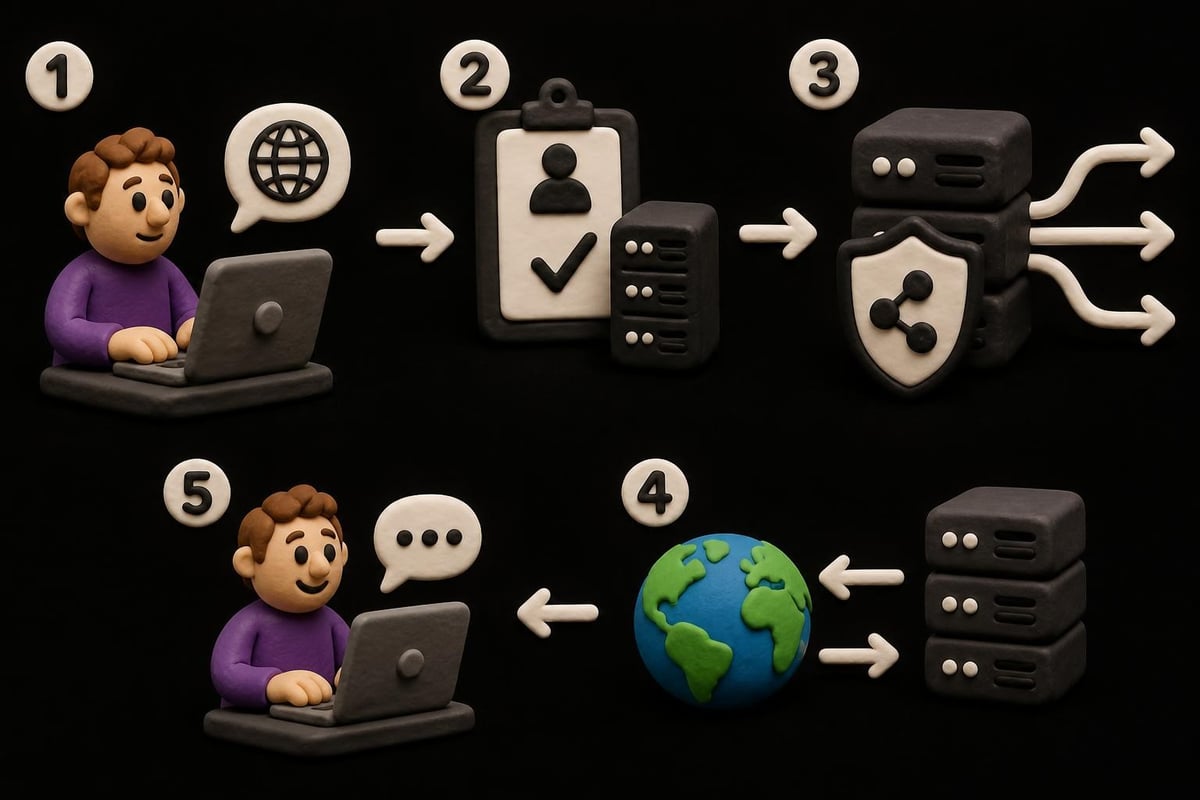
The Socket Secure (SOCKS) protocol functions as an intermediary between your device and the internet, routing your connection through a proxy server before reaching its final destination. When you connect to a SOCKS proxy service, your requests first travel to the proxy server, which then forwards them to the target website or service. This process effectively masks your original IP address and location.
What sets SOCKS apart from other proxy types is its protocol-agnostic nature. While HTTP proxies only understand web traffic, a socks proxy service handles TCP and UDP traffic seamlessly, making it suitable for applications far beyond web browsing.
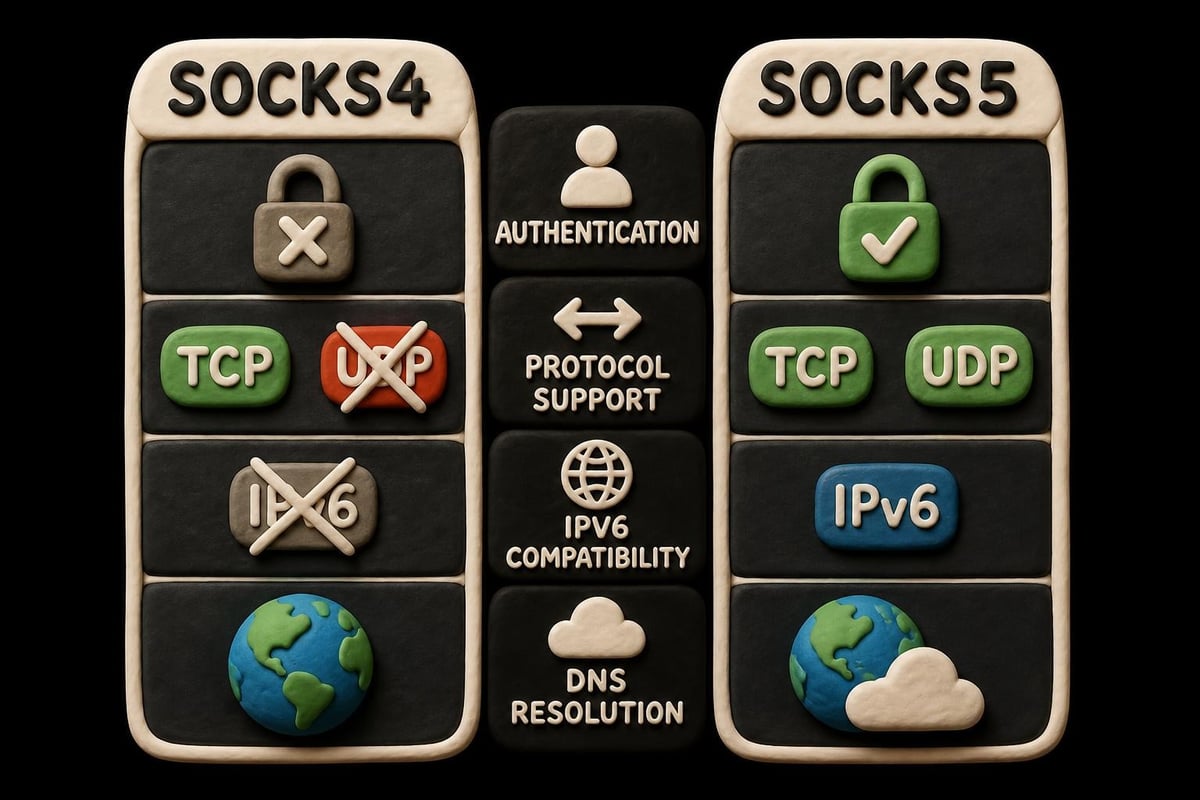
SOCKS4 vs SOCKS5: Key Differences
The evolution from SOCKS4 to SOCKS5 brought significant improvements that modern users rely on daily:
- Authentication support: SOCKS5 includes robust authentication methods
- UDP protocol support: Critical for gaming and VoIP applications
- IPv6 compatibility: Future-proofing for next-generation internet
- DNS resolution: Enhanced privacy through proxy-side DNS lookups
SOCKS5 has become the industry standard, and most reputable providers, including PinguProxy, exclusively offer SOCKS5 connections due to these advantages.
Critical Features of Professional SOCKS Proxy Services
Selecting the right socks proxy service requires understanding several technical and operational characteristics that directly impact performance and security.
Speed and Bandwidth Considerations
Connection speed remains paramount for any proxy service. Professional providers offer 10Gbps bandwidth capabilities, ensuring minimal latency even during intensive operations like data scraping or 4K streaming. The physical distance between you and the proxy server significantly affects speed, making geographical distribution important.
| Feature | Standard Service | Premium Service |
|---|---|---|
| Bandwidth | 1Gbps | 10Gbps |
| Concurrent Connections | 100 | Unlimited |
| Rotation Speed | 5 minutes | 1ms |
| Protocol Support | SOCKS5 only | SOCKS5 + IPv4/IPv6 |
When evaluating datacenter proxies versus residential options, speed differences become apparent. Datacenter proxies typically deliver faster connections but may face more blocks from security-conscious websites.
Privacy and Security Architecture
A quality socks proxy service implements multiple layers of protection. The zero-log policy ensures no record of your browsing activities, connection times, or IP addresses gets stored. This commitment to privacy distinguishes legitimate services from questionable operators.
Recent law enforcement actions, such as the dismantling of malicious proxy networks, highlight the importance of choosing reputable providers. Unauthorized services often compromise user security by logging data or injecting malware.
Authentication mechanisms prevent unauthorized access to your proxy connections. Modern SOCKS5 implementations support:
- Username and password authentication
- IP whitelist authentication
- API key authentication for automated systems
- Multi-factor authentication for enterprise accounts
Real-World Applications and Use Cases
The versatility of a socks proxy service makes it valuable across numerous professional and personal scenarios.
Web Scraping and Data Collection
Data scientists and market researchers rely on SOCKS proxies to gather information at scale without triggering anti-bot measures. By rotating IP addresses through private SOCKS5 proxies, scrapers maintain continuous access while distributing requests across multiple addresses.
Rotation capabilities prove essential here. A 1ms rotation feature allows instantaneous IP changes between requests, preventing pattern recognition by target websites. This technology enables:
- Price monitoring across e-commerce platforms
- Social media sentiment analysis
- Competitive intelligence gathering
- Search engine result page tracking
Gaming and Streaming Applications
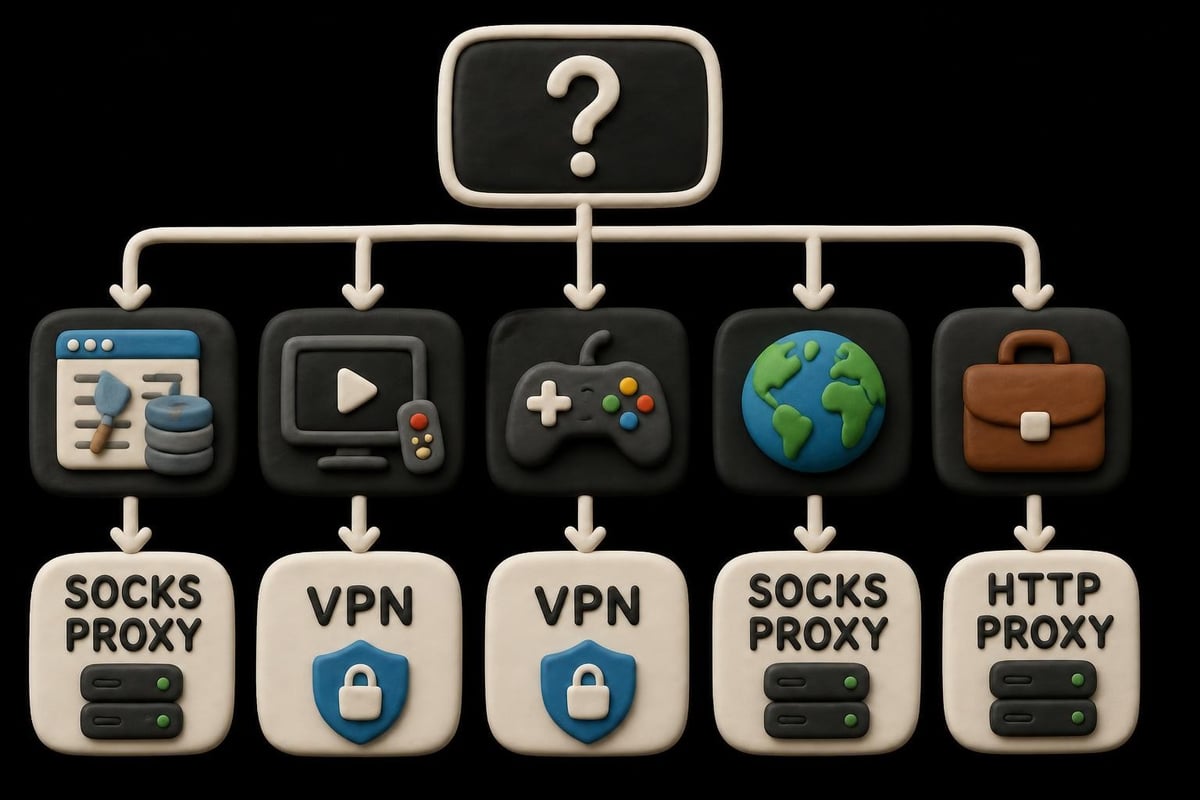
Gamers use SOCKS proxies to reduce latency by connecting through servers closer to game servers, or to access region-locked content and tournaments. The UDP protocol support in SOCKS5 proves crucial for real-time gaming traffic, which traditional HTTP proxies cannot handle.
Streaming enthusiasts leverage these services to access content libraries restricted by geographical licensing agreements. Unlike VPNs, which encrypt all device traffic, a socks proxy service can be configured per-application, allowing you to route only specific programs through the proxy.
Business Intelligence and Market Research
Corporations utilize SOCKS proxies for competitive analysis and market monitoring. Residential proxies appear as regular users from specific locations, enabling accurate price checking, ad verification, and competitor website monitoring without detection.
Mobile proxies from legitimate providers add another dimension, allowing businesses to understand how content appears to mobile users across different carriers and regions.
Implementation and Technical Configuration
Deploying a socks proxy service requires understanding configuration protocols across different platforms and applications.
Basic Connection Setup
Most applications support SOCKS proxy configuration through network settings:
- Identify your proxy server address and port number
- Select SOCKS5 as the proxy protocol type
- Enter authentication credentials if required
- Configure DNS settings to route through proxy
- Test connection to verify proper routing
For command-line tools, the implementation process with curl demonstrates how developers integrate SOCKS proxies into automated workflows. The syntax typically follows: --socks5 proxy.example.com:1080
Application-Specific Configurations
Different software requires unique setup approaches:
Web Browsers: Modern browsers include built-in SOCKS proxy support in network settings, allowing you to route all browser traffic through the proxy while other applications use your regular connection.
Torrent Clients: Configure SOCKS5 settings in the connection preferences to anonymize peer-to-peer traffic. This prevents your ISP from throttling or monitoring torrent activity.
Development Tools: Integrate proxies into testing environments to simulate users from different locations, ensuring applications function correctly across geographical boundaries.
Security Considerations and Best Practices
While a socks proxy service enhances privacy, proper configuration and provider selection determine actual security levels.
Avoiding Unauthenticated Proxies
The prevalence of unauthenticated SOCKS proxies presents significant security risks. These open proxies often operate on compromised devices, exposing users to data interception, malware injection, and legal liability.
Never use free, public SOCKS proxies for sensitive operations. The operators may:
- Log and sell your browsing data
- Inject advertisements or tracking scripts
- Launch man-in-the-middle attacks
- Use your connection for illegal activities
Verifying Provider Legitimacy
International operations like the disruption of SocksEscort demonstrate how law enforcement targets illegitimate proxy services. Choose providers with transparent business operations, clear terms of service, and established reputations.
Research potential providers thoroughly:
- Check for company registration and physical addresses
- Read independent reviews from verified users
- Verify payment security and refund policies
- Test customer support responsiveness
- Confirm technical capabilities match advertised features
Comparing SOCKS Proxies to Alternative Solutions
Understanding how a socks proxy service differs from VPNs and other proxy types helps you select the right tool for specific needs.
| Feature | SOCKS5 Proxy | VPN | HTTP Proxy |
|---|---|---|---|
| Encryption | No | Yes | No |
| Speed | Very Fast | Moderate | Fast |
| Protocol Support | All | All | HTTP/HTTPS only |
| Application-Specific | Yes | No | Limited |
| Authentication | Strong | Strong | Moderate |
| Price Point | Moderate | Higher | Lower |
According to comprehensive proxy comparisons, SOCKS proxies excel in scenarios requiring speed and flexibility without the overhead of VPN encryption. When comparing various proxy options, consider your primary use case.
When to Choose SOCKS Over VPN
Speed-critical applications benefit from SOCKS proxies because they don't encrypt traffic. Gaming, streaming, and large-scale data scraping see performance improvements without encryption overhead. Additionally, configuring proxies per-application allows other programs to maintain direct internet connections.
VPNs suit users who need comprehensive device-level encryption and don't mind modest speed reductions. For tasks requiring both speed and specific IP locations, exploring best SOCKS5 proxy services provides targeted solutions.
Advanced Features for Power Users
Modern socks proxy service providers offer sophisticated capabilities that extend beyond basic IP masking.
Proxy Rotation and Session Management
Intelligent rotation algorithms distribute requests across proxy pools, preventing rate limiting and detection. Different rotation strategies serve different purposes:
- Time-based rotation: Changes IP every fixed interval
- Request-based rotation: New IP for each request
- Session-based rotation: Maintains IP for complete user sessions
- Failure-triggered rotation: Switches IP when connection fails
Advanced users configure rotation patterns through APIs, integrating proxy management directly into their applications. This automation proves essential for enterprise-scale operations.
Geographic Targeting and IP Pool Management
Professional services maintain proxy servers in dozens of countries and hundreds of cities. This geographic distribution enables precise targeting for location-specific tasks. When you need to appear as a user from Tokyo, London, or São Paulo, selecting the appropriate proxy location becomes straightforward.
IP pool quality matters significantly. Premium residential and mobile IP addresses from legitimate sources face fewer blocks than datacenter IPs. Understanding when to use mobile proxies versus datacenter options optimizes both cost and effectiveness.
IPv4 and IPv6 Protocol Support
As the internet transitions to IPv6, forward-thinking providers offer complete protocol support. Dual-stack proxies handle both IPv4 and IPv6 traffic, ensuring compatibility with modern websites while maintaining access to legacy systems. This flexibility prevents connectivity issues as more services adopt IPv6.
Pricing Models and Value Assessment
The socks proxy service market offers various pricing structures, each suited to different usage patterns and budgets.
Bandwidth-Based vs. IP-Based Pricing
Providers typically charge either by:
- Bandwidth consumption: Pay per gigabyte transferred
- IP quantity: Fixed price per proxy IP address
- Concurrent connections: Charge based on simultaneous connections
- Time-based: Monthly or annual unlimited usage
High-volume users often find bandwidth-based pricing more economical, while those needing specific IP addresses prefer IP-based models. Evaluating your actual usage patterns prevents overpaying for unused capacity.
Enterprise vs. Individual Plans
Business users require features beyond basic proxy access:
- Dedicated account managers
- Custom IP pools not shared with other users
- Priority customer support with guaranteed response times
- API access for automated management
- Usage analytics and reporting dashboards
Individual users prioritizing affordability can consider dedicated datacenter proxies for cost-effective performance without enterprise overhead.
Maintaining Proxy Performance and Reliability
Ongoing monitoring and optimization ensure your socks proxy service continues delivering expected results.
Performance Testing and Benchmarking
Regular speed tests identify performance degradation before it impacts operations. Test multiple metrics:
- Latency: Round-trip time to proxy server
- Bandwidth: Actual transfer speeds achieved
- Success rate: Percentage of successful connections
- Geographic accuracy: Confirmed location matching requests
Automated monitoring tools alert you to issues immediately, allowing quick provider contact or server switching.
Troubleshooting Common Connection Issues
When proxy connections fail, systematic troubleshooting identifies root causes:
- Verify authentication credentials remain valid
- Confirm proxy server addresses and ports are correct
- Check if target websites block proxy IP ranges
- Test connection from different applications
- Review firewall and antivirus settings blocking proxy traffic
Quality providers offer 24/7 customer support to resolve technical challenges quickly. Documentation and knowledge bases help users solve common problems independently.
Implementing a reliable socks proxy service enhances privacy, enables global access, and supports diverse business operations from web scraping to competitive intelligence. Whether you need residential IPs for social media management, datacenter proxies for high-speed data collection, or mobile proxies for app testing, selecting a provider with robust infrastructure and comprehensive protocol support ensures success. PinguProxy delivers high-speed datacenter, residential, and mobile proxies with complete IPv4 and IPv6 support, unlimited access, zero-log privacy protection, and 1ms rotation capabilities backed by 24/7 customer support to meet your specific proxy requirements.