
5G Mobile Proxy: The Future of Secure, High-Speed Connections
The digital landscape in 2026 demands faster, more secure, and more reliable proxy solutions than ever before. As fifth-generation cellular networks become the global standard, the 5g mobile proxy has emerged as a premium tool for businesses and individuals seeking authentic mobile connections with unprecedented performance. Unlike traditional datacenter or residential proxies, 5G mobile proxies route traffic through genuine mobile carrier networks, providing the perfect blend of speed, legitimacy, and anonymity that modern use cases require.
Understanding the 5G Mobile Proxy Architecture
A 5g mobile proxy operates fundamentally differently from other proxy types by leveraging cellular network infrastructure. When you connect through a 5G mobile proxy, your requests travel through actual mobile devices equipped with SIM cards from legitimate carriers, routing through cell towers and mobile switching centers before reaching their destination.
The architecture provides several distinct advantages:
- Carrier-grade IP addresses that websites recognize as legitimate mobile users
- Dynamic IP rotation through natural network handoffs between cell towers
- Geographic flexibility spanning multiple cities and regions simultaneously
- Protocol support for both HTTP/HTTPS and SOCKS5 connections
How 5G Networks Transform Proxy Performance
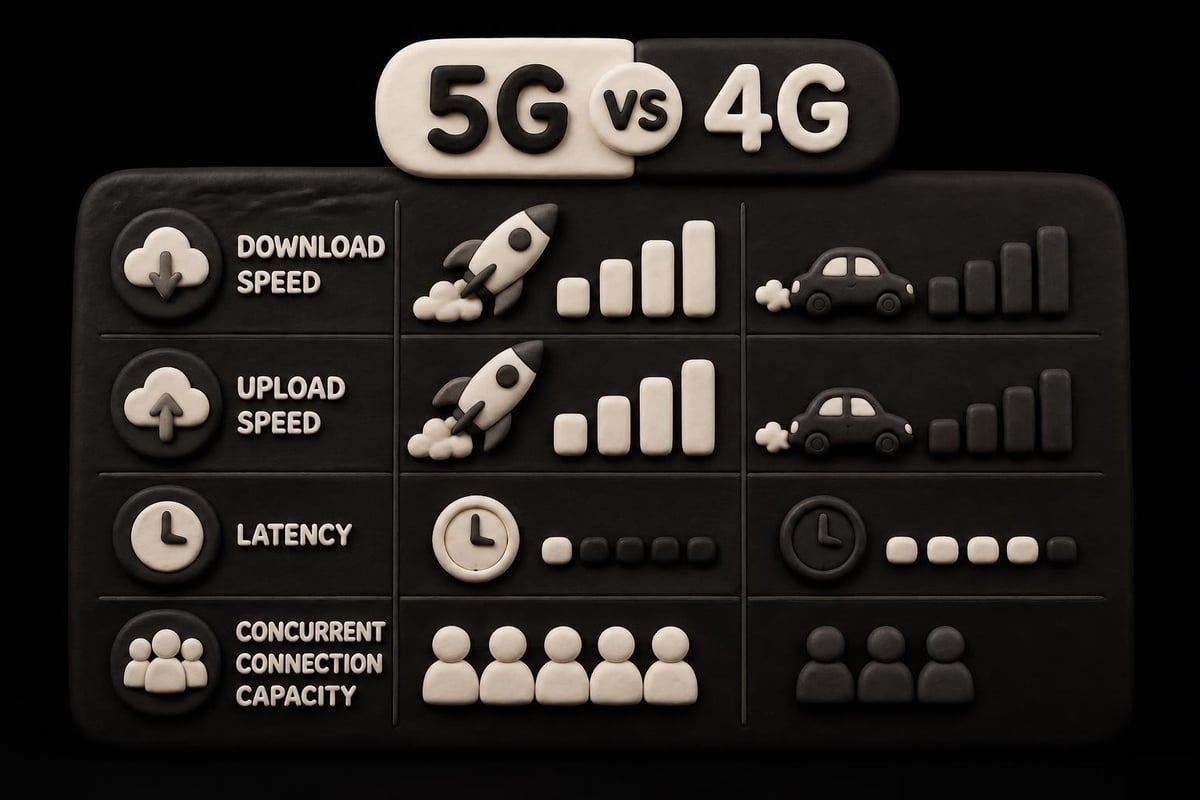
The jump from 4G LTE to 5G brings transformative improvements that directly impact proxy quality. 5G networks deliver download speeds up to 10 Gbps and latency as low as 1 millisecond in ideal conditions, making them exceptional for time-sensitive operations like sneaker botting, real-time data collection, and streaming media verification.
Traditional mobile proxies running on 4G infrastructure typically offer 20-100 Mbps speeds with 30-50ms latency. While functional for many tasks, this creates bottlenecks when scraping hundreds of pages per minute or managing multiple concurrent sessions. The 3GPP TS 23.501 specification defines the service-based architecture that enables these performance gains through network slicing and edge computing capabilities.
| Feature | 4G Mobile Proxy | 5G Mobile Proxy | Datacenter Proxy |
|---|---|---|---|
| Average Speed | 20-100 Mbps | 500-2000 Mbps | 1000+ Mbps |
| Typical Latency | 30-50ms | 5-15ms | 2-10ms |
| IP Trust Score | High | Very High | Low-Medium |
| Detection Rate | Very Low | Extremely Low | Medium-High |
| Cost per GB | Medium | Medium-High | Low |
Primary Use Cases for 5G Mobile Proxies
The unique characteristics of a 5g mobile proxy make it invaluable for specific business applications where authenticity and performance converge.
Web Scraping and Data Collection
Modern websites deploy sophisticated anti-bot systems that analyze dozens of connection fingerprints. Datacenter IPs trigger immediate red flags, but mobile IPs from recognized carriers pass scrutiny effortlessly. When you're scraping e-commerce sites, social media platforms, or travel aggregators, a 5G mobile proxy presents your requests as coming from a legitimate smartphone user browsing on a cellular connection.
E-commerce intelligence companies report scraping success rates above 98% when using mobile proxies compared to 60-75% with datacenter alternatives. The 5G advantage becomes clear when scaling operations. Faster page loads mean more data collected per hour while maintaining natural browsing patterns that avoid rate limiting.
Ad Verification and Affiliate Marketing
Digital advertisers spend billions annually ensuring their campaigns display correctly across different devices, locations, and network types. A 5g mobile proxy allows you to verify how mobile ads render in specific geographic markets without physically traveling.
Key verification tasks include:
- Checking ad placement and creative display across carrier networks
- Monitoring competitor campaigns in target demographics
- Validating affiliate tracking links from mobile perspectives
- Testing geo-targeted promotions before full deployment
- Ensuring compliance with regional advertising regulations
Social Media Management
Platform algorithms increasingly distinguish between authentic mobile users and automated desktop access. Managing multiple social accounts requires IP diversity that mirrors real user behavior. 5G mobile proxies deliver the connection authenticity that keeps accounts secure while enabling efficient multi-account management.
Social media managers report that accounts maintained through mobile proxies experience significantly fewer security challenges, verification requests, and shadowbans compared to those managed through datacenter infrastructure.
Technical Implementation and Security Considerations
Setting up and using a 5g mobile proxy requires understanding both the technical configuration and security implications. The connection chain involves your application, the proxy gateway, mobile devices with active SIM cards, carrier networks, and finally your target servers.
Configuration and Protocol Support
Most 5G mobile proxy providers, including specialized services like those found in proxy service inventories, offer standard authentication methods and connection protocols. You'll typically configure your scraper or application with:
- Proxy server address (IP or hostname)
- Port number (commonly 8080, 3128, or custom ports)
- Authentication credentials (username:password or API tokens)
- Protocol selection (HTTP, HTTPS, or SOCKS5)
The IETF proxy-status draft describes standardized headers that help diagnose connection issues and understand how intermediaries handle your traffic. Advanced users can leverage these headers to monitor proxy health and performance in real-time.
Security and Privacy Architecture
Unlike datacenter proxies where data passes through server infrastructure controlled entirely by the provider, 5G mobile proxies introduce cellular carrier networks into the trust chain. This creates both opportunities and considerations.
Privacy benefits include:
- Carrier-level encryption protecting data in transit across cellular networks
- Distributed trust model spreading traffic across multiple carriers and devices
- Natural IP rotation through network mobility without manual configuration
- Compliance with telecommunications regulations that mandate privacy protections
The NIST SP 1800-33 practice guide on 5G cybersecurity discusses threat models and mitigation strategies relevant to 5G networks, including considerations for intermediaries and proxy functions within 5G deployments.

Performance Optimization Strategies
Maximizing the value of a 5g mobile proxy requires optimization across multiple dimensions. Raw 5G speeds don't automatically translate to optimal proxy performance without proper configuration.
Connection Pooling and Session Management
Smart applications maintain connection pools that reuse established proxy sessions rather than creating new connections for each request. Session persistence reduces overhead and improves throughput by 30-50% in typical scenarios.
Consider implementing:
- Persistent HTTP connections that keep sockets open across multiple requests
- Session affinity routing related requests through the same proxy endpoint
- Intelligent retry logic that handles temporary network fluctuations
- Graceful fallback to alternative proxies when specific endpoints underperform
Geographic Distribution and Carrier Selection
The 5G network landscape varies dramatically across regions and carriers. Some operators have deployed extensive 5G infrastructure with nationwide coverage, while others maintain limited 5G zones concentrated in urban centers. Selecting proxies from carriers with strong 5G deployment in your target region ensures consistent performance.
| Region | Leading 5G Carriers | Typical Coverage | Average Speed |
|---|---|---|---|
| United States | Verizon, T-Mobile, AT&T | 85-95% urban, 40-60% rural | 400-900 Mbps |
| European Union | Vodafone, Deutsche Telekom, Orange | 70-85% urban, 25-45% rural | 350-750 Mbps |
| Asia-Pacific | SK Telecom, China Mobile, Singtel | 90-100% urban, 50-70% rural | 500-1200 Mbps |
| Middle East | Etisalat, STC, Ooredoo | 60-80% urban, 20-40% rural | 300-650 Mbps |
Bandwidth Management and Request Throttling
Even with 5G speeds, overwhelming your proxy infrastructure with excessive concurrent connections degrades performance for all sessions. Implement request throttling that respects both target server limits and proxy capacity.
Professional web scrapers typically configure:
- Maximum concurrent connections per proxy (15-30 for most applications)
- Request delay randomization (800-2000ms between requests from the same IP)
- Bandwidth quotas that prevent any single task from monopolizing resources
- Automatic scaling that adds proxy endpoints as workload increases
Industry Standards and Compliance
The 5G ecosystem operates under comprehensive standards developed by international bodies. Understanding these standards helps evaluate proxy quality and security claims.
3GPP and GSMA Framework
The 3GPP specification suite defines everything from radio interfaces to core network architecture. For proxy users, the most relevant aspects involve service-based architecture (SBA) and security functions like the Security Edge Protection Proxy (SEPP).
The GSMA NG.113 guidance document provides operator-focused recommendations on implementing security controls, including proxy-related functions in 5G roaming scenarios. While these documents primarily target network operators, they establish the foundation for how legitimate mobile connections should behave-critical context when evaluating proxy authenticity.
Open-Source Implementations and Testing
For technical teams building custom solutions or conducting proof-of-concept testing, open-source 5G core implementations offer valuable insights. The Open5GS quickstart guide demonstrates how to deploy a complete 5G core that includes service communication proxies and other network functions.
Recent evaluations like the ArXiv paper comparing open-source 5G platforms show how proxies and intermediaries appear in real implementations, helping technical users understand the full connection path their traffic traverses.

Cost-Benefit Analysis for Different User Profiles
Choosing a 5g mobile proxy involves balancing performance benefits against cost considerations. Different use cases justify different investment levels.
Small-Scale Operations
Individual developers and small businesses typically need 5-20 GB of monthly mobile proxy traffic. For limited scraping projects or account management, the premium price of 5G proxies (typically $3-8 per GB) may exceed budget constraints unless the use case specifically requires mobile IPs.
Consider 5G mobile proxies essential when:
- Target platforms actively block datacenter and residential proxies
- Success rate differences justify 2-3x cost premiums
- Time sensitivity makes 5G speed advantages critical
- Account security requires highest-quality mobile connections
Enterprise Deployments
Large-scale operations processing terabytes of data monthly achieve better economics through volume pricing and infrastructure optimization. Enterprise users can negotiate rates as low as $1.50-3.00 per GB while accessing premium features like dedicated proxy pools and priority support.
Fortune 500 companies running competitive intelligence, price monitoring, and ad verification programs typically allocate $10,000-50,000 monthly for mobile proxy infrastructure, with 5G endpoints comprising 40-60% of their mobile proxy traffic.
Future Developments in 5G Proxy Technology
The 5G proxy landscape continues evolving as network operators expand coverage and new technologies emerge.
Network Slicing and Dedicated Bandwidth
5G network slicing allows carriers to create virtualized networks with guaranteed performance characteristics. Premium 5g mobile proxy services may soon offer dedicated network slices with SLA-backed speed and latency guarantees, eliminating the performance variability that comes from sharing network resources with general mobile users.
Integration with Edge Computing
As edge computing infrastructure expands, proxy providers can position servers closer to cellular networks, reducing latency and improving throughput. Edge-optimized 5G proxies could achieve sub-5ms latency for applications requiring real-time responsiveness.
Enhanced IPv6 Support
The combination of 5G networks and expanded IPv6 deployment creates opportunities for massive proxy pools with unique addresses. Modern proxy services already support both IPv4 and IPv6, but 5G networks make IPv6-native connections increasingly practical and performant.
5G mobile proxies represent the cutting edge of connection technology, delivering the speed, authenticity, and security that demanding applications require in 2026. Whether you're scaling web scraping operations, verifying global ad campaigns, or managing social media at scale, understanding 5G proxy capabilities helps you make informed infrastructure decisions. When you need reliable, high-performance proxy solutions with comprehensive protocol support and enterprise-grade features, PinguProxy offers unlimited access to datacenter, residential, and mobile proxies backed by 24/7 support, 10Gbps bandwidth, and a strict zero-log policy to keep your operations secure and efficient.