
Dedicated Residential Proxy: The Complete 2026 Guide
In 2026, online privacy and unrestricted access to web resources have become critical concerns for businesses and individuals alike. A dedicated residential proxy represents one of the most powerful tools available for maintaining anonymity while accessing geo-restricted content, conducting market research, or performing large-scale web scraping operations. Unlike shared proxies or datacenter solutions, this specialized proxy type combines the authenticity of residential IP addresses with exclusive access, ensuring that only you use the assigned IP.
What Makes a Dedicated Residential Proxy Unique
A dedicated residential proxy is an IP address sourced from an internet service provider and assigned to a real residential location, with one crucial difference: it's reserved exclusively for a single user. This exclusivity eliminates many problems associated with shared proxy pools.
The Architecture Behind Residential Proxies
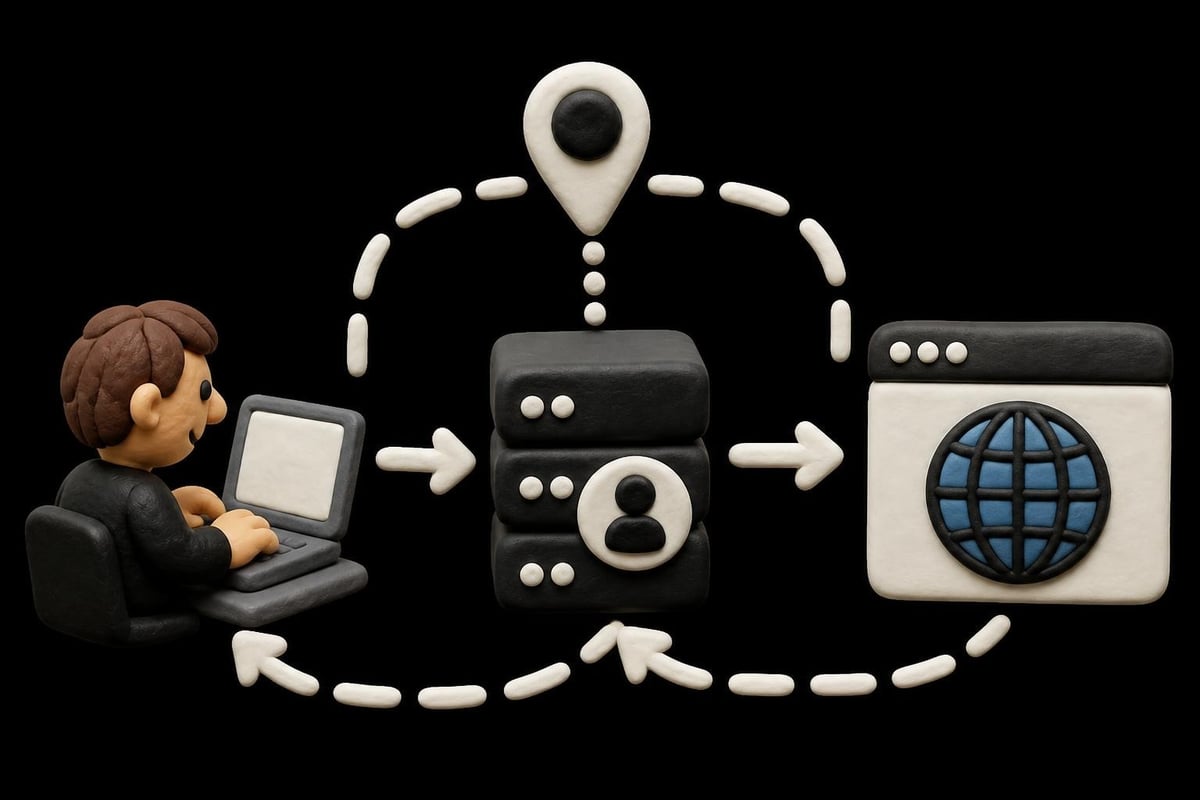
Residential proxies route your internet traffic through devices connected to home internet connections. When you use a dedicated residential proxy, your requests appear to originate from a genuine residential address rather than a datacenter. Websites see a legitimate household IP address, making detection significantly harder.
Key architectural components include:
- Real ISP-assigned IP addresses from homes and apartments
- Dedicated assignment ensuring no other users share your IP
- Routing infrastructure that maintains connection stability
- Session persistence for long-duration tasks
The IETF's work on proxy configuration standards provides technical context for how proxy systems communicate and maintain secure connections between clients and target servers.
How Dedicated Differs from Shared Residential Proxies
The distinction between dedicated and shared residential proxies fundamentally changes how you can use them. With shared pools, hundreds or thousands of users might rotate through the same IP addresses, increasing the risk of IP reputation damage.
| Feature | Dedicated Residential Proxy | Shared Residential Proxy |
|---|---|---|
| User Access | Single user only | Multiple concurrent users |
| IP Reputation | Controlled by you alone | Affected by all pool users |
| Session Stability | Highly stable | Variable, depends on rotation |
| Detection Risk | Lower | Higher due to shared patterns |
| Cost | Premium pricing | More affordable |
| Speed Consistency | Predictable performance | Can vary with load |
When you control the dedicated residential proxy exclusively, you manage its reputation. Poor behavior by other users won't taint your IP address, and you avoid the fingerprinting challenges that come from shared traffic patterns.
Primary Use Cases for Dedicated Residential Proxies
Businesses and power users deploy dedicated residential proxies across numerous scenarios where authenticity and reliability matter most.
Web Scraping and Data Collection
Web scraping represents one of the most demanding applications for dedicated residential proxies. When extracting data from e-commerce sites, social media platforms, or price comparison engines, you need IPs that appear completely legitimate.
- Target site compatibility: Residential IPs bypass datacenter detection
- Rate limit management: Dedicated IPs allow controlled request pacing
- Long-term projects: Same IP over weeks or months builds trust
- Account-based scraping: Maintain logged-in sessions reliably
Cloudflare's research on residential-proxy-based bot traffic detection demonstrates how sophisticated networks identify proxy traffic, making the authentic nature of residential IPs even more valuable in 2026.
Social Media Management and Marketing
Managing multiple social media accounts requires careful IP management to avoid platform bans. A dedicated residential proxy provides the consistency that platforms expect from genuine users.
- Account separation: Each account operates from its own residential IP
- Geographic targeting: Match IP location to account profile
- Engagement campaigns: Avoid detection during outreach activities
- Analytics tracking: Monitor competitor strategies without blocks
E-commerce and Sneaker Purchasing
Limited-release product drops have become increasingly competitive. Dedicated residential proxies give buyers an edge by appearing as regular consumers rather than automated bots.
The checkout process benefits from session persistence that dedicated IPs provide. When a retailer sees the same residential IP from initial browse through final purchase, the transaction appears more legitimate than rapidly rotating addresses would.
Privacy and Compliance Considerations
Using a dedicated residential proxy involves processing data that may traverse multiple jurisdictions, raising important privacy questions in 2026.
Data Protection Regulations
When your traffic routes through residential IPs, especially across borders, GDPR and similar regulations may apply. The European Data Protection Board's guidance on legal bases clarifies when personal data processing requires specific justification.
Compliance checkpoints:
- Understand where your proxy IPs physically terminate
- Review your provider's data retention and logging policies
- Ensure encryption for sensitive information in transit
- Document legitimate interests for business use cases
The European Commission's guidance on GDPR application helps businesses determine when data protection rules apply to their proxy usage.
Privacy-Enhancing Technology Claims
Proxy providers often market their services as privacy-enhancing technologies. The FTC's analysis of privacy-enhancing technology promises emphasizes that vendors must substantiate their claims about anonymity, security, and data protection.

When evaluating providers like those discussed in our iProyal residential proxy comparison, verify specific technical implementations rather than accepting marketing language at face value.
Technical Specifications That Matter
Not all dedicated residential proxies deliver the same performance or security features. Understanding technical specifications helps you choose a solution that meets your requirements.
Protocol Support and Infrastructure
Modern proxy infrastructure must support both IPv4 and IPv6 protocols. As the internet continues transitioning to IPv6, dual-stack support ensures compatibility across all target websites.
Critical technical features include:
- Bandwidth capacity: 10Gbps or higher for data-intensive operations
- Rotation speed: Sub-second switching when needed (some providers offer 1ms rotation)
- Connection pooling: Efficient handling of concurrent requests
- Geographic distribution: Access to IPs in target markets
Authentication and Security
Security mechanisms protect both your account and your data in transit. Zero-log policies prevent proxy providers from retaining records of your browsing activity.
| Security Feature | Importance | What to Verify |
|---|---|---|
| Zero-log policy | Critical for privacy | Independent audits or transparency reports |
| HTTPS/SOCKS5 support | Essential for encryption | Protocol options in documentation |
| IP whitelisting | Access control | Dashboard configuration options |
| Session management | Stability and control | Sticky session duration limits |
| 2FA authentication | Account security | Available authentication methods |
Geolocation Accuracy and Limitations
One often-overlooked aspect of residential proxies involves geolocation precision. Research from ACM measurement studies highlights challenges in accurate IP geolocation, which can affect targeting accuracy.
When you need a dedicated residential proxy for a specific city or region, verify the provider's location granularity. Some providers guarantee country-level accuracy but offer only approximate city matching.
Detection Risks and Mitigation Strategies
Even the most authentic residential IPs face potential detection if not used correctly. Understanding modern detection techniques helps you maintain anonymity.
Browser Fingerprinting and Metadata Leakage
WebRTC leaks represent a significant risk that proxies alone cannot solve. Recent research documented in ArXiv studies on WebRTC metadata leakage demonstrates how browsers can expose your real IP address despite proxy usage.
Mitigation requires a layered approach:
- Disable WebRTC in browser settings or use extensions
- Configure browser fingerprint randomization
- Match user-agent strings to IP geolocation
- Use residential proxy with browser automation tools designed for privacy
The OWASP Bot Management cheat sheet outlines detection techniques that sophisticated sites employ, including TLS fingerprinting and HTTP header analysis.
Behavioral Patterns and Rate Limiting
Even with a perfect dedicated residential proxy, unusual behavior triggers detection systems. Your request patterns must mimic human browsing habits.
Best practices for natural behavior:
- Implement random delays between requests (2-10 seconds)
- Vary request timing to avoid fixed intervals
- Mimic human scrolling and interaction patterns
- Respect robots.txt and rate limit headers
- Maintain realistic session durations
When comparing options, reviews like our Luminati proxies analysis can help you understand which providers offer the best tools for behavioral mimicry.
Choosing the Right Dedicated Residential Proxy Provider
The proxy market has matured significantly by 2026, with numerous providers offering dedicated residential solutions. Evaluating providers requires examining several key dimensions.
Performance Metrics to Compare
Speed and reliability directly impact your productivity. Response time matters especially for time-sensitive applications like sneaker drops or limited inventory purchases.
Test these performance indicators:
- Average response time: Under 500ms for quality providers
- Success rate: 99%+ uptime for dedicated IPs
- Geographic coverage: Availability in your target markets
- Concurrent connections: Sufficient for your workload
Support and Documentation Quality
24/7 customer support becomes essential when issues arise during critical operations. Evaluate provider support through:
- Response time for technical inquiries
- Availability of setup documentation and APIs
- Community resources and knowledge bases
- Account management tools and dashboards
Premium providers offer dedicated account managers for enterprise clients, ensuring rapid resolution of complex issues.
Pricing Models and Value Assessment
Dedicated residential proxies command premium pricing due to their exclusivity. Understanding pricing structures helps you budget appropriately.
| Pricing Model | Typical Structure | Best For |
|---|---|---|
| Per IP/month | Fixed monthly fee per dedicated IP | Stable, long-term projects |
| Bandwidth-based | Pay per GB transferred | Variable usage patterns |
| Hybrid models | Base fee plus bandwidth | Predictable costs with flexibility |
| Enterprise contracts | Custom pricing with volume | Large-scale operations |
Calculate your total cost of ownership by considering bandwidth needs, number of IPs required, and expected project duration. A seemingly expensive per-IP price may offer better value than cheaper options with hidden bandwidth charges.
<image_prompt alt="Proxy provider evaluation">Decision framework for selecting a dedicated residential proxy provider: performance benchmarks, support quality assessment, pricing model comparison, and compliance verification steps</image_print>
Advanced Configuration and Optimization
Getting maximum value from a dedicated residential proxy requires proper configuration and ongoing optimization.
Session Management Strategies
Sticky sessions allow you to maintain the same IP address across multiple requests, essential for logged-in browsing or multi-step transactions.
Configure session duration based on your use case:
- Short sessions (5-10 minutes): General browsing and reconnaissance
- Medium sessions (30-60 minutes): Form submissions and shopping
- Long sessions (several hours): Account management and social media
- Persistent sessions (days/weeks): Long-term monitoring projects
Integration with Automation Tools
Modern workflows integrate dedicated residential proxies with automation frameworks. Popular tools include Selenium, Puppeteer, and Playwright for browser automation, or language-specific HTTP libraries for API interactions.
Integration considerations:
- Proxy rotation logic in your application layer
- Retry mechanisms for failed requests
- Session cookie management across requests
- Error handling for proxy timeouts or blocks
When building scrapers or automation scripts, proper proxy integration prevents detection and maximizes success rates. Many developers maintain separate configuration profiles for different target sites, optimizing settings based on each site's detection sensitivity.
Monitoring and Maintenance
Ongoing monitoring ensures your dedicated residential proxy maintains optimal performance. Track key metrics through provider dashboards or your own logging infrastructure.
Essential monitoring points:
- Request success/failure rates by target domain
- Average response times and latency trends
- Bandwidth consumption against allocations
- IP reputation scores (if available from provider)
- Detection or blocking incidents
Set up alerts for unusual patterns like sudden drops in success rates or unexpected bandwidth spikes, which may indicate problems requiring immediate attention.
Industry-Specific Applications in 2026
Different industries leverage dedicated residential proxies in specialized ways that reflect their unique requirements.
Market Research and Competitive Intelligence
Businesses conducting market research need accurate, unbiased data from competitor websites, search engines, and pricing platforms. A dedicated residential proxy enables consistent monitoring without alerting competitors to your surveillance.
Research applications include:
- Price monitoring across geographic markets
- SERP tracking for SEO competitive analysis
- Product availability monitoring
- Review and sentiment analysis collection
Ad Verification and Brand Protection
Advertisers spend billions annually, making ad verification critical. Dedicated residential proxies allow agencies to verify that ads display correctly across different geographic markets and that click fraud isn't inflating costs.
Brand protection teams use residential IPs to detect counterfeit listings, unauthorized resellers, and trademark violations across e-commerce platforms that might block datacenter IPs.
Real Estate and Travel Aggregation
Real estate and travel industries rely on accurate, real-time data from multiple listing sources. Dedicated residential proxies provide stable access for aggregating property listings, hotel rates, and flight prices.
The residential nature prevents the aggressive rate limiting that these industries commonly employ against datacenter IPs, while dedicated assignment ensures you control your scraping pace and IP reputation.
Dedicated residential proxies have become indispensable tools for businesses requiring authentic, reliable internet access in 2026. By understanding the technical specifications, compliance requirements, and optimization strategies outlined above, you can make informed decisions that balance performance, privacy, and cost. Whether you need to conduct market research, manage social media accounts, or access geo-restricted content, PinguProxy delivers high-speed residential and mobile proxies with complete IPv4 and IPv6 support, zero-log privacy, 10Gbps bandwidth, and 24/7 support to power your most demanding projects.