
Free Residential Proxy: Risks, Realities & Safe Alternatives
The promise of a free residential proxy can seem attractive to businesses and individuals looking to access geo-restricted content, perform web scraping, or maintain anonymity online. However, the reality behind these "free" services often involves significant security risks, compromised privacy, and potential legal consequences. Understanding what truly powers free residential proxy networks and why they pose dangers to users is essential before considering any proxy solution in 2026.
Understanding How Free Residential Proxy Services Actually Work
When you encounter a free residential proxy, it's important to ask: how does the provider sustain operations without charging users? The answer typically lies in one of several questionable business models.
The Economics Behind Free Proxy Services
Most free residential proxy providers generate their IP pools through methods that range from ethically dubious to outright illegal. Some operate by:
- Installing software on users' devices in exchange for "free" VPN or utility apps
- Purchasing traffic from malware-infected computers without owner consent
- Harvesting IPs from compromised IoT devices and home routers
- Redistributing bandwidth from users who don't fully understand the terms of service
A longitudinal security analysis of free proxy services demonstrates how these operations expose users to credential theft, traffic manipulation, and privacy violations. The research reveals that free proxies frequently intercept HTTPS traffic, inject advertisements, and harvest sensitive data.
The Residential Proxy Traffic Ecosystem
Academic research has characterized how residential proxy traffic differs from legitimate network activity. A measurement study of residential-proxy traffic shows that RESIP (residential IP proxy) flows exhibit distinct patterns that can be detected and blocked by sophisticated security systems.
The ecosystem operates through several layers:
- Device recruitment through bundled software, malware, or "earn money" apps
- Traffic aggregation where providers pool connections from thousands of devices
- Resale or free distribution to end users who utilize the residential IPs
- Exit node operation where actual traffic emerges from residential connections

| Component | Legitimate Service | Free Residential Proxy |
|---|---|---|
| IP Source | Purchased from ISPs/datacenters | Harvested from devices |
| User Consent | Explicit agreement | Often buried in EULAs |
| Data Privacy | Zero-log policies | Frequently logs/sells data |
| Legal Standing | Proper business licensing | Questionable or illegal |
| Support | 24/7 professional help | Limited or nonexistent |
Security and Privacy Dangers of Free Residential Proxies
The security implications of using a free residential proxy extend far beyond simple performance issues. These services fundamentally compromise the privacy and security they claim to provide.
Data Interception and Man-in-the-Middle Attacks
When you route traffic through a free residential proxy, you're placing complete trust in an operator whose business model depends on exploiting users. Research consistently shows that free proxy services:
- Decrypt and inspect HTTPS traffic using certificate injection
- Harvest login credentials for banking, email, and social media
- Inject tracking scripts and advertisements into web pages
- Sell browsing data to third-party advertisers and data brokers
The privacy paradox is striking: users seeking anonymity through a free residential proxy often expose themselves to far greater surveillance than they would experience with a standard internet connection.
Legal and Criminal Liability Concerns
Perhaps the most serious risk involves unwitting participation in criminal activity. When using a free residential proxy, your traffic exits from someone else's residential IP address. This means:
- Your activities appear to originate from an innocent third party's home
- If you engage in questionable activities, that person may face legal consequences
- Conversely, illegal traffic from other proxy users may route through your device
The U.S. Department of Justice dismantled the 911 S5 botnet in 2024, which operated as a massive residential-proxy service built on compromised computers. This operation illustrated how free residential proxy networks frequently involve criminal infrastructure.
An FBI public service announcement warned device owners about how their computers and routers become unwitting participants in proxy networks, exposing them to legal liability when their IPs are used for fraud, identity theft, or cyberattacks.
How Your Device Becomes Part of a Free Proxy Network
Understanding the recruitment mechanisms helps explain why free residential proxy services proliferate despite their risks.
Software Bundling and "Monetization" Apps
Many users unknowingly contribute to free residential proxy pools through:
- Free VPN applications that include proxy-sharing clauses in terms of service
- Browser extensions promising ad-blocking or privacy features
- "Passive income" apps that claim to pay users for sharing bandwidth
- Pirated software bundles containing hidden proxy client software
These applications install background services that route other users' traffic through your connection. While some legitimate companies like residential proxy providers operate transparent peer-to-peer networks with informed consent, free services often obscure this functionality.

Malware and Botnet Integration
More malicious operators deploy actual malware to build their residential IP pools. USENIX research on bot and proxy ecosystems provides empirical evidence of how malware operators integrate proxy functionality into their botnets, creating enormous pools of residential IPs for resale.
The malware approach involves:
- Exploiting software vulnerabilities to gain device access
- Installing persistent proxy clients that survive reboots
- Hiding proxy traffic within normal network activity
- Updating commands through encrypted command-and-control servers
Europol's Operation Endgame demonstrates the international scope of these operations, with law enforcement agencies across continents collaborating to dismantle the infrastructure supporting both malware and proxy networks.
Modern Detection and Mitigation Strategies
As free residential proxy usage has grown, so have defensive technologies designed to detect and block this traffic.
IP Reputation and Behavioral Analysis
Traditional IP-based blocking has become less effective as residential proxies, by definition, use legitimate residential IP addresses. Cloudflare's account abuse protection explains why IP signals alone no longer suffice and outlines behavior-based approaches that identify suspicious activity regardless of source IP.
Organizations now employ multiple detection layers:
- Device fingerprinting to identify inconsistencies in browser and system data
- Behavioral analytics that flag unusual access patterns
- Machine learning models trained on proxy traffic characteristics
- TLS fingerprinting to detect proxy middleware interfering with connections
Moving Beyond Simple IP-Based Defenses
Cloudflare's article on moving past bots vs. humans describes how modern security must balance privacy with protection. As privacy-preserving technologies like VPNs and proxies become more common, defenders focus on:
- Analyzing client signals that indicate automation or tampering
- Implementing challenge mechanisms that don't rely on IP reputation
- Using contextual data like account history and transaction patterns
- Deploying adaptive systems that adjust security based on risk levels
These sophisticated approaches mean that even a free residential proxy that successfully masks your IP may still trigger security mechanisms through behavioral anomalies.
Professional Alternatives to Free Residential Proxies
For legitimate use cases like web scraping, market research, or accessing geo-restricted content, professional proxy services offer security, performance, and legal protection that free options cannot match.
Key Advantages of Paid Proxy Services
| Feature | Free Residential Proxy | Professional Service |
|---|---|---|
| IP Pool Quality | Uncertain/compromised sources | Ethically sourced, verified IPs |
| Speed & Reliability | Variable, often slow | High-speed (up to 10Gbps) |
| Privacy Protection | Data harvesting common | Zero-log policies |
| Customer Support | None or minimal | 24/7 professional assistance |
| Legal Compliance | Questionable | Proper licensing & contracts |
| Protocol Support | Limited | Full IPv4 & IPv6 support |
Professional services operate through transparent relationships with ISPs, mobile carriers, and device owners who explicitly consent to bandwidth sharing in exchange for compensation. This creates an ethical and legal foundation that free residential proxy networks typically lack.
Choosing Between Proxy Types for Different Use Cases
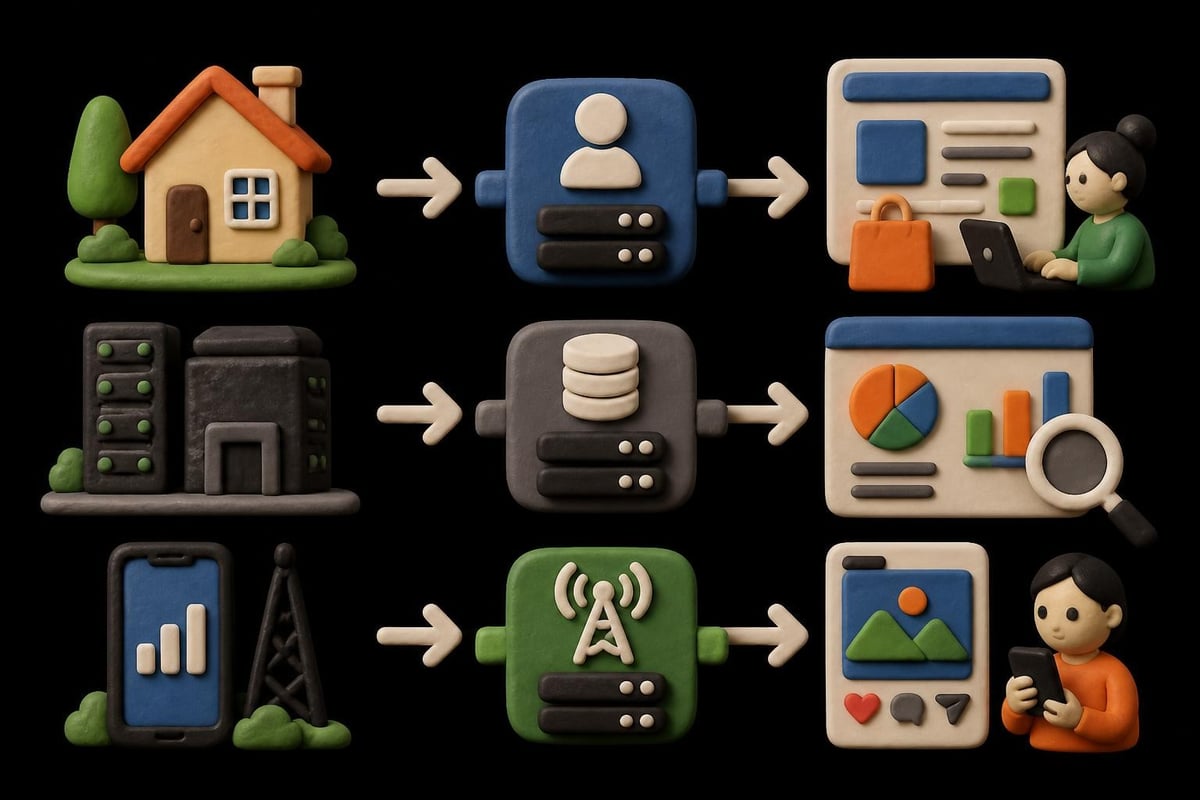
Understanding when to use different proxy types helps optimize both cost and performance. For social media automation like residential proxies for Instagram, residential IPs are essential because platforms aggressively block datacenter ranges.
Residential proxies excel at:
- Social media account management
- Sneaker and ticket purchasing
- Ad verification across geographic regions
- Accessing services that block datacenter IPs
Datacenter proxies work better for:
- High-volume web scraping where speed matters
- SEO monitoring and rank tracking
- Price comparison and competitive intelligence
- Bulk data collection where residential IPs aren't required
Mobile proxies serve specialized needs:
- App testing on actual mobile networks
- Mobile ad verification
- Accessing mobile-exclusive content
- Simulating real mobile user behavior
Evaluating Proxy Providers: What to Look For
When selecting an alternative to a free residential proxy, several key factors distinguish reputable providers from questionable operators.
Transparency and Business Model
Legitimate proxy providers clearly explain how they source their IPs. They should:
- Disclose whether they operate peer-to-peer networks
- Explain compensation models for bandwidth contributors
- Provide clear terms of service and acceptable use policies
- Maintain proper business registration and licensing
Red flags include vague descriptions of IP sourcing, refusal to explain business models, or claims of "unlimited" residential IPs at suspiciously low prices.
Technical Capabilities and Infrastructure
Professional providers invest in infrastructure that delivers consistent performance. Look for:
- Multiple geographic locations with specific city and ISP targeting
- Fast rotation capabilities (1ms or faster) for enhanced anonymity
- Protocol flexibility supporting both HTTP/HTTPS and SOCKS5
- API access for programmatic proxy management
- Session control allowing both sticky and rotating sessions
Providers should also demonstrate technical competence through comprehensive API documentation and clear setup guides.
Privacy Policies and Data Handling
Since proxy providers can technically observe all your traffic, their privacy commitments matter enormously. Essential protections include:
- Zero-log policies that prevent traffic monitoring and storage
- No data resale commitments in terms of service
- Encryption standards for proxy connections
- GDPR compliance (for European users) demonstrating privacy commitment
- Independent audits or transparency reports (when available)
Compare these standards against what a free residential proxy offers (typically nothing) to understand the value proposition.
Customer Support and Reliability
When proxy connections fail during critical operations, responsive support becomes invaluable. Professional providers offer:
- 24/7 support through multiple channels (chat, email, phone)
- Technical troubleshooting for integration issues
- Network status pages showing real-time uptime
- Service level agreements (SLAs) guaranteeing availability
- Dedicated account managers for enterprise clients
Free services provide none of these safeguards, leaving users to troubleshoot connection failures alone.
The True Cost of "Free" Proxy Services
While a free residential proxy appears to save money, the hidden costs often exceed the price of professional alternatives.
Quantifying the Risks
Consider the potential losses from using free residential proxy services:
- Data breach exposure: If credentials are harvested, the cost of compromised accounts ranges from minor inconvenience to identity theft
- Legal liability: Defending against accusations stemming from proxy abuse can cost thousands in legal fees
- Operational downtime: Unreliable free proxies cause project delays and missed opportunities
- Reputation damage: Security incidents traced to your activities can harm business relationships
- Device compromise: Malware bundled with free proxy software may steal files or enable ransomware
A single serious incident typically costs far more than months or years of professional proxy service.
Understanding the Value Proposition
Professional proxy services charge based on factors like:
- Bandwidth consumption (gigabytes transferred)
- Number of concurrent connections
- Geographic targeting specificity
- Protocol support and advanced features
- Support level and SLA guarantees
While these costs seem higher than "free," they represent actual value: verified IP sources, reliable infrastructure, legal protection, and professional support. The price reflects the provider's investment in ethical IP acquisition and maintaining high-quality infrastructure.
Building a Sustainable Proxy Strategy
Organizations and individuals who rely on proxies for legitimate purposes benefit from strategic planning rather than opportunistic use of whatever free residential proxy they find online.
Matching Proxy Solutions to Business Needs
Start by analyzing your specific requirements:
For web scraping projects:
- Volume of requests per day
- Target websites' anti-bot sophistication
- Need for geographic diversity
- Speed vs. stealth priorities
For social media management:
- Number of accounts managed
- Platform detection sophistication
- Session duration requirements
- Budget constraints per account
For market research:
- Geographic markets to monitor
- Frequency of data collection
- Competitive intelligence sensitivity
- Compliance requirements
This analysis helps identify whether you need premium residential proxies, cost-effective datacenter proxies, or a hybrid approach.
Implementing Proper Proxy Hygiene
Even with professional proxies, following best practices maximizes effectiveness:
- Rotate IPs appropriately based on target site policies
- Respect rate limits to avoid triggering anti-bot measures
- Use realistic user agents matching your proxy type
- Implement retry logic for failed requests
- Monitor proxy performance and switch providers if quality degrades
Professional services often provide guidance on these practices, unlike free residential proxy providers who offer no support.
Scaling Proxy Usage Responsibly
As your needs grow, scaling should prioritize quality and sustainability:
- Start with smaller proxy pools to test provider reliability
- Monitor success rates and adjust targeting parameters
- Gradually increase volume while watching for blocking patterns
- Diversify across multiple providers to reduce single-point failures
- Budget for premium proxies on high-value projects
This measured approach prevents the common mistake of over-relying on a single free residential proxy source that suddenly disappears or gets blocklisted.
The risks associated with free residential proxy services far outweigh any short-term cost savings, particularly when considering security vulnerabilities, legal liability, and operational reliability. For businesses and professionals who require dependable proxy infrastructure, investing in legitimate services provides peace of mind and superior performance. PinguProxy delivers enterprise-grade residential, datacenter, and mobile proxies with complete IPv4 and IPv6 support, zero-log privacy protection, and 24/7 expert support to ensure your projects succeed without compromising security or legality.