
Private SOCKS Proxy: Security, Speed & Setup in 2026
A private socks proxy represents one of the most versatile and secure methods for routing internet traffic through an intermediary server. Unlike public or shared proxies that serve multiple users simultaneously, a private configuration dedicates resources exclusively to a single user or organization, delivering superior performance, enhanced security, and complete control over network traffic. Understanding the technical foundations and practical applications of this technology has become essential for businesses and individuals seeking reliable privacy solutions in 2026.
Understanding SOCKS Proxy Technology
The SOCKS protocol operates at a lower network layer than HTTP proxies, making it protocol-agnostic and capable of handling any type of traffic. This fundamental difference allows a private socks proxy to route web browsing, email, file transfers, and even gaming traffic through the same connection.
The current standard, SOCKS Protocol Version 5 as defined in RFC 1928, introduced authentication mechanisms and support for IPv6, UDP, and domain name resolution. These enhancements transformed SOCKS from a simple circuit-level gateway into a robust tunneling protocol suitable for enterprise deployments.
Key Protocol Features
Authentication flexibility stands out as a primary advantage. SOCKS5 supports multiple authentication methods:
- Username and password combinations
- GSS-API integration for enterprise environments
- No authentication for trusted networks
- Custom authentication schemes
Protocol versatility enables diverse applications. A private socks proxy handles:
- TCP connections for web traffic and API calls
- UDP associations for DNS queries and VoIP
- Domain name resolution at the proxy level
- IPv4 and IPv6 address families
The protocol's simplicity contributes to its efficiency. SOCKS servers don't interpret or modify application data, reducing processing overhead and minimizing latency compared to higher-level proxy protocols.

Private vs. Shared Proxy Architecture
The distinction between private and shared infrastructure significantly impacts performance, security, and reliability. A private socks proxy allocates dedicated resources to individual users, while shared configurations distribute server capacity across multiple clients.
| Feature | Private SOCKS Proxy | Shared SOCKS Proxy |
|---|---|---|
| Dedicated IP | Yes, exclusive address | No, shared among users |
| Bandwidth | Full allocation (10Gbps+) | Divided among all users |
| Speed consistency | Predictable, stable | Variable, congestion-prone |
| Security | Maximum, zero neighbors | Moderate, neighbor risk |
| Cost | Higher per connection | Lower per connection |
| Anonymity | High with rotation | Moderate, shared footprint |
Shared proxies introduce the "noisy neighbor" problem. When multiple users route traffic through the same IP address, abusive behavior by one client can result in IP blacklisting that affects everyone. This issue particularly impacts web scraping operations and access to services with strict rate limiting.
Recent research published in Free Proxies Unmasked documented widespread instability and security vulnerabilities in shared proxy services. The study found that 73% of free proxy servers exhibited malicious behavior or significant configuration errors within a 90-day observation period.
Performance Considerations
Dedicated resources translate directly into performance advantages. A private socks proxy eliminates bandwidth contention, ensuring:
- Consistent throughput regardless of time or user load
- Minimal latency with direct server allocation
- Predictable response times for time-sensitive applications
- No throttling from provider overselling
For operations requiring high-volume data collection, these performance characteristics prove essential. Web scraping projects that might require thousands of concurrent connections benefit enormously from dedicated proxy infrastructure.
Security and Privacy Advantages
Privacy represents the cornerstone benefit of private proxy deployments. When you control the entire connection pathway, you eliminate numerous security vulnerabilities inherent in shared infrastructure.
Zero-Log Policies
A reputable private socks proxy provider implements comprehensive zero-log policies. This means:
- No connection timestamps or duration records
- No traffic content logging or inspection
- No DNS query retention
- No IP address association storage
The absence of logs ensures that even if a provider receives legal requests for user data, no meaningful information exists to disclose. This protection extends beyond simple privacy to operational security for businesses conducting competitive research or market analysis.
Encryption and Authentication
Modern private SOCKS implementations layer additional security measures atop the basic protocol. While SOCKS5 itself doesn't encrypt traffic, it facilitates authentication that prevents unauthorized access to your dedicated resources.
Best practices include:
- Strong password policies with regular rotation
- IP allowlisting for additional access control
- TLS wrapping for end-to-end encryption
- Certificate pinning to prevent man-in-the-middle attacks
Academic research into open proxy security, detailed in a Georgetown University study, revealed that unprotected proxy servers frequently suffered from content manipulation, malware injection, and TLS interception. A properly secured private socks proxy eliminates these attack vectors through dedicated infrastructure and robust authentication.

Use Cases and Applications
The versatility of SOCKS5 protocol combined with private infrastructure creates opportunities across numerous domains. Different applications leverage specific characteristics of the technology.
Web Scraping and Data Collection
Large-scale web scraping operations require stable, high-performance connections that won't trigger anti-bot systems. A private socks proxy provides:
- Clean IP reputation unmarred by previous users
- Consistent geolocation for region-specific content
- High request volumes without shared rate limits
- Session persistence for authenticated scraping
Rotating between multiple private proxies with millisecond intervals prevents pattern detection while maintaining the performance advantages of dedicated infrastructure. Some providers offer 1ms rotation capabilities specifically designed for high-volume scraping applications.
Gaming and Latency-Sensitive Applications
Online gaming increasingly relies on proxy technology for several purposes. Players use a private socks proxy to:
- Access region-locked game servers and content
- Reduce latency through optimized routing paths
- Protect against DDoS attacks targeting personal IPs
- Maintain multiple accounts without detection
The low protocol overhead of SOCKS5 minimizes additional latency compared to VPN tunnels or HTTP proxies. For competitive gaming where milliseconds matter, this efficiency proves critical.
Accessing Geo-Restricted Services
Content providers and platforms implement geographic restrictions for licensing and regulatory reasons. A private socks proxy deployed in the target region enables seamless access while maintaining high streaming quality through dedicated bandwidth.
Unlike VPN services that may suffer from congestion or throttling, private proxy connections deliver consistent performance suitable for:
- 4K video streaming without buffering
- Live sports broadcasts and real-time events
- Region-specific financial platforms
- Location-dependent research and monitoring
Technical Setup and Configuration
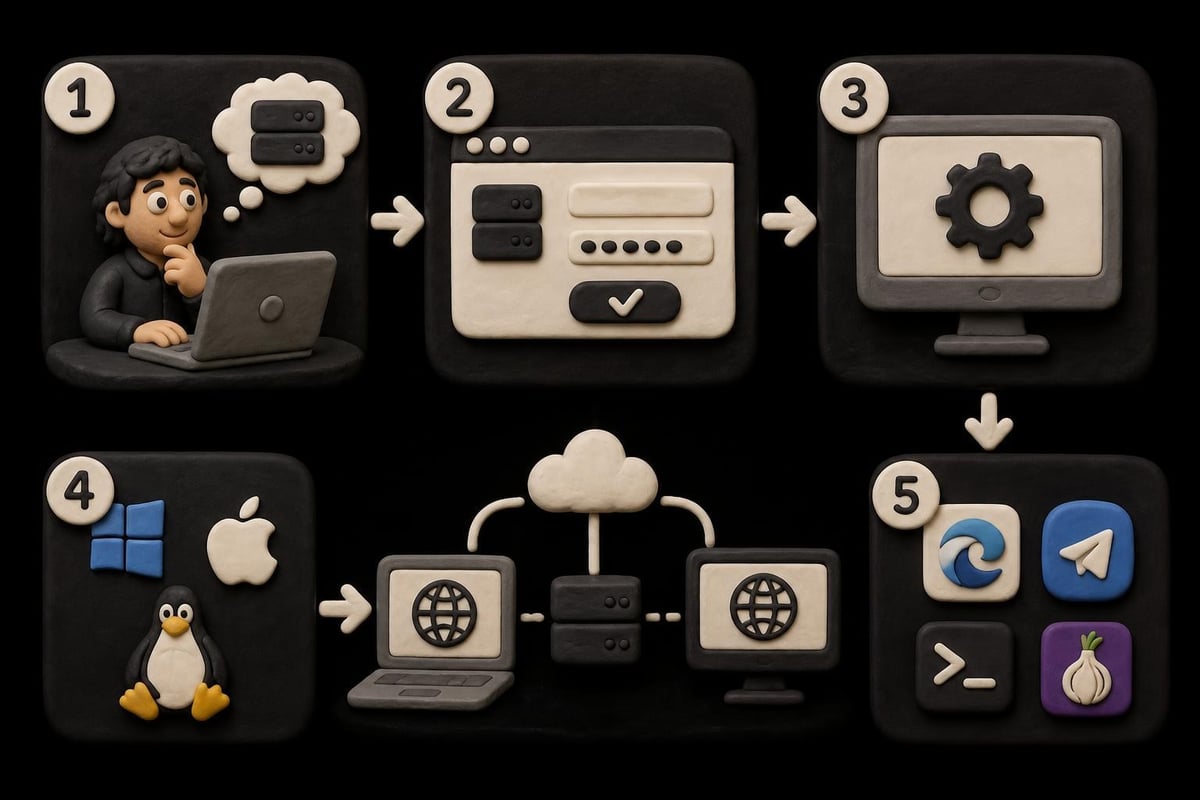
Implementing a private socks proxy requires understanding both server-side deployment and client-side configuration. The process varies by operating system and use case.
Server Deployment Options
Organizations typically choose between three deployment models:
Self-hosted infrastructure provides maximum control but requires technical expertise and ongoing maintenance. You provision virtual or dedicated servers, install SOCKS5 software like Dante or Shadowsocks, and manage security updates.
Managed proxy services like those offered through platforms such as PinguProxy deliver instant access to pre-configured infrastructure with professional support. This model eliminates setup complexity while providing enterprise features like automated rotation and monitoring.
Hybrid approaches combine private server control for sensitive operations with managed services for scalability and geographic distribution.
Client Configuration
Most operating systems and applications support SOCKS5 configuration natively. The basic parameters required include:
| Parameter | Description | Example |
|---|---|---|
| Server address | Hostname or IP of proxy | proxy.example.com |
| Port number | SOCKS5 listening port | 1080 |
| Authentication | Username and password | user:pass |
| SOCKS version | Protocol version (typically 5) | SOCKS5 |
| DNS routing | Local or remote resolution | Remote preferred |
Browser configuration varies by platform. Firefox offers native SOCKS proxy support in network settings. Chrome and Edge rely on system-wide proxy settings or require extensions for per-application control.
Command-line tools like curl support SOCKS5 through the --socks5 flag:
curl --socks5 proxy.example.com:1080 --proxy-user user:pass https://example.com
Programming libraries in Python, Node.js, and other languages include SOCKS5 client implementations. Python's requests library supports SOCKS through the PySocks module, enabling programmatic proxy usage in scraping scripts.
Performance Optimization Techniques
Maximizing the performance of a private socks proxy requires attention to network architecture, server configuration, and protocol-level optimizations. Recent research on proxy performance optimization identified several high-impact techniques.
Infrastructure Considerations
Geographic proximity between proxy server and target resources dramatically affects latency. Position private proxies in data centers close to frequently accessed services.
- North America data centers for US-based platforms
- European locations for GDPR-compliant services
- Asian deployment for regional content and services
- Multi-region distribution for global operations
Network quality matters more than raw bandwidth for many applications. A 1Gbps connection with low latency and minimal packet loss outperforms a 10Gbps link suffering from congestion.
Protocol-Level Enhancements
The proposed SOCKS 5a specification introduces several performance and security enhancements currently being adopted by forward-thinking providers:
- Traffic obfuscation to bypass deep packet inspection
- Method chaining for multi-hop privacy
- Improved authentication flows reducing handshake overhead
- Enhanced UDP support for modern protocols
While not yet standardized, these extensions demonstrate the ongoing evolution of SOCKS technology to meet contemporary requirements.
Connection Pooling and Reuse
Establishing new proxy connections involves authentication and handshake overhead. Intelligent applications implement connection pooling to:
- Reuse authenticated connections for multiple requests
- Maintain persistent connections to frequently accessed hosts
- Balance load across multiple private proxies
- Minimize connection setup latency
For high-volume operations processing thousands of requests per minute, connection reuse can reduce overall latency by 30-50% compared to creating new connections for each request.
IPv6 and Dual-Stack Considerations
The transition to IPv6 creates both opportunities and challenges for proxy infrastructure. A modern private socks proxy must support both IPv4 and IPv6 to maintain compatibility across evolving internet architecture.
Protocol Support Requirements
Full dual-stack support means handling:
- IPv4 clients connecting to IPv4 targets (traditional)
- IPv6 clients connecting to IPv6 targets (native)
- IPv4 clients accessing IPv6 resources (translation)
- IPv6 clients reaching IPv4 destinations (reverse translation)
This flexibility ensures your proxy infrastructure remains functional regardless of endpoint protocol support. As major platforms complete IPv6 rollouts throughout 2026, dual-stack capability transitions from optional to essential.
Address Space Advantages
IPv6's vast address space enables proxy providers to allocate thousands of unique IPs to individual customers. This creates new possibilities for:
Granular rotation cycling through millions of IPv6 addresses without overlap or reputation concerns common in crowded IPv4 space.
Subnet allocation providing entire /64 networks to customers for complete control over address management and rotation strategies.
Cost efficiency reducing the premium traditionally associated with dedicated IPv4 addresses due to IPv6's abundance.
Comparing Proxy Technologies
Understanding where a private socks proxy fits within the broader landscape of anonymity and routing technologies helps inform deployment decisions.
| Technology | Protocol Support | Speed | Setup Complexity | Use Cases |
|---|---|---|---|---|
| Private SOCKS Proxy | All (TCP/UDP) | Very High | Moderate | Scraping, gaming, specific apps |
| HTTP/HTTPS Proxy | Web only | High | Low | Basic browsing, simple scraping |
| VPN | All (encrypted) | Moderate | Low | General privacy, remote access |
| Tor Network | All (onion routing) | Low | Low | Maximum anonymity, sensitive research |
| SSH Tunnel | All (encrypted) | High | High | Secure admin, developer access |
Each technology excels in specific scenarios. VPNs provide comprehensive device-level encryption but may suffer from speed penalties. Tor offers unmatched anonymity at the cost of significant latency. HTTP proxies work well for simple browsing but lack protocol versatility.
A private socks proxy strikes a balance between performance, flexibility, and privacy, making it ideal for professional applications requiring reliable, high-speed connections with robust security characteristics.
Evaluating Proxy Service Providers
Selecting a private socks proxy provider requires careful evaluation of technical capabilities, business practices, and support infrastructure. Not all providers deliver equivalent quality or security.
Technical Evaluation Criteria
Network infrastructure forms the foundation of service quality:
- Data center tier ratings and redundancy
- Network backbone connectivity (10Gbps+)
- IPv4 and IPv6 availability
- Geographic distribution of server locations
Protocol implementation reveals provider expertise:
- Full SOCKS5 specification compliance
- Authentication method support
- UDP association capabilities
- DNS resolution handling (remote vs. local)
Performance metrics should be verifiable through trials:
- Average connection latency
- Sustained bandwidth availability
- Uptime guarantees and SLA terms
- Rotation speed and effectiveness
Privacy and Security Assessment
The hCaptcha residential proxy study highlighted the importance of understanding proxy service traffic sources and business models. While focused on residential networks, the research methodology applies to evaluating any proxy provider.
Key privacy questions include:
- What logs does the provider retain?
- How long is user activity data stored?
- What information is shared with third parties?
- Where is the company legally incorporated?
- What is the provider's law enforcement response policy?
Transparent providers publish detailed privacy policies and undergo independent audits. Vague or absent documentation suggests potential privacy concerns.
Support and Reliability
Professional proxy deployments require responsive technical support. Evaluate providers based on:
- Support availability (24/7 vs. business hours)
- Response time commitments
- Technical expertise of support staff
- Documentation quality and completeness
- Community resources and knowledge bases
Testing support responsiveness during the trial period reveals how providers handle issues when they inevitably arise in production environments.
Cost-Benefit Analysis
Private proxy infrastructure represents a significant investment compared to free or shared alternatives. Understanding the true cost requires examining both direct expenses and opportunity costs.
Direct Costs
Private socks proxy pricing typically follows these models:
Per-IP pricing charges based on the number of dedicated addresses allocated. Typical ranges in 2026:
- Single dedicated IP: $50-150/month
- 10-IP pool: $400-1200/month
- 100+ IPs: Custom enterprise pricing
Bandwidth-based pricing meters data transfer volume:
- Unlimited bandwidth with speed caps
- Tiered pricing by GB consumed
- Premium rates for guaranteed speeds
Hybrid models combine IP allocation with bandwidth limits, offering flexibility for variable workloads.
Value Proposition
The price premium over free SOCKS5 proxy alternatives purchases tangible benefits:
- Reliability: 99.9%+ uptime vs. sporadic availability
- Performance: Dedicated bandwidth vs. congested shared resources
- Security: Zero-log policies vs. unknown data handling
- Reputation: Clean IPs vs. blacklisted addresses
- Support: Professional assistance vs. community forums
For business applications, the cost of downtime, security breaches, or blocked IPs far exceeds proxy service fees. A single successful scraping project or prevented data breach justifies months of private proxy investment.
ROI Calculation
Calculate return on investment by quantifying:
- Time savings from reliable connections vs. troubleshooting free proxies
- Success rate improvement in data collection or access operations
- Risk mitigation value of preventing IP bans or security incidents
- Competitive advantage from exclusive access to restricted data sources
Many organizations find that private proxies pay for themselves within the first month through improved operational efficiency alone.
Emerging Trends and Future Developments
Proxy technology continues evolving to address new security threats, performance requirements, and regulatory frameworks. Several trends will shape private socks proxy capabilities through 2026 and beyond.
AI-Powered Traffic Optimization
Machine learning algorithms increasingly optimize proxy routing decisions in real-time. Advanced providers implement:
- Intelligent endpoint selection based on current performance
- Predictive rotation to avoid detection patterns
- Automated failover when primary routes degrade
- Traffic shaping to mimic organic user behavior
These capabilities transform static proxy infrastructure into adaptive systems that respond to changing network conditions and platform defenses.
Enhanced Privacy Protocols
Growing surveillance concerns drive demand for stronger privacy protections. Expect wider adoption of:
- End-to-end encryption as standard rather than optional
- Multi-hop routing combining proxy and VPN technologies
- Decentralized proxy networks reducing single points of failure
- Zero-knowledge authentication systems
Regulatory Compliance Features
Data protection regulations like GDPR, CCPA, and emerging frameworks require proxy providers to implement:
- Geographic data sovereignty controls
- Audit logging for compliance verification (distinct from user activity logs)
- Data residency guarantees for specific jurisdictions
- Automated compliance reporting tools
Private proxy providers offering these features will command premium pricing from enterprise customers requiring regulatory compliance.
Understanding the technical foundations, security advantages, and practical applications of private socks proxy technology empowers organizations to make informed infrastructure decisions. The combination of protocol versatility, dedicated resources, and robust privacy protections creates a powerful tool for businesses requiring reliable, high-performance internet access. Whether you need infrastructure for large-scale web scraping, secure gaming connections, or accessing geo-restricted content, PinguProxy delivers enterprise-grade private proxy services with 10Gbps bandwidth, complete IPv4/IPv6 support, and 24/7 expert support to ensure your operations run smoothly.