
SOCKS and Proxy: A Complete Guide for 2026
Understanding the relationship between socks and proxy technologies is crucial for anyone seeking enhanced privacy, security, or unrestricted internet access in 2026. These technologies work together to route your internet traffic through intermediary servers, masking your real IP address and location while providing various levels of anonymity and functionality. Whether you're conducting web scraping operations, managing multiple social media accounts, or accessing geo-restricted content, knowing how socks and proxy systems function will help you make informed decisions about your online privacy strategy.
What Are SOCKS Proxies and How Do They Work
SOCKS (Socket Secure) represents a specific internet protocol that facilitates routing network packets between a client and server through a proxy server. Unlike HTTP proxies that only handle web traffic, SOCKS operates at a lower level in the networking stack, making it protocol-agnostic and capable of handling any type of traffic.
The SOCKS protocol creates a TCP connection to another server behind the proxy server, then exchanges network packets between the client and the actual server. This fundamental difference makes SOCKS particularly versatile for applications beyond simple web browsing.
SOCKS4 vs SOCKS5 Protocol Differences
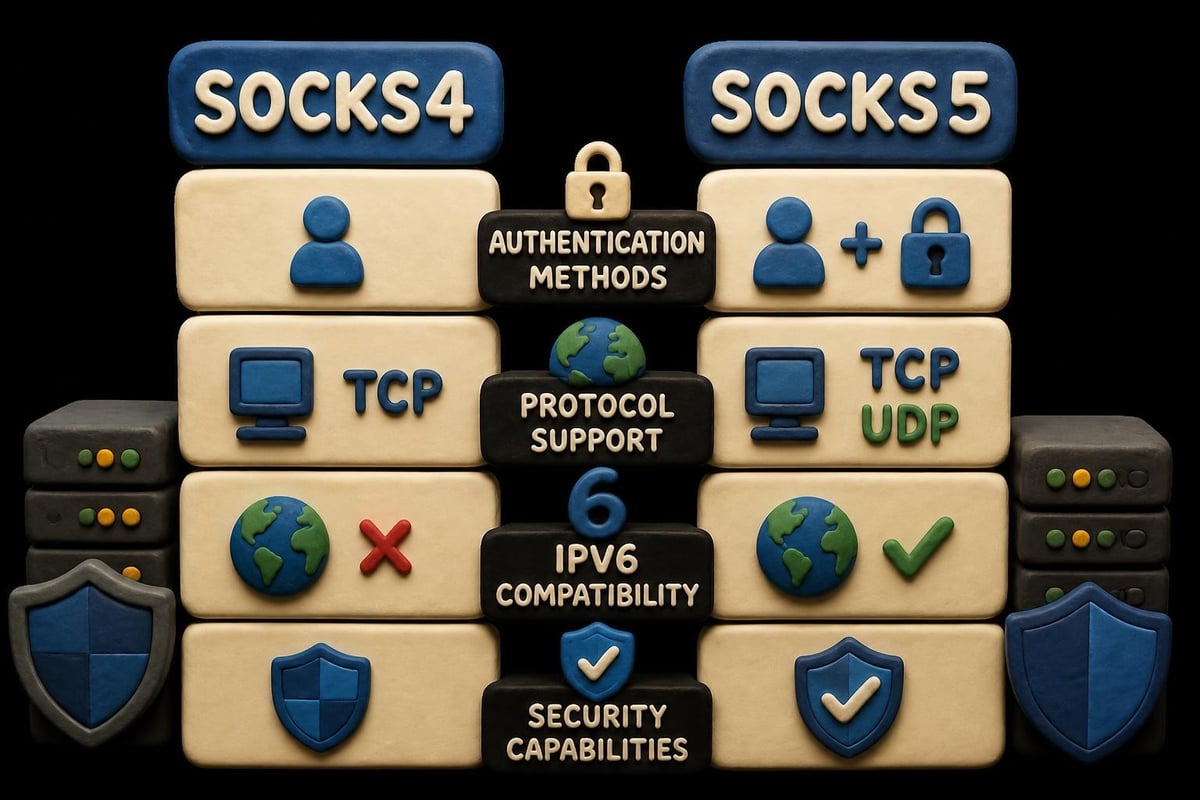
When discussing socks and proxy configurations, understanding the evolution from SOCKS4 to SOCKS5 is essential. SOCKS4 provided basic proxy functionality but lacked authentication mechanisms and UDP support, limiting its security and versatility.
SOCKS5 introduced critical improvements:
- Username/password authentication for enhanced security
- UDP protocol support for applications like VoIP and gaming
- IPv6 compatibility for modern network infrastructures
- Domain name resolution through the proxy server
- Enhanced error handling and connection management
The SOCKS5 protocol has become the industry standard for proxy services in 2026, offering the flexibility and security that modern applications demand. For businesses handling sensitive data or requiring reliable connections, SOCKS5 provides the robust framework necessary for professional operations.
Authentication and Security Considerations
Security in socks and proxy implementations depends heavily on proper authentication and encryption practices. SOCKS5 authentication occurs at the protocol level, requiring credentials before establishing the tunnel.
| Security Feature | SOCKS4 | SOCKS5 | HTTP Proxy |
|---|---|---|---|
| Authentication | No | Yes | Yes |
| UDP Support | No | Yes | No |
| IPv6 Support | No | Yes | Limited |
| DNS Leaks | Possible | Preventable | Preventable |
However, SOCKS proxies don't encrypt traffic by default. The connection between your device and the proxy server remains unencrypted unless you implement additional security layers like SSH tunneling or use the proxy in conjunction with TLS/SSL protocols.
HTTP Proxies vs SOCKS Proxies
The debate between socks and proxy types often centers on HTTP versus SOCKS protocols. HTTP proxies operate at the application layer, understanding and interpreting HTTP headers and requests specifically designed for web traffic.
HTTP proxies can modify requests and responses, cache content, and filter based on URLs or content types. This makes them excellent for web scraping, content filtering, and bandwidth optimization. They're particularly effective for e-commerce monitoring where understanding HTTP responses is crucial.
Key advantages of HTTP proxies:
- Content caching for improved performance
- Header modification for specific use cases
- URL-based filtering and access control
- Better integration with web browsers
SOCKS proxies, conversely, treat all traffic equally without interpretation. They function at the transport layer, forwarding packets without understanding their content. This protocol-agnostic approach makes them ideal for applications beyond web browsing, including email clients, FTP transfers, and peer-to-peer applications.
Use Case Scenarios for Each Protocol Type
Choosing between socks and proxy protocols depends on your specific requirements. For social media management where you need to handle multiple accounts across platforms like Instagram or TikTok, SOCKS5 proxies often provide better compatibility with mobile apps and desktop clients.
Web scraping operations typically benefit from HTTP proxies when targeting standard websites, as they can handle cookies, sessions, and JavaScript redirects more effectively. However, when scraping requires accessing APIs, mobile applications, or non-HTTP protocols, SOCKS5 becomes the superior choice.
Gaming and streaming applications almost exclusively require SOCKS proxies due to their UDP support and low-level packet handling. The protocol's ability to maintain persistent connections without interpreting traffic makes it ideal for real-time applications.
Residential and Datacenter SOCKS Proxies
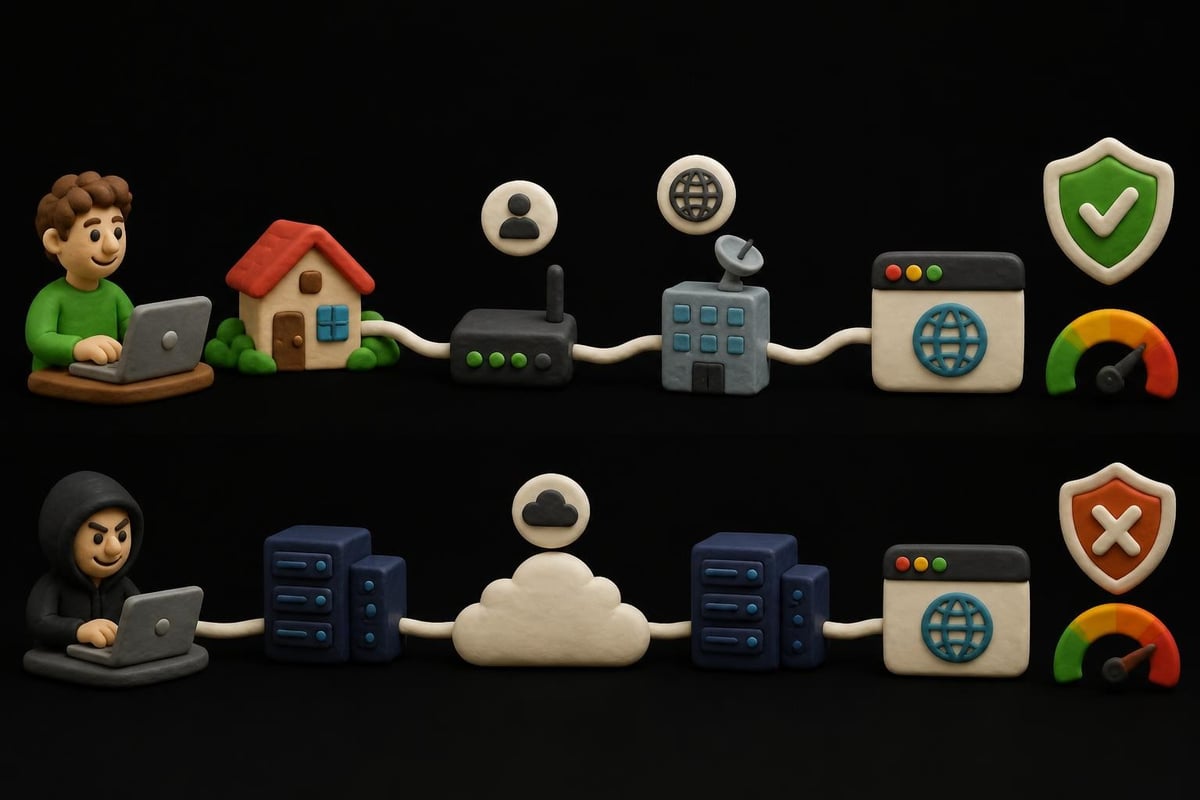
The infrastructure behind socks and proxy services significantly impacts their performance and detection resistance. Residential proxies use IP addresses assigned by Internet Service Providers to homeowners, making them appear as legitimate residential connections.
Residential SOCKS proxy benefits include:
- Lower detection rates on platforms with anti-bot measures
- Access to geo-specific content tied to residential IPs
- Better success rates for account creation and management
- Higher trust scores from websites and services
Datacenter SOCKS proxies originate from cloud hosting providers and data centers. While potentially faster and more affordable, they're more easily identified as proxy traffic. However, recent research into proxy stability and security has shown that datacenter proxies from reputable providers can offer excellent reliability when properly managed.
Mobile Proxies and SOCKS Implementation
Mobile proxies represent the newest evolution in socks and proxy technology, utilizing IP addresses from cellular networks (3G, 4G, 5G). These proxies route traffic through mobile carrier networks, providing the highest level of legitimacy for many applications.
The combination of SOCKS5 protocol with mobile proxy infrastructure creates an exceptionally powerful tool for social media automation, account management, and ad verification. Mobile IPs rotate naturally as devices move between cell towers, providing organic IP rotation that's nearly impossible to detect.
| Proxy Type | Speed | Detection Rate | Cost | Best Use Cases |
|---|---|---|---|---|
| Datacenter | Highest | Higher | Lower | Bulk scraping, speed-critical tasks |
| Residential | Medium | Low | Medium | Account management, e-commerce |
| Mobile | Variable | Lowest | Higher | Social media, app testing |
Setting Up and Configuring SOCKS Proxies
Implementing socks and proxy solutions requires understanding both the technical configuration and the strategic application. The setup process varies depending on your operating system, application, and specific use case requirements.
For basic SOCKS5 configuration, you need four essential pieces of information: the proxy server address, port number, username, and password. Most modern applications support SOCKS proxy configuration through their network settings or configuration files.
Application-Specific Configuration Methods
Different applications handle socks and proxy settings through various methods. Web browsers like Chrome and Firefox allow system-wide proxy settings or extensions for more granular control. Development tools and scraping frameworks typically support proxy configuration through environment variables or dedicated configuration objects.
Common configuration approaches:
- System-wide proxy settings (affects all applications)
- Application-specific settings (browser, email client, etc.)
- Command-line arguments for development tools
- API-based proxy rotation for automated systems
For rotating proxy configurations, many services now offer API endpoints that automatically rotate IPs at specified intervals. This automation proves invaluable for large-scale operations requiring constant IP diversity.
When configuring SOCKS proxies for sensitive operations, always verify that DNS requests route through the proxy server rather than your local DNS resolver. DNS leaks can compromise anonymity even when using properly configured socks and proxy systems.
Security Risks and Mitigation Strategies
The security landscape surrounding socks and proxy services has evolved significantly, with both legitimate providers and malicious actors operating in the space. Understanding these risks is essential for maintaining secure operations.
Recent law enforcement actions, including the dismantling of the SocksEscort network, highlight the dangers of using unvetted proxy services. This massive botnet comprised compromised residential devices unknowingly serving as proxy nodes for criminal activities.
Identifying Trustworthy Proxy Providers
Evaluating socks and proxy service providers requires examining several critical factors beyond price and speed. Legitimate providers maintain transparent operations, clear terms of service, and responsive customer support teams.
Essential provider evaluation criteria:
- Clear privacy policy and zero-log commitments
- Documented IP acquisition methods (ethical sourcing)
- Responsive technical support with actual expertise
- Transparent pricing without hidden fees
- Published uptime statistics and performance metrics
The importance of protocol compatibility cannot be overstated when selecting a provider. Services supporting both IPv4 and IPv6, like PinguProxy's comprehensive protocol support, ensure maximum compatibility across different networks and target services.
Common Security Vulnerabilities
Even properly configured socks and proxy setups can suffer from implementation flaws. DNS leaks represent one of the most common security vulnerabilities, occurring when DNS requests bypass the proxy tunnel and use your ISP's DNS servers directly.
WebRTC leaks pose another significant risk for browser-based applications. Even when routing traffic through SOCKS proxies, WebRTC can expose your real IP address through STUN server requests. Disabling WebRTC or using browser extensions that control these requests becomes necessary for maintaining anonymity.
Traffic analysis and fingerprinting techniques can sometimes identify proxy usage even without seeing the actual IP address. Advanced systems analyze packet timing, traffic patterns, and protocol-specific behaviors to detect proxy configurations.
Performance Optimization for SOCKS Proxies
Maximizing the performance of socks and proxy configurations involves balancing speed, reliability, and security. Geographic proximity between your proxy server and target destinations significantly impacts latency and connection speeds.
Connection pooling and persistent connections reduce overhead when making multiple requests through the same proxy. Rather than establishing a new SOCKS handshake for each request, maintaining open connections improves throughput for high-volume operations like web scraping or API consumption.
Bandwidth and Throughput Considerations
Understanding the bandwidth capabilities of your socks and proxy infrastructure helps set realistic performance expectations. Professional services offering 10Gbps bandwidth can handle substantial concurrent connections without degradation, essential for enterprise-level data collection or AI training data acquisition.
Performance optimization techniques include:
- Geographic proxy selection based on target locations
- Connection pooling for reduced handshake overhead
- Compression when supported by both endpoints
- Parallel connections for large-scale operations
- Smart rotation intervals balancing anonymity and speed
Monitor connection timeout rates when working with socks and proxy systems. High timeout rates often indicate network congestion, overloaded proxy servers, or incompatible protocol configurations. Many issues can be resolved by consulting connection timeout troubleshooting guides specific to your proxy service.
Advanced Use Cases and Applications
The versatility of socks and proxy technologies enables sophisticated applications across numerous industries. Cybersecurity professionals utilize SOCKS proxies for threat intelligence gathering, safely investigating malicious infrastructure without exposing their real IP addresses.
Academic researchers conducting large-scale data collection rely on SOCKS proxies to access region-specific content and avoid rate limiting when gathering datasets for machine learning or social science research. The protocol's flexibility accommodates diverse data sources beyond simple web pages.
Enterprise Integration Patterns
Modern businesses integrate socks and proxy systems into their operational infrastructure through API-driven approaches. Automated proxy creation, rotation, and management through programmatic interfaces enable scalable solutions for brand protection and competitive intelligence.
For companies operating in heavily restricted markets, SOCKS proxies provide essential connectivity for accessing restricted services while maintaining compliance with local regulations and corporate security policies.
The talent intelligence sector leverages socks and proxy technology to aggregate job postings, salary data, and hiring trends from platforms worldwide without triggering anti-scraping measures that would otherwise block their research activities.
Proxy Rotation Strategies
Implementing effective rotation for socks and proxy configurations maximizes anonymity while maintaining operational efficiency. Static IP assignments work well for account-based activities requiring consistent identity, while rapid rotation suits high-volume scraping operations.
Rotation approaches include:
- Time-based rotation (rotate every N seconds/minutes)
- Request-based rotation (new IP per request or batch)
- Failure-triggered rotation (switch on errors or blocks)
- Geographic rotation (cycle through different regions)
- Session-based rotation (consistent IP per user session)
Advanced services offering 1ms proxy rotation capabilities enable near-instantaneous IP switching, essential for maintaining high request rates while avoiding detection. This rapid rotation particularly benefits SERP monitoring where search engines actively combat automated queries.
Session Management and Sticky Sessions
Some applications require maintaining the same IP address across multiple requests, creating "sticky sessions" within socks and proxy configurations. E-commerce sites, banking portals, and many SaaS platforms track session consistency and flag accounts switching IPs mid-session as suspicious.
Balancing session stickiness with rotation frequency requires understanding target platform behaviors. Shopping cart retention, authentication cookies, and multi-step workflows often necessitate session persistence ranging from minutes to hours.
Compliance and Legal Considerations
Operating socks and proxy infrastructure carries legal responsibilities that vary by jurisdiction. Legitimate use cases like ad verification, competitive research, and content localization testing remain perfectly legal when respecting website terms of service and applicable laws.
However, using proxies to circumvent access controls, commit fraud, or engage in unauthorized access violates both civil and criminal statutes in most jurisdictions. Understanding the distinction between ethical proxy use and illegal activity protects organizations from liability.
Website terms of service often specifically address automated access and proxy usage. While many sites prohibit scraping in their ToS, enforcement varies widely, and many legitimate business activities operate in this gray area. Consulting legal counsel ensures your socks and proxy usage aligns with both the law and business ethics.
Mastering socks and proxy technologies in 2026 requires understanding protocol differences, security implications, and strategic implementation approaches for your specific use cases. Whether you need datacenter speed for bulk operations, residential IPs for account management, or mobile proxies for social media automation, choosing the right combination of protocol and infrastructure determines success. PinguProxy delivers enterprise-grade SOCKS5 support across datacenter, residential, and mobile proxy networks, with unlimited bandwidth, instant 1ms rotation, and comprehensive IPv4/IPv6 compatibility backed by 24/7 expert support to ensure your operations run smoothly and securely.