
Tor SOCKS Proxy: Der vollständige Leitfaden für 2026
Datenschutz und Anonymität sind zu kritischen Anliegen für Internetnutzer, Entwickler und Unternehmen weltweit geworden. Ein Tor SOCKS Proxy stellt eines der leistungsfähigsten Werkzeuge zum Schutz der digitalen Identität und zur Umgehung von Beschränkungen dar. Diese Technologie kombiniert die anonyme Netzwerk-Weiterleitung von Tor mit der flexiblen Verbindungsverarbeitung des SOCKS-Protokolls und schafft so eine robuste Lösung für datenschutzbewusste Aktivitäten. Egal, ob Sie recherchieren, sensible Daten verwalten oder einfach nur ohne Überwachung surfen möchten, das Verständnis, wie Sie diese Technologie effektiv nutzen können, kann Ihre Online-Sicherheit grundlegend verbessern.
Die Architektur eines Tor SOCKS Proxys verstehen
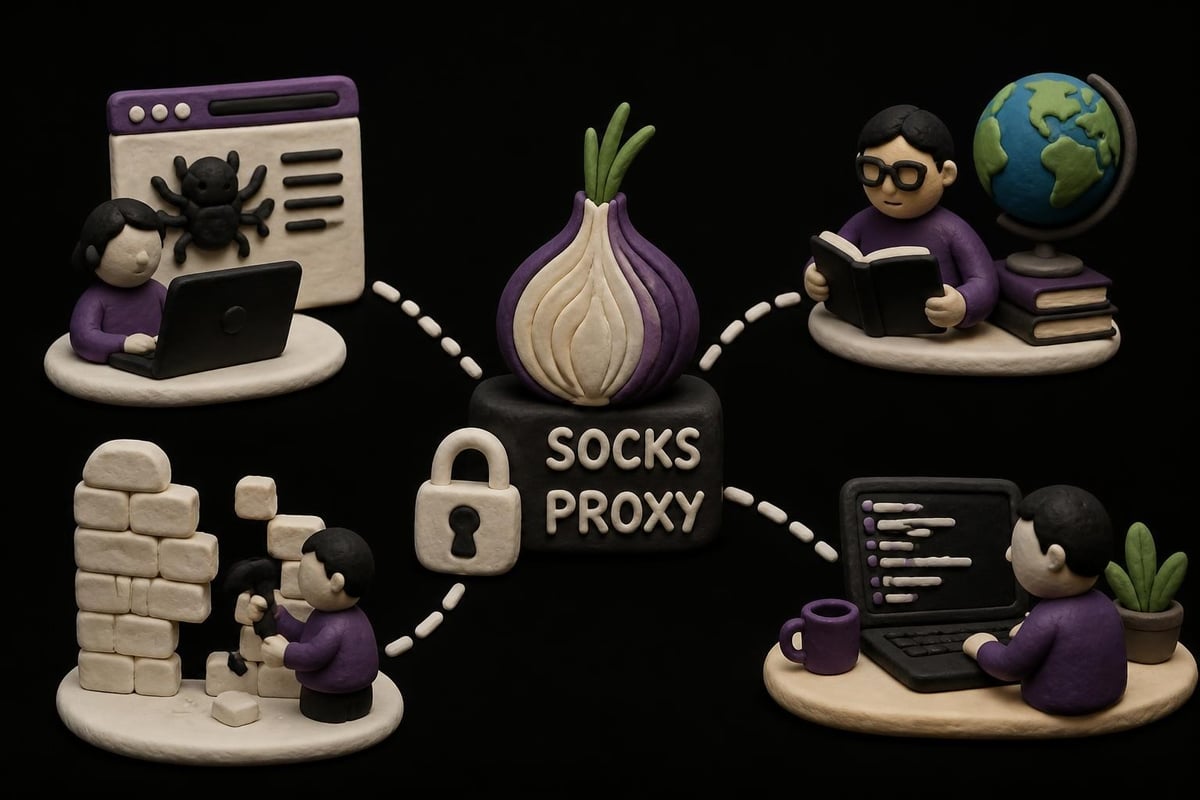
Der Tor SOCKS Proxy funktioniert, indem er einen lokalen Endpunkt erstellt, den Anwendungen nutzen können, um den Datenverkehr durch das Tor-Netzwerk zu leiten. Im Kern richtet Tor eine SOCKS-Schnittstelle auf Ihrem lokalen Rechner ein, typischerweise auf Port 9050 oder 9150, abhängig von Ihrer Konfiguration.
Wenn Sie eine Anwendung mit diesem Proxy verbinden, gelangt Ihr Datenverkehr nicht direkt an sein Ziel. Stattdessen durchläuft er mehrere verschlüsselte Schichten über die von Freiwilligen betriebenen Relayserver des Tor-Netzwerks. Diese Multi-Hop-Weiterleitung macht es extrem schwierig, die Verbindung zu Ihnen zurückzuverfolgen.
SOCKS-Protokollversionen und Tor-Kompatibilität
Tor unterstützt mehrere SOCKS-Protokollversionen, die jeweils unterschiedliche Funktionen bieten:
- SOCKS4: Grundlegende Proxy-Funktionalität ohne Authentifizierung
- SOCKS4A: Fügt die Hostnamenauflösung über den Proxy hinzu
- SOCKS5: Voll ausgestattetes Protokoll mit Authentifizierung und UDP-Unterstützung
Die SOCKS-Protokollerweiterungen, die Tor implementiert, umfassen spezifische Verbesserungen für Datenschutz und Funktionalität. Die meisten Benutzer sollten Anwendungen so konfigurieren, dass sie SOCKS5 verwenden, wenn sie sich mit Tor verbinden, da diese Version den umfassendsten Funktionsumfang bietet und gleichzeitig starke Anonymitätsgarantien aufrechterhält.

Wie die Datenverkehrs-Weiterleitung funktioniert
Der Weiterleitungsprozess folgt einer spezifischen Reihenfolge, die Anonymität gewährleistet. Ihre Anwendung sendet Daten an den lokalen SOCKS-Proxy-Port. Tor verschlüsselt diese Daten dann in mehreren Schichten und wählt einen zufälligen Pfad durch sein Netzwerk von Relays. Jedes Relay kennt nur den vorherigen und nächsten Hop, niemals den vollständigen Pfad.
Diese Onion-Routing-Technik bietet einen starken Schutz der Privatsphäre. Selbst wenn jemand Ihre Internetverbindung überwacht, sieht er nur verschlüsselten Datenverkehr, der zu einem Tor-Eingangsknoten geht, nicht Ihr endgültiges Ziel.
Einrichten eines Tor SOCKS Proxys
Die Installation und Konfiguration eines Tor SOCKS Proxys erfordert Sorgfalt, ist aber für die meisten Betriebssysteme unkompliziert. Das Tor Browser Bundle enthält alles, was für die grundlegende Nutzung benötigt wird, während fortgeschrittene Benutzer möglicherweise eigenständige Tor-Installationen für mehr Kontrolle bevorzugen.
Installationsprozess
- Laden Sie die offizielle Tor-Software von der Tor Project-Website herunter.
- Installieren Sie das Paket gemäß den Standardverfahren Ihres Betriebssystems.
- Konfigurieren Sie Ihre torrc-Datei, um SOCKS-Port-Einstellungen festzulegen.
- Starten Sie den Tor-Dienst und überprüfen Sie, ob er ordnungsgemäß läuft.
- Testen Sie die Konnektivität mit einem einfachen curl-Befehl oder einer Browserkonfiguration.
Für eigenständige Installationen müssen Sie die Konfigurationsdatei torrc bearbeiten. Wichtige Einstellungen sind:
SocksPort 9050
SocksPolicy accept 127.0.0.1
SocksPolicy reject *
Diese Direktiven richten einen SOCKS-Proxy auf Port 9050 ein, der nur lokale Verbindungen akzeptiert und verhindert, dass externe Systeme Ihren Tor-Knoten als offenen Proxy verwenden.
Best Practices für die Konfiguration
Bei der Arbeit mit SOCKS-Proxys sollte Sicherheit jede Konfigurationsentscheidung leiten. Die Tor-Konfigurationsdirektiven bieten umfangreiche Anpassungsoptionen, die sowohl die Leistung als auch die Privatsphäre verbessern können.
| Konfigurationsoption | Zweck | Empfohlener Wert |
|---|---|---|
| SocksPort | Definiert den Listening-Port | 9050 (Standard) |
| ControlPort | Verwaltungsschnittstelle | 9051 mit Passwort |
| DNSPort | DNS-Auflösung | 53 nur auf localhost |
| IsolateDestAddr | Stream-Isolation | 1 (aktiviert) |
Die Stream-Isolation verdient besondere Aufmerksamkeit. Durch die Aktivierung von IsolateDestAddr und verwandten Optionen stellen Sie sicher, dass verschiedene Anwendungen oder Ziele separate Tor-Schaltkreise verwenden, wodurch Korrelationsangriffe verhindert werden.
Praktische Anwendungen und Anwendungsfälle
Die Vielseitigkeit eines Tor SOCKS Proxys geht weit über einfaches anonymes Surfen hinaus. Entwickler, Forscher und Unternehmen nutzen diese Technologie für verschiedene anspruchsvolle Zwecke.
Entwicklung und Tests
Entwickler müssen häufig Anwendungen unter verschiedenen Netzwerkbedingungen oder von verschiedenen geografischen Standorten aus testen. Ein Tor SOCKS Proxy bietet eine hervorragende Testumgebung, ohne dass mehrere physische Standorte oder teure Infrastruktur erforderlich sind.
Beim Erstellen von Web-Scrapern oder automatisierten Tools kann das Routing von Anfragen über Tor dazu beitragen, IP-basierte Ratenbegrenzungen zu vermeiden. Ein verantwortungsvoller Umgang ist jedoch von größter Bedeutung. Die Bandbreite des Tor-Netzwerks ist begrenzt, und starker automatisierter Datenverkehr kann den Dienst für Benutzer beeinträchtigen, die Tor für ihre Sicherheit und Freiheit benötigen.
Datenschutzverbesserte Forschung
Akademische Forscher und Journalisten, die sensible Themen untersuchen, profitieren enorm von den Anonymitätsschutzfunktionen von Tor. Bei der Recherche zu Themen, die Überwachung oder Zensur auslösen könnten, ermöglicht ein Tor SOCKS Proxy den Zugang zu Informationen, ohne die Identität oder den Standort des Forschers preiszugeben.
Diese Anwendung erweist sich als besonders wertvoll beim Zugriff auf Quellen in Ländern mit restriktiven Internetrichtlinien. Die Möglichkeit, den Datenverkehr über Tor zu leiten, bietet eine wichtige Lebensader für die Informationsbeschaffung in schwierigen Umgebungen.
Integration mit Entwicklungswerkzeugen
Moderne Entwicklungsworkflows können Tor-Routing durch einfache Konfigurationsänderungen integrieren. Die Verwendung des SOCKS5-Proxys von Tor mit Tools wie curl und Python zeigt die unkomplizierte Natur dieser Integration.
Für Befehlszeilentools:
- Setzen Sie Umgebungsvariablen, die auf den SOCKS-Proxy verweisen.
- Verwenden Sie anwendungsspezifische Proxy-Flags.
- Konfigurieren Sie systemweite Proxy-Einstellungen für eine breitere Abdeckung.
- Implementieren Sie eine Proxy-Rotation für verbesserte Anonymität.
Die technische Implementierung variiert je nach Programmiersprache und Framework, aber das Kernkonzept bleibt plattformübergreifend konsistent.
Sicherheitsaspekte und DNS-Leck-Prävention
Obwohl ein Tor SOCKS Proxy robuste Anonymität bietet, kann eine unsachgemäße Konfiguration Schwachstellen schaffen, die die Privatsphäre gefährden. Das Verständnis und die Minderung dieser Risiken sind entscheidend für die Aufrechterhaltung echter Anonymität.
DNS-Leck-Schwachstellen
DNS-Lecks stellen eine der häufigsten Ursachen für den Verlust der Anonymität dar. Wenn eine Anwendung Hostnamen über Ihre regulären DNS-Server auflöst, anstatt über Tor, wird offengelegt, welche Websites Sie besuchen, obwohl die tatsächliche Verbindung über Tor läuft.
Das Überprüfen auf DNS-Lecks sollte ein regelmäßiger Bestandteil Ihres Sicherheitsüberprüfungsprozesses sein. Mehrere Methoden können diese Lecks verhindern:
- Konfigurieren Sie Anwendungen so, dass sie SOCKS4A oder SOCKS5 mit Remote-DNS-Auflösung verwenden.
- Richten Sie den DNSPort von Tor ein und erzwingen Sie alle DNS-Anfragen darüber.
- Verwenden Sie transparente Proxy-Konfigurationen, die den gesamten Datenverkehr erfassen.
- Implementieren Sie DNS-Kontrollen auf Anwendungsebene.
Das Schlüsselprinzip besteht darin, sicherzustellen, dass die Hostnamenauflösung innerhalb des Tor-Netzwerks erfolgt und nicht auf Ihrem lokalen Rechner unter Verwendung potenziell überwachter DNS-Server.
Sicherheit auf Anwendungsebene
Nicht alle Anwendungen gehen gleich gut mit SOCKS-Proxys um. Einige können Informationen preisgeben, selbst wenn sie für die Verwendung von Tor konfiguriert sind. Es ist entscheidend, jede Anwendung gründlich zu testen, bevor man sich für sensible Aktivitäten auf sie verlässt.
Browserkonfigurationen erfordern besondere Aufmerksamkeit. Selbst wenn der Datenverkehr über einen Tor SOCKS Proxy geleitet wird, können Browser Informationen preisgeben durch:
- WebRTC-Verbindungen, die den Proxy umgehen.
- DNS-Prefetching, das Hostnamen außerhalb von Tor auflöst.
- Browser-Fingerprinting, das Sie über Sitzungen hinweg identifiziert.
- Plugin-Inhalte, die direkte Verbindungen herstellen.
Die Verwendung des Tor Browsers bietet das sicherste Surferlebnis, da er speziell gegen diese Probleme gehärtet ist. Wenn andere Anwendungen über Tor verbunden werden müssen, sind umfassende Tests und Validierungen erforderlich.
Leistungsoptimierung und Netzwerkauswahl
Die ehrenamtliche Natur des Tor-Netzwerks bedeutet, dass die Leistung erheblich variiert. Das Verständnis, wie Sie Ihre Tor SOCKS Proxy-Konfiguration optimieren können, kann die Benutzerfreundlichkeit drastisch verbessern, ohne die Sicherheit zu beeinträchtigen.
Schaltkreis-Auswahl und -Verwaltung
Tor wählt Schaltkreise automatisch basierend auf verschiedenen Faktoren wie verfügbarer Bandbreite, Betriebszeit und geografischer Verteilung aus. Sie können diese Auswahl jedoch durch Konfigurationsoptionen beeinflussen, die Leistung und Anonymitätsanforderungen in Einklang bringen.
Der Schaltkreisaufbau dauert typischerweise mehrere Sekunden, da Tor verschlüsselte Verbindungen über mehrere Relays herstellt. Anwendungen, die empfindlich auf Latenz reagieren, können spürbare Verzögerungen erfahren, insbesondere beim Aufbau neuer Schaltkreise.
| Leistungsfaktor | Auswirkung | Strategie zur Minderung |
|---|---|---|
| Schaltkreisaufbauzeit | 3-7 Sekunden anfängliche Verzögerung | Persistente Verbindungen verwenden |
| Bandbreitenbeschränkungen | Langsamer als direkte Verbindungen | Relays mit hoher Bandbreite auswählen |
| Geografisches Routing | Variable Latenz | Bevorzugte Länder konfigurieren |
| Netzwerküberlastung | Inkonsistente Leistung | Schaltkreise strategisch rotieren |
Die Einstellung MaxCircuitDirtiness steuert, wie lange Tor einen Schaltkreis verwendet, bevor ein neuer aufgebaut wird. Längere Werte verbessern die Leistung, reduzieren aber die Anonymität geringfügig, indem sie mehr Datenverkehrskorrelation ermöglichen.
Bandbreitenmanagement
Im Gegensatz zu kommerziellen Diensten wie Hochgeschwindigkeits-Datacenter-Proxys ist Tor auf freiwillige Bandbreite angewiesen. Dies führt zu ethischen Überlegungen bei starker Nutzung. Das Netzwerk priorisiert interaktiven Datenverkehr gegenüber Massen-Downloads und implementiert Quality-of-Service-Maßnahmen, die große Übertragungen drosseln können.
Für Anwendungen, die sowohl Anonymität als auch konstant hohe Bandbreite erfordern, können hybride Ansätze sinnvoll sein. Verwenden Sie Tor für die erste Aufklärung oder den Zugriff auf blockierte Inhalte und wechseln Sie dann zu kommerziellen Proxy-Diensten für den Massendatentransfer, wenn die Anonymitätsanforderungen dies zulassen.
Fortgeschrittene Konfigurationstechniken
Power-User können die Funktionalität eines Tor SOCKS Proxys durch erweiterte Konfigurationsoptionen erweitern, die eine feingranulare Kontrolle über das Netzwerkverhalten und die Sicherheitseigenschaften ermöglichen.
Mehrere SOCKS-Ports mit Isolation
Das Betreiben mehrerer SOCKS-Ports ermöglicht eine vollständige Trennung zwischen verschiedenen Aktivitäten. Jeder Port kann unabhängige Schaltkreise aufrechterhalten, wodurch jegliche Korrelation zwischen den Streams verhindert wird. Dies erweist sich als wertvoll, wenn Sie gleichzeitig als völlig unterschiedliche Benutzer erscheinen müssen.
Konfigurationsbeispiel:
- Port 9050: Allgemeines Surfen mit Standardeinstellungen
- Port 9051: Forschungsaktivitäten mit strenger Isolation
- Port 9052: Entwicklungstests mit spezifischen Exit-Nodes
- Port 9053: Automatisierte Tools mit benutzerdefinierten Timeouts
Jeder Port kann unterschiedliche SocksPolicy, IsolateDestAddr und andere Einstellungen haben, die auf spezifische Anwendungsfälle zugeschnitten sind.
Pluggable Transports und Zensurumgehung
In Regionen, in denen Tor selbst blockiert ist, tarnen Pluggable Transports den Tor-Verkehr als andere Protokolle. Die Architektur der Pluggable Transports von Tor zeigt, wie SOCKS-Proxys verschleierte Verbindungen zwischen Clients und Bridges erleichtern.
Diese Transports akzeptieren Verbindungen an einem lokalen SOCKS-Port und leiten den Datenverkehr dann durch Verschleierungsschichten weiter, bevor er das Tor-Netzwerk erreicht. Dieser mehrschichtige Ansatz überwindet viele Formen der Deep Packet Inspection.

Control Port Integration
Der Tor-Kontrollport (typischerweise 9051) ermöglicht die programmgesteuerte Verwaltung des Tor-Prozesses. Anwendungen können neue Schaltkreise anfordern, aktuelle Schaltkreisinformationen abrufen und die Konfiguration dynamisch über diese Schnittstelle ändern.
Diese Fähigkeit unterstützt anspruchsvolle Anwendungen, die Folgendes benötigen:
- Schaltkreise bei Bedarf rotieren, um die Anonymität zu verbessern
- Verbindungsstatus und Relay-Informationen überwachen
- Benutzerdefinierte Schaltkreis-Auswahllogik implementieren
- Programmgesteuert auf Netzwerkereignisse reagieren
Die Authentifizierung sollte am Kontrollport immer aktiviert sein, um unbefugten Zugriff auf Ihre Tor-Konfiguration zu verhindern.
Sicherheitsforschung und Bedrohungsmodellierung
Das Verständnis der Einschränkungen eines Tor SOCKS Proxys hilft, realistische Sicherheitserwartungen zu etablieren. Obwohl Tor eine starke Anonymität bietet, ist es nicht unverwundbar gegenüber allen Angriffen.
Bekannte Angriffsvektoren
Die Forschung identifiziert weiterhin potenzielle Schwachstellen in den Anonymitätsgarantien von Tor. De-Anonymisierungsangriffe auf das Tor-Netzwerk untersuchen verschiedene Techniken, die Angreifer einsetzen könnten, um die Privatsphäre der Benutzer zu kompromittieren.
Häufige Angriffskategorien umfassen:
- Traffic-Korrelation: Überwachung von Ein- und Ausgangspunkten zur Korrelation von Datenflüssen
- Website-Fingerprinting: Identifizierung von Websites basierend auf Verkehrsmustern
- Timing-Angriffe: Verwendung von Timing-Informationen zur Verknüpfung von Verbindungen
- Sybil-Angriffe: Betrieb vieler bösartiger Relays, um Schaltkreise zu erfassen
Sybil-Angriffe innerhalb des Tor-Netzwerks stellen eine besonders besorgniserregende Bedrohung dar, bei der Angreifer mehrere Relays kontrollieren. Wenn Ihr Schaltkreis zufällig mehrere bösartige Relays verwendet, könnte die Anonymität kompromittiert werden.
Verteidigungsstrategien
Die Minderung dieser Bedrohungen erfordert mehrschichtige Verteidigungsmaßnahmen:
- Halten Sie die Tor-Software auf dem neuesten Stand, um von Sicherheitspatches zu profitieren.
- Verwenden Sie seriöse Entry Guards und vermeiden Sie verdächtige Relays.
- Aktivieren Sie zusätzliche Schutzmaßnahmen wie Vanguard für Onion-Dienste.
- Kombinieren Sie Tor gegebenenfalls mit anderen Datenschutz-Tools.
- Verstehen Sie Ihr Bedrohungsmodell und passen Sie die Sicherheit entsprechend an.
Keine einzelne Technologie bietet perfekte Sicherheit. Tor bietet starken Schutz vor gängiger Überwachung, aber hochentwickelte staatliche Akteure verfügen über zusätzliche Fähigkeiten.
Tor im Vergleich zu kommerziellen Proxy-Lösungen
Während ein Tor SOCKS Proxy hervorragend für Anonymität geeignet ist, bieten kommerzielle Proxy-Dienste, wie sie beim Kauf von SOCKS5-Proxys erhältlich sind, unterschiedliche Vorteile für verschiedene Anwendungsfälle.
Kompromisse zwischen Leistung und Anonymität
| Merkmal | Tor SOCKS Proxy | Kommerzielle Proxys |
|---|---|---|
| Anonymitätslevel | Sehr hoch | Moderat |
| Verbindungsgeschwindigkeit | Variabel (oft langsamer) | Hoch und konstant |
| Geografische Auswahl | Begrenzte Kontrolle | Präzise Zielgruppenansprache |
| Kosten | Kostenlos | Abonnementbasiert |
| Bandbreitenbeschränkungen | Netzwerkabhängig | Oft unbegrenzt |
| Zuverlässigkeit | Variiert | Service-Level-Garantien |
Kommerzielle HTTP-Proxy-Dienste bieten garantierte Leistung und spezifische geografische Standorte. Für Geschäftsanwendungen wie Wettbewerbsforschung oder Anzeigenüberprüfung überwiegen diese Eigenschaften oft die stärkere Anonymität von Tor.
Das richtige Werkzeug wählen
Die Entscheidung zwischen Tor und kommerziellen Proxys hängt von spezifischen Anforderungen ab:
Verwenden Sie Tor, wenn:
- Maximale Anonymität von größter Bedeutung ist.
- Der Zugriff auf zensierte Inhalte in restriktiven Regionen erfolgt.
- Forschung oder Journalismus sensible Themen betreffen.
- Kostenbeschränkungen kommerzielle Optionen verhindern.
- Legale Aktivitäten Schutz vor Überwachung erfordern.
Wählen Sie kommerzielle Proxys für:
- Geschäftsanwendungen, die Geschwindigkeit und Zuverlässigkeit erfordern.
- Web-Scraping in großem Maßstab mit konstanter Leistung.
- Geografisches Targeting für den Zugriff auf Inhalte oder Tests.
- Professionellen Support und Servicegarantien.
- Aktivitäten, bei denen Anonymität nicht das Hauptanliegen ist.
Viele Benutzer setzen beide Technologien für unterschiedliche Zwecke ein und wählen das geeignete Werkzeug basierend auf den spezifischen Anforderungen jeder Aufgabe aus.
Behebung häufiger Probleme
Selbst ordnungsgemäß konfigurierte Tor SOCKS Proxy-Setups stoßen gelegentlich auf Probleme. Das Verständnis häufiger Probleme und deren Lösungen hilft, einen zuverlässigen Betrieb aufrechtzuerhalten.
Verbindungsfehler
Wenn Anwendungen keine Verbindung über Tor herstellen können, identifiziert eine systematische Fehlerbehebung das Problem:
- Überprüfen Sie, ob der Tor-Dienst läuft und auf dem erwarteten Port lauscht.
- Überprüfen Sie, ob Firewall-Regeln lokale SOCKS-Verbindungen nicht blockieren.
- Bestätigen Sie, dass die Proxy-Einstellungen der Anwendung den richtigen Host und Port angeben.
- Überprüfen Sie die Tor-Protokolle auf Fehlermeldungen oder Probleme beim Schaltkreisaufbau.
- Testen Sie mit einfachen Tools wie curl, bevor Sie komplexe Anwendungen verwenden.
Netzwerkverbindungsprobleme, veraltete Relay-Informationen oder falsche Berechtigungen können alle erfolgreiche Verbindungen verhindern.
Leistungsprobleme
Langsame Leistung über Tor kann mehrere potenzielle Ursachen haben. Die Schaltkreis-Auswahl wählt manchmal langsame Relays, insbesondere bei Netzwerküberlastung. Das Neuerstellen von Schaltkreisen verbessert oft die Leistung.
Zusätzlich beeinflusst der Standort des Exit-Knotens die Latenz erheblich. Ein Schaltkreis, der in einem entfernten Land endet, fügt im Vergleich zu nahegelegenen Ausgängen eine beträchtliche Verzögerung hinzu. Obwohl Sie die Auswahl spezifischer Exit-Knoten routinemäßig vermeiden sollten (dies reduziert die Anonymität), hilft das Verständnis der geografischen Auswirkungen, realistische Erwartungen zu setzen.
Einige Websites implementieren Ratenbegrenzungen oder Blockierungen gegen Tor-Exit-Knoten. Wenn Sie auf anhaltende Probleme beim Zugriff auf bestimmte Dienste stoßen, kann der Exit-Knoten auf einer Blacklist stehen.
Das Verständnis der Funktionsweise eines Tor SOCKS Proxys und dessen korrekte Implementierung bietet einen leistungsstarken Datenschutz für verschiedene Online-Aktivitäten. Von der Entwicklung und dem Testen bis hin zur Forschung und sicheren Kommunikation bietet das Anonymitätsnetzwerk von Tor einzigartige Funktionen, die kostenlose Tools selten erreichen. Wenn Ihre Anwendungen jedoch eine konstant hohe Leistung, präzises geografisches Targeting oder professionelle Supportgarantien erfordern, werden kommerzielle Proxy-Lösungen unerlässlich. PinguProxy liefert Rechenzentrums-, Residential- und Mobile-Proxys auf Unternehmensniveau mit vollständiger IPv4/IPv6-Unterstützung, 10 Gbit/s Bandbreite und 24/7-Support für Benutzer, die neben ihrem Datenschutz-Toolkit zuverlässige, schnelle Proxy-Dienste benötigen.