
Artikel ini saat ini hanya tersedia dalam bahasa Inggris.
Baca dalam bahasa InggrisSOCKS5 Proxy List: Complete Guide for 2026
Finding a reliable socks5 proxy list has become essential for businesses and individuals seeking enhanced online privacy, unrestricted access, and efficient data collection in 2026. Unlike traditional HTTP proxies, SOCKS5 proxies operate at a lower level, offering greater flexibility and supporting various traffic types including UDP, making them ideal for activities ranging from web scraping to secure browsing. The challenge lies in identifying quality proxies that deliver consistent performance while maintaining the security standards your operations demand.
Understanding SOCKS5 Proxy Lists
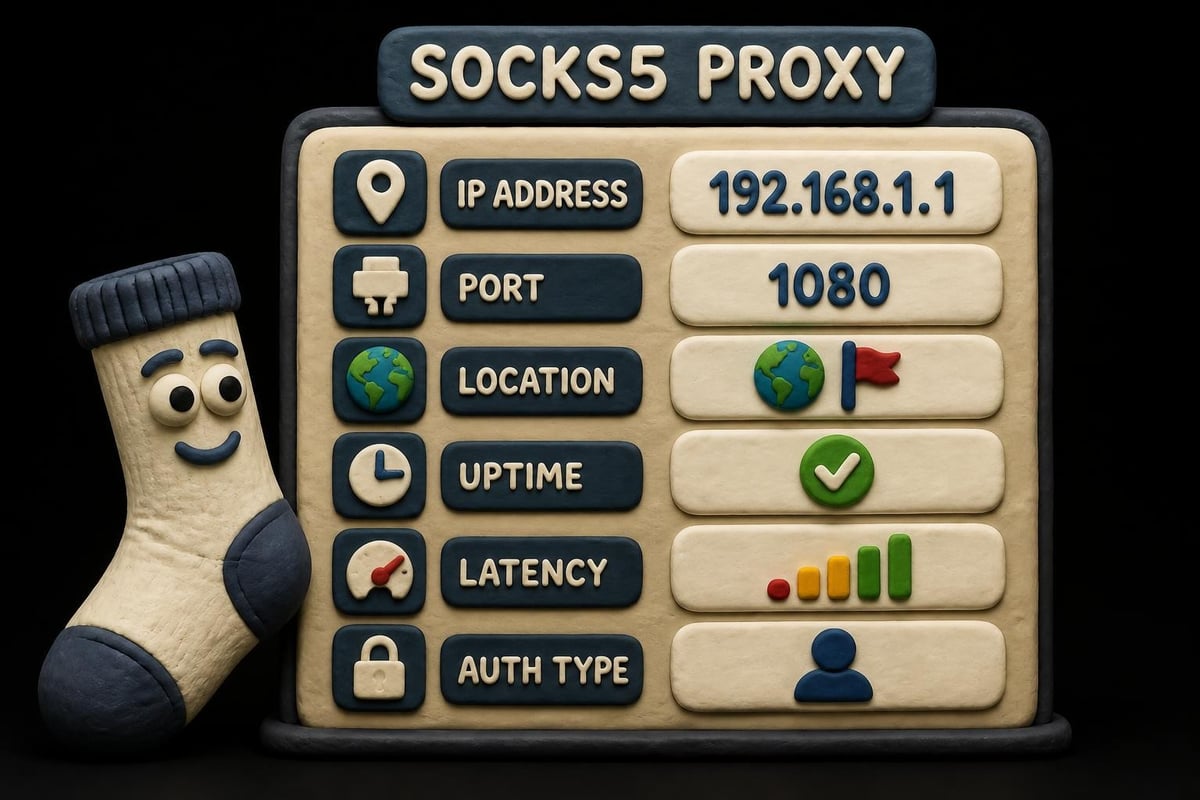
A socks5 proxy list is a curated collection of SOCKS5 proxy servers, typically organized with essential details like IP addresses, port numbers, geographic locations, and performance metrics. These lists serve as directories for users seeking to route their internet traffic through intermediary servers.
SOCKS5 represents the latest version of the Socket Secure protocol, offering significant improvements over its predecessors. The protocol supports multiple authentication methods and doesn't inspect or modify data packets, making it faster and more versatile than HTTP-based alternatives.
Key Components of Quality Proxy Lists
When evaluating any socks5 proxy list, several critical elements determine its usefulness:
- IP address and port number for connection establishment
- Geographic location (country, city, ISP information)
- Uptime percentage indicating reliability
- Response time and latency metrics
- Last verification timestamp showing list freshness
- Authentication requirements (username/password or IP whitelist)
- Protocol support (SOCKS5, SOCKS4, HTTP/HTTPS)
Premium providers maintain these lists with automated verification systems that test each proxy every few minutes. Free SOCKS5 proxy services typically update hourly, though reliability varies significantly.
Free vs Premium SOCKS5 Proxy Lists
The distinction between free and paid proxy lists extends far beyond cost considerations. Each option serves different use cases and comes with distinct tradeoffs.
Free SOCKS5 Proxy List Options
Several platforms maintain publicly accessible proxy lists. ProxyLists.org and similar services aggregate thousands of proxies from various sources, filtering by protocol and location. However, research on free proxy ecosystems reveals significant security and performance concerns.
Common challenges with free proxies include:
- Unpredictable uptime and frequent disconnections
- Slower speeds due to overcrowding
- Limited geographic distribution
- Potential security vulnerabilities
- Data logging and privacy risks
- Frequent blacklisting by target websites
Free lists work acceptably for non-critical testing or personal browsing. For business applications requiring consistency, they present substantial limitations.
Premium Proxy Services
Commercial providers like those featured in TechRadar's proxy comparison offer professionally managed proxy networks with guaranteed performance. Premium services distinguish themselves through several advantages:
| Feature | Free Lists | Premium Services |
|---|---|---|
| Uptime Guarantee | None | 99%+ SLA |
| Speed | Variable | 10Gbps+ bandwidth |
| IP Rotation | Manual | Automated (sub-second) |
| Support | Community forums | 24/7 dedicated support |
| Privacy | Unknown logging | Zero-log policies |
| Authentication | Often open | Secure credentials |
When comparing options, consider how datacenter proxies and residential alternatives fit your specific requirements. The investment in premium services typically justifies itself through reliability and time savings.
Evaluating SOCKS5 Proxy List Quality
Not all proxy lists provide equal value. Systematic evaluation helps identify sources that meet your performance and security standards.
Performance Metrics That Matter
Response time directly impacts user experience and operational efficiency. A quality socks5 proxy list should display current latency measurements for each entry, typically ranging from 50ms to 500ms depending on geographic distance.
Testing methodology matters significantly. Lists updated through automated ping tests provide basic connectivity confirmation but don't verify actual proxy functionality. Comprehensive testing includes:
- Connection establishment time from multiple geographic locations
- Throughput testing with actual data transfers
- Protocol verification ensuring full SOCKS5 compliance
- Authentication validation confirming credential requirements
- Blacklist checking against major websites and services
Uptime tracking over extended periods reveals proxy stability patterns. Proxies maintaining 95%+ uptime over 30 days demonstrate reliability suitable for production environments.
Security Considerations
The security implications of your socks5 proxy list choice extend beyond basic privacy concerns. Each proxy server represents a potential vulnerability in your security infrastructure.
Critical security factors include:
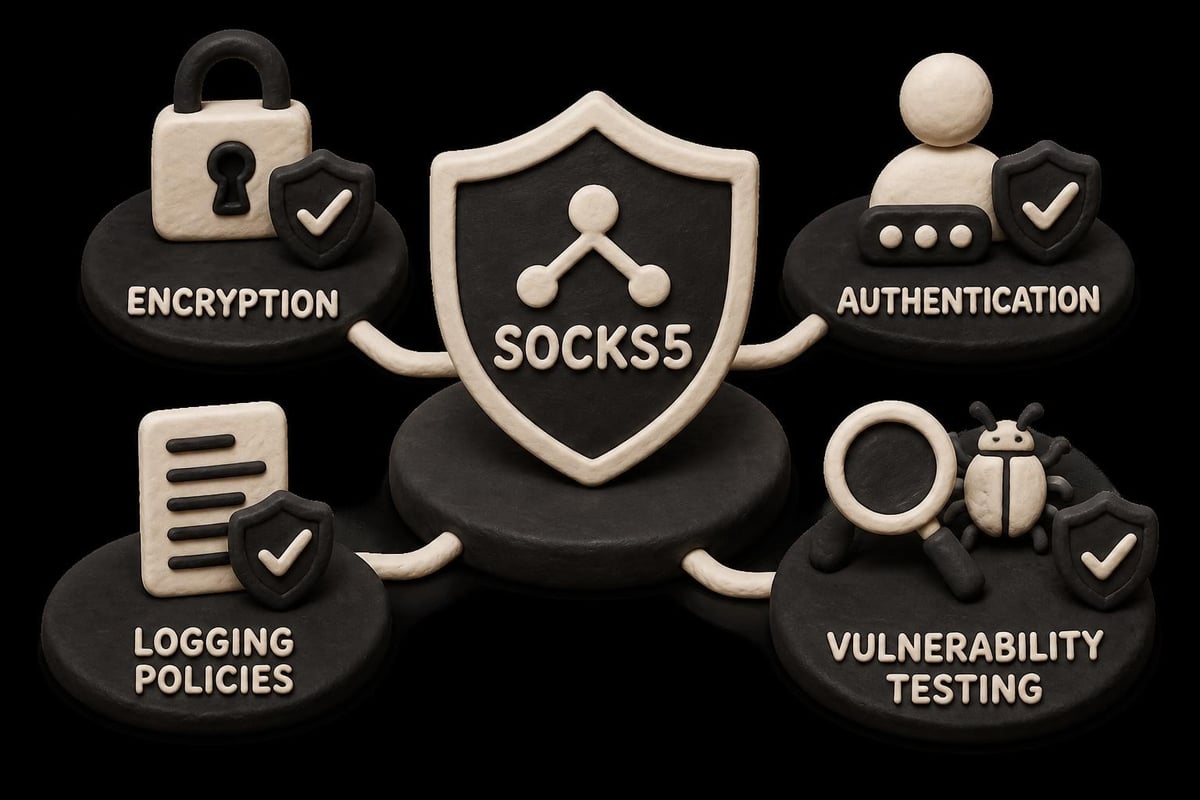
- SSL/TLS support for encrypted connections
- Authentication mechanisms preventing unauthorized access
- Data logging policies and privacy commitments
- Operator reputation and business transparency
- Known security incidents or breaches
- Compliance with data protection regulations
Private SOCKS5 proxy options eliminate many risks associated with shared public proxies by providing dedicated resources with controlled access.
Geographic Distribution and Location Selection
The geographic composition of your socks5 proxy list significantly influences its utility for different applications. Location strategy depends entirely on your specific use case.
Regional Coverage Requirements
Web scraping projects often require proxies from specific countries to access localized content or comply with geographic restrictions. A comprehensive proxy list should offer representation across major regions:
- North America (US, Canada)
- Europe (UK, Germany, France, Netherlands)
- Asia-Pacific (Japan, Singapore, Hong Kong, Australia)
- Latin America (Brazil, Mexico, Argentina)
- Middle East and Africa (UAE, South Africa)
Services like residential proxy providers typically offer broader geographic coverage than datacenter alternatives, though with different performance characteristics.
Latency vs Location Tradeoffs
Physical distance between your location, the proxy server, and your target destination creates unavoidable latency. Optimizing proxy selection requires understanding these relationships.
For speed-critical applications, selecting proxies geographically closer to target servers minimizes round-trip time. E-commerce monitoring targeting US websites performs best with proxies located in major US data centers.
Conversely, accessing geo-restricted content requires proxies in specific countries regardless of latency impact. Streaming services verify geographic location through IP addresses, making proxy location the primary selection criterion.
Managing and Maintaining Proxy Lists
Even the best socks5 proxy list requires active management to maintain effectiveness. Automated systems handle verification, rotation, and failure recovery.
Automated Verification Systems
Manual proxy testing becomes impractical beyond a handful of addresses. Automated verification scripts check proxy functionality at regular intervals:
- Connectivity testing - Confirms the proxy accepts connections
- Protocol validation - Verifies SOCKS5 protocol compliance
- Speed testing - Measures current throughput and latency
- Anonymity verification - Confirms IP address masking
- Target accessibility - Tests access to specific websites or services
Scripts should remove non-responsive proxies immediately and flag degraded performance for investigation. Lists maintaining 80%+ working proxies at any given time indicate proper maintenance.
Rotation Strategies
Static proxy usage creates recognizable patterns that sophisticated detection systems identify. Implementing rotation prevents detection while distributing load:
| Rotation Method | Use Case | Advantages | Limitations |
|---|---|---|---|
| Time-based | Regular browsing | Simple implementation | Predictable patterns |
| Request-based | Web scraping | Distributes requests | Higher complexity |
| Random | General purpose | Unpredictable | May reuse recently used IPs |
| Geographic | Location-specific tasks | Maintains regional consistency | Requires larger pool |
Premium services offer sub-second rotation capabilities, as discussed in guides covering SOCKS5 residential proxies, enabling request-level IP changes that maximize anonymity.

Integration and Implementation
Accessing a socks5 proxy list is only the first step. Proper integration into your applications determines operational success.
Configuration Across Different Tools
SOCKS5 proxies work with virtually any network-capable application, though configuration methods vary. Understanding platform-specific implementation accelerates deployment.
Popular integration scenarios include:
- Web browsers - Manual configuration through network settings or extensions
- Scraping frameworks - Proxy rotation middleware in Python, Node.js, or other languages
- Mobile applications - System-level proxy configuration on Android and iOS devices
- Command-line tools - Environment variables or tool-specific parameters
- API clients - Proxy settings in HTTP request libraries
For developers working with curl and similar tools, SOCKS5 support requires specific flags or configuration options. Testing integration with a small proxy subset before scaling prevents widespread issues.
Authentication Management
Most quality proxies require authentication to prevent unauthorized access and abuse. Two primary authentication methods dominate:
Username/password authentication provides universal compatibility but requires secure credential management. Rotating credentials periodically and using unique passwords for each service follows security best practices.
IP whitelisting restricts access to predefined IP addresses, eliminating credential exposure risks. This approach works well for static server deployments but complicates mobile or dynamic IP scenarios.
Specialized Use Cases
Different applications place unique demands on proxy infrastructure. Tailoring your socks5 proxy list selection to specific use cases optimizes results.
Web Scraping and Data Collection
Large-scale scraping operations require extensive proxy pools to avoid rate limiting and IP blocks. Successful scraping strategies combine multiple factors:
- High proxy count (hundreds to thousands of IPs)
- Automatic rotation after each request or time interval
- Geographic diversity matching target website distribution
- Session management for sites requiring authentication
- Failure handling and automatic proxy replacement
Datacenter proxies offer speed advantages for scraping, while residential options provide better success rates against sophisticated anti-bot systems. The optimal approach often combines both types based on target website characteristics.
Privacy and Anonymity
Users prioritizing anonymity face different requirements than those focused on performance. Privacy-oriented proxy selection emphasizes:
- Zero-logging policies verified through independent audits
- Strong encryption support (HTTPS/SSL)
- Jurisdiction in privacy-friendly countries
- Payment options preserving anonymity
- No traffic inspection or modification
Understanding the difference between HTTP and SOCKS proxies helps users select protocols appropriate for their privacy needs. SOCKS5's protocol-agnostic design prevents deep packet inspection that could compromise anonymity.
Gaming and Streaming
Low latency becomes paramount for real-time applications. Gamers seeking regional server access or reduced ping require carefully selected proxies:
- Minimal geographic distance to game servers
- Dedicated bandwidth avoiding congestion
- Consistent routing preventing mid-session disconnections
- Low overhead protocols minimizing processing delays
Mobile proxy infrastructure sometimes provides advantages for mobile gaming applications, though mobile proxy options typically cost more than datacenter alternatives.
Best Practices for SOCKS5 Proxy Lists
Maximizing proxy effectiveness requires following established best practices developed through industry experience.
Testing Before Production Deployment
Never deploy an untested socks5 proxy list directly into production systems. Comprehensive testing identifies issues before they impact operations:
- Test connectivity from your actual deployment environment
- Verify target website accessibility through each proxy
- Measure actual performance under realistic load conditions
- Confirm authentication works as documented
- Test failure recovery and rotation mechanisms
Small-scale pilots with 10-20 proxies reveal configuration issues and compatibility problems without risking large-scale failures.
Monitoring and Analytics
Ongoing monitoring provides visibility into proxy performance and identifies degradation before it causes failures. Essential monitoring metrics include:
- Success rate percentages by proxy and target
- Average response times and latency trends
- Bandwidth consumption and throughput
- Authentication failure rates
- Geographic distribution of requests
- Detection and blocking incidents
Building dashboards around these metrics enables data-driven decisions about proxy list composition and rotation strategies.
Compliance and Legal Considerations
Using proxies for legitimate purposes remains legal in most jurisdictions, but specific use cases may trigger regulations. Consider these compliance factors:
- Terms of service for websites you access
- Data protection regulations in relevant jurisdictions
- Industry-specific compliance requirements (GDPR, CCPA, etc.)
- Intellectual property considerations for content access
- Export control laws for international proxy usage
Consulting legal counsel familiar with digital privacy and proxy usage prevents inadvertent violations.
Common Pitfalls and How to Avoid Them
Understanding frequent mistakes helps users avoid costly errors when working with proxy lists.
Over-Reliance on Free Proxies
Free proxy lists attract users through zero monetary cost but often create hidden expenses through unreliability, security risks, and time spent managing failures. The analysis of free proxy risks demonstrates why professional operations avoid them.
Free proxy risks include:
- Malicious operators logging or modifying traffic
- Injection of advertisements or tracking code
- Sudden disappearance without notice
- Blacklisting by major websites
- Infection with malware or credential harvesting
Budget-conscious users should consider affordable datacenter proxy options that provide professional reliability at reasonable costs.
Ignoring Proxy Protocol Differences
Treating all proxies as interchangeable regardless of protocol leads to configuration errors and suboptimal performance. SOCKS5 proxies function differently from HTTP proxies or VPN services.
Understanding when to use SOCKS versus HTTP protocols prevents mismatched application requirements. SOCKS5's lower-level operation provides flexibility that HTTP proxies can't match, but requires proper client configuration.
Inadequate IP Pool Size
Attempting large-scale operations with insufficient proxy quantities causes rapid IP exhaustion and detection. As a general guideline:
- Small projects (under 100 requests/hour) - 10-50 proxies
- Medium operations (100-1000 requests/hour) - 100-500 proxies
- Large-scale scraping (1000+ requests/hour) - 1000+ proxies
- Enterprise operations - Dedicated pools with automatic scaling
Proper sizing prevents over-rotation that itself becomes detectable and ensures adequate capacity during peak demand periods.
Building and maintaining an effective socks5 proxy list requires balancing performance, security, cost, and reliability factors specific to your use case. Whether you need proxies for web scraping, privacy protection, or accessing geo-restricted content, selecting the right infrastructure makes the difference between success and frustration. PinguProxy offers enterprise-grade SOCKS5 proxy solutions with 10Gbps bandwidth, 1ms rotation capabilities, and complete IPv4/IPv6 support backed by 24/7 customer service. Our zero-log policy and unlimited access model eliminate the reliability concerns associated with public proxy lists while delivering the performance your operations demand.